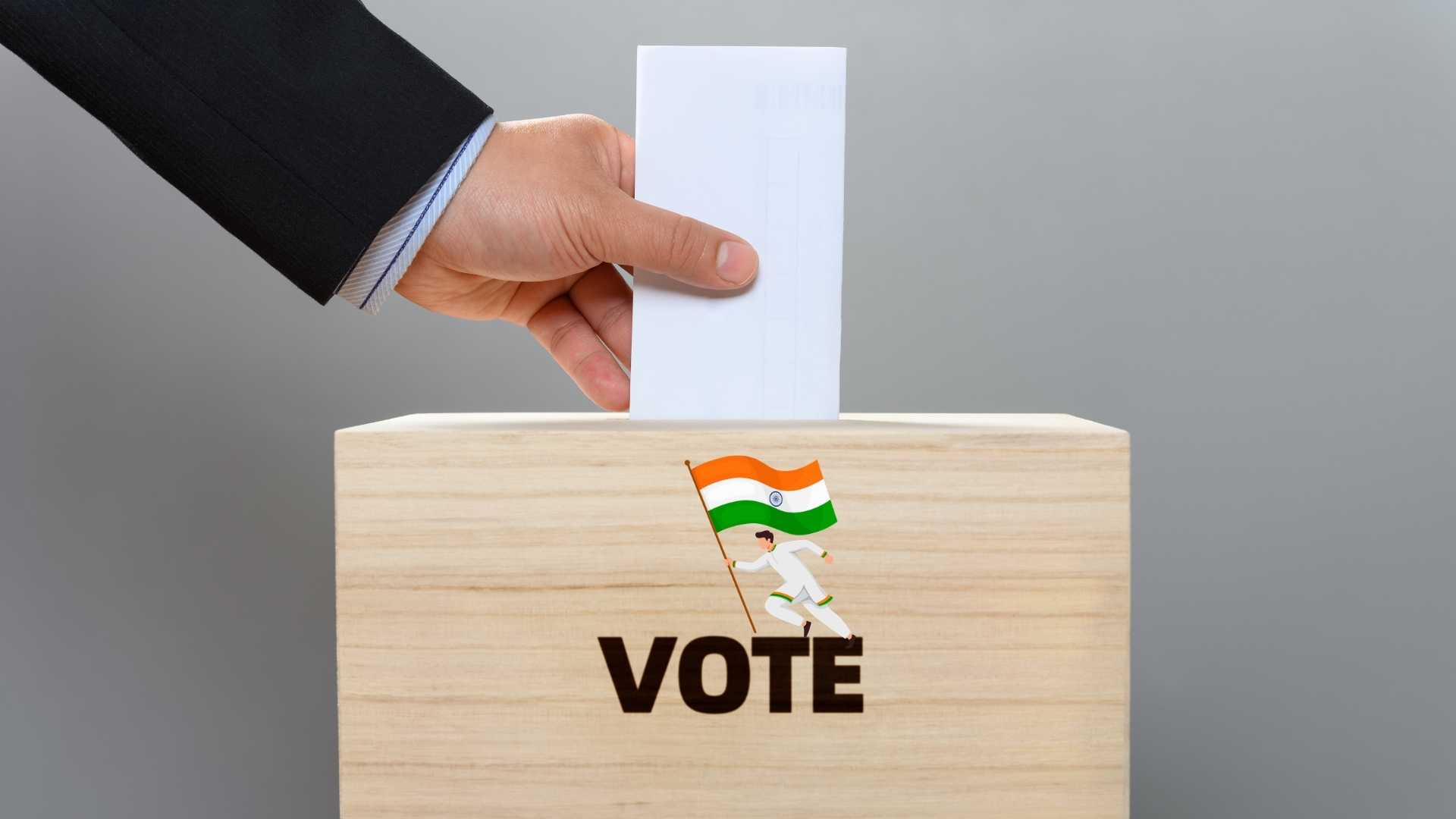
1. Free and Fair Elections as Part of the Basic Structure
Free and fair elections constitute the normative foundation of India’s democratic order. In Indira Nehru Gandhi v. Raj Narain (1975), the Supreme Court recognised free and fair elections as part of the Basic Structure of the Constitution, thereby insulating electoral integrity from majoritarian alteration.
Article 326 guarantees adult suffrage, making universal franchise the bedrock of representative democracy. Any dilution of electoral fairness—procedural or substantive—directly affects political legitimacy and the sovereignty of the people.
Recent controversies regarding alleged “vote theft” and manipulation of electoral rolls during the Special Intensive Revision (SIR) exercise, particularly in Bihar, have reignited debates about electoral credibility. The reported deletion of approximately 65 lakh voters has led to judicial scrutiny and political mobilisation.
Free and fair elections are not merely procedural rituals but instruments of political accountability. If the credibility of electoral rolls or processes is questioned, it can erode public trust in democratic outcomes and weaken constitutional legitimacy.
2. Special Intensive Revision (SIR) and Electoral Roll Integrity
Electoral rolls form the operational backbone of democratic participation. Errors or large-scale deletions, whether intentional or administrative, directly affect the exercise of the right to vote.
Allegations surrounding the SIR exercise suggest that the revision process was rushed and may have disproportionately impacted minorities and opposition-supporting voters. Such concerns highlight the tension between administrative efficiency and procedural fairness.
Key Concern:
- Deletion of approximately 65 lakh names during SIR
- Challenge before the Supreme Court
Electoral roll revision is legally permissible under the Representation of the People Act, 1950. However, procedural impropriety in such revisions risks converting a technical exercise into a constitutional controversy.
The integrity of voter rolls determines inclusivity in democratic participation. If revision exercises are perceived as selective or opaque, it may lead to political polarisation and delegitimisation of electoral outcomes.
3. Appointment of Election Commissioners and the 2023 Act
The independence of the Election Commission (EC) depends significantly on its appointment process. The Chief Election Commissioner and Other Election Commissioners (Appointment, Conditions of Office and Terms of Office) Act, 2023 replaced the 1991 framework.
Under the 2023 Act:
- Appointment is made by the President.
Based on recommendations of a Selection Committee comprising:
- Prime Minister
- A Union Minister
- Leader of Opposition
In Anoop Baranwal v. Union of India (2023), the Supreme Court had held that the Chief Justice of India (CJI) should be part of the selection committee until Parliament enacted a law. The exclusion of the CJI in the 2023 Act has raised concerns about executive dominance. The Act is under challenge in Jaya Thakur v. Union of India (2024), with the next hearing scheduled for March 2026.
Institutional independence depends not only on constitutional text but also on the perception of impartial appointments. If appointment mechanisms are seen as executive-centric, the credibility of the Commission may be affected.
4. Constitutional Mandate under Article 324
Article 324 establishes a permanent Election Commission vested with “superintendence, direction and control” of elections to:
- President and Vice-President
- Parliament
- State Legislatures
This constitutional status distinguishes the EC from statutory bodies and provides structural independence.
Key safeguards:
- Tenure: Six years or until 65 years of age, whichever earlier (as per 2023 Act).
Article 324(5):
- Removal of CEC in the manner of a Supreme Court judge (Article 124(4)).
- Conditions of service cannot be varied to disadvantage during tenure.
This framework ensures insulation from arbitrary executive interference.
Constitutional entrenchment ensures functional autonomy. If Article 324 safeguards are weakened in practice, the balance between executive authority and electoral neutrality may be disturbed.
5. Removal of the CEC: Constitutional and Statutory Framework
The removal of the CEC is deliberately rigorous, reflecting the importance of electoral independence.
Article 324(5) read with Article 124(4):
- Grounds: Proved misbehaviour or incapacity
- Procedure: Same as removal of a Supreme Court judge
Process under the Judges (Inquiry) Act, 1968:
Notice:
-
At least 100 MPs (Lok Sabha), or
-
At least 50 MPs (Rajya Sabha)
-
Admission by Speaker/Chairman
Constitution of a three-member committee:
- CJI or Supreme Court Judge
- Chief Justice of a High Court
- Distinguished jurist
Principles of natural justice apply:
- Framing of definite charges
- Opportunity for defence
- Medical examination in case of incapacity
Section 11 of the 2023 Act also provides procedural clarity regarding removal.
The complexity of removal acts as a political and constitutional safeguard. If removal were made easier, it could expose the EC to executive pressure; if misused, removal attempts could become tools of political contestation.
6. Position of the CEC in a Multi-Member Commission
Article 324 envisages a Commission comprising a CEC and other Election Commissioners. It allows the President to determine the number of commissioners.
Institutional evolution:
- 1989: Multi-member Commission introduced
- 1990: Additional posts abolished
- 1993: Multi-member Commission permanently established
- Upheld in T.N. Seshan v. Union of India (1995)
Under Article 324(3), the CEC acts as the Chairman when the Commission is multi-member. This ensures:
- Administrative leadership
- Collegial decision-making
- Balance between individual authority and institutional consensus
The multi-member structure reduces concentration of power while preserving administrative coherence. If collegiality is undermined, either by internal discord or external influence, institutional stability may suffer.
7. Political Dimensions and Institutional Legitimacy
The Opposition’s move to remove the CEC reflects deepening political distrust. However, given the ruling alliance’s parliamentary majority, the motion is unlikely to succeed.
The larger issue concerns the politicisation of constitutional bodies. While criticism and dissent are legitimate in a democracy, sustained attacks on institutional credibility may have systemic consequences.
Risks:
- Decline in public trust in electoral outcomes
- Perception of executive capture or partisan bias
- Institutional erosion through politicisation
Constitutional bodies operate within defined legal frameworks. Their credibility depends both on internal integrity and external respect from political actors.
Democratic stability requires both accountability and institutional restraint. Excessive politicisation may weaken institutions, while lack of accountability may foster opacity—both detrimental to governance.
8. Implications for Governance and Democratic Balance
Electoral fairness affects multiple dimensions:
- GS2 (Polity & Governance): Institutional independence, federal balance, separation of powers
- GS1 (Society): Inclusion of minorities and vulnerable groups in political participation
- GS3 (Governance & Reforms): Administrative transparency in electoral processes
- Essay: Balance between liberty and authority; institutional trust in democracy
The Constitution balances “authority of the state” with “liberty of citizens.” Electoral integrity forms the intersection of these values.
If electoral institutions lose credibility:
- Policy legitimacy may be questioned
- Governance stability may weaken
- Democratic participation may decline
Conclusion
The controversy surrounding electoral roll revisions and the proposed removal of the CEC highlights the delicate balance between institutional independence and political accountability. Constitutional safeguards under Articles 324 and 326 aim to preserve electoral integrity through structural autonomy and rigorous removal procedures.
For India’s democracy to remain resilient, electoral processes must not only be fair but also appear fair. Strengthening transparency, ensuring procedural propriety, and preserving institutional respect are essential for sustaining long-term democratic legitimacy and governance stability.