Introduction
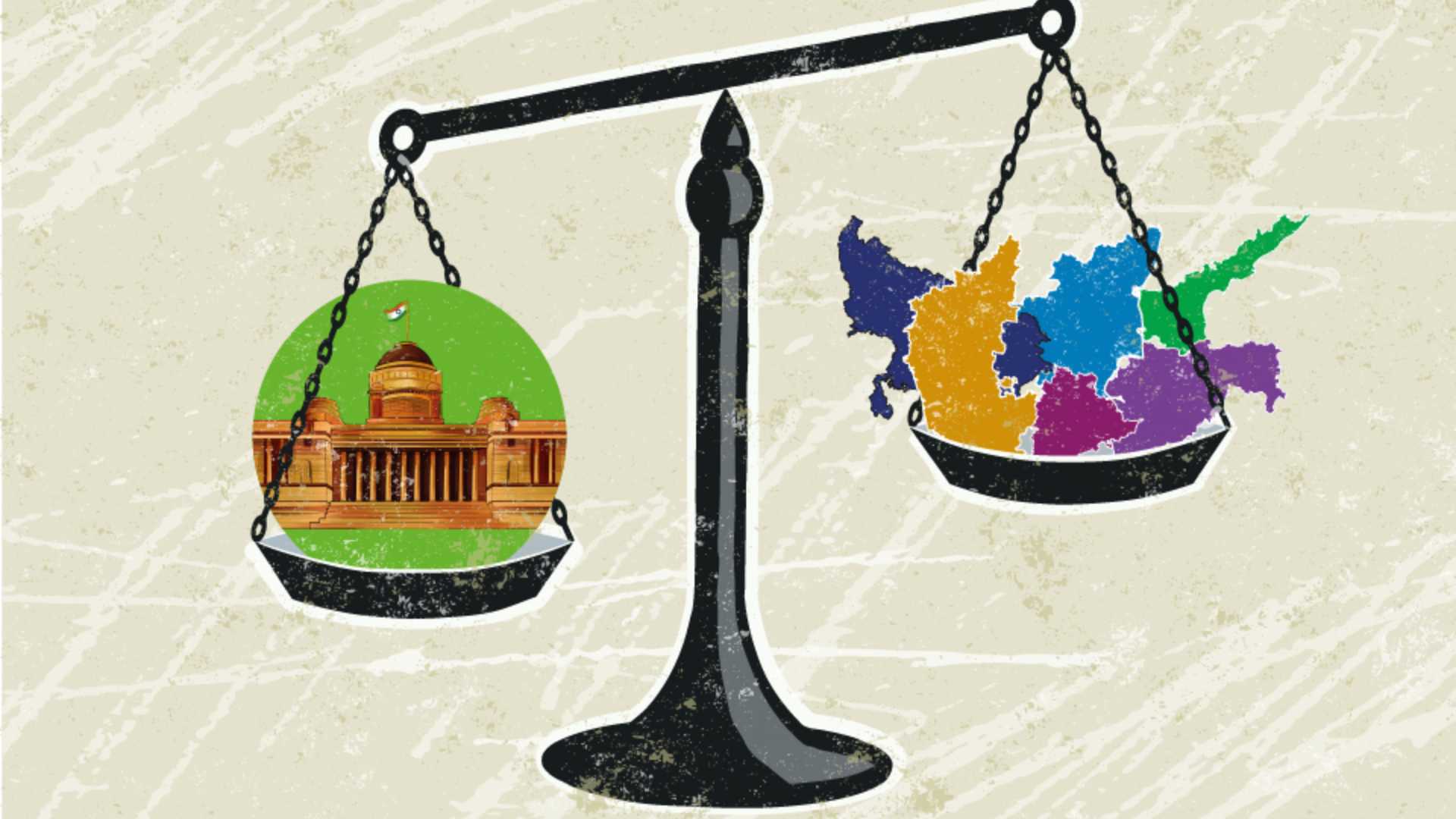
India's upcoming delimitation exercise — following Census 2027 — poses a defining federal question: should States that sacrificed population growth for decades lose parliamentary representation to States that did not? The 84th Constitutional Amendment, 2002 froze Lok Sabha seats precisely to incentivise population stabilisation, yet the fertility gap between States has only widened.
"Federal stability matters as much as electoral arithmetic. Applying demographic performance to the Lok Sabha would balance democratic equality with federal fairness." — Constitutional and Demographic Analysis on Delimitation
| Data Point | Figure |
|---|---|
| Constitutional provision | Article 81 — population-based seat allocation |
| Seats frozen by | 84th Constitutional Amendment Act, 2002 |
| Freeze valid until | First Census after 2026 |
| Census results expected | October 2028 |
| Current Lok Sabha strength | 543 seats |
| Proposed maximum strength | 700 seats |
| Replacement-level TFR | 2.1 births per woman |
| Mean TFR — low-fertility States (NFHS-5) | 1.64 |
| Mean TFR — high-fertility States (NFHS-5) | 2.38 (45% higher) |
Background and Context
Constitutional Framework
| Provision | Detail |
|---|---|
| Article 81 | Seats distributed based on population — ratio of seats to population must be equal across States |
| 84th Constitutional Amendment Act, 2002 | Froze Lok Sabha and State Legislature seats until first Census after 2026 |
| Rationale for freeze | Motivational measure to incentivise State governments to pursue population stabilisation |
| Next step | Census results by October 2028 → Delimitation Commission constituted → 2029 Lok Sabha elections |
The Core Problem In 1951 and 1971, State populations had not diverged significantly — making pure population-based seat allocation fair. Today, India's demographic landscape has split sharply between high-fertility and low-fertility States, making raw population the sole criterion for seat allocation constitutionally problematic for federal unity.
Fertility Gap: The Data
Total Fertility Rate (TFR) — National Family Health Survey (NFHS)
| Category | TFR | States |
|---|---|---|
| Replacement level (target) | 2.1 | — |
| States below 2.1 (as per NFHS-5, 2019–21) | Mean: 1.64 | HP, Punjab, Delhi, Goa, AP, Telangana, Karnataka, Kerala, Tamil Nadu and others |
| States above national mean (NFHS-5) | Mean: 2.38 | Bihar, UP, Jharkhand, Meghalaya, Manipur |
| Gap between the two groups | 45% higher fertility in laggard States vs early achievers | — |
Key finding: In 2005, 9 States had achieved TFR ≤ 2.1. By 2021, only 5 major States remain above replacement level — significant progress, but the fertility gap persists.
Key Concept: Demographic Performance (DemPer) Principle
The article proposes a DemPer principle for seat allocation in the delimitation exercise — borrowing logic from the Finance Commission framework.
Finance Commission Parallel
| Body | Criteria Used | Population Weight |
|---|---|---|
| Finance Commission | Population size + demographic performance + other criteria | 50% |
| Proposed Delimitation Commission | Population size + DemPer | Population remains dominant |
How DemPer Would Work
| Component | Weightage | Rationale |
|---|---|---|
| Existing 543 seats | No change | Population principle preserved |
| Additional seats (beyond 543) | Subject to DemPer | Rewards/penalises demographic performance |
| Early TFR achievement (≤2.1 before 2005) | 10% weight | Rewards early achievers |
| Rate of TFR decline (2005–2021) | 90% weight | Rewards recent improvement — more equitable |
Key outcome: All States receive more seats in absolute terms; more populous States gain more seats; but States with better demographic performance retain or improve their seat share.
Ideal Lok Sabha Size
| Benchmark | Figure |
|---|---|
| Average population per seat (1971) | 10–11.1 lakh |
| India's population in 1971 | 54.1 crore |
| India's population today | ~140 crore (~3x of 1971) |
| Proposed maximum Lok Sabha size | 700 seats |
Rationale: Beyond 700 seats, the quality of parliamentary debate and deliberation risks deterioration. Democracy requires not just representation but meaningful participation.
Why This Is a Federal Issue — Not Just a North-South Debate
A common framing presents delimitation as a conflict between northern (high-fertility) and southern (low-fertility) States. The article corrects this:
- States like Punjab, Haryana, Himachal Pradesh, and Goa — all northern or western — achieved population stabilisation early.
- The issue is not regional identity but governance performance — rewarding States that invested in health, education, and women's empowerment to bring down fertility rates.
- Fair federalism requires that good governance be rewarded, not penalised by arithmetic representation alone.
Implications
For Democracy
- Pure population-based delimitation would significantly reduce the seat share of southern and other low-fertility States — creating resentment and weakening federal cohesion.
- DemPer ensures all voices retain meaningful weight in Parliament.
For Federalism
- Incentivises States to continue investing in population stabilisation, health, and education.
- Protects the constitutional compact implicit in the 2002 freeze — that demographic sacrifice would be fairly recognised.
For Governance
- Mirrors the Finance Commission's logic of performance-linked allocation — a proven federal tool.
- Discourages the perverse incentive where higher population growth leads to greater political representation.
Critical Perspectives
- Against DemPer: Critics may argue it dilutes the one-person-one-vote principle fundamental to democracy — giving citizens in low-fertility States disproportionate political weight.
- Constitutional challenge: Article 81 mandates population-based allocation — any departure may face judicial scrutiny.
- Data dependency: Reliable, updated population and TFR data are prerequisites — making Census 2027 accuracy critical.
Conclusion
The upcoming delimitation exercise is one of the most consequential constitutional events in post-independence India. A purely arithmetic approach — seats proportional only to population — would punish States that pursued responsible governance and population stabilisation for decades. The DemPer principle offers a constitutionally grounded, federally sensitive alternative that rewards performance without abandoning the population principle. India's democracy must be measured not only by the equality of numbers but by the fairness of incentives. Fair federalism — where good governance is recognised and rewarded — is not merely a policy preference; it is a precondition for the Union's long-term stability.