
1. Context: Governor’s Address and Contemporary Federal Tensions
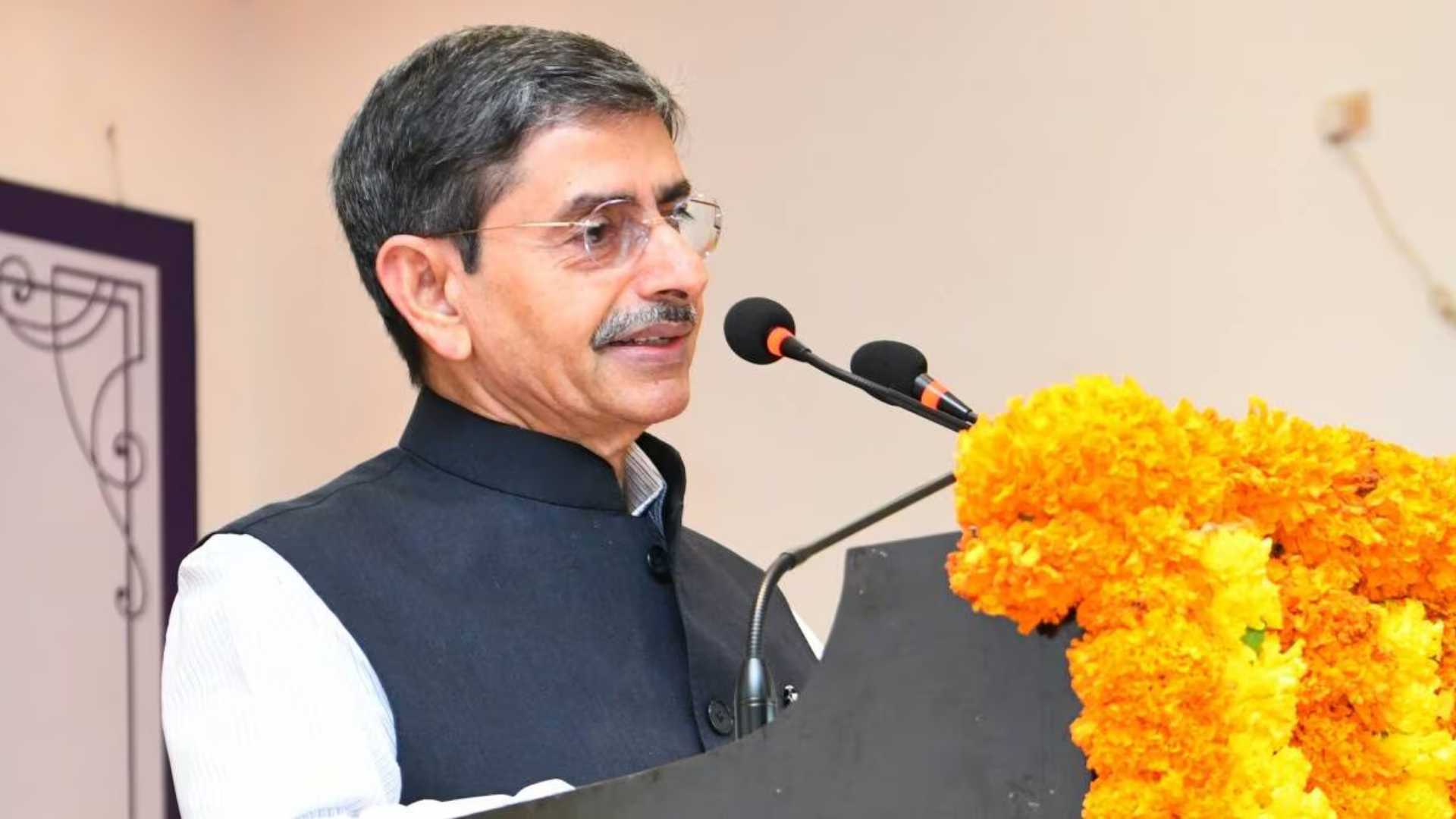
Recent developments in several Opposition-ruled States have brought renewed attention to the constitutional role of the Governor in the State legislature. Disputes have arisen over the Governor’s address at the commencement of the first legislative session of the year, a long-established constitutional practice.
These episodes are significant because the Governor’s address is not merely ceremonial; it reflects the policy priorities and legislative agenda of the elected State government. Any deviation has implications for democratic accountability and legislative functioning.
The increasing frequency of such confrontations signals deeper strains in Centre–State relations. If left unaddressed, they risk weakening cooperative federalism and institutional trust between constitutional offices.
“The Governor under the Constitution has no functions which he can discharge by himself; no functions at all.”
— B.R. Ambedkar, Constituent Assembly Debates
The underlying governance logic is that constitutional conventions are essential to maintain balance between nominated and elected authorities; their erosion creates persistent institutional friction.
2. Historical Evolution of the Governor’s Address
The practice of the Governor’s address has its origins in colonial constitutional arrangements. Section 63 of the Government of India Act, 1935 allowed the Governor to address the Provincial legislature at his discretion. However, with the introduction of provincial autonomy in 1937, the address began reflecting the agenda of elected ministries.
This convention continued into the Constituent Assembly debates. Members broadly agreed that the Governor’s address should articulate the policies of the Council of Ministers, not the Governor’s personal opinions.
This historical continuity underscores that the address was conceived as an executive–legislative bridge, not a discretionary political instrument.
The constitutional logic is continuity with responsible government; ignoring this history risks reverting to discretionary colonial-era practices.
3. Constitutional Provisions Governing the Address
The Constitution clearly differentiates between discretionary and mandatory addresses by the Governor. Article 175 empowers the Governor to address either House of the State legislature, but this is discretionary and rarely invoked.
In contrast, Article 176 mandates that the Governor shall address the legislature at the commencement of:
- the first session after each general election, and
- the first session of every calendar year.
This address outlines the government’s past performance and future policy roadmap. It is prepared by the Council of Ministers and followed by a structured legislative debate through the Motion of Thanks.
Failure to adhere to Article 176 disrupts legislative accountability and undermines the collective responsibility of the executive to the legislature.
The governance rationale is that mandatory constitutional duties cannot be selectively ignored without weakening the rule-based functioning of legislatures.
4. Judicial Interpretation of the Governor’s Role
The Supreme Court has repeatedly clarified the limited and constitutional nature of the Governor’s role. In Shamsher Singh vs State of Punjab (1974), the Court held that the Governor is only a constitutional head and must act on the aid and advice of the Council of Ministers.
“The Governor is bound by the aid and advice of the Council of Ministers in the exercise of his functions.”
— Supreme Court, Shamsher Singh vs State of Punjab (1974)
This position was reaffirmed in Nabam Rebia vs Deputy Speaker (2016), where the Court explicitly stated that the Governor’s address under Articles 175 and 176 must be delivered on ministerial advice.
“The Governor has no discretion to act independently in matters where the Constitution requires him to act on the aid and advice of the Council of Ministers.”
— Supreme Court, Nabam Rebia vs Deputy Speaker (2016)
These judgments conclusively settle the legal position that the Governor has no independent discretion in the content or delivery of the address.
Judicial clarity reinforces constitutional morality; ignoring it risks normalising unconstitutional conduct by high offices.
5. Nature of the Current Disputes
In recent years, multiple States have witnessed deviations from established practice. In Tamil Nadu, the Governor skipped portions of the address in 2022 and 2023, and from 2024 onwards, failed to deliver the address altogether. Similar departures were observed in Kerala and Karnataka, where Governors either omitted parts or declined to read the prepared text.
These actions are significant because Governors take an oath under Article 159 to preserve, protect, and defend the Constitution. Departures from mandatory constitutional functions raise questions about adherence to this oath.
While Centre–State friction over the Governor’s address has existed since the 1960s, the complete skipping of the address marks a qualitative escalation.
The institutional logic is that repeated procedural deviations harden political conflicts into constitutional crises.
6. Implications for Federalism and Democratic Governance
The Governor occupies a dual position: as the nominal head of the State executive and as an appointee of the Centre. This role is intended to balance national unity with State autonomy.
However, frequent confrontations with elected State governments risk tilting this balance. They can weaken legislative deliberation, politicise constitutional offices, and erode public confidence in neutral governance.
“Federalism is a part of the basic structure of the Constitution.”
— Supreme Court, S.R. Bommai vs Union of India (1994)
Such trends, if sustained, may encourage demands for radical institutional changes, including questioning the relevance of the Governor’s office itself.
Federal stability depends on restraint and respect for conventions; politicisation of constitutional posts undermines both.
7. Way Forward: Institutional and Procedural Reforms
Complete abolition of the Governor’s office is unlikely within India’s quasi-federal framework. However, reforms aimed at reducing politicisation can help restore institutional equilibrium.
Reform measures discussed:
- Implement recommendations of Sarkaria Commission and Punchhi Commission
- Consult the Chief Minister of the State before appointing the Governor
“The office of Governor should not be reduced to a political football.”
— Sarkaria Commission on Centre–State Relations
Such consultation may not eliminate all conflicts, but it can improve mutual trust and reduce confrontations over routine constitutional practices like the annual address.
The reform logic is preventive rather than curative; better appointments can reduce friction before it manifests institutionally.
Conclusion
The recent controversies over the Governor’s address highlight the tension between constitutional text, convention, and political practice. Upholding judicial precedents, respecting mandatory constitutional duties, and adopting consultative appointment processes are essential to preserve federal balance.
“Constitutional morality means adherence to the core principles of the Constitution.”
— Supreme Court, Government of NCT of Delhi vs Union of India (2018)
Strengthening these norms will ensure that constitutional offices function as stabilisers, not flashpoints, in India’s democratic governance.
