
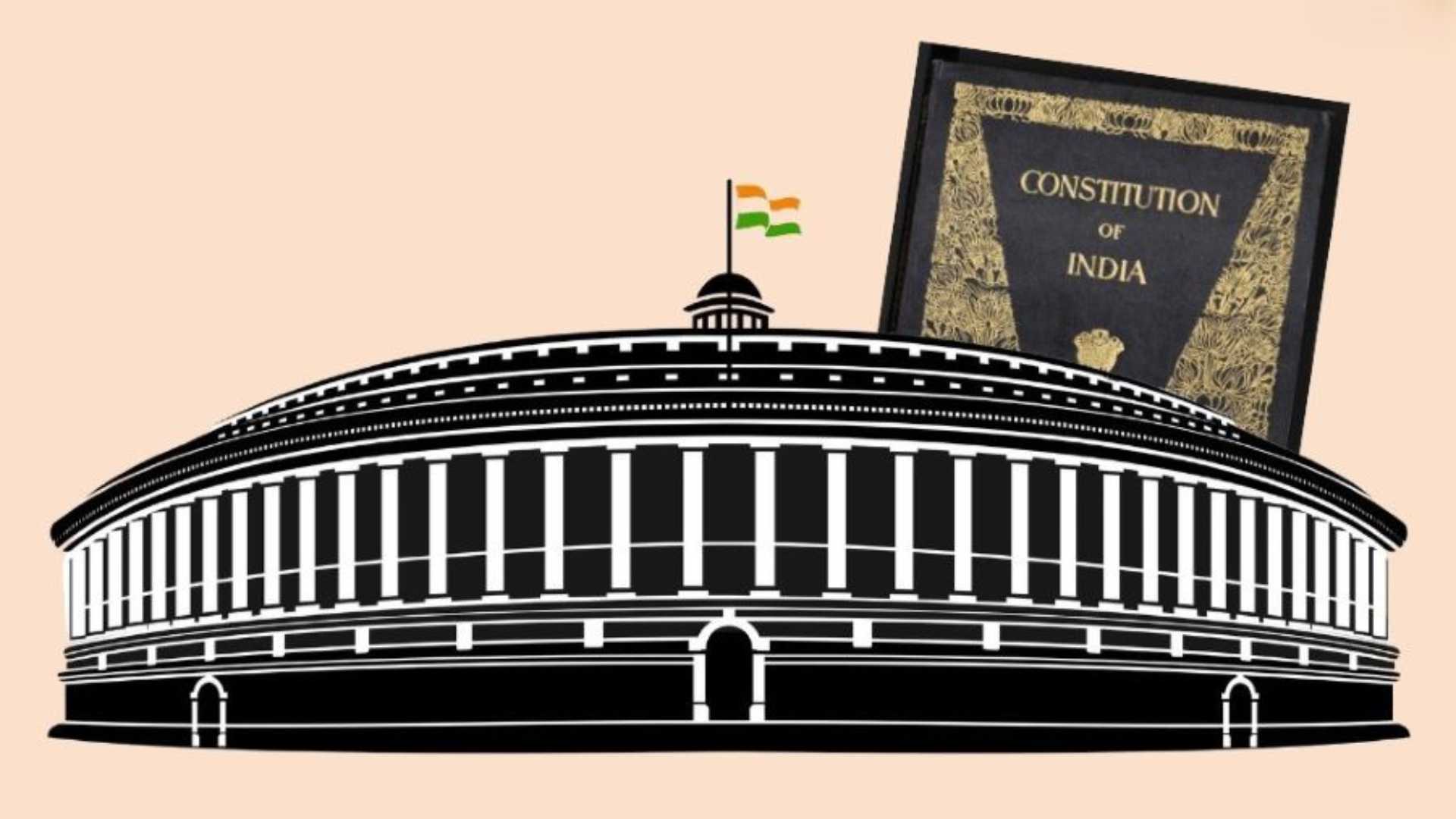
Governors' Walkouts: Testing Constitutional Limits in India

Exploring the implications of Governors' walkouts from Legislative Assemblies on constitutional mandates and the democratic framework.
GopiGopi
4 mins read
Walkout by Governor during inaugural Assembly session raises constitutional questions
Not Started

1. Constitutional Context of the Governor’s Address

The Constitution mandates a formal communication between the executive and the legislature through the Governor’s address at the commencement of the first session each year. Article 176(1) uses the word “shall”, making the address obligatory and not optional.

This address is not a personal statement of the Governor but a constitutional mechanism to inform the Legislature of the reasons for its summons and the policy direction of the elected government. It serves as a bridge between popular mandate and legislative deliberation.

By design, the address symbolises responsible government under a parliamentary system, where the executive is accountable to the legislature. Any deviation weakens the ritual of collective responsibility.

Ignoring this constitutional formality risks converting a mandatory democratic practice into a discretionary act, thereby diluting legislative oversight and public accountability.

The address operationalises executive accountability within a parliamentary democracy; treating it as optional undermines the constitutional balance and normalises executive-legislative friction.


2. Recent Gubernatorial Walkouts: Nature of the Issue

Walkouts by Governors from inaugural Assembly sessions in Opposition-ruled States such as Karnataka, Tamil Nadu, and Kerala represent a departure from established constitutional practice. These walkouts followed selective reading or complete abandonment of the address.

State governments argue that Governors have no discretion to omit or edit portions of the address, as it reflects Cabinet-approved policy. The act of walking out is viewed as an implicit veto over the elected government’s agenda.

Such actions raise questions about the neutrality of the gubernatorial office and its alignment with the constitutional requirement to act on the aid and advice of the Council of Ministers.

If left unchecked, these actions risk transforming a ceremonial constitutional duty into a site of political contestation.

When constitutional offices act beyond defined roles, institutional trust erodes, leading to governance deadlocks and centre–state friction.


3. Constitutional Position of the Governor in Parliamentary Democracy

The Constituent Assembly envisaged the Governor as a constitutional head with no independent policy-making role. Dr. B.R. Ambedkar clarified this limited position during the debates.

“The Governor under the Constitution has no functions which he can discharge by himself; no functions at all.” — Dr. B.R. Ambedkar, Constituent Assembly Debates

The Governor is expected to represent the people of the State as a whole, not any political party or the Union government. This reinforces the principle of federal neutrality.

The address under Article 176 is an executive function, performed strictly on ministerial advice. Personal disagreement cannot justify deviation from the text.

Disregarding this role risks reviving colonial-era governance structures incompatible with a sovereign parliamentary democracy.

The Governor’s legitimacy flows from constitutional restraint; overreach converts a neutral arbiter into an active political actor, weakening democratic norms.


4. Supreme Court Jurisprudence on Gubernatorial Discretion

Judicial interpretation has consistently limited the discretionary powers of Governors to those explicitly mentioned in the Constitution. The Supreme Court has rejected expansive readings of gubernatorial autonomy.

In Shamsher Singh v. State of Punjab (1974), a seven-judge Bench held that Governors cannot take public positions critical of Cabinet policy, terming such conduct an “unconstitutional faux pas”.

The Court later clarified that even the “limited freewheeling” allowed to Governors is not personal discretion but operates under constitutional control, ultimately answerable through the Union Council of Ministers.

In Nabam Rebia (2016), a five-judge Constitution Bench categorised the Governor’s address under Articles 175(1) and 176(1) as executive functions requiring ministerial advice.

Permissible discretionary areas (as per the Court):

  • Appointment of Chief Minister
  • Assent, withholding, or reservation of Bills
  • Dissolution of the House
  • Report under Article 356
  • Specific responsibilities for certain States

Allowing discretion beyond these areas would negate responsible government.

Judicial clarity preserves constitutional morality; ignoring precedent risks normalising arbitrary use of authority by unelected offices.


5. Federal and Governance Implications

The Governor’s address controversy has wider implications for Indian federalism. Governors are centrally appointed, and their actions are often perceived through the lens of Centre–State relations.

Frequent constitutional confrontations weaken cooperative federalism and shift focus from development to institutional conflict. Legislative productivity suffers when constitutional rituals are disrupted.

States approaching the Supreme Court for declaratory relief indicate erosion of informal constitutional conventions, forcing judicial intervention in routine governance.

If such practices persist, parliamentary democracy risks being reduced to procedural symbolism without substantive respect for electoral mandates.

Stable federal governance depends on adherence to conventions; repeated breakdowns invite judicialisation of politics and strain institutional comity.


Conclusion

The Governor’s address under Article 176 is a constitutional obligation integral to parliamentary accountability and federal balance. Judicial precedent, constitutional text, and democratic logic converge in limiting gubernatorial discretion. Sustained respect for these limits is essential to preserve institutional neutrality, cooperative federalism, and the credibility of India’s parliamentary democracy in the long term.


Quick Q&A

Everything you need to know

Constitutional Mandate: Under Article 176(1) of the Indian Constitution, the Governor is required to address the Legislative Assembly (or both Houses in bicameral states) at the commencement of the first session each year. The address informs the Legislature of the causes of its summons and outlines the general policy of the State Government.

Executive Role: The Governor performs this function on the aid and advice of the Council of Ministers. This means that the content and policy positions expressed are those of the elected government, not the Governor personally. It is an executive function, not a discretionary one.

Significance: The address serves as a constitutional link between the executive and legislature, providing transparency on the State’s policy priorities and legislative agenda. Any deviation, such as selective reading or walkouts, raises questions about the respect for parliamentary conventions and constitutional propriety.

Violation of Constitutional Duties: The Governors’ walkouts during the inaugural Assembly sessions are controversial because they appear to contravene the mandatory requirements under Article 176(1). By skipping portions of the speech or abandoning the reading altogether, Governors may undermine the Legislature’s right to be fully informed about the policy agenda.

Impact on Parliamentary Democracy: The Supreme Court, in Shamsher Singh vs State of Punjab (1974), emphasized that Governors taking public stances critical of government policy amounts to an unconstitutional intrusion into the executive domain. Similarly, walkouts or selective reading can erode the principle of collective responsibility and the supremacy of the elected government.

Potential Judicial Review: State Governments are reportedly considering approaching the Supreme Court for declarations on the constitutionality of these actions. The issue raises broader questions about the limits of gubernatorial discretion and the need to safeguard the parliamentary system in India.

Limited Discretion: The Supreme Court has consistently held that while Governors have certain discretionary powers, these are narrowly defined and intended to ensure constitutional governance. Examples include:

  • Giving or withholding assent to Bills
  • Appointment or dismissal of a Chief Minister in special circumstances
  • Dissolution of the House
  • Recommendations under Article 356 (President’s Rule)

Non-Discretionary Executive Functions: Addressing the Assembly under Articles 175(1) and 176(1) or delivering a special address is an executive function. The Governor must act according to the aid and advice of the Council of Ministers and cannot exercise personal discretion.

Judicial Oversight: In cases like Nabam Rebia & Bamang Felix (2016), the Court affirmed that discretionary powers cannot override the principle of collective responsibility or the elected government’s mandate. Discretion is meant to protect constitutional integrity, not to enable political intervention.

Preserving Parliamentary Supremacy: The Indian Constitution envisages a parliamentary democracy where the Council of Ministers, headed by the Chief Minister, holds executive power. Allowing Governors unrestricted discretion could undermine the elected government’s authority and disrupt governance.

Preventing Political Bias: Governors are appointed by the central government but must act as neutral constitutional functionaries representing the entire State. Restrictions on ‘freewheeling’ prevent them from taking partisan positions or interfering in state policy.

Constitutional Safeguard: The Supreme Court in Shamsher Singh and related judgments clarified that excessive discretion would convert the Governor into a figure akin to the British colonial Secretary of State — a situation incompatible with the federal parliamentary system. Limited discretion ensures accountability and adherence to constitutional norms.

Undermining Legislative Function: The Governor’s address is intended to communicate the policy agenda of the elected government to the legislature and, indirectly, to the public. Selective reading or walkouts can disrupt legislative proceedings and reduce transparency in governance.

Constitutional and Political Risks: Such actions can be perceived as a breach of constitutional duties, potentially inviting judicial intervention. They may also escalate political tensions between the State and Union governments, particularly in opposition-ruled states.

Parliamentary Norms and Public Perception: Governors acting contrary to established conventions risk eroding trust in constitutional institutions. While limited discretion is allowed, the exercise must not contravene the principle of collective responsibility or interfere with the policy positions of the Cabinet. The controversy highlights the delicate balance between ceremonial autonomy and executive accountability in India’s federal system.

Shamsher Singh vs State of Punjab (1974): The Court held that Governors taking public stances critical of government policy is unconstitutional and incompatible with parliamentary democracy. Limited discretionary powers are allowed, but public opposition to Cabinet decisions is prohibited.

Nabam Rebia & Bamang Felix (2016): The Court reaffirmed that discretionary powers, such as recommending President’s Rule or appointing a Chief Minister, cannot override the principle of collective responsibility or interfere with the functioning of a stable government.

Tamil Nadu Governor Case: The Court observed that the Governor acts as a guide, philosopher, and friend of the government, exercising functions on the aid and advice of the Council of Ministers. These cases collectively underline the constitutional principle that Governors are largely ceremonial in day-to-day governance, with discretion confined to exceptional circumstances.

Background: Governors in Karnataka, Tamil Nadu, and Kerala walked out or selectively read the inaugural session addresses, diverging from the full policy speech prepared by the elected government. This has sparked debates over the constitutional propriety of such actions.

Constitutional Analysis: Under Articles 175 and 176, delivering the address is an executive duty, not a discretionary choice. By walking out, Governors appear to have exercised personal discretion beyond constitutional limits, potentially infringing on the principle of collective responsibility.

Implications: The actions may invite judicial review, strain Centre-State relations, and set precedents affecting parliamentary conventions. The case highlights the tension between ceremonial autonomy and constitutional duties, reinforcing the need for Governors to act within defined limits while respecting the mandates of elected governments. It also underscores the Supreme Court’s role in clarifying ambiguities in federal governance.

Attribution

Original content sources and authors

Sign in to track your reading progress

Comments (0)

Please sign in to comment

No comments yet. Be the first to comment!