
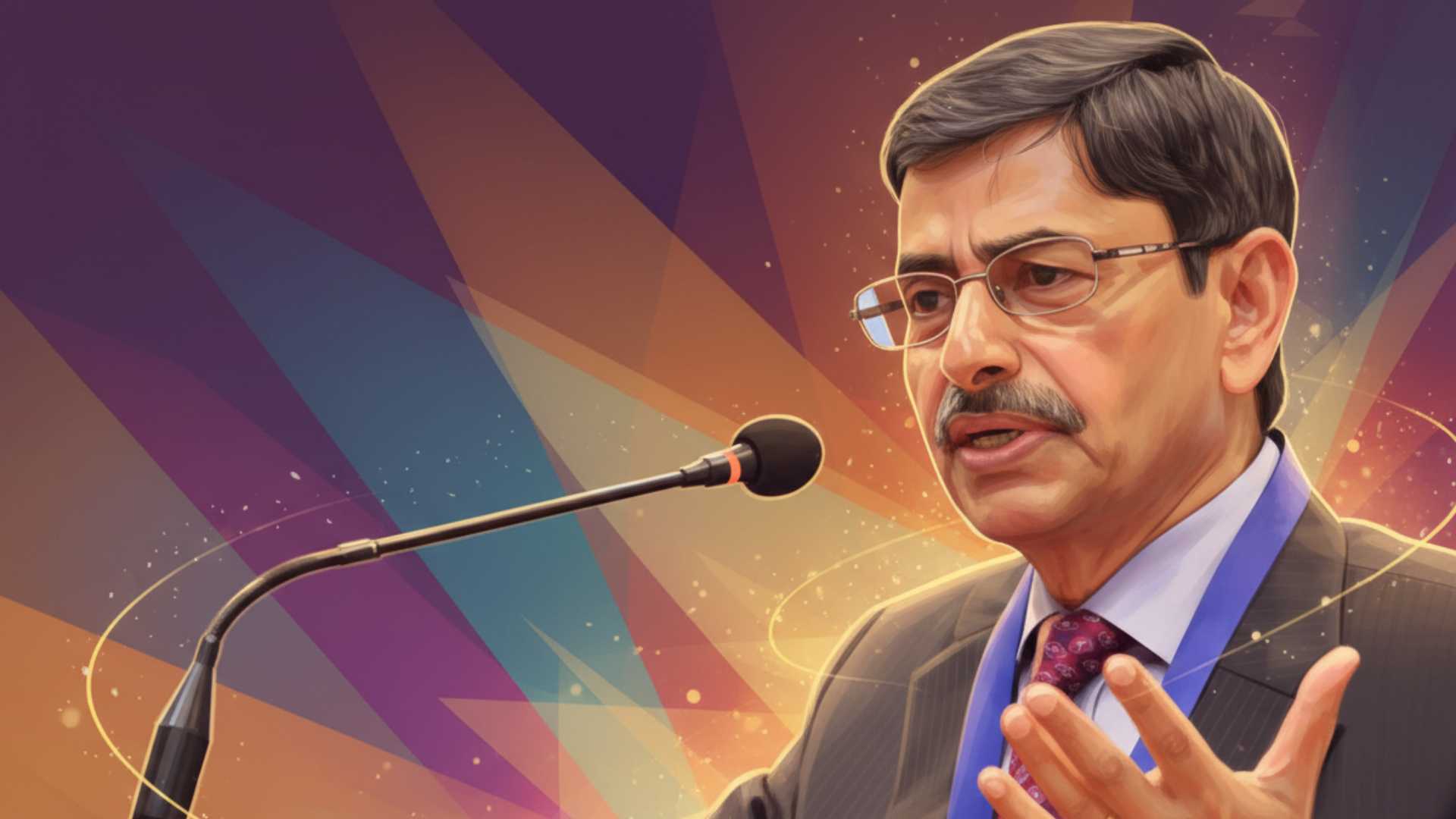
Tamil Nadu Governor R.N. Ravi Walks Out During Assembly Address

Governor's refusal to read address sparks a call for amendment to eliminate Governor's customary speech in Tamil Nadu Assembly sessions.
GopiGopi
5 mins read
Constitutional Convention Meets Political Contestation
Not Started

1. Constitutional Framework of the Governor’s Address

The Indian Constitution mandates a special address by the Governor to the State Legislature at the commencement of the first session of each year and after a general election to the Assembly. This address is not a personal speech of the Governor but a formal presentation of the elected government’s policies and priorities.

The provision reflects the parliamentary character of India’s constitutional design, where the real executive authority lies with the Council of Ministers responsible to the legislature. The Governor, as a constitutional head, acts on the aid and advice of the Council of Ministers in such matters.

The address sets the tone for legislative business and is followed by a Motion of Thanks, enabling democratic scrutiny of government policy. If this convention is disrupted, it undermines institutional predictability and legislative accountability.

If the constitutional nature of the Governor’s address is ignored, the balance between ceremonial authority and democratic legitimacy becomes blurred, weakening legislative conventions that sustain responsible government.

Article 176 of the Constitution of India mandates the Governor’s address to the State Legislature.


2. Tamil Nadu Episode: Breakdown of Constitutional Convention

In Tamil Nadu, Governor R.N. Ravi declined to read out the Cabinet-approved address and walked out of the Assembly, citing “unsubstantiated claims and misleading statements” in the speech. This marked a continuation of similar disruptions over the past three years.

The Speaker and the Chief Minister reiterated that the Governor is constitutionally bound to read the speech prepared by the elected government. The Assembly subsequently resolved to place on record only the approved text and adopted it unanimously.

The incident triggered a political response, with the State government proposing a Constitutional amendment to reconsider the practice of the Governor’s customary address. This reflects growing institutional friction rather than an isolated procedural disagreement.

When repeated deviations occur, conventions harden into conflict, converting a ceremonial constitutional function into a site of executive-legislative confrontation.

Key Facts:

  • Tamil Nadu Legislative Assembly strength: 234 elected members
  • Repeated instances over 3 years of deviation or refusal by the Governor

3. Kerala Episode: Alteration of Policy Address Text

In Kerala, Governor Rajendra Vishwanath Arlekar delivered an address that deviated from the Cabinet-approved version by omitting and modifying key paragraphs related to fiscal federalism and pending Bills.

After the Governor’s departure, the Chief Minister clarified on the floor of the House that the official version would be the Cabinet-approved speech. Both English and Malayalam copies circulated to MLAs reflected the government’s version.

The Kerala Assembly asserted its institutional precedent that the Governor’s address represents the policy of the elected government, not the discretionary views of the Governor.

Unilateral textual changes, even if subtle, can distort legislative intent and dilute the executive’s accountability to the Assembly.

Key Facts:

  • 14 Bills passed by Kerala Assembly awaiting Governor’s assent
  • First session of 2026 and final session of the 15th Kerala Assembly

4. Core Constitutional Issues Highlighted

These episodes raise fundamental questions about the role of Governors within India’s federal and parliamentary framework. The Constitution envisages Governors as neutral constitutional heads, not as parallel political authorities.

The Governor’s address is a symbolic affirmation of responsible government, where policy ownership rests with the elected executive. Any assertion of personal discretion in this function departs from settled constitutional practice.

Such actions also place the Speaker in a difficult position, forcing procedural interventions that should ordinarily be unnecessary in a mature constitutional democracy.

If constitutional roles are reinterpreted through political lenses, the credibility of neutral offices erodes, affecting inter-institutional trust.


5. Implications for Federalism and Democratic Governance

Frequent confrontations between Governors and State governments deepen Centre–State tensions, especially when Governors are perceived as political actors rather than neutral arbiters.

These disputes distract legislatures from substantive policy debates, delay legislative business, and weaken cooperative federalism. Over time, they risk normalising constitutional friction as routine governance.

The public legitimacy of constitutional offices depends on restraint and adherence to conventions, not merely on textual powers.

Ignoring these implications can convert federal checks and balances into instruments of persistent institutional deadlock.

Impacts:

  • Strain on cooperative federalism
  • Legislative time diverted from policy scrutiny
  • Precedents encouraging politicisation of constitutional offices

6. Debates on Reform and Constitutional Amendment

The Tamil Nadu government’s proposal to amend the Constitution to remove the Governor’s address reflects frustration with repeated disruptions. However, such amendments raise broader questions about whether reform should target the institution or its functioning.

Historically, constitutional experts, including former President R. Venkataraman, have questioned the utility of ceremonial addresses when conventions are not respected. Yet, abolition may also remove a platform for legislative accountability through the Motion of Thanks.

The challenge lies in balancing reform with preservation of parliamentary traditions that reinforce executive responsibility.

Reform without consensus risks weakening institutions, while inaction risks normalising constitutional defiance.


7. Way Forward: Restoring Constitutional Morality

A durable solution lies in reaffirming constitutional morality, where written provisions are guided by established conventions and restraint. Clear judicial reiteration of the Governor’s limited discretion in addresses could reduce ambiguity.

Strengthening consultative mechanisms between Raj Bhavans and State governments may prevent escalation. Additionally, codifying certain conventions through parliamentary or legislative rules could provide procedural clarity.

Ultimately, constitutional offices derive authority from neutrality and predictability, not from confrontation.

If conventions are restored and respected, the Governor’s address can return to its intended role as a democratic bridge rather than a constitutional battleground.


Conclusion

Recent developments in Tamil Nadu and Kerala highlight a growing stress on constitutional conventions governing the Governor’s address. While the Constitution provides the framework, its smooth functioning depends on adherence to parliamentary norms and federal spirit. Sustaining India’s democratic governance requires reinforcing institutional restraint, clarifying roles, and prioritising cooperative federalism over episodic confrontation.


Quick Q&A

Everything you need to know

The Governor’s address holds both constitutional and procedural significance in the functioning of State legislatures in India.

Constitutional mandate: Article 176 of the Indian Constitution requires the Governor to deliver a special address at the commencement of the first session after a general election and at the start of the first session of each year. This address outlines the policies and priorities of the State government and sets the agenda for legislative deliberations.

Procedural importance: The Governor’s speech is intended to be a formal communication of the Cabinet-approved policy framework. It allows legislators to understand government priorities and forms the basis for the Motion of Thanks debate. The speech itself is meant to be read verbatim, and members of the Assembly, not the Governor, exercise legislative opinion on its content.

Example: In Tamil Nadu (January 2026), Governor R.N. Ravi’s refusal to read the prepared speech highlighted the tension between constitutional convention and individual discretion of the Governor. Similarly, in Kerala, Governor R. Vishwanath Arlekar made unilateral edits to the Cabinet-approved speech, which the Chief Minister clarified would not alter the official policy text, reaffirming the procedural norms of legislative supremacy.

The Governor’s address has become controversial due to issues of discretion, political interference, and perceived deviations from constitutional norms.

Discretionary actions: Governors in Tamil Nadu and Kerala have at times digressed from the Cabinet-approved speech, refused to read it, or edited sections, leading to political disputes. For example, in Tamil Nadu (January 2026), Governor R.N. Ravi walked out instead of reading the speech, citing unsubstantiated claims, while in Kerala, Governor Arlekar altered paragraphs of the policy speech.

Political implications: Such actions can be perceived as undermining the elected government’s policy priorities and legislative supremacy. The Chief Ministers in both States emphasized that only Cabinet-approved versions should be considered official, highlighting the tension between gubernatorial discretion and democratic accountability.

Significance: These controversies underscore the need for clarity in constitutional conventions regarding the Governor’s role. They also prompt discussions about possible amendments to streamline the practice, ensuring it serves the legislative process rather than creating political friction.

The recent actions of Governors in Tamil Nadu and Kerala illustrate the delicate balance of power between the State executive and legislature.

Role of the Governor: The Governor acts as the constitutional head and a link between the Union and the State government. However, their actions must conform to the advice of the elected Council of Ministers and follow procedural norms. Deviations from approved policy addresses, as seen in both States, can create friction and challenge the principle of legislative supremacy.

Legislative response: The State legislatures asserted their authority by adopting resolutions and clarifying that only Cabinet-approved speeches are official. In Tamil Nadu, the Assembly unanimously supported the CM’s resolution, while in Kerala, the CM publicly clarified the official text. These actions reinforce the legislature’s primacy in policymaking and ensure that the Governor’s discretion does not override elected government decisions.

Implications: These instances highlight the constitutional principle that while the Governor has ceremonial duties, the elected government and legislature hold the ultimate policymaking authority. It reinforces the need for clear conventions and communication to prevent institutional conflicts.

Governors may deviate from or alter Cabinet-approved speeches due to political, administrative, or personal considerations.

Political differences: In States where the ruling party differs from the Union government’s ideology, Governors may attempt to highlight issues, critique policies, or emphasize concerns, as seen with R.N. Ravi in Tamil Nadu, citing unsubstantiated claims in the prepared speech.

Administrative discretion: Governors may perceive certain sections of the speech as factually incorrect, misleading, or neglectful of specific constitutional obligations, prompting them to modify or skip portions. In Kerala, Governor Arlekar changed paragraphs to express personal views on fiscal matters.

Constitutional ambiguity: The Constitution grants Governors discretion, but it does not explicitly limit deviations from approved speeches. This gray area can lead to friction between the ceremonial role of the Governor and the executive authority of the elected government.

Implications: Such deviations challenge established norms and often provoke debates on whether legislative supremacy or gubernatorial discretion should prevail, underscoring the need for formal conventions or legislative amendments.

Governors altering or refusing to read policy addresses can have both symbolic and practical implications for democratic governance.

Impact on legislative process: The Governor’s speech sets the legislative agenda and frames the Motion of Thanks debate. Deviations or refusals disrupt procedural norms and create uncertainty regarding official policy positions. For instance, Tamil Nadu’s Governor walked out, creating procedural ambiguity, while Kerala’s Governor edited paragraphs, prompting public clarification by the CM.

Political ramifications: Such actions may be perceived as interference by the Union-appointed Governor in State governance, potentially undermining the authority of the elected government. This can exacerbate political tensions and erode public trust in constitutional institutions.

Democratic principles: While the Governor is expected to act impartially, deviations highlight ambiguities in the balance between ceremonial authority and legislative supremacy. These events underscore the need for formal conventions, possibly including amendments, to ensure that the Governor’s role enhances, rather than complicates, democratic governance and respects federal principles.

The recent incidents in Tamil Nadu and Kerala provide important lessons on the constitutional and political role of Governors in State legislatures.

Lesson 1 – Clarity of conventions: Constitutional provisions like Article 176 mandate the Governor’s address, but do not clearly limit deviations. Clearer procedural conventions or legislative guidelines could prevent conflicts, ensuring that Governors present Cabinet-approved policy content without personal digressions.

Lesson 2 – Legislative supremacy: Both cases reaffirm that the elected government and Assembly hold the ultimate authority in policymaking. Tamil Nadu’s Assembly passed a resolution to officially adopt the Cabinet-approved speech, while Kerala’s CM clarified the official version, demonstrating mechanisms to safeguard legislative supremacy.

Lesson 3 – Conflict resolution: These cases illustrate the importance of structured communication and prior coordination between the Governor and State government. Adhering to formal protocols can prevent public controversies, maintain institutional trust, and uphold the integrity of parliamentary procedures.

Broader implications: The events emphasize that while Governors have a ceremonial role, their actions must respect democratic norms and reinforce, rather than challenge, the policy authority of elected governments. These lessons could inform potential reforms and standard operating procedures for Governors across India.

Potential conflicts can be mitigated through legal, procedural, and administrative measures.

Legal clarity: Constitutional amendments or detailed guidelines could codify the Governor’s role in reading Cabinet-approved speeches, limiting personal edits or digressions. Clear statutory language can define procedural boundaries while preserving ceremonial duties.

Procedural coordination: Prior consultation between the Governor’s office and State Cabinet ensures alignment on speech content. Sharing drafts well in advance and establishing formal review mechanisms can reduce misunderstandings.

Administrative measures: Assembly procedures can be reinforced to ensure that official records only include Cabinet-approved versions. This includes controlling microphones, official distribution of copies, and clarifying the Motion of Thanks debate’s scope.

Example: In Kerala, despite edits by the Governor, the Chief Minister and Speaker confirmed that the Cabinet-approved speech would prevail. Such proactive clarification can prevent institutional friction and maintain the legitimacy of legislative processes.

Attribution

Original content sources and authors

Sign in to track your reading progress

Comments (0)

Please sign in to comment

No comments yet. Be the first to comment!