Introduction
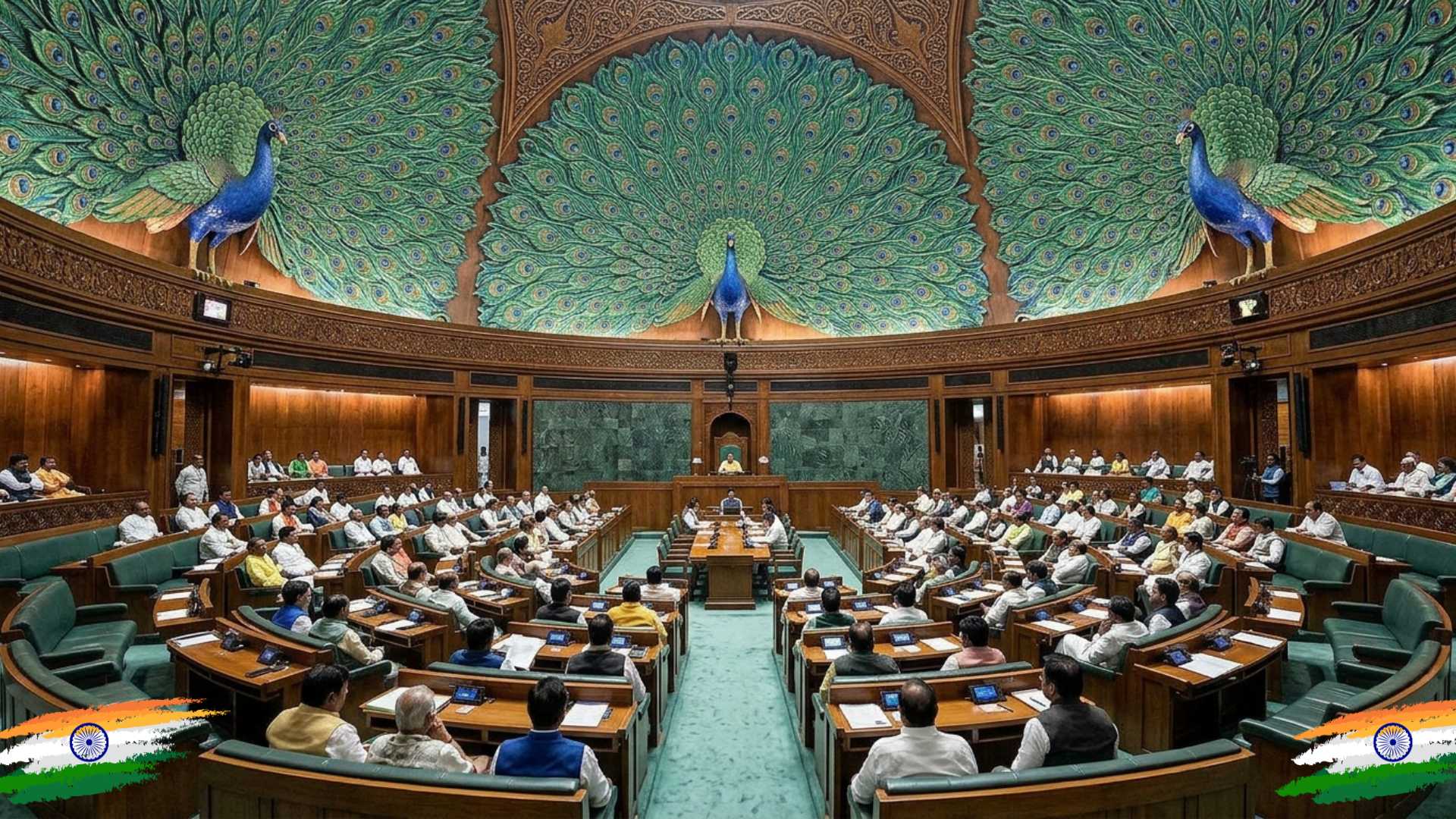
Parliamentary control over public finance is the cornerstone of democratic governance — rooted in the principle that no taxation without representation. India's Constitution mandates legislative approval for every rupee the executive spends. Yet on March 18, 2026, the Lok Sabha passed Demands for Grants worth over ₹53 lakh crore for most Ministries without a single minute of debate, by invoking the guillotine procedure. This raises a fundamental question: is India's legislature fulfilling its constitutional role as a financial watchdog, or has it become a rubber stamp for executive expenditure?
"The budget is not merely a financial statement; it is a statement of the government's priorities, values and vision — and Parliament's role is to hold that vision accountable." — Jawaharlal Nehru (Constituent Assembly Debates)
Constitutional & Legal Framework
| Constitutional Provision | Content | Significance |
|---|---|---|
| Article 112 | Government must lay Annual Financial Statement before Parliament | Legal basis of the Union Budget |
| Article 113 | Demands for Grants submitted to Lok Sabha for approval, reduction, or rejection | Rajya Sabha has no voting power on money matters |
| Article 114 | No withdrawal from Consolidated Fund without Appropriation Act | Makes parliamentary approval constitutionally indispensable |
| Rule 214, Lok Sabha Rules | Outstanding Demands put to vote without debate at fixed deadline | Statutory basis of the guillotine procedure |
Core Principle: The founding intent was unambiguous — the executive must justify every expenditure before elected representatives. Financial control is Parliament's most powerful democratic function.
What Is the Guillotine? — Concept & Character
Under Rule 214 of the Lok Sabha Rules of Procedure, all outstanding Demands for Grants not discussed by a fixed deadline are collectively put to vote — without debate, without scrutiny, without ministerial accountability. The term "guillotine" is deliberately evocative: like its namesake, it is swift, indiscriminate, and final.
"The guillotine is the parliamentary equivalent of signing a blank cheque — the government gets the money, but no one asks what it will be spent on." — N. Gopalaswami, Former Chief Election Commissioner (on parliamentary reform)
| Feature | Detail |
|---|---|
| Rule | Rule 214, Lok Sabha Rules of Procedure |
| Trigger | Unfinished Demands for Grants at session deadline |
| Effect | Collective vote without debate |
| Frequency | Used every budget session — not an exception but the norm |
| 2026 Instance | ~100 Demands for Grants; only Agriculture & Railways debated |
| Amount Guillotined (2026) | Over ₹53 lakh crore approved without discussion |
Historical & Comparative Context
| Parameter | Early Parliament (1950s–60s) | Present Day |
|---|---|---|
| Budget Session Duration | Extended — weeks of Ministry-wise debate | Compressed — guillotine applied to most Ministries |
| Culture of Scrutiny | Robust; Finance Ministers faced granular questioning | Declining; political disruptions consume deliberative time |
| Committee Utilisation | Limited but debates were floor-based | Committees exist but recommendations rarely debated on floor |
| Days Parliament Sits (Annual Avg.) | ~120–130 days | ~60–70 days |
| UK Parliament (Comparative) | — | ~150+ sitting days; detailed committee-led scrutiny |
"Parliament's declining role in financial oversight is one of the most serious threats to Indian democracy that goes largely undiscussed." — PRS Legislative Research, Annual Report on Parliamentary Functioning
In India's early Parliament, Nehru's governments faced serious scrutiny on Five-Year Plan allocations. The guillotine was meant to close extended debates — not to substitute for debate entirely. That original intent has been completely inverted.
Consequences of the Guillotine — Why It Matters
| Consequence | Explanation |
|---|---|
| No Ministerial Accountability | Ministers not required to explain past fund utilisation or future deployment plans |
| Cut Motions Eliminated | Policy Cut, Economy Cut, Token Cut — Parliament's key expenditure tools — become unavailable |
| Approval Becomes Ceremonial | Constitutional requirement reduced to a formality; democratic substance hollowed out |
| Opposition Silenced | Legislature's scrutiny role — its primary constitutional function — is suspended for most Ministries |
| Uninformed Appropriation | Billions approved without any deliberation on programme outcomes or implementation gaps |
The Three Cut Motions — A Quick Reference
| Type of Cut Motion | Purpose | Nature |
|---|---|---|
| Policy Cut | Disapproval of the policy underlying the demand | Amount reduced to ₹1 |
| Economy Cut | Seeks reduction in expenditure by a specific amount | Specifies the amount of reduction |
| Token Cut | Ventilates a specific grievance against the government | Amount reduced by ₹100 |
"Cut motions are the Opposition's most potent constitutional weapon against executive excess — the guillotine disarms them completely." — Subhash Kashyap, Former Secretary-General, Lok Sabha
Structural Causes: Why Does the Guillotine Dominate?
| Structural Problem | Detail |
|---|---|
| Short Session Duration | India averages 60–70 parliamentary sitting days/year vs. 150+ in UK |
| Disruptions & Adjournments | Political walkouts consume time reserved for financial scrutiny |
| Weak Committee Culture | DRSCs submit reports on Demands; but floor debate rarely follows |
| High Volume of Business | ~100 Demands for Grants impossible to debate fully in plenary without structural reform |
| No Fixed Legislative Calendar | Session schedules driven by executive convenience, not legislative necessity |
"We have the form of parliamentary government without its substance. The real decisions are made elsewhere; Parliament merely ratifies them." — Granville Austin, Constitutional historian, Working a Democratic Constitution
What Was Debated vs. What Was Not — 2026 Budget Session
| Ministry | Debated? | Rationale |
|---|---|---|
| Agriculture | ✅ Yes | High political salience — MSP, farm distress, natural farming |
| Railways | ✅ Yes | Historically flagship parliamentary discussion |
| Health | ❌ No — Guillotined | Despite post-COVID infrastructure gaps |
| Education | ❌ No — Guillotined | Despite NEP 2020 implementation concerns |
| Defence | ❌ No — Guillotined | Despite border security imperatives |
| Environment | ❌ No — Guillotined | Despite climate commitments and green transition |
| Tribal Affairs | ❌ No — Guillotined | Despite persistent welfare delivery gaps |
This selectivity reveals a troubling reality: parliamentary discussion in budget sessions is governed by political optics, not systematic financial scrutiny.
Reform Perspectives
| Reform Measure | Mechanism | Expected Outcome |
|---|---|---|
| Mandatory Committee Engagement | Ministers formally respond to DRSC reports before voting | Accountability without extending floor time |
| Pre-Budget Parliamentary Consultations | Committees engage Finance Ministry during budget formulation | Legislative input embedded early |
| Fixed Legislative Calendar | Constitutional or statutory mandate for session duration | Adequate time for scrutiny; reduces guillotine dependence |
| PAC Findings in Budget Debate | Public Accounts Committee reports linked to new allocations | Past performance informs future spending |
| Hybrid Scrutiny Model | Floor debate for major Ministries; committee scrutiny for rest | Balances efficiency with accountability |
"Parliamentary committees are the microscopes of democracy — they allow detailed examination that the floor of the House, with its theatre and noise, cannot." — Ram Nath Kovind, Former President of India
Second ARC Recommendation: Strengthen parliamentary oversight mechanisms, including greater integration of PAC and Standing Committee findings into budget deliberations.
Conclusion
The guillotine procedure, taken in isolation, is a procedural necessity born of calendar constraints. Taken in context — of shrinking session days, declining deliberative culture, and a legislature that increasingly defers to the executive — it becomes a symptom of a deeper democratic deficit. India's Parliament was designed by the Constitution to be the supreme financial authority of the republic.
"A Parliament that does not control the purse does not control the government." — B.R. Ambedkar (paraphrased from Constituent Assembly Debates on financial provisions)
When ₹53 lakh crore is approved without scrutiny, that authority exists on paper alone. Restoring meaningful parliamentary control over public expenditure demands structural reform: longer sessions, mandatory committee engagement, and a political culture that treats financial oversight not as obstruction, but as the foundational duty of elected representatives. The quality of Indian democracy will, in no small measure, be determined by whether its Parliament reclaims this function.