1. Context: Motion of Thanks and Parliamentary Convention
The motion of thanks to the President’s address is a foundational parliamentary practice through which the executive outlines its policy priorities and is held accountable by the legislature. Conventionally, this debate concludes with a reply by the Prime Minister, as the Leader of the House, responding to issues raised by Members of Parliament.
On February 5, the Lok Sabha adopted the motion of thanks without the Prime Minister’s reply, marking a significant departure from established parliamentary convention. Such deviations are rare because the reply symbolises executive accountability to the elected House.
The Lok Sabha Speaker’s explanation — citing intelligence inputs about possible “unexpected” actions by Opposition MPs — raised serious concerns. The implication that the Prime Minister could not safely address Parliament undermines the dignity of the House and the principle of legislative sovereignty.
If such practices become normalised, Parliament risks being reduced from a forum of accountability to a procedural formality, weakening democratic governance.
In constitutional practice, conventions fill gaps where rules are silent; ignoring them erodes trust, predictability, and institutional legitimacy.
2. Issue: Curtailment of Debate and Executive Accountability
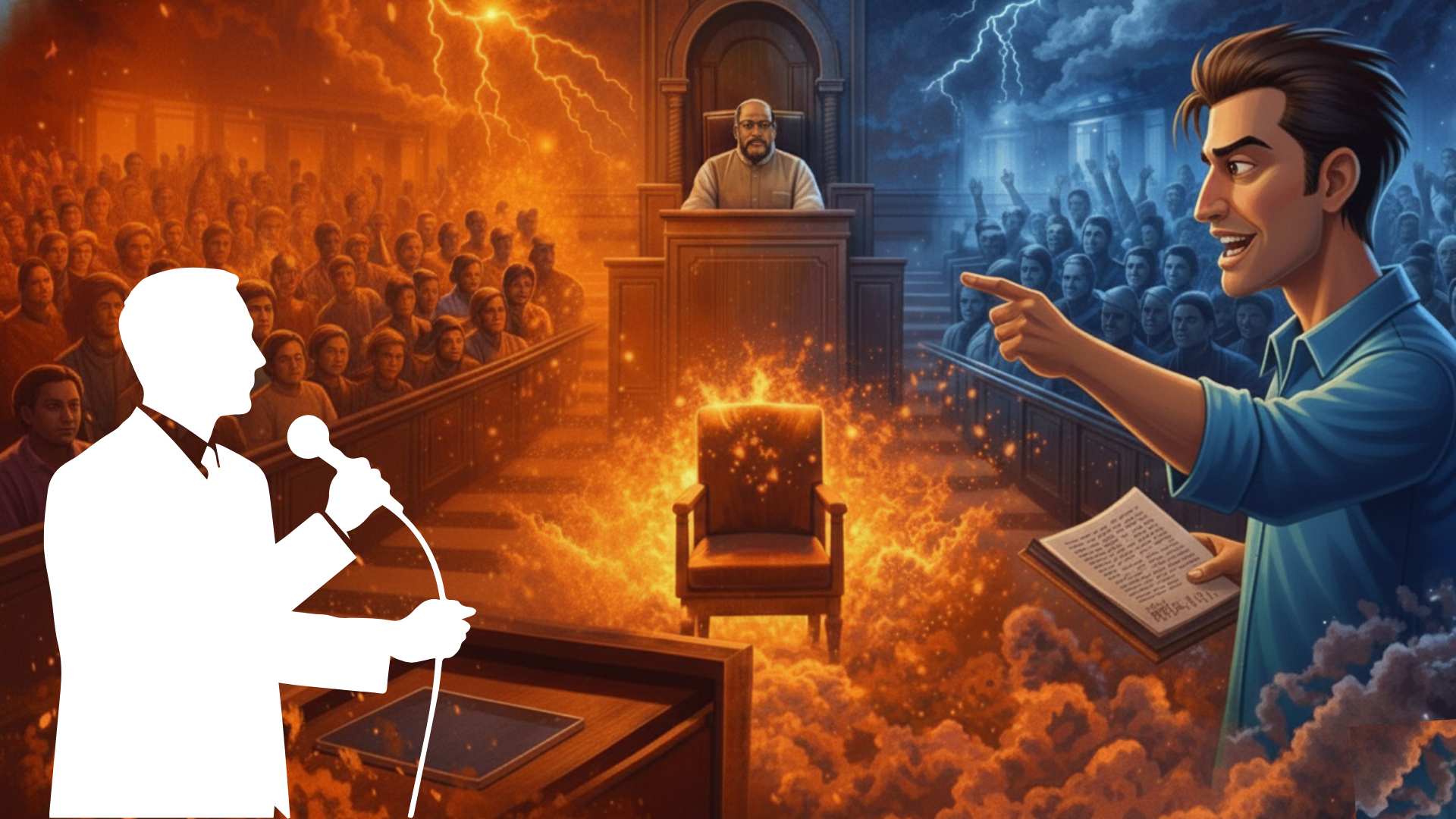
The immediate controversy arose after the Leader of the Opposition (LoP), Rahul Gandhi, was disallowed from citing excerpts from a book by former Army Chief General M.M. Naravane during the debate. The Chair did not permit the reference, despite the LoP’s willingness to authenticate and place the material on record.
Simultaneously, the Prime Minister chose not to respond to the debate. The combination of restricting the Opposition’s speech and the executive’s absence disrupted the deliberative balance central to parliamentary democracy.
Parliamentary rules stipulate that if a debate on the motion of thanks is to conclude without the Prime Minister’s reply, a specific resolution must be moved and adopted. This procedural safeguard was not followed.
Such developments reflect not merely procedural lapses but a deeper weakening of the mechanisms through which Parliament scrutinises executive action.
Accountability requires both the right to question and the obligation to answer; removing either hollows out legislative oversight.
3. Context: Role of Debate in Democratic Governance
Debate on the President’s address allows elected representatives to raise concerns on governance, policy direction, and national security. The Prime Minister’s reply serves as the formal closure, ensuring that criticisms and questions receive authoritative responses.
The book referenced by the LoP reportedly raised issues of national security decision-making. Preventing discussion on such matters denies Parliament its role as the supreme deliberative body.
When elected members are denied space to speak and the executive avoids reply, the House is deprived of both contestation and clarification. This weakens informed lawmaking and public accountability.
If sensitive issues are systematically excluded from parliamentary debate, democratic oversight over executive power diminishes.
Parliamentary debate is not disruption; it is the constitutional method for resolving disagreement and ensuring transparency.
4. Implications: Erosion of Parliamentary Norms
Departing from convention without transparent justification sets problematic precedents. It allows executive convenience or political calculation to override institutional discipline.
The Speaker’s reasoning, suggesting a threat from fellow MPs, risks politicising the Chair’s neutrality — a cornerstone of parliamentary functioning.
Repeated dilution of norms can cumulatively weaken Parliament’s authority, shifting power further towards the executive and away from collective deliberation.
Impacts:
- Weakening of executive accountability
- Curtailment of Opposition’s deliberative role
- Precedents that normalise bypassing parliamentary convention
Once conventions erode, restoring them becomes harder than preserving them.
“Constitutional morality is not a natural sentiment; it has to be cultivated.” — B.R. Ambedkar
5. Way Forward: Restoring Institutional Balance
Parliamentary authorities must reaffirm established conventions, particularly those governing debates on the President’s address. Procedural deviations should be rare, rule-bound, and transparently justified.
The Speaker’s role as an impartial guardian of the House must be reinforced through consistent application of rules, irrespective of political context.
The executive, especially the Prime Minister as Leader of the House, must visibly engage with Parliament to sustain democratic legitimacy.
Reforms:
- Strict adherence to rules governing the motion of thanks
- Clear criteria for disallowing references during debate
- Reinforcing the Speaker’s neutrality through convention and practice
Strong institutions depend less on personalities and more on respect for norms.
“Democracy is government by discussion.” — B.R. Ambedkar
Conclusion
The adoption of the motion of thanks without the Prime Minister’s reply highlights a troubling departure from parliamentary convention and accountability. For India’s democracy, the episode underscores the importance of preserving institutional norms that balance executive authority with legislative scrutiny. Upholding these conventions is essential to maintain Parliament’s role as the central forum of democratic governance.