Declining Parliamentary Sittings and Legislative Deliberation in India
1. Context: Shrinking Time of the Legislature
India’s Parliament, the supreme legislative body and a core pillar of constitutional democracy, has witnessed a steady decline in the number of sittings over the decades. The 15-day Winter Session (December 1–19, 2025) has reignited debate on the weakening of parliamentary functioning and executive–legislative relations. With only 62 sittings in 2025, Parliament recorded one of its lowest annual working days in independent India.
This trend is significant because parliamentary time is not merely procedural. It determines the quality of law-making, the depth of budgetary scrutiny, and the robustness of executive accountability. A reduction in sittings directly narrows the space for democratic deliberation and oversight.
2. Long-Term Trend in Parliamentary Sittings
Historically, Parliament met for substantially longer durations, reflecting a culture of debate and scrutiny. Over time, sittings have declined sharply, especially in the last decade.
- First Lok Sabha (1952–57): 677 sittings (≈ 135 days/year)
- Second Lok Sabha (1957–62): 581 sittings (≈ 116 days/year)
- 10th Lok Sabha (1991–96): 423 sittings (≈ 84.6 days/year)
- 13th Lok Sabha (1999–2004): 356 sittings (≈ 71 days/year)
- 15th Lok Sabha (2009–14): 356 sittings (≈ 71 days/year)
- 16th Lok Sabha (2014–19): 331 sittings (≈ 66 days/year)
- 17th Lok Sabha (2019–24): 274 sittings (≈ 55 days/year)
The 17th Lok Sabha became the shortest full-term House since 1952, signalling a structural contraction of legislative time rather than a one-off disruption.
3. Implications for Parliamentary Functions
Parliament performs four constitutionally vital functions: law-making, budget approval, executive accountability, and articulation of public concerns. Reduced sittings undermine all four simultaneously.
When sessions are truncated, fewer issues reach the floor, fewer Bills receive scrutiny, and accountability mechanisms such as Question Hour are weakened. Over time, this shifts the balance of power in favour of the executive, diminishing Parliament’s role as a deliberative institution.
4. Quality of Law-Making and Legislative Debate
A major consequence of fewer sittings is the hurried passage of legislation. In the 17th Lok Sabha, 58% of Bills (out of 179) were passed within two weeks of introduction, and 35% of them were debated for less than one hour. In the Rajya Sabha, the corresponding figure was 34%.
By contrast, the 16th Lok Sabha showed relatively better deliberation, with 32% of Bills discussed for more than three hours, compared to 22% in the 15th and 14% in the 14th Lok Sabha. This decline indicates reduced opportunities for MPs to examine legal infirmities, stakeholder concerns, and implementation challenges.
5. Constitutional Implications of Reduced Debate
Article 107 of the Constitution requires that both Houses “agree” to a Bill. The emphasis on agreement implies informed consent, which is difficult without adequate discussion. When Bills are passed amid disruptions or minimal debate, Parliament risks diluting its constitutional responsibility of informed law-making.
Thus, the decline in sittings is not only procedural but also constitutional in nature, affecting the spirit of bicameralism and legislative scrutiny.
6. Decline in Committee Scrutiny
Parliamentary Standing Committees, established in 1993, are critical for expert evaluation of Bills. However, their role has diminished sharply.
- 17th Lok Sabha: Only 16% of Bills referred to committees
- 16th Lok Sabha: 27%
- 15th Lok Sabha: 71%
- 14th Lok Sabha: 60%
Since 2004, only 45% of Bills introduced have been referred to committees. This erosion removes a crucial layer of non-partisan, evidence-based scrutiny, increasing the risk of poorly drafted or inadequately vetted legislation.
7. Accountability Mechanisms: Question Hour and Budget Scrutiny
The effectiveness of Question Hour, a primary accountability tool, has declined due to disruptions and curtailed sittings. In the 17th Lok Sabha, Question Hour functioned for only 60% of scheduled time, while the Rajya Sabha functioned for 52%. Budget scrutiny has also weakened, with around 80% of the Union Budget (2019–23) being passed without discussion. In 2023, the entire Budget was approved without debate.
These trends collectively weaken financial oversight and reduce Parliament’s control over public expenditure.
8. Political Polarisation and Parliamentary Disruptions
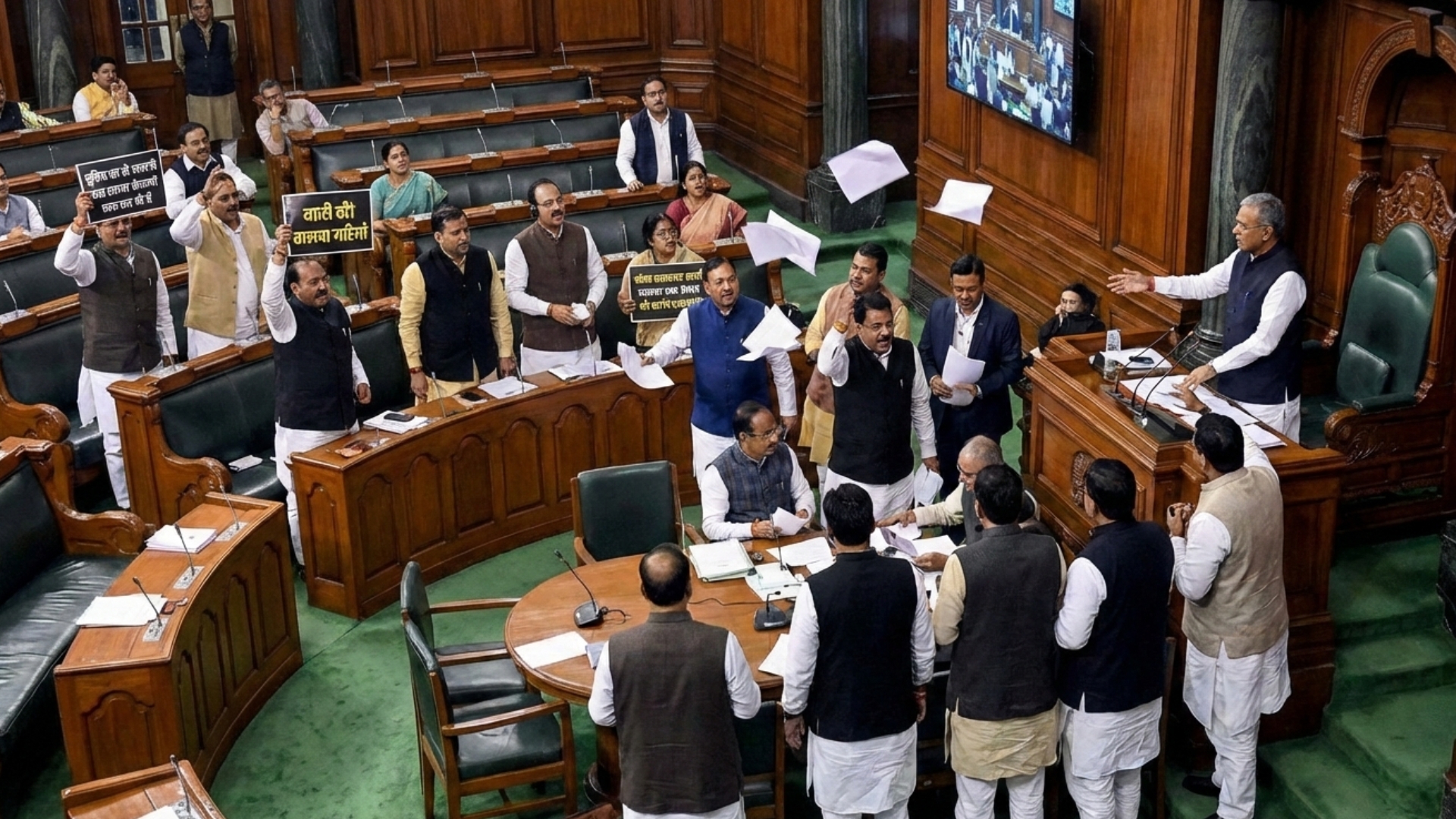
Deepening mistrust between the ruling party and the opposition has contributed to frequent disruptions and suspensions. During the 17th Lok Sabha, MPs were suspended on 206 occasions, including 146 suspensions in the Winter Session of 2023 alone.
When opposition voices are perceived as procedural obstacles rather than legitimate participants, Parliament’s deliberative ethos suffers. While obstruction is not desirable, the responsibility to ensure smooth functioning lies primarily with the government, which controls the parliamentary agenda.
9. Comparative Perspective and Reform Proposals
In many mature democracies, legislatures operate on fixed annual calendars, sitting for 120–150 days a year. India lacks such predictability. Recognising this gap, private members’ Bills have proposed a statutory minimum of 100–120 sittings per year with a fixed calendar.
Regular sittings institutionalise debate, reduce ad hocism, and prevent legislative business from being rushed into short sessions.
10. Way Forward: Restoring Parliamentary Centrality
Reviving Parliament’s effectiveness requires both procedural and political commitment. Predictable sittings, adequate time for debate, mandatory committee scrutiny for major Bills, and respect for opposition viewpoints are essential to restore institutional balance. Parliament functions best not through unanimity, but through structured disagreement anchored in constitutional norms.
Conclusion
The decline in parliamentary sittings reflects a deeper erosion of deliberative democracy in India. If unaddressed, it risks normalising executive dominance and weakening constitutional accountability. Strengthening Parliament is therefore not a partisan concern but a prerequisite for democratic sustainability and high-quality governance.