GS2 Indian Constitution

Tamil Nadu Speaker upholds fairness in defection case

Speaker’s Role, Anti-Defection Law and Constitutional Morality: Lessons from Tamil Nadu

Examining the Tamil Nadu Speaker's decision on AIADMK MLAs and the implications for democratic integrity.
Dhinesh Balasubramanian Dhinesh Balasubramanian
4 mins read

β€œThe success of the anti-defection law depends not only on constitutional provisions but also on the impartiality of the Speaker.”

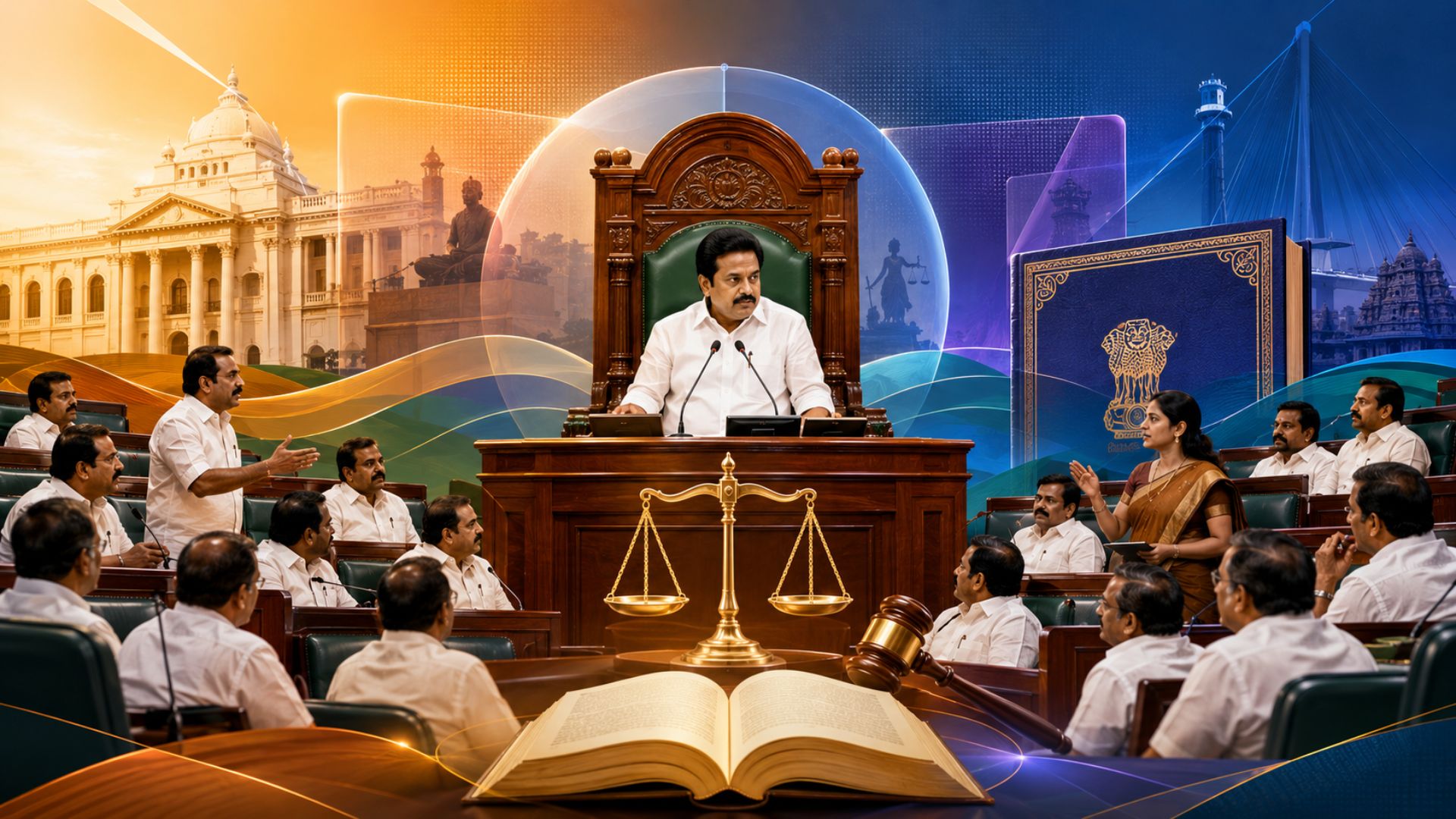
The recent decision of the Tamil Nadu Legislative Assembly Speaker, J.C.D. Prabhakar, not to proceed with disqualification proceedings against 21 rebel AIADMK MLAs has reignited discussions on the functioning of the Anti-Defection Law, the powers of the Speaker, and the importance of constitutional morality in parliamentary democracy.

Background of the Issue

During a trust vote on May 13, several AIADMK legislators voted in favour of the TVK-led government, defying the party whip.

Sequence of Events

EventDetails
Trust VoteMay 13
AIADMK MLAs who violated whip25
MLAs who later resigned4
MLAs covered by Speaker's decision21
Reconciliation within AIADMKMay 27
Condonation by party leadershipWithin 15 days

AIADMK General Secretary Edappadi K. Palaniswami later condoned the actions of the dissident legislators and formally informed the Speaker.

What Does the Anti-Defection Law Say?

The Tenth Schedule of the Constitution seeks to prevent political defections.

A legislator may face disqualification if:

  • They voluntarily give up party membership.
  • They vote or abstain contrary to the party whip.
  • The party does not condone such action within the prescribed period.
Violation of Party Whip
          ↓
Party Complaint
          ↓
Speaker's Examination
          ↓
Condonation by Party?
      ↙          β†˜
    Yes           No
     ↓             ↓
No Disqualification  Possible Disqualification

In this case, the party leadership chose to condone the violation, leading the Speaker to drop proceedings against 21 legislators.

Why Is the Decision Significant?

Upholding Constitutional Morality

The Speaker acted based on:

  • Party condonation.
  • Constitutional provisions.
  • Assembly disqualification rules.

This avoided the use of disqualification proceedings as a political tool.

Demonstration of Impartiality

The Speaker had earlier assured that his decision would reflect neutrality.

Given that:

  • AIADMK is politically opposed to the ruling TVK.
  • Tamil Nadu has witnessed allegations of partisan Speaker decisions in the past.

The decision has been viewed as a demonstration of institutional fairness.

Historical Concerns Regarding Speaker's Powers

The office of the Speaker occupies a critical constitutional position.

However, concerns have emerged over the years regarding:

  • Delay in deciding disqualification petitions.
  • Political considerations influencing decisions.
  • Broad discretionary powers under the Tenth Schedule.

A frequently cited example is former Speaker P.H. Pandian's assertion that the Speaker possessed "sky-high powers".

Tenth Schedule
       ↓
Discretionary Powers
       ↓
Need for Neutrality
       ↓
Protection of Democratic Principles

The present case is viewed as a departure from such controversies.

The Issue of the Four Resigned MLAs

While proceedings against 21 legislators were dropped, questions remain regarding four MLAs who resigned after violating the whip.

Argument Raised

Some constitutional observers argue that:

  • Disqualification proceedings should have been initiated first.
  • Resignation should have been considered thereafter.

This is because resignation may otherwise allow legislators to avoid scrutiny under anti-defection provisions.

Practical Limitation

However:

  • Their seats have already been declared vacant.
  • Election authorities have begun the process for by-elections.
  • The practical impact is limited.
Resignation
      ↓
Vacancy Notification
      ↓
By-Election Process

Disqualification
      ↓
Restriction on Becoming Minister
Until Re-elected

Thus, the remaining proceedings may largely be technical in nature.

Broader Constitutional Lessons

The episode highlights:

  • Importance of party condonation provisions.
  • Need for impartial Speakers.
  • Proper application of the Tenth Schedule.
  • Balance between party discipline and legislative autonomy.
  • Significance of constitutional morality over political expediency.

Way Forward

  • Ensure time-bound decisions on disqualification petitions.
  • Strengthen institutional neutrality of Speakers.
  • Establish clearer guidelines for handling resignation during pending defection cases.
  • Promote greater transparency in anti-defection proceedings.
  • Revisit recommendations for independent adjudication of defection cases.

Conclusion

The Tamil Nadu Speaker's decision demonstrates the importance of impartial constitutional functioning in a parliamentary democracy. By respecting the condonation provided under the Tenth Schedule and avoiding politically motivated action, the Speaker has reinforced constitutional morality and democratic fairness. The episode also highlights the continuing need to refine the anti-defection framework to ensure both accountability and institutional neutrality.

Attribution

Original content sources and authors

Author Dhinesh Balasubramanian
The Hindu Source The Hindu

Syllabus classification

How this article maps to GS papers

Main syllabus

GS2Indian Constitution

Quick Q&A

What is the anti-defection law under the Tenth Schedule and what is its significance in India's parliamentary democracy?
The anti-defection law, incorporated through the 52nd Constitutional Amendment Act, 1985, inserted the Tenth Schedule into the Constitution to address the growing menace of political defections. The law aims to promote political stability, maintain party discipline, and prevent elected representatives from switching loyalties for personal or political gain. It was enacted in response to the phenomenon of 'Aaya Ram, Gaya Ram', which became synonymous with frequent defections during the 1960s and 1970s. Under the Tenth Schedule, legislators can be disqualified if they voluntarily give up party membership or vote contrary to the party whip without prior permission. However, the party leadership may condone such actions within a specified period, thereby preventing disqualification. The Speaker or Chairman of the House acts as the adjudicating authority in such matters. In the recent Tamil Nadu case, AIADMK MLAs voted against the party whip during a trust vote in favour of the TVK-led government. Subsequently, party leader Edappadi K. Palaniswami condoned the actions of 21 legislators within the stipulated period, leading the Speaker to drop disqualification proceedings. The anti-defection law has contributed to governmental stability but has also attracted criticism for restricting the freedom of legislators and strengthening party leadership at the expense of deliberative democracy. Several expert bodies, including the Dinesh Goswami Committee and Law Commission, have recommended reforms. For UPSC, the issue is relevant to GS-II topics relating to Parliament, State Legislatures, constitutional amendments, and political reforms. It also raises questions regarding constitutional morality, democratic accountability, and the balance between party discipline and representative freedom.
Why is the role of the Speaker in disqualification proceedings considered crucial and controversial in Indian constitutional practice?
The Speaker occupies a pivotal constitutional position because he or she acts as the adjudicating authority under the Tenth Schedule in cases involving defection and disqualification. Although the office is expected to function impartially, several controversies have arisen due to allegations of partisan behaviour by Speakers in different States. The Supreme Court in Kihoto Hollohan v. Zachillhu (1992) upheld the constitutional validity of the anti-defection law while making the Speaker's decisions subject to judicial review. Despite this safeguard, delays and selective decisions by Speakers have often influenced political outcomes. Historically, controversies have emerged in Karnataka, Maharashtra, Manipur, Arunachal Pradesh, and other States where disqualification proceedings became entangled with government formation and coalition politics. Critics argue that Speakers frequently act according to political considerations rather than constitutional principles. The Tamil Nadu episode assumes significance because Speaker J.C.D. Prabhakar's decision to drop proceedings against 21 AIADMK MLAs, after receiving a formal condonation from the party leadership, has been viewed as an example of impartiality and adherence to constitutional morality. This is particularly notable because Tamil Nadu has witnessed accusations of partisan conduct in the past, including the tenure of former Speaker P.H. Pandian, who famously described the Speaker's authority as possessing 'sky-high powers'. The controversy highlights the tension between legal discretion and political neutrality. Many constitutional experts have advocated transferring adjudicatory powers to independent institutions or tribunals. For UPSC aspirants, this issue is highly relevant to GS-II topics relating to constitutional bodies, separation of powers, accountability, and judicial review. It also illustrates the importance of institutional integrity in sustaining democratic governance.
How does the process of disqualification under the Tenth Schedule operate and what role does party condonation play in such cases?
The Tenth Schedule lays down the procedure for disqualifying legislators who defect from their political parties. A member may be disqualified if he or she voluntarily gives up party membership or votes against the party whip without obtaining prior approval. The process generally begins when a petition seeking disqualification is submitted to the Speaker or Chairman of the concerned House. Once the petition is received, the Speaker examines the facts, seeks explanations from the concerned members, and determines whether the conduct amounts to defection. The decision of the Speaker is subject to judicial review following the Supreme Court's judgment in Kihoto Hollohan v. Zachillhu (1992). An important safeguard under the law is the provision for condonation. If the party leadership condones the legislator's actions within the prescribed time period, the member can avoid disqualification. This provision recognizes the importance of internal party reconciliation and political realities. In the Tamil Nadu case, 25 AIADMK legislators had voted against the party whip by supporting the TVK-led government during the trust vote. However, four legislators resigned, leaving 21 members. AIADMK General Secretary Edappadi K. Palaniswami formally condoned the actions of these 21 MLAs within 15 days, enabling Speaker J.C.D. Prabhakar to discontinue disqualification proceedings. The process demonstrates the interplay between constitutional provisions and political negotiations. It also reveals the flexibility built into the anti-defection framework. For UPSC preparation, understanding this mechanism is relevant to GS-II topics concerning constitutional provisions, political processes, legislative procedures, and governance. It is frequently discussed in relation to judicial review, party democracy, and electoral reforms.
Critically analyse the strengths and limitations of the anti-defection law in preserving democratic stability and constitutional morality.
The anti-defection law was introduced to combat political instability caused by frequent defections and opportunistic alliances. By ensuring party discipline and preventing legislators from changing loyalties for personal gain, the Tenth Schedule has contributed significantly to stable governments and coalition management. One of its major strengths is that it discourages horse-trading and corruption in legislative politics. It has provided continuity to governments and strengthened the party system. The law also promotes accountability by ensuring that elected representatives adhere to the mandate on which they were elected. However, the law has attracted substantial criticism. It is argued that strict enforcement of party whips undermines the freedom of expression and conscience of legislators. Members are often compelled to vote according to party directives even on issues that require independent judgment. This weakens deliberative democracy and transforms legislators into instruments of party leadership. Another limitation concerns the role of the Speaker. Since the Speaker often belongs to a political party, accusations of bias and selective decision-making are common. Delays in deciding petitions have also been used strategically to alter political outcomes. The recent Tamil Nadu case has been appreciated because the Speaker's conduct appeared to uphold constitutional morality rather than partisan interests. Nevertheless, questions remain regarding the treatment of the four MLAs who resigned. Several committees, including the Dinesh Goswami Committee and the Law Commission, have suggested transferring adjudicatory powers to independent authorities or limiting the scope of the whip to confidence motions. For UPSC aspirants, this issue links with GS-II topics relating to constitutional reforms, political ethics, and democratic institutions. It also provides material for essays on constitutional morality and institutional accountability.
What lessons regarding constitutional morality and institutional impartiality emerge from the recent Tamil Nadu Assembly episode?
The Tamil Nadu Assembly episode involving AIADMK rebel legislators provides an important case study on constitutional morality and institutional neutrality. Twenty-five AIADMK legislators violated the party whip and supported the TVK-led government during a trust vote. Subsequently, four members resigned, while party leader Edappadi K. Palaniswami formally condoned the actions of the remaining 21 MLAs. Speaker J.C.D. Prabhakar decided not to proceed with the disqualification petitions against these 21 legislators, citing the condonation letters and the reconciliation achieved within the party. His decision was widely interpreted as an example of adherence to constitutional principles rather than partisan considerations. The case acquired significance because Tamil Nadu has witnessed controversies regarding the role of Speakers in the past. Former Speaker P.H. Pandian's assertion regarding the 'sky-high powers' of the office had raised concerns about excessive discretion. Therefore, many observers closely watched whether the present Speaker would act impartially, especially since the AIADMK leadership and the ruling TVK were political rivals. The episode highlights the importance of constitutional morality, a concept emphasized by Dr. B.R. Ambedkar. Constitutional morality requires public authorities to exercise powers fairly, reasonably, and in accordance with democratic principles rather than partisan interests. The controversy regarding the four resigned MLAs also illustrates the procedural complexities associated with resignations and disqualifications. For UPSC aspirants, this case study is valuable for GS-II topics relating to constitutional institutions, ethics in public administration, and legislative procedures. It demonstrates how institutional behaviour can strengthen public confidence in democratic processes and uphold the spirit of the Constitution.
What are the reasons behind recurring demands for reforms in the anti-defection framework and the powers of the Speaker?
Repeated controversies involving defections and disqualification proceedings have led to increasing demands for reforms in the anti-defection framework. One major reason is the perception that Speakers often act in a partisan manner because they belong to political parties and may have vested interests in preserving or altering legislative majorities. Another reason concerns delays in adjudication. In several States, Speakers have postponed decisions for extended periods, thereby affecting government formation and legislative functioning. Such delays undermine the objective of the anti-defection law and encourage political uncertainty. Critics also argue that the current law excessively strengthens party leadership while restricting legislators' autonomy. Since members are bound by party whips on a wide range of issues, parliamentary debate and independent thinking are weakened. This contradicts the spirit of representative democracy. Judicial interventions, particularly the Supreme Court's judgments in Kihoto Hollohan (1992), Keisham Meghachandra Singh (2020), and recent cases from Maharashtra, have repeatedly highlighted the need for timely decisions and institutional reforms. Expert committees such as the Dinesh Goswami Committee and the Law Commission have recommended transferring the power of deciding disqualification cases to independent bodies like the Election Commission or a tribunal. Some scholars have also proposed restricting the operation of the whip only to confidence motions and money bills. The Tamil Nadu case has shown that Speakers can act impartially, but reliance solely on individual conduct may not guarantee institutional neutrality. For UPSC preparation, this debate is relevant to GS-II topics concerning constitutional reforms, parliamentary democracy, and governance. It also raises broader questions regarding checks and balances, institutional independence, and democratic accountability.

Practice questions

1 question for mains preparation

β€œThe effectiveness of the Anti-Defection Law depends as much on the impartial conduct of the Speaker as on the provisions of the Tenth Schedule .” Discuss .

10 marks Β· 150 words Β· 8 mins