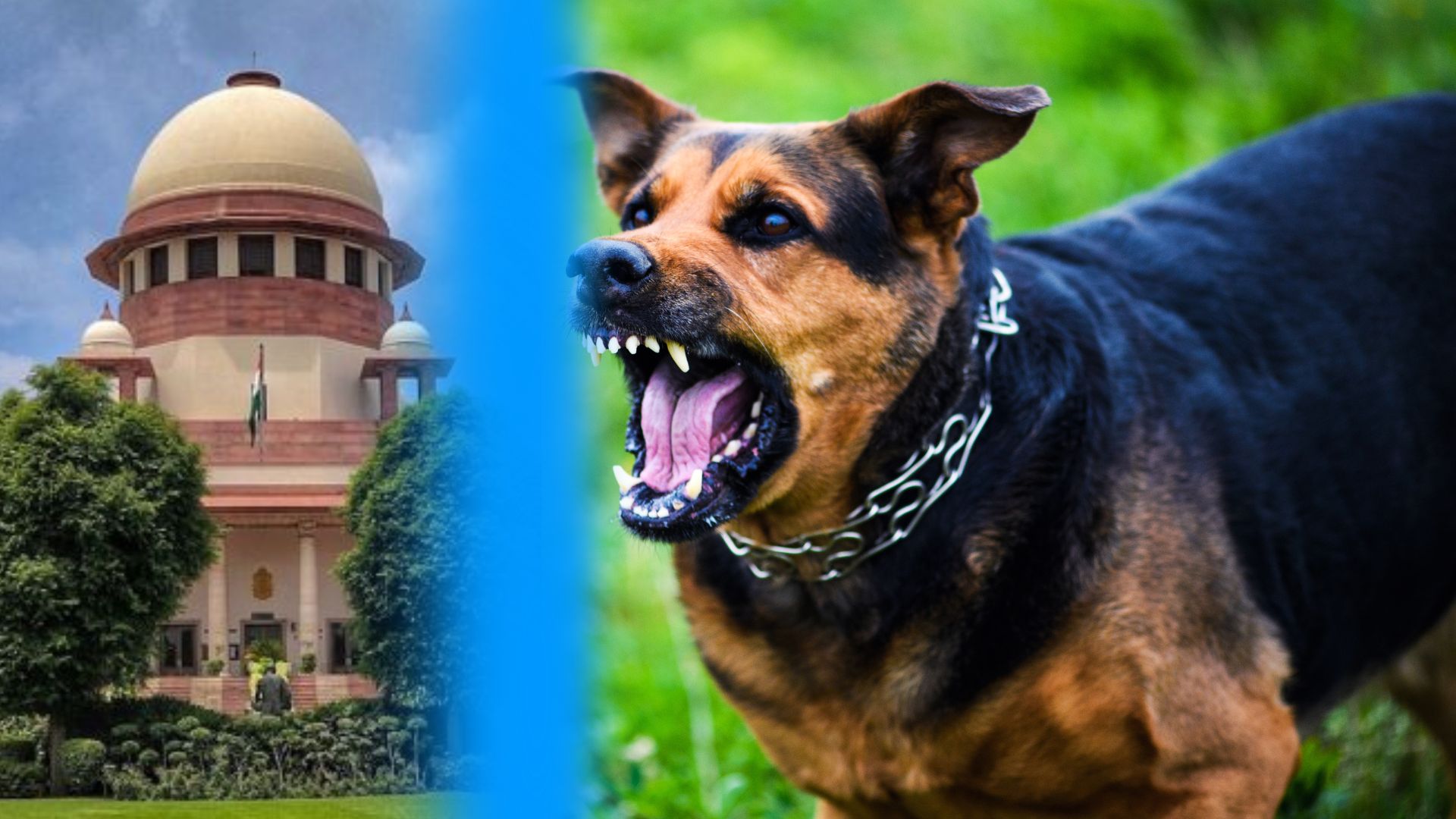
Stray Dogs, Public Safety and the Law: Supreme Court Strikes a Constitutional Balance
The court emphasizes the protection of public safety over stray dog rights, directing States to act decisively.

Attribution
Original content sources and authors


Syllabus classification
How this article maps to GS papers
Main syllabus
GS2Indian ConstitutionQuick Q&A
What constitutional principles did the Supreme Court invoke while addressing the stray dog management issue?
The Supreme Court grounded its judgment primarily in Article 21 of the Constitution, which guarantees the right to life and personal liberty. The Court clarified that the right to life includes not only survival but also the right to move freely and safely in public spaces without fear of physical harm. Therefore, the State has a constitutional obligation to protect citizens from preventable dangers such as stray dog attacks, especially in high-footfall institutions like schools, hospitals, and transport hubs.
The Court balanced this with statutory animal welfare protections under the Prevention of Cruelty to Animals Act, 1960 and the Animal Birth Control Rules, 2023. It rejected the interpretation that stray dogs have an unrestricted right to occupy all public spaces. Instead, it emphasized a harmonious reading where animal welfare cannot override public safety when there is a direct threat to human life.
This judgment illustrates constitutional balancing:
The Court balanced this with statutory animal welfare protections under the Prevention of Cruelty to Animals Act, 1960 and the Animal Birth Control Rules, 2023. It rejected the interpretation that stray dogs have an unrestricted right to occupy all public spaces. Instead, it emphasized a harmonious reading where animal welfare cannot override public safety when there is a direct threat to human life.
This judgment illustrates constitutional balancing:
- Protection of human dignity under Article 21
- Recognition of animal welfare obligations
- State’s duty to maintain public order and health
- Judicial oversight where executive inaction persists
Why has the stray dog issue evolved into a significant public policy and governance challenge in India?
The stray dog issue has become a major governance challenge because it intersects public health, urban management, animal welfare, and local administration. Rapid urbanisation, poor municipal waste management, and weak sterilisation programmes have contributed to a growing stray dog population. As urban spaces become denser, conflicts between humans and stray animals have intensified.
The Court noted alarming statistics to demonstrate the seriousness of the issue. Tamil Nadu recorded 2.63 lakh dog-bite cases in just four months of 2026, while airport terminals in Delhi also reported attacks. These figures show that the problem extends beyond residential areas into critical public infrastructure.
The challenge is compounded by administrative gaps:
The Court noted alarming statistics to demonstrate the seriousness of the issue. Tamil Nadu recorded 2.63 lakh dog-bite cases in just four months of 2026, while airport terminals in Delhi also reported attacks. These figures show that the problem extends beyond residential areas into critical public infrastructure.
The challenge is compounded by administrative gaps:
- Insufficient ABC centres
- Lack of trained veterinary staff
- Poor vaccination coverage
- Weak enforcement by municipalities
How does the Animal Birth Control framework attempt to balance animal rights and public safety?
The Animal Birth Control (ABC) framework seeks to control stray dog populations through humane methods rather than indiscriminate elimination. It emphasizes sterilisation, vaccination, tagging, and monitored release. This model is based on the principle that population control is best achieved through long-term birth reduction rather than culling.
However, the Supreme Court clarified that the ABC Rules are not absolute. Re-releasing dogs into sensitive public institutions is impermissible because public safety must prevail. The Court also permitted euthanasia for rabid, incurably ill, or dangerous dogs after expert veterinary assessment, recognising exceptional circumstances.
The framework thus balances:
However, the Supreme Court clarified that the ABC Rules are not absolute. Re-releasing dogs into sensitive public institutions is impermissible because public safety must prevail. The Court also permitted euthanasia for rabid, incurably ill, or dangerous dogs after expert veterinary assessment, recognising exceptional circumstances.
The framework thus balances:
- Humane treatment of animals
- Prevention of rabies
- Population management
- Protection of citizens from attacks
Critically analyse the Supreme Court's approach in prioritising human life over animal welfare in this case.
The Court’s approach is rooted in constitutional realism, recognising the primacy of human life in public governance. It held that when there is a direct conflict between human safety and animal welfare, the constitutional balance must favour human life. This is consistent with the State’s duty under Article 21.
Supporters argue that the decision addresses executive inaction. Municipal authorities often failed to implement sterilisation programmes effectively, resulting in escalating attacks. Judicial intervention was therefore necessary to compel action. The provision for High Court monitoring further strengthens enforcement.
Critics, however, warn of implementation risks.
Supporters argue that the decision addresses executive inaction. Municipal authorities often failed to implement sterilisation programmes effectively, resulting in escalating attacks. Judicial intervention was therefore necessary to compel action. The provision for High Court monitoring further strengthens enforcement.
Critics, however, warn of implementation risks.
- Potential misuse of euthanasia provisions
- Harassment of animal welfare groups
- Inadequate veterinary oversight
- Possibility of cruelty under weak monitoring
What examples from this case demonstrate judicial activism in public interest governance?
This case is a strong example of judicial activism where the Supreme Court stepped in due to administrative inertia. The Court initiated suo motu proceedings after a series of dog-bite incidents, including the death of a child, showing how public concern can trigger judicial review even without formal litigation.
The Court issued wide-ranging directions:
Similar interventions have occurred in air pollution and prison reforms. This reflects the judiciary’s role as guardian of fundamental rights when governance systems fail to respond effectively.
The Court issued wide-ranging directions:
- Establishing ABC centres in every district
- Ensuring anti-rabies vaccine availability
- Monitoring by all High Courts
- Contempt action against non-compliant officials
Similar interventions have occurred in air pollution and prison reforms. This reflects the judiciary’s role as guardian of fundamental rights when governance systems fail to respond effectively.
As a case study, what lessons does the stray dog issue provide for urban governance and public administration in India?
The stray dog issue highlights how urban governance failures can transform local civic problems into national public policy crises. Poor waste disposal, inadequate veterinary infrastructure, and fragmented municipal administration create conditions for stray population growth. The issue reveals the limitations of reactive governance.
Administrative lessons include:
As a governance case study, it also demonstrates the importance of institutional accountability. Courts compelled Chief Secretaries, municipal bodies, and High Courts to ensure compliance. It shows that effective urban governance requires proactive institutions, adequate infrastructure, and balanced rights-based policymaking.
Administrative lessons include:
- Need for preventive public health systems
- Importance of decentralised implementation
- Coordination among municipalities, health departments, and animal welfare agencies
- Data-driven policy responses
As a governance case study, it also demonstrates the importance of institutional accountability. Courts compelled Chief Secretaries, municipal bodies, and High Courts to ensure compliance. It shows that effective urban governance requires proactive institutions, adequate infrastructure, and balanced rights-based policymaking.
Practice questions
1 question for mains preparation