1. Changing Global Context: Diplomacy Beyond Bilaterals
The choice of the European Union’s institutional leadership as chief guest at the Republic Day 2026 parade signals a shift in India’s diplomatic messaging from symbolic bilateralism to engagement with collective power centres. It reflects recognition that influence in today’s world often lies with blocs that shape rules rather than individual capitals.
The global environment in 2026 is marked by sustained friction in traditional bilateral relationships. India’s neighbourhood demands continuous management, while ties with the United States and China are characterised by trade disputes, strategic rivalry, and political uncertainty. These dynamics limit the returns from conventional diplomacy.
Simultaneously, global governance faces a leadership vacuum. Many transnational challenges require coordination, yet no single major power enjoys legitimacy or consensus to lead. This creates “white spaces” — crowded international arenas lacking a credible convenor.
For India, these white spaces offer opportunity rather than risk. By working through selective coalitions and issue-based forums, India can shape rules, deliver public goods, and enhance strategic autonomy without overextension.
When traditional centres of power are paralysed, influence shifts to actors that can convene and deliver. If India fails to act in these spaces, global rules may be shaped without reflecting its developmental and strategic interests.
2. Europe as the Technocratic Test Case
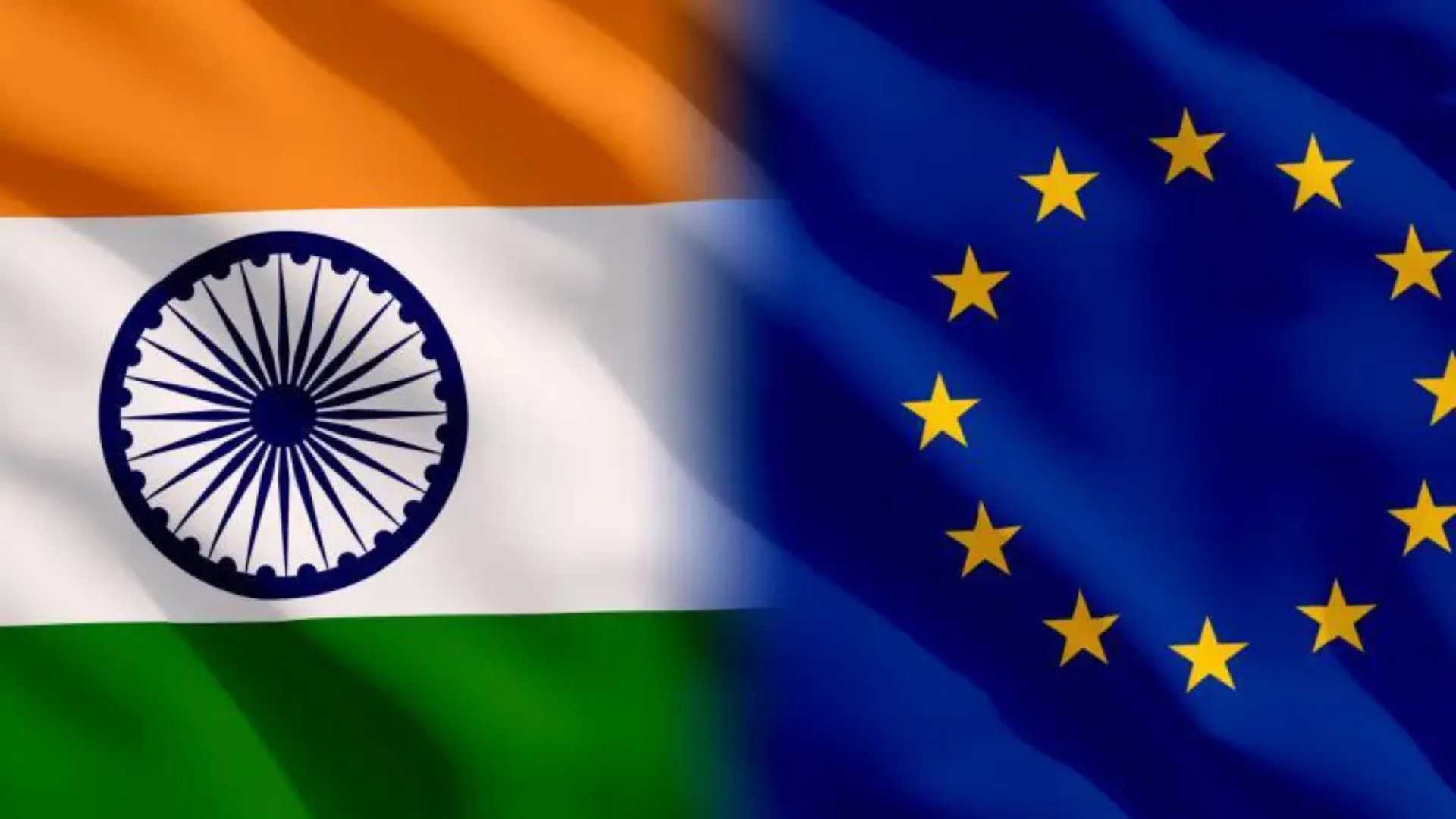
India’s engagement with Europe in 2026 is primarily institutional rather than bilateral. The presence of EU leaders underlines momentum toward the long-pending India–EU Free Trade Agreement (FTA), which now extends beyond tariffs to encompass data governance, competition policy, and sustainability standards.
The EU’s regulatory power makes this engagement strategically significant. Market access increasingly depends on compliance with non-tariff measures such as carbon norms, digital standards, and supply-chain transparency. The FTA, therefore, represents a structural alignment rather than a narrow trade bargain.
Treating the agreement as a de-risking compact offers multiple benefits. It strengthens India’s access to European markets, integrates India into reconfigured global value chains, and provides partial insulation against potential U.S. trade pressure amid geopolitical uncertainty.
However, these gains come with higher compliance costs for Indian firms, especially small and medium enterprises. Delayed adaptation could reduce competitiveness and close the current strategic window, as Europe’s recalibration away from China may not remain open indefinitely.
Standards now shape power in global trade. If India does not engage early with rule-making centres like the EU, it risks becoming a rule-taker, undermining long-term export competitiveness.
3. BRICS: Political White Space and the Challenge of Direction
BRICS in 2026 represents expanded reach but diluted coherence. Enlargement has amplified the bloc’s representation of the Global South while simultaneously blurring its role, as members diverge in priorities, pace, and strategic orientation.
The core demands driving BRICS remain legitimate. Members seek greater voice in global governance, fairer representation in institutions, and credible alternatives in development finance. Yet, the absence of consensus raises uncertainty over whether BRICS is a reformist platform or a revisionist one.
As chair and host in 2026, India has agenda-setting power. Steering BRICS toward tangible delivery — such as improved use of New Development Bank guarantees and practical implementation toolkits — can convert political symbolism into developmental outcomes.
External constraints are critical. U.S. tariff threats against countries perceived as aligning with BRICS raise the costs of adversarial positioning. Allowing the forum to drift into overt anti-West rhetoric or aggressive de-dollarisation narratives would undermine India’s parallel goals of attracting Western capital and technology.
Reform of global institutions is distinct from rejection of the existing order. If India fails to balance BRICS pragmatism with strategic restraint, it risks losing credibility on both sides of the geopolitical divide.
4. The Quad: Delivering Public Goods without Polarisation
The Quad represents a different kind of white space — one focused on capability delivery rather than institutional reform. Hosting a Quad leaders’ summit in 2026 would elevate political visibility, especially if it includes the U.S. President, increasing expectations of concrete outcomes.
The Quad’s relevance lies in functional cooperation, particularly in maritime domain awareness and resilient port infrastructure. These areas address real needs of Indian Ocean littoral states that seek capacity-building without entanglement in great power rivalries.
India’s experience demonstrates the value of this approach. Operation Sagar Bandhu, conducted after Cyclone Ditwah in Sri Lanka, showcased how rapidly deployable assets can deliver assistance without diplomatic friction, reinforcing India’s image as a net security provider.
However, success depends partly on external alignment. Persistent U.S. trade disputes with partners could disrupt broader cooperation, highlighting the need for compartmentalisation between economic disagreements and strategic collaboration.
Coalitions endure when they deliver services rather than ideology. If the Quad fails to translate capabilities into accessible public goods, it risks being perceived as exclusionary and strategically brittle.
5. Limits of Large Forums: UN and G20 under Strain
Large multilateral forums continue to provide legitimacy but face declining effectiveness. The United Nations remains central for norm-setting, yet geopolitical rivalry among major powers weakens its capacity for timely delivery.
The G20 illustrates similar strain. While designed as the premier forum for economic coordination, it is increasingly shaped by domestic politics and agenda contestation. The U.S. boycott of the Johannesburg G20 summit in 2025 and the push to narrow priorities under the U.S. presidency in 2026 risk marginalising Global South concerns.
These trends reinforce a broader shift in global governance. Outcomes are increasingly generated by smaller, flexible coalitions that can operate despite divisions at the centre. For India, this validates a strategy of selective engagement rather than reliance on universal forums alone.
Legitimacy without delivery erodes relevance. If India invests solely in large but gridlocked institutions, it may miss opportunities to shape practical solutions through smaller, outcome-oriented groupings.
6. New Tables, New Choices: Technology and Governance
The AI Impact Summit in Delhi (February 2026) exemplifies India’s opportunity to convene diverse stakeholders — governments, firms, and researchers — around overlapping interests where consensus is still possible. Such platforms allow India to shape norms at an early stage of technological governance.
At the same time, the proliferation of new forums complicates strategic choices. Proposals such as the U.S.-led ‘Board of Peace’ and a possible invitation to join Pax Silica, focused on Artificial Intelligence and semiconductor supply chains, reflect the rapid multiplication of issue-specific coalitions.
India must exercise selectivity. Over-commitment risks dilution of capacity, while non-participation could mean exclusion from rule-making in critical domains. The strategic task lies in choosing tables where India can both contribute and shape outcomes.
Influence flows from sustained participation in forums that matter. If India spreads itself too thin or chooses poorly, it risks being present everywhere but impactful nowhere.
Conclusion
In 2026, India’s diplomatic advantage lies not in the size of the forum but in the quality of outcomes. By converting white spaces into working arrangements — with Europe on standards, BRICS on functionality, and the Quad on public goods — India can enhance strategic autonomy and global relevance. This approach aligns immediate diplomatic action with long-term governance and development goals in a fragmented international order.