
1. Transatlantic Tensions and the Davos Context
The 2026 World Economic Forum (WEF) at Davos has been marked by heightened transatlantic tensions, particularly due to pressure exerted by the United States on European nations. Issues such as the possible annexation of Greenland and renewed use of tariffs as coercive instruments have underscored a more transactional US approach to alliances.
This context is significant for global governance because it signals a shift from rules-based cooperation to power-based bargaining within the Western alliance. Such behaviour weakens predictability in international economic relations and complicates collective responses to global challenges.
If left unaddressed, these tensions risk fragmenting established alliances that have underpinned global trade and security since the post-war period, thereby increasing uncertainty for both developed and developing economies.
The governance logic is that when dominant powers rely on coercive tools rather than consensus, institutional trust erodes. Ignoring this trend risks normalising unilateralism in global economic and security affairs.
2. Europe’s Real Dependence on the United States
A common assumption is that Europe is heavily dependent on the US in both military and economic terms. While military reliance exists to an extent, particularly through NATO, the article argues that Europe’s economic dependence is more limited and sector-specific.
Certain industries—luxury goods in France, automobiles in Germany, engineering in Sweden, and pharmaceuticals in Ireland—are highly exposed to the American market. For some, such as German carmakers, reduced US access could be existential due to concurrent pressures from electric vehicle transitions and Chinese competition.
However, the broader European manufacturing base retains the capacity to survive without the US market. Europe also possesses counter-leverage through its ability to restrict American services imports and influence financial markets via its holdings of US Treasuries.
Sectoral exposure:
- France: Luxury goods
- Germany: Automotives
- Sweden: Engineering
- Ireland: Pharmaceuticals
The development logic is that asymmetric dependence creates selective vulnerabilities, not total subordination. Misreading this balance can lead to policy over-correction or strategic paralysis.
3. Europe’s Strategic Response: Towards “New Independence”
At the WEF, European Commission President Ursula von der Leyen articulated a strategic response centred on building “a new form of independence” from the US. She emphasised the need for Europe to adapt to a changing security architecture and geopolitical realities.
This approach involves closer military cooperation with regional partners and extensive domestic reforms aimed at restoring economic competitiveness. A key concern identified is the underutilisation of the EU’s internal market by European firms, partly due to regulatory fragmentation.
Proposed regulatory reforms are intended to strengthen internal resilience and reduce vulnerability to external shocks. Failure to pursue such reforms could leave Europe exposed to repeated external coercion.
“Europe needs to adjust to the new security architecture and realities that we are now facing.” — Ursula von der Leyen, President, European Commission
The governance logic is that strategic autonomy requires internal cohesion and competitiveness. Ignoring domestic reform undermines external resilience.
4. Trade Diversification and External Economic Strategy
Europe’s external response focuses on derisking and diversifying supply chains through trade agreements. Ms von der Leyen highlighted the conclusion of a free trade agreement with the Mercosur bloc of Latin America, a region also facing US pressure.
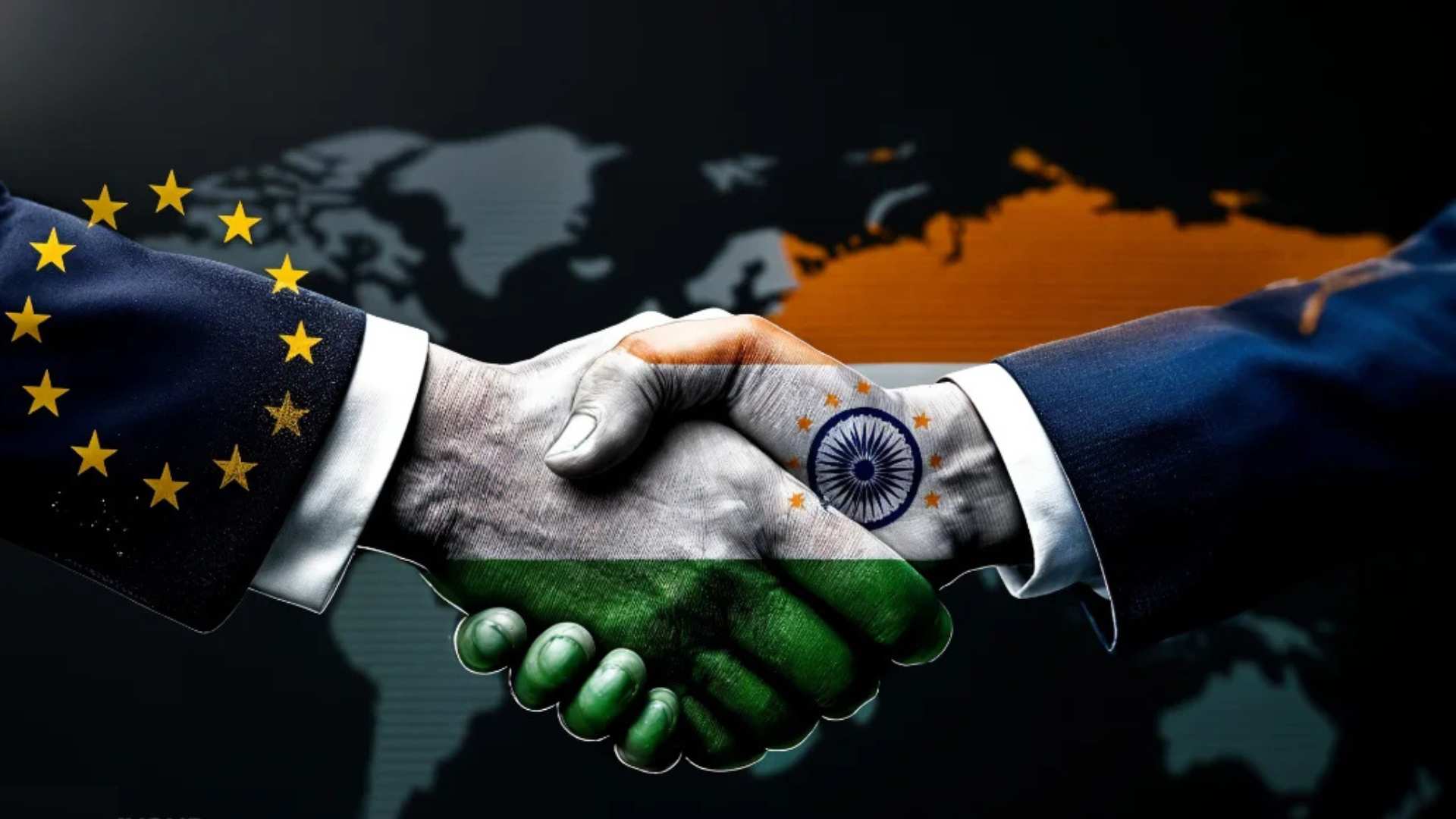
She also emphasised progress on an FTA with India, framing it as engagement with current and future growth centres. Such agreements aim to reduce overdependence on any single market while setting new trade and regulatory standards.
A potential agreement with the Comprehensive and Progressive Trans-Pacific Partnership (CPTPP) could further reshape global trade architecture by creating alternative supply chains and norms.
External trade initiatives:
- FTA with Mercosur
- Ongoing EU–India FTA
- Possible engagement with CPTPP
“Trade is not about protectionism; it is about shaping rules and partnerships.” — Pascal Lamy, former WTO Director-General
The development logic is that diversified trade networks enhance economic resilience. Neglecting this strategy increases exposure to geopolitical shocks.
5. Implications for Global Stability and Governance
Signs of disintegration within the Western alliance are not new, but recent developments are more destabilising. Such fragmentation emboldens “bad actors” across regions, from conflict zones in Sudan and Southeast Asia to military establishments seeking new defence alignments.
This instability undermines collective efforts to manage conflicts and maintain open trade routes. For the international system, weakened alliances reduce the effectiveness of global governance institutions.
For India, such instability is directly detrimental to national interests, as it increases regional insecurity and disrupts trade-dependent growth.
The governance logic is that fragmented leadership creates governance vacuums. Ignoring alliance breakdowns risks cascading instability across regions.
6. India’s Strategic Opportunity and Responsibility
The editorial argues that India must act with urgency to restore global governance mechanisms and keep trade flowing. As a major emerging economy, India has a stake in preventing further erosion of multilateralism.
Concluding the EU–India FTA during Ms von der Leyen’s visit would send a strong signal of India’s commitment to stable, rules-based trade and strategic diversification. It would also position India as a balancing partner amid shifting global alignments.
Such a move could convert global uncertainty into strategic advantage, strengthening India’s economic and diplomatic standing.
“In a world of growing uncertainty, strategic partnerships matter more than ever.” — S. Jaishankar, India’s Minister of External Affairs
The development logic is that proactive engagement allows rising powers to shape, rather than merely react to, global change. Delay risks missed opportunities and reduced influence.
Conclusion
The evolving transatlantic rift reflects deeper shifts in global power and governance. Europe’s pursuit of strategic autonomy, combined with diversified trade partnerships, marks an adaptation to these realities. For India, this moment presents both risks and opportunities. By advancing key agreements like the EU–India FTA and supporting multilateral stability, India can contribute to resilient global governance while advancing its own long-term development and strategic interests.

.jpeg)