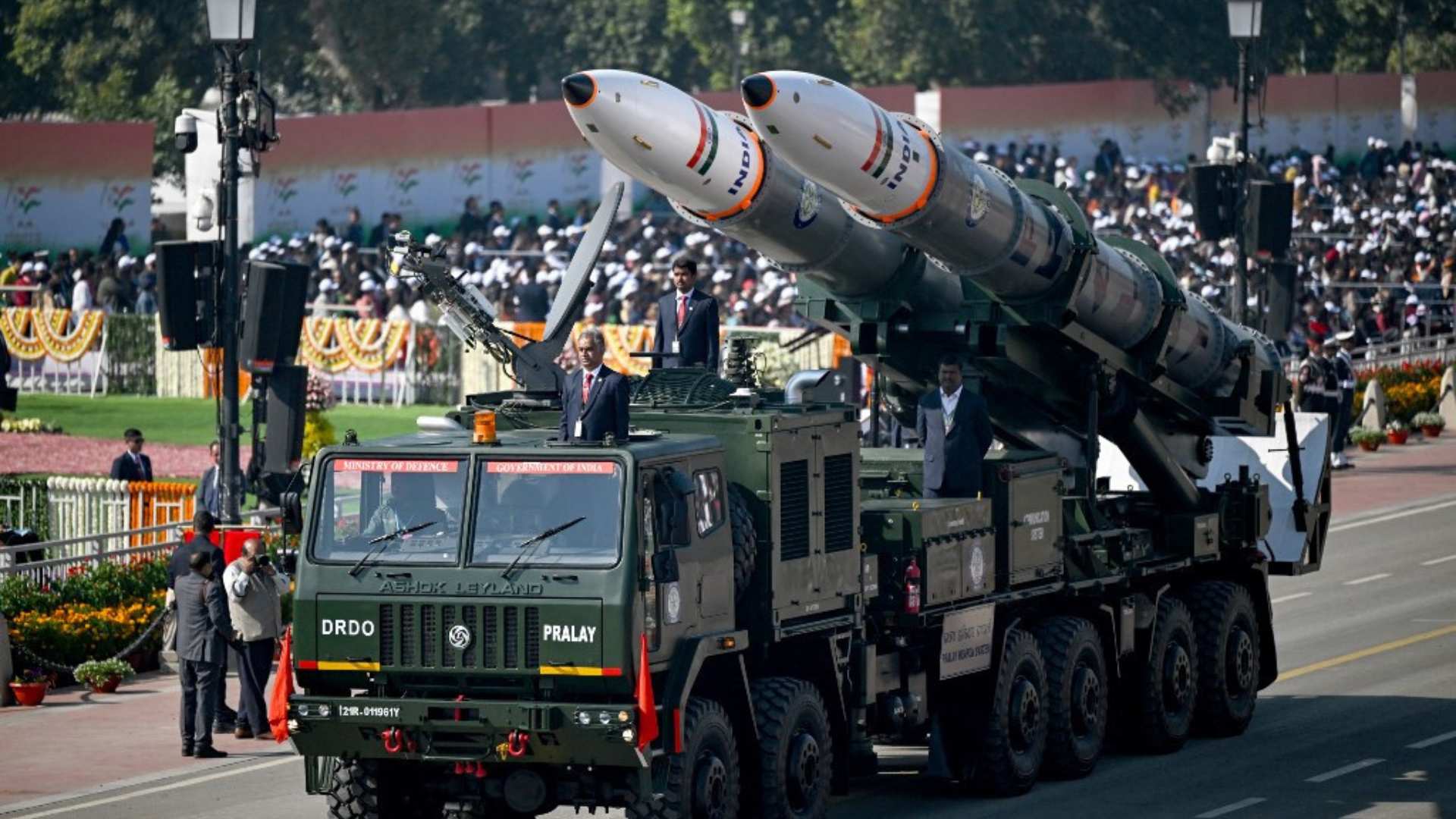
Strengthening Hard Power for India's Strategic Autonomy

Experts emphasize the need for a robust military base and self-reliance to enhance India's position globally.
S
Surya
4 mins read
Panel stresses hard power for strategic autonomy
Not Started

1. Strategic Autonomy and the Centrality of Hard Power

Strategic autonomy refers to India’s ability to frame and execute independent foreign and security policies without coercion by major powers. In an increasingly multipolar and competitive world order, autonomy is closely linked to credible military and technological capability.

At a recent policy discussion, experts from diplomacy, the armed forces, and industry emphasised that economic strength alone does not translate into great-power status. Military capability remains a decisive factor in shaping global influence.

While India is often ranked among the top three or four militaries globally and possesses nuclear weapons that deter coercion, military power is inherently relative.

“Military power is always relative to your adversary.” — Lt Gen Deependra Singh Hooda (Retd)

Strategic autonomy without credible hard power risks policy constraints during crises. Relative capability gaps, especially vis-à-vis major adversaries, can erode deterrence and bargaining leverage.


2. Relative Military Capability and the China Factor

India’s principal strategic benchmark is China, a major economic, technological, and military power. The challenge is not merely to expand capabilities but to ensure that the capability gap does not widen.

Despite significant defence spending, India remains the largest importer of arms globally. Dependence on foreign suppliers can constrain operational readiness and strategic flexibility.

Nuclear deterrence strengthens autonomy, but conventional capability asymmetry may create vulnerabilities in prolonged or high-intensity conflicts.

Key Data:

  • India’s annual defence spending: ~$80 billion
  • Share of global defence expenditure: 3.5–4%
  • Projected share by 2047: 10–16%
  • Expected expansion of military-industrial scale: 7–8 times

“The bottom line is that there is no strategic autonomy worthy of the name unless you have freedom of choice during war.” — Sujan Chinoy

If import dependence persists, crisis-time supply disruptions may undermine operational autonomy, as witnessed during the Kargil conflict.


3. Building a Robust Defence Industrial Base

Experts highlighted the need for a stronger domestic military-industrial complex to support long-term autonomy. A balanced ecosystem is required where Defence Public Sector Undertakings (DPSUs) focus on strategic systems while private industry addresses immediate operational needs.

The reform agenda includes improving procurement processes, accelerating decision-making, and encouraging greater private-sector participation.

The current procurement model, often driven by the lowest bidder (L1) criterion, may compromise technological depth. A shift toward prioritising technological superiority (T1) and identifying niche capabilities has been suggested.

“There is no substitute for spending our own money on R&D.” — Sujan Chinoy

Without a viable domestic defence ecosystem, increasing budget allocations alone will not translate into technological sovereignty or operational readiness.


4. Technology Gap: From Incremental Innovation to Breakthrough Capabilities

India faces a gap in advanced and disruptive technologies. While research and development (R&D) is largely state-led and innovation tends to be incremental, emphasis must shift toward breakthrough and disruptive technologies.

Bengaluru alone hosts around 16,000 startups, indicating substantial entrepreneurial capacity. However, unlocking this potential requires ecosystem support and sentiment conducive to high-risk innovation.

Technology lifecycle management is critical. Acquiring advanced technologies at the appropriate stage allows for “spiral development,” where platforms evolve over time.

“Technology doesn’t come cheap.” — Sujan Chinoy

If India remains dependent on imported critical technologies—such as aero-engines powering Tejas and future fighter platforms—strategic vulnerability may persist for decades.


5. Whole-of-Nation Approach and National Champions

The concept of a “whole-of-nation approach” involves integrating government, armed forces, private industry, startups, academia, and finance into a cohesive defence innovation ecosystem.

Breaking bureaucratic and sectoral silos is necessary to respond to what has been described as a “polycrisis”—multiple, interconnected security and technological challenges.

The creation of “national champions” in niche sectors can help build scale and sustained investment capacity. Fragmentation of orders or excessive price-based competition may weaken domestic industry.

Strategic sectors require coordinated industrial policy. Without scale and sustained demand, domestic firms cannot invest in long-term technological capabilities.


6. Economic Growth as Enabler of Defence Capability

India’s projected economic growth—estimated at $30–40 trillion by 2047—could significantly expand fiscal space for defence modernisation.

As defence spending’s share of global expenditure rises to a projected 10–16%, the size and complexity of India’s military-industrial ecosystem will need to expand substantially.

Economic strength and technological self-reliance are therefore mutually reinforcing pillars of strategic autonomy.

“Power respects power.” — Attributed to Kautilya, Arthashastra (conceptual principle of statecraft)

Economic growth provides resources, but without efficient allocation and institutional reform, fiscal expansion alone may not guarantee capability enhancement.


Conclusion

India’s pursuit of strategic autonomy demands more than diplomatic balancing; it requires sustained investment in hard power, technological innovation, and a resilient defence-industrial ecosystem.

Bridging capability gaps, reforming procurement, nurturing national champions, and adopting a whole-of-nation approach are essential steps. As global power competition intensifies, credible military strength combined with technological self-reliance will determine India’s ability to act independently and shape the emerging world order.

Quick Q&A

Everything you need to know

Strategic autonomy refers to India’s ability to take independent decisions in foreign and security policy without coercion or overdependence on major powers. It does not imply isolationism; rather, it means retaining the freedom of choice in times of crisis, particularly during conflict. As highlighted by the panel, autonomy is meaningful only if backed by credible hard power—military capability, nuclear deterrence, and a robust defence-industrial base.

While economic strength is necessary, it is insufficient on its own. Countries like Germany and Japan are economic powerhouses but rely heavily on external security guarantees. In contrast, India’s nuclear weapons capability and strong conventional forces enhance its deterrence credibility. However, as Lt Gen Hooda noted, military power is always relative to one’s adversary—particularly China, which combines economic, technological, and military strength.

Thus, strategic autonomy requires a combination of:

  • Credible military deterrence
  • Technological self-reliance
  • Domestic defence manufacturing capacity
  • Diversified strategic partnerships
Without these pillars, autonomy risks becoming rhetorical rather than operational.

India remains one of the world’s largest arms importers, which creates vulnerabilities in times of crisis. Dependence on foreign suppliers can lead to supply disruptions, political leverage, or delayed deliveries during wartime—as seen during the 1999 Kargil conflict, when India had to urgently procure artillery shells from abroad. Such episodes underscore that self-reliance in defence production is directly linked to freedom of action.

A strong military-industrial base also generates technological spillovers into civilian sectors, boosting innovation and employment. With India projected to significantly increase its share in global defence expenditure by 2047, the scale of domestic production must expand seven to eight times. This requires coordinated public-private participation, improved procurement processes, and sustained R&D investments.

Therefore, domestic capability is not merely an economic objective but a strategic necessity. It ensures supply security, reduces foreign exchange outflows, and enhances India’s bargaining power in global geopolitics.

The assertion that military power is relative highlights that capability must be assessed in comparison to potential adversaries. India’s armed forces are ranked among the top globally, yet China’s rapid military modernisation—advanced missile systems, naval expansion, cyber capabilities, and AI integration—creates a widening capability gap.

From a realist perspective, deterrence depends not on absolute strength but on credible parity or sufficient asymmetry to impose unacceptable costs. Therefore, India must focus on narrowing critical gaps in areas such as aerospace engines, cyber warfare, and advanced surveillance systems. At the same time, overemphasis on matching China symmetrically may strain resources.

A balanced strategy would involve asymmetric capabilities, partnerships (e.g., Quad cooperation), and technological innovation. Thus, the relativity principle demands prioritisation rather than indiscriminate expansion of military assets.

A whole-of-nation approach integrates government, armed forces, private industry, startups, academia, and financial institutions into a coordinated innovation ecosystem. As highlighted, Bengaluru alone hosts around 16,000 startups, indicating abundant entrepreneurial potential. Harnessing this ecosystem requires policy clarity, targeted funding, and procurement reforms.

Breaking silos between public sector undertakings and private firms is crucial. Defence PSUs may focus on strategic systems, while private players meet operational requirements. Encouraging breakthrough and disruptive technologies—rather than only incremental innovation—can help India ‘jump the queue’ in emerging domains such as AI-driven warfare and advanced propulsion systems.

Institutional reforms such as faster decision-making, stable R&D funding, and collaborative testing platforms would ensure sustained progress. This integrated model mirrors successful defence ecosystems in countries like Israel and the United States.

India’s indigenous fighter programmes—Tejas Mk-1, Mk-1A, Mk-2, and the upcoming AMCA—are powered by General Electric engines, indicating long-term dependence on foreign propulsion technology. Aero-engines represent one of the most complex engineering domains, involving metallurgy, materials science, and precision manufacturing.

While partnerships with countries like France for next-generation engine technology offer opportunities for knowledge transfer and spiral development, they also entail high costs and geopolitical considerations. Dependence over the next 50 years could constrain India’s operational flexibility if supply chains are disrupted.

This case study illustrates that technological sovereignty requires sustained indigenous R&D investment, not episodic procurement. Building capabilities in niche areas and creating national champions—supported by assured order books—can gradually reduce strategic vulnerabilities.

One major reform suggested is moving beyond the L1 (lowest bidder) model towards considering T1 (technologically superior bidder) criteria in certain strategic sectors. Excessive focus on cost minimisation can discourage innovation and prevent companies from investing in advanced technologies.

Additionally, creating ‘national champions’ in niche defence areas—such as artillery systems, missile components, or advanced electronics—can ensure scale and competitiveness. Avoiding unnecessary splitting of orders may allow firms to achieve economies of scale and reinvest in R&D.

International examples such as the US defence procurement system, which supports major contractors with long-term contracts, demonstrate how predictable demand fosters innovation. For India, similar reforms could align industrial growth with national security imperatives.

Attribution

Original content sources and authors

Sign in to track your reading progress

Comments (0)

Please sign in to comment

No comments yet. Be the first to comment!