1. Claims of Third-Party Mediation in India–Pakistan Conflict
The article is set against the backdrop of the May 2025 India–Pakistan military confrontation, which ended with a ceasefire on May 10. Since then, multiple foreign leaders have publicly claimed a role in mediating the de-escalation.
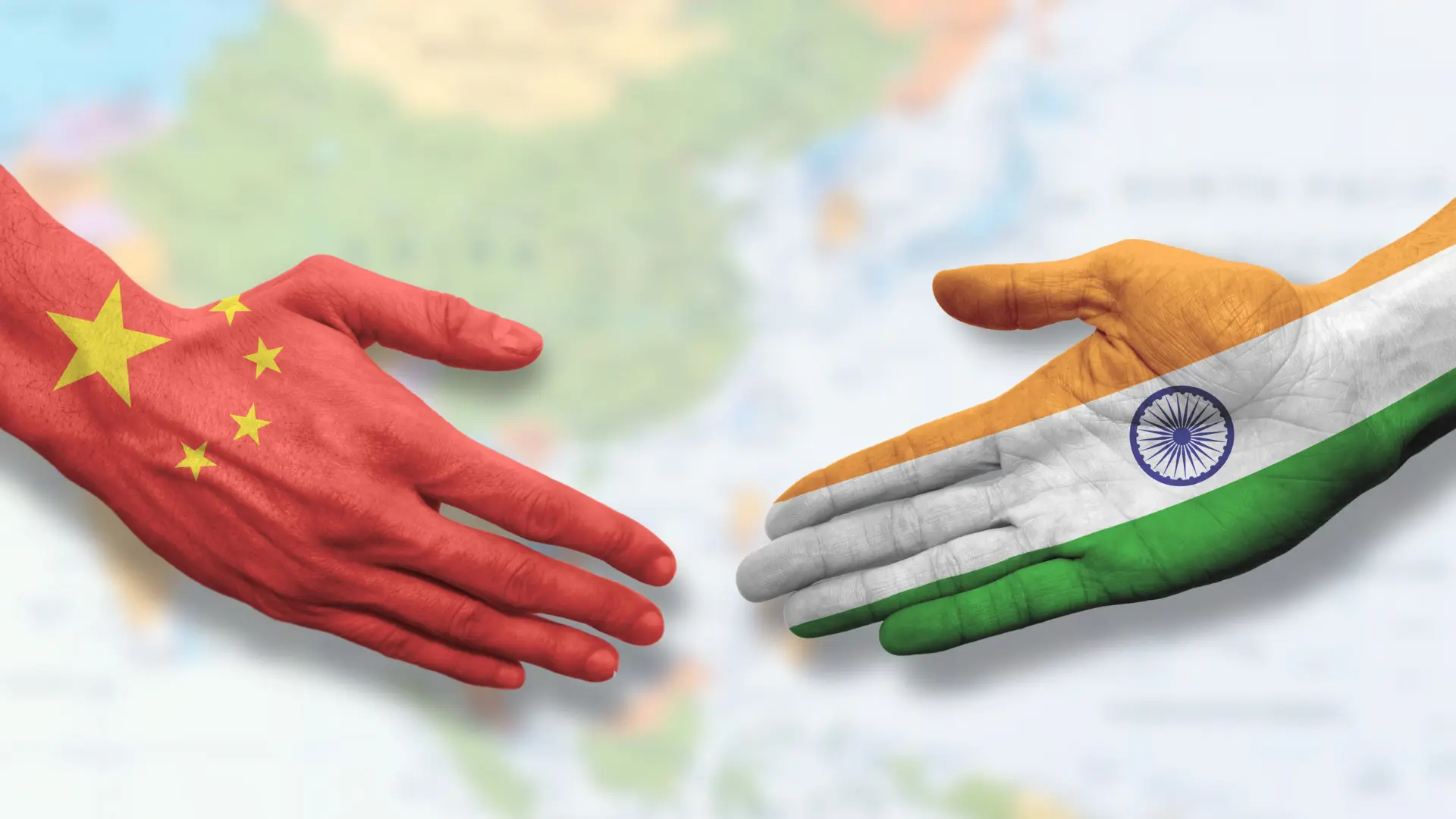
China’s Foreign Minister Wang Yi stated that China had “mediated” the India–Pakistan tensions, placing this claim alongside other Chinese diplomatic interventions globally. This assertion comes despite India’s long-standing policy rejecting any third-party role in bilateral disputes with Pakistan.
The Indian government reiterated that its position has not changed, even though no formal Ministry of External Affairs (MEA) statement was issued in response to Mr. Wang’s speech. Officials instead referred to earlier clarifications made in May and June 2025.
The issue is significant for India’s foreign policy credibility and sovereignty, as unchallenged mediation claims risk normalising external involvement in bilateral security matters.
The governance logic rests on maintaining consistency between stated policy and diplomatic signalling; if such claims are left ambiguously addressed, they can weaken India’s negotiating position and set precedents contrary to its core strategic doctrine.
2. India’s Official Position on the May 2025 Ceasefire
India maintains that the ceasefire on May 10, 2025 was initiated at Pakistan’s request and accepted by India strictly through established military channels. Communication occurred via the Director-General of Military Operations (DGMO) mechanism, which is a bilateral and institutionalised process.
Senior MEA officials clarified that no third country played any role in facilitating or influencing the ceasefire decision. This position has been consistently reiterated in official statements and leadership-level communications.
Prime Minister Narendra Modi, in a telephone call with U.S. President Donald Trump on June 17, explicitly stated that there was no discussion on trade deals or mediation proposals between India and Pakistan.
This stance reinforces India’s broader policy framework that bilateral issues, especially those involving national security, must be resolved without external involvement.
"At no point … was there any discussion, at any level, on an India-U.S. trade deal, or any proposal for a mediation by the U.S. between India and Pakistan." — Prime Minister Narendra Modi (as cited by MEA)
If this bilateral-only approach is diluted, it risks institutional erosion of India’s conflict-management mechanisms and could invite unwanted diplomatic pressure during future crises.
3. Repeated U.S. Claims and India’s Diplomatic Rebuttal
U.S. President Donald Trump has claimed more than 60 times in seven months that the United States mediated the India–Pakistan conflict, often linking the de-escalation to trade leverage. These claims were reiterated even during unrelated diplomatic engagements, including talks with the Israeli Prime Minister.
The U.S. State Department’s decision to award Ricky Gill for “internal coordination and diplomatic outreach” during the conflict added another layer of complexity to India’s diplomatic messaging challenge.
India has chosen a calibrated response strategy—firmly rejecting the claims while avoiding public diplomatic escalation. The MEA has consistently referred back to its earlier statements rather than issuing repetitive rebuttals.
This approach reflects India’s attempt to balance strategic partnerships with the U.S. while safeguarding its policy autonomy.
- Implications:
- Risk of narrative-setting by external powers if claims go uncontested
- Diplomatic tightrope between strategic alignment and sovereign decision-making
Ignoring repeated external claims can gradually reshape international perceptions, even if domestically rejected, thereby affecting India’s strategic credibility in future negotiations.
4. China’s Broader Diplomatic Narrative and India–China Relations
China’s claim of mediating India–Pakistan tensions was part of a wider narrative presented by Wang Yi, where China positioned itself as a global peacemaker across multiple conflict zones. This framing seeks to enhance China’s diplomatic stature and normative influence.
Notably, the Chinese Foreign Minister also highlighted positive momentum in China–India relations, referencing Prime Minister Modi’s visit to Tianjin for the Shanghai Cooperation Organisation (SCO) summit and a bilateral meeting with President Xi Jinping.
However, these mediation claims sit uneasily with India’s perception of China’s alignment with Pakistan during Operation Sindoor, raising trust and credibility concerns.
The episode underscores the complexity of managing cooperative and competitive elements simultaneously within India–China relations.
If such contradictions are not carefully managed, they can blur diplomatic signalling and complicate India’s engagement strategy with China across multilateral and bilateral platforms.
5. Domestic Political Response and Accountability Concerns
The Chinese claim triggered a political response within India, with the Congress party questioning the government’s handling of the issue. Congress MP Jairam Ramesh criticised the Prime Minister’s “silence” and sought clarity on China’s alleged role.
The opposition linked China’s mediation claim to national security concerns, particularly given China’s perceived alignment with Pakistan during the conflict. This brings the issue into the domain of democratic accountability and parliamentary oversight.
While the government has relied on earlier official statements, the debate highlights the need for transparent communication to prevent misinformation and political polarisation.
"Chinese claims of having mediated between India and Pakistan are concerning." — Jairam Ramesh, Congress MP
In the absence of clear and timely communication, strategic issues risk being reframed as political controversies, potentially undermining public trust in foreign policy decision-making.
Conclusion
The episode underscores the importance of narrative control in foreign policy alongside military and diplomatic actions. For India, consistently asserting bilateralism, clarifying ceasefire mechanisms, and managing external claims remain critical to preserving strategic autonomy. Over the long term, effective communication and institutional clarity will be central to safeguarding India’s sovereignty while navigating an increasingly assertive global diplomatic environment.