
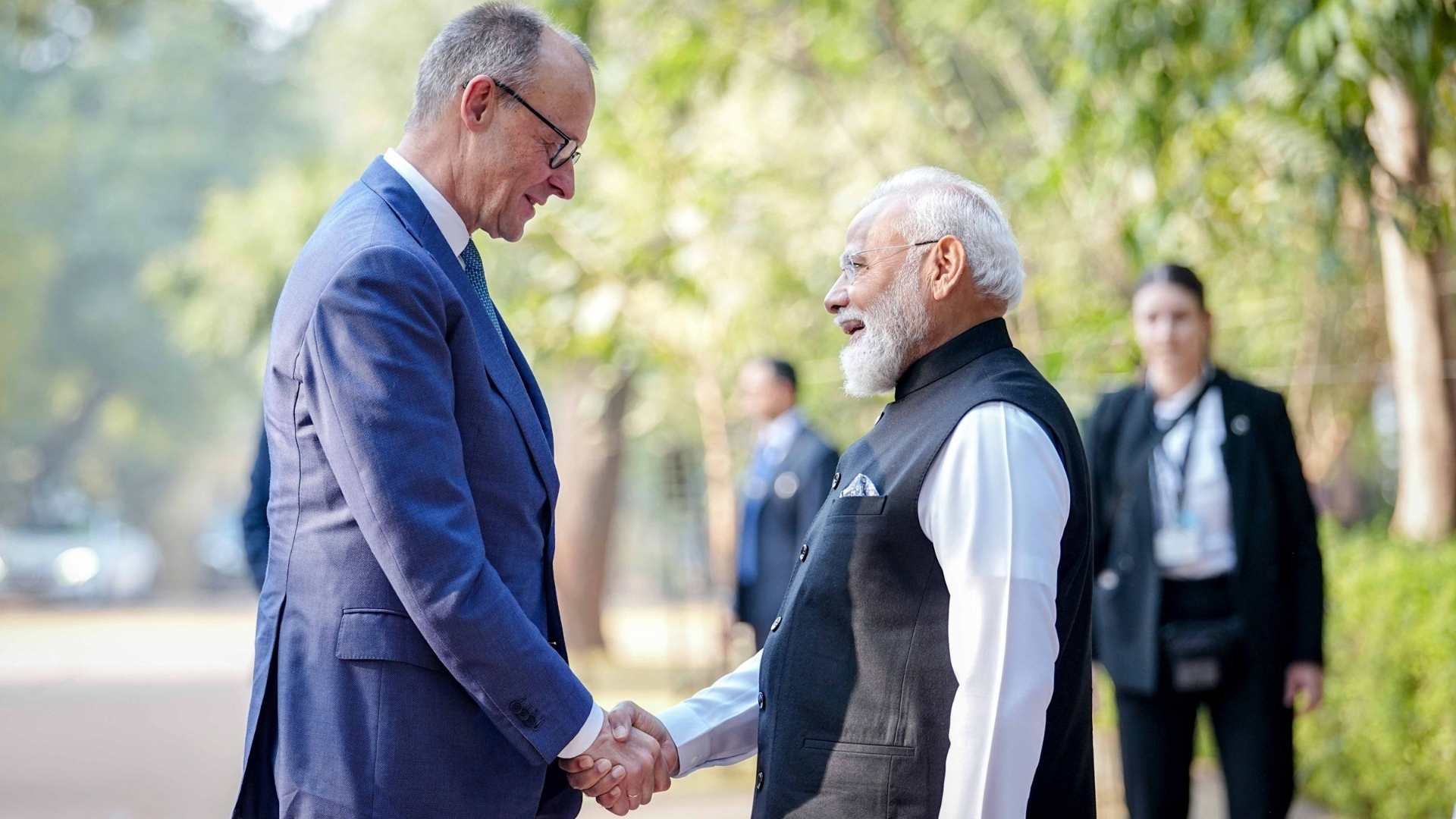
India and Germany Elevate Defence Ties with Co-Production and Strategic Collaboration

Leaders unveil MoUs across defence, education, and Indo-Pacific security amid global trade tensions and rising protectionism
SuryaSurya
3 mins read
India Germany Strengthen Defence Industrial Ties
Not Started

1. Context of India-Germany Strategic Partnership

India and Germany have recently reaffirmed their commitment to enhancing bilateral defence trade, with a focus on co-production and co-development. Prime Minister Narendra Modi and Chancellor Friedrich Merz signed agreements to strengthen defence industrial cooperation, marking a milestone in 25 years of strategic partnership and 75 years of diplomatic ties.

The visit underscores the importance of the Indo-Pacific consultation mechanism, aiming to align strategic interests and maintain stability in a geopolitically volatile region. Both leaders acknowledged the necessity to adapt their partnership to counter emerging global trends of instability, emphasizing a rules-based international order.

"The growing cooperation in defence and security is a symbol of our mutual trust and shared vision." — Prime Minister Narendra Modi

Strategic partnerships like India-Germany illustrate the value of sustained diplomatic and industrial engagement. Ignoring these frameworks could result in missed opportunities for defence modernization and regional influence.

2. Defence Industrial Cooperation and Co-Development

The agreement on Bilateral Defence Industrial Cooperation focuses on collaborative R&D, co-production of defence equipment, and streamlining defence trade processes. India aims to leverage German expertise to enhance technological capabilities, while Germany benefits from access to India’s growing defence market.

The cooperation also extends to recruitment of skilled professionals, higher education, and sports initiatives, creating a holistic industrial and societal partnership. The co-development model supports Make in India objectives and strengthens India’s push for self-reliance in defence production.

Impacts:

  • Accelerates India’s indigenous defence manufacturing.
  • Promotes technology transfer and skill development.
  • Strengthens bilateral trust and long-term industrial collaboration.

Prioritizing co-production and co-development ensures that India’s defence industry gains not just hardware but also critical knowledge, reducing dependency on foreign suppliers.

3. Economic and Trade Implications

The leaders highlighted the challenges posed by rising global protectionism, which threatens free trade and disrupts supply chains. Chancellor Merz emphasized strengthening global supply chains, indirectly critiquing punitive tariffs imposed on India by the U.S., and reaffirmed Germany’s commitment to tariff-free trade practices.

Both sides reiterated support for the India-EU Free Trade Agreement, expected to enhance trade flows, attract investments, and consolidate Germany-India economic relations. This aligns with India’s broader strategy of diversifying trade partners and securing technology-intensive sectors.

Impacts:

  • Encourages integration of India in global supply chains.
  • Provides a buffer against trade disruptions from protectionist policies.
  • Strengthens economic resilience through EU-India FTA outcomes.

Economic engagement complements strategic cooperation. Neglecting trade frameworks can limit industrial growth and weaken geopolitical leverage.

4. Geopolitical Significance and Regional Security

India and Germany also discussed regional conflicts including Ukraine and Gaza, emphasizing shared commitments to counter-terrorism and uphold international law. The establishment of a consultation mechanism for the Indo-Pacific reflects a forward-looking approach to multilateral diplomacy, enabling coordinated action on security challenges.

Such engagements enhance India’s position in global governance, reinforcing its role as a responsible power in maintaining regional and international stability. The strategic dimension ensures that defence-industrial cooperation translates into tangible security outcomes.

"Rough winds are blowing in world politics; India and Germany should increase partnership to counter global instability." — Chancellor Friedrich Merz

Strategic and security dialogues with key partners mitigate regional risks and enhance India’s influence in shaping norms of international conduct.

5. Way Forward

  • Strengthen joint R&D programs in defence technologies, focusing on innovation and dual-use applications.
  • Leverage Indo-Pacific consultation mechanisms to enhance regional security coordination.
  • Facilitate industrial linkages and supply chain integration through FTA implementation and skill development initiatives.
  • Monitor global protectionism trends and adopt diplomatic measures to secure uninterrupted trade and technology access.

Enhancing industrial, trade, and security cooperation ensures India can navigate geopolitical uncertainties while achieving self-reliance in critical sectors.


Quick Q&A

Everything you need to know

The India-Germany agreement on defence co-production and co-development is significant for multiple reasons. Strategically, it strengthens bilateral defence industrial cooperation, allowing India and Germany to jointly develop defence technologies and systems tailored to regional security needs, particularly in the Indo-Pacific region. This partnership enhances India’s domestic defence capabilities and aligns with its 'Make in India' initiative by promoting indigenous manufacturing.

Economically, the agreement facilitates knowledge transfer, access to advanced German technology, and potential cost efficiencies through shared production. By simplifying defence trade processes, as highlighted by Prime Minister Modi, India can procure high-end systems more efficiently while also creating opportunities for its domestic defence industry to expand into European markets.

Enhanced India-Germany defence cooperation is crucial given the current global security environment, characterized by instability and regional conflicts. Both countries face shared concerns such as terrorism, geopolitical tensions in Europe, and security challenges in the Indo-Pacific. Joint defence collaboration allows them to share intelligence, technology, and strategic insights, which can improve preparedness and operational effectiveness.

Moreover, Germany's advanced defence technologies complement India's growing security needs, while India provides strategic positioning in the Indo-Pacific. This partnership sends a geopolitical signal of trust and shared vision, reinforcing global norms and collaborative security frameworks amid rising protectionism and unilateralism in international affairs.

The India-Germany consultation mechanism in the Indo-Pacific is expected to enhance strategic coordination between the two nations. By establishing a formal channel for dialogue, India and Germany can align policies on maritime security, counter-terrorism, and capacity building in the region. This may include joint exercises, technology sharing, and coordinated responses to potential crises.

Regionally, the mechanism strengthens multilateral security frameworks, supporting stability in a region where tensions involving China, North Korea, and maritime disputes persist. It also reassures smaller nations about the commitment of like-minded powers to uphold freedom of navigation, respect for international law, and a rules-based order in the Indo-Pacific.

Germany’s emphasis on partnering with India to strengthen global supply chains stems from multiple factors. First, the rise of protectionism worldwide, including punitive tariffs imposed by some countries on India, has disrupted international trade flows. By deepening ties with India, Germany ensures a more resilient and diversified supply chain for critical industries, including defence, manufacturing, and high-tech sectors.

Second, India’s large market and manufacturing potential make it a strategic partner for mitigating supply chain risks. Collaborative ventures in co-production, technology transfer, and skilled workforce development create mutual economic benefits. Finally, such partnerships enhance Germany’s geopolitical leverage, enabling it to influence regional and global trade frameworks while supporting rules-based international trade and economic stability.

A concrete example of operationalizing India-Germany defence cooperation is the signing of the agreement on Strengthening Bilateral Defence Industrial Cooperation during Chancellor Merz’s visit in January 2026. This agreement includes co-production and co-development of defence equipment, roadmap planning for enhanced industry cooperation, and simplified defence trade processes.

Additionally, other joint initiatives such as recruitment of skilled professionals, sports and higher education collaborations, and strategic consultations in the Indo-Pacific indicate that the partnership is multi-dimensional. These examples demonstrate how bilateral ties are being translated into actionable frameworks that integrate industrial, technological, and strategic objectives.

The potential benefits of India’s defence partnership with Germany are substantial. First, access to advanced German defence technologies enhances India’s self-reliance and capabilities in high-tech domains such as precision weaponry and aerospace. Second, joint co-production and co-development reduce costs, improve efficiency, and create employment and skill development opportunities within India.

However, challenges exist. Germany’s defence priorities and global strategic outlook may not always align perfectly with India’s needs. There could also be concerns about technology transfer, intellectual property rights, and export restrictions, which may limit the scope of collaboration. Furthermore, rising protectionism globally and competing partnerships (e.g., India-U.S. defence relations) may complicate long-term planning. Balancing these benefits and risks requires careful diplomatic and policy coordination.

In a scenario of heightened global protectionism, India could leverage its partnership with Germany to maintain supply chain resilience and sustain trade flows. Strategically, India could collaborate with Germany on co-production of defence equipment, ensuring continuity of critical military capabilities without reliance on countries imposing tariffs or trade barriers.

Economically, Germany could serve as a gateway for Indian exports to the EU, bypassing countries with restrictive trade measures. Joint ventures in high-tech sectors, skill development programs, and innovation hubs could mitigate the adverse effects of protectionist policies while reinforcing economic diplomacy. This case study highlights how strategic partnerships can act as buffers against global uncertainties and support long-term national security and economic objectives.

Attribution

Original content sources and authors

Sign in to track your reading progress

Comments (0)

Please sign in to comment

No comments yet. Be the first to comment!