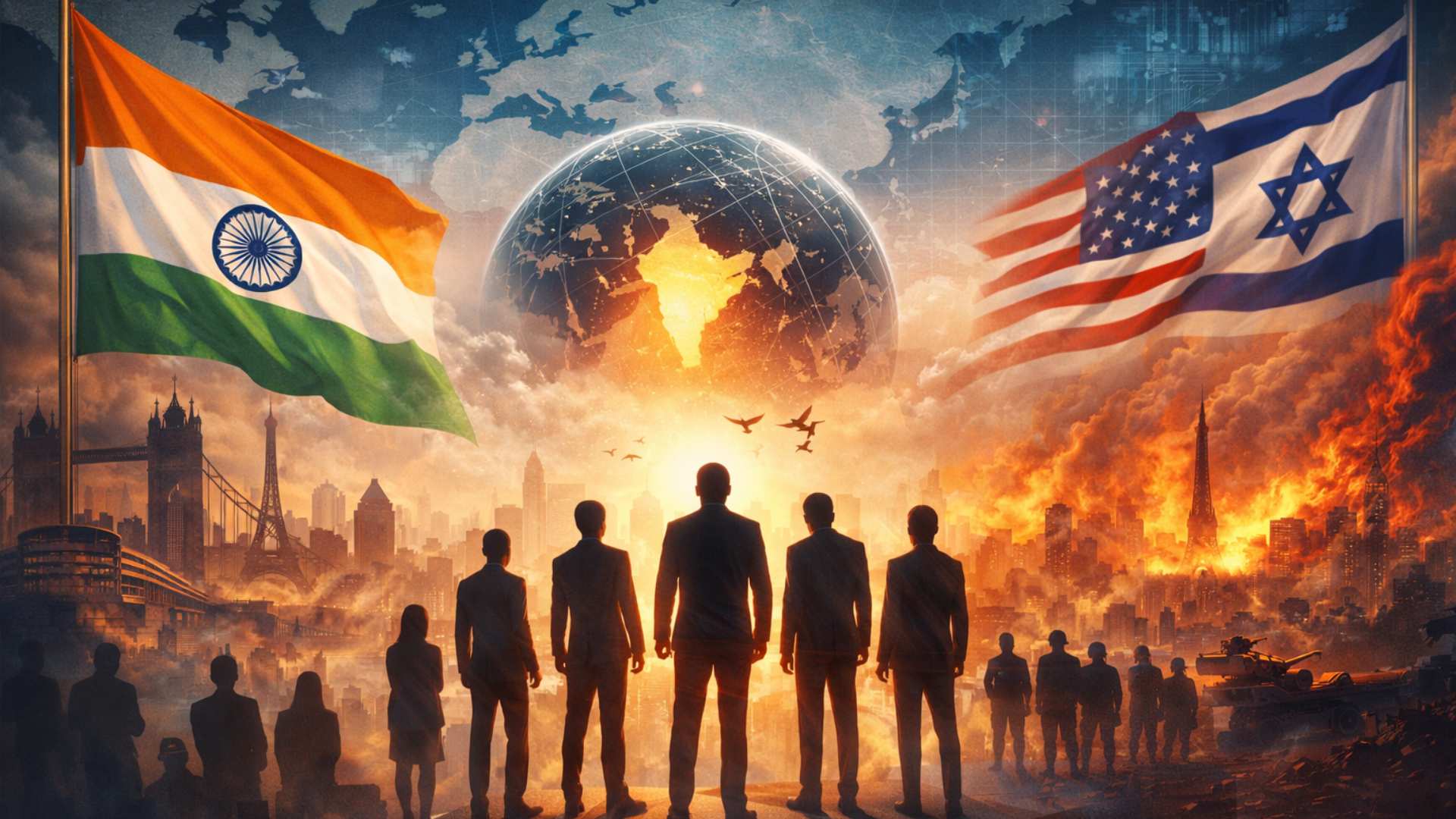
India's Role Among Middle Powers to Uphold Global Law

India faces a unique challenge as the US trends towards isolation and aggression in global politics, necessitating a united front with other middle powers.
S
Surya
3 mins read
India Navigates Turbulent Shifts in Global Order

Introduction

The global geopolitical system is undergoing a structural shift marked by declining multilateralism and rising unilateralism. The US, accounting for ~25% of global GDP and dominant military power, is increasingly perceived as acting outside established international norms. Simultaneously, West Asia tensions threaten global energy security, with India importing ~85% of its crude oil and receiving ~$50 billion annually in remittances from the Gulf. These developments pose significant economic and diplomatic challenges for India.


Background & Context

  • Post-2008: India–US relations strengthened (e.g., Civil Nuclear Deal).
  • Current phase: Rise of transactional diplomacy, weakening of UN-based global order.
  • Escalation of conflicts (e.g., US–Israel–Iran tensions) undermining international law.

“The crisis of multilateralism is the defining feature of contemporary global politics.” – UN Reports


Key Concepts

ConceptExplanation
Transactional DiplomacyForeign policy driven by short-term gains rather than long-term partnerships
Middle PowersCountries like India, Australia, Japan with moderate influence but not superpowers
MultilateralismCooperation through institutions like UN, WTO
Strategic AutonomyIndia’s ability to pursue independent foreign policy

Major Challenges for India

1. Unpredictability of US Policy

  • Shift from rules-based order to unilateral actions.
  • Risk of sudden policy reversals affecting trade, technology, defense ties.

2. Weakening of Multilateral Institutions

  • Bypassing UN frameworks reduces global dispute-resolution mechanisms.
  • India’s reliance on rules-based order gets undermined.

3. West Asia Instability

  • Risks:

    • Oil price shocks (Brent crude crossing $100/barrel).
    • Supply disruptions via Strait of Hormuz (~20% global oil passes).
    • Decline in remittances (~$50 billion annually).

4. Export Vulnerabilities

  • IT sector (~$225 billion exports; ~8 million jobs) facing slowdown due to:

    • AI disruption
    • Protectionism
  • Need to diversify into manufacturing exports.

5. Risk to Development Goals

  • Prolonged conflict may derail India’s goal of becoming a $5 trillion economy and developed nation by 2047.

Emerging Opportunities: Middle-Power Coalition

India’s Trade & Diplomatic Strategy

Agreement/GroupingSignificance
India–UK FTAMarket access, services boost
EFTA AgreementInvestment and technology inflows
Australia FTAStrategic Indo-Pacific partnership
EU FTA (negotiated)Access to large developed markets
CPTPP (proposed)Diversification beyond US & China
  • CPTPP accounts for ~15% of global GDP.
  • Offers opportunity to integrate into global value chains.

Strategic Shift: From Services to Manufacturing

  • IT growth slowing (from ~8% to <4% employment growth).

  • AI transforming service sector dynamics.

  • Manufacturing exports can:

    • Generate employment (especially in low-income states).
    • Reduce regional inequalities.
    • Strengthen economic resilience.

Role of Middle Powers in Global Stability

Need for Collective Action

  • Counterbalance unilateral dominance of major powers.
  • Promote rule-based international order.

Possible Actions

  • Diplomatic pressure to limit war escalation.
  • Formation of informal peace coalitions.
  • Coordinated economic and strategic policies.

Example: QUAD (India, US, Japan, Australia) shows potential of like-minded coalitions.


Implications for India

Economic

  • Inflationary pressures due to energy shocks.
  • Export diversification imperative.

Diplomatic

  • Need for multi-alignment strategy.
  • Reduced dependence on any single power.

Strategic

  • Enhance defense preparedness.
  • Strengthen ties with middle powers.

Way Forward

  • Deepen engagement with middle-power coalitions.
  • Consider joining CPTPP with calibrated safeguards.
  • Accelerate manufacturing push (PLI schemes, Make in India).
  • Diversify energy sources (renewables, strategic reserves).
  • Champion reform of global governance institutions.

Conclusion

India stands at a critical juncture in a rapidly evolving global order marked by declining multilateralism and rising geopolitical instability. By leveraging middle-power alliances, diversifying economic partnerships, and reinforcing strategic autonomy, India can not only mitigate risks but also shape a more balanced and rule-based international system.

Quick Q&A

Everything you need to know

Changing Geopolitical Order: The current global geopolitical system is undergoing a transition marked by the weakening of multilateralism and the rise of transactional and unilateral decision-making, particularly by major powers like the United States. This shift is characterized by disregard for international norms such as the UN Charter, increasing geopolitical conflicts, and a decline in cooperative global governance frameworks.

Impact on India: For India, this transformation creates both economic and diplomatic uncertainties. Traditionally, India benefited from a rules-based international order that ensured stability in trade and diplomacy. However, the emergence of a more unpredictable global power structure means India must now navigate risks such as sudden policy shifts, trade disruptions, and geopolitical conflicts.

Broader Implications: This environment compels India to adopt a more strategic and flexible foreign policy. For instance, India's engagement with multiple partners—such as the EU, Australia, and EFTA—reflects its attempt to hedge against uncertainties. The shift also demands strengthening domestic capabilities, especially in manufacturing and energy security, to reduce vulnerability to global shocks.

Nature of US Policy Shift: The growing tendency of the United States to act unilaterally—bypassing international institutions and even traditional allies—signals a departure from its earlier role as a promoter of rules-based global order. Actions such as military interventions without UN approval reflect this shift.

Concerns for India: India’s strategic and economic interests have been closely tied to stable relations with the US, especially since the 2008 India-US nuclear deal. A more unpredictable and "transactional" US raises the risk of sudden policy reversals, trade restrictions, or geopolitical pressures that may not align with India’s interests.

Strategic Implications: This necessitates a recalibration of India’s foreign policy. India must reduce overdependence on any single power and instead diversify partnerships. For example, strengthening ties with middle powers like Japan, Australia, and the EU can help India maintain strategic autonomy. Additionally, India must invest in multilateral platforms where it can influence outcomes collectively rather than relying solely on bilateral ties with dominant powers.

Role of Middle Powers: Middle-power countries—such as India, Japan, Australia, Canada, and the UK—possess significant economic and diplomatic influence, though they are not dominant superpowers. These nations can collectively act as a balancing force against unilateral actions by larger powers.

Mechanisms of Influence: One key approach is through economic cooperation, such as free trade agreements (FTAs) and groupings like the CPTPP. These frameworks promote interdependence and reduce reliance on dominant economies like the US or China. Additionally, middle powers can coordinate diplomatically to advocate for adherence to international law and norms.

India’s Role: India can take a leadership role by building an informal coalition for peace and rule of law. For instance, India's recent FTAs with Australia and EFTA demonstrate its commitment to diversified partnerships. Beyond trade, India can leverage forums like the G20 and BRICS to push for conflict de-escalation and promote a rules-based order. Such collective action can help mitigate global instability and prevent escalation of conflicts.

Significance of CPTPP: The Comprehensive and Progressive Agreement for Trans-Pacific Partnership (CPTPP) is a major trade bloc comprising middle-power economies accounting for around 15% of global GDP. Joining this grouping would help India diversify its trade partnerships, reduce dependence on major powers like the US and China, and integrate into global value chains.

Potential Benefits: Membership could boost India’s manufacturing exports, attract foreign investment, and enhance competitiveness. It would also strengthen India’s geopolitical positioning by aligning it with influential middle powers. For example, countries like Vietnam have significantly benefited from similar trade agreements by expanding export markets.

Challenges and Concerns: However, there are significant concerns, particularly in agriculture and domestic industry protection. Indian farmers and small industries may face competition from more efficient producers in member countries. Additionally, compliance with high standards in areas like intellectual property and labor could pose challenges.

Balanced Approach: India must weigh these trade-offs carefully. While short-term adjustments may be difficult, long-term gains in competitiveness and strategic autonomy could justify participation. A phased or conditional approach to joining CPTPP could help mitigate risks.

Immediate Economic Impact: The conflict in West Asia, particularly involving Iran, the US, and Israel, has led to a sharp rise in oil and gas prices. India, being heavily dependent on energy imports from the Gulf, faces increased import bills, which can worsen its current account deficit and fuel inflation.

Secondary Effects: Another critical concern is the potential disruption of remittances from Indian workers in the Gulf region, which amount to nearly $50 billion annually. Any economic instability or conflict escalation in the region could reduce employment opportunities for Indian expatriates, thereby affecting household incomes and foreign exchange inflows.

Long-Term Consequences: Prolonged conflict could severely impact India’s growth trajectory and its ambition to become a developed nation by 2047. Supply chain disruptions and increased energy costs would hinder industrial growth and exports. For example, past Gulf conflicts have shown how energy shocks can slow down emerging economies.

Mitigation Strategies: India must diversify energy sources, invest in renewable energy, and strengthen strategic petroleum reserves. Diplomatic engagement to ensure stability in the region is equally crucial.

Role of Trade Agreements: Trade agreements with middle-power countries enable India to expand export markets, reduce tariff barriers, and integrate into global supply chains. These agreements are particularly important in the context of declining growth in the IT services sector due to automation and AI advancements.

Examples of Agreements: India has recently signed FTAs with Australia and the European Free Trade Association (EFTA), and concluded negotiations with the European Union. These agreements open up opportunities for Indian goods such as textiles, pharmaceuticals, and engineering products. For instance, the India-Australia FTA has already improved access for Indian exporters in sectors like education services and agriculture.

Impact on Manufacturing and Employment: Such agreements can boost manufacturing exports, creating jobs for blue-collar workers, especially in states with underutilized labor potential. This aligns with initiatives like Make in India. Increased exports also enhance foreign exchange earnings and economic resilience.

Strategic Dimension: Beyond economics, these agreements reduce dependence on dominant economies and strengthen India’s geopolitical position. By building strong economic ties with multiple partners, India enhances its strategic autonomy and resilience against global uncertainties.

Policy Framework: In the event of a prolonged West Asia conflict, India must adopt a multi-dimensional strategy combining economic, diplomatic, and strategic measures. The first priority would be ensuring energy security by diversifying import sources and utilizing strategic petroleum reserves.

Diplomatic Initiatives: India should actively engage with middle-power coalitions to push for de-escalation and adherence to international law. Leveraging platforms like the G20 and UN, India can advocate for peaceful resolution. Additionally, maintaining balanced relations with all stakeholders—US, Iran, and Gulf countries—is essential.

Economic Measures: Domestically, policies should focus on controlling inflation, supporting affected industries, and boosting manufacturing exports to offset external shocks. Encouraging renewable energy investments can reduce long-term dependence on fossil fuels.

Case Insight: During previous oil shocks, countries that diversified energy sources and strengthened domestic production were better able to withstand crises. India can draw lessons from such experiences to build resilience.

Long-Term Strategy: Ultimately, India should aim to emerge as a stabilizing force in global geopolitics by promoting cooperation among middle powers and reinforcing a rules-based international order.

Attribution

Original content sources and authors

Sign in to track your reading progress

Comments (0)

Please sign in to comment

No comments yet. Be the first to comment!