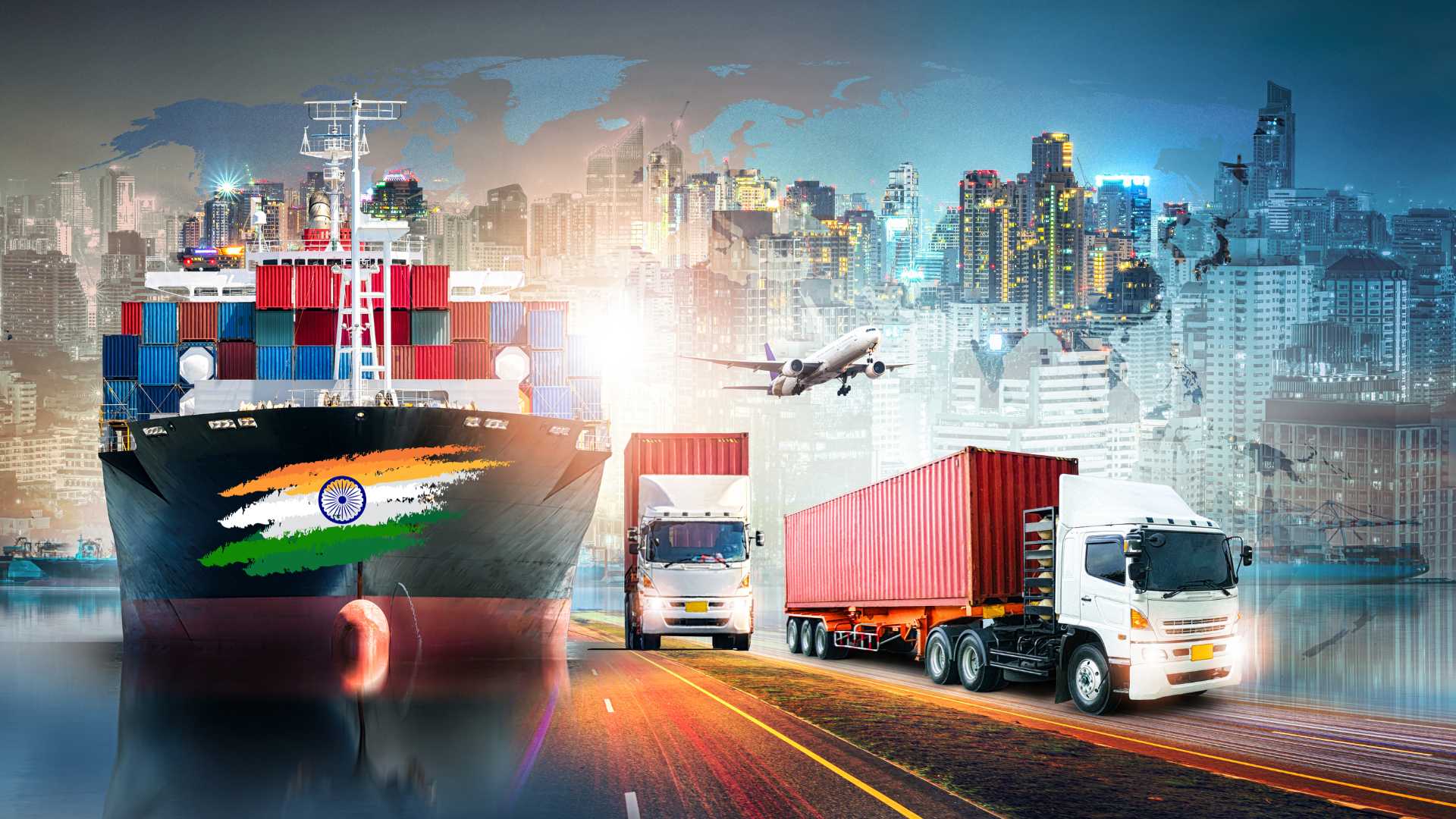
1. India’s Recent Trade Agreements: Strategic Economic Positioning
India has recently entered into multiple trade agreements, including with the European Union and the United States, which the Prime Minister described as being negotiated “from a position of strength.” These agreements aim to expand global market access for Indian manufacturing and services.
The government has presented these FTAs as part of a broader strategy to integrate India into global value chains (GVCs), diversify export destinations, and enhance the country’s credibility as a stable and predictable investment destination. Political stability and predictability were highlighted as factors restoring investor confidence.
The agreements also come amid domestic political debate, with concerns raised about their terms. However, the government frames them as long-term structural interventions rather than short-term trade concessions.
“Trade competitiveness is not only about tariffs. It is about liquidity, certification, technology adoption and compliance with global standards.” — Prime Minister Narendra Modi
Trade agreements in the current global order are instruments of strategic economic alignment. If India fails to integrate effectively, it risks exclusion from global supply chains, reduced export competitiveness, and slower industrial transformation.
Implications:
- Greater access to EU and US markets
- Strengthening India’s global economic positioning
- Increased investor confidence due to policy stability
- Political economy debate over domestic sectoral impact
GS Linkages:
- GS2: India and bilateral trade agreements
- GS3: External sector, export-led growth, industrial policy
- Essay: Globalisation and self-reliance
2. Beyond Tariffs: Structural Trade Competitiveness
The Prime Minister emphasised that modern trade competitiveness extends beyond tariff reductions. It includes liquidity access, certification standards, technology adoption, and compliance with global norms.
The FTAs are designed not only to reduce tariff barriers but also to address non-tariff barriers (NTBs), which often pose greater obstacles to exports. This reflects a shift from traditional trade diplomacy to regulatory harmonisation and standards integration.
By targeting sectors such as textiles, leather, processed food, engineering goods, chemicals, handicrafts, and gems and jewellery, the government is aligning trade policy with labour-intensive and MSME-dominated industries.
In a global economy driven by standards and supply chain integration, tariff reductions alone are insufficient. Failure to upgrade regulatory, technological, and quality ecosystems could neutralise the benefits of FTAs.
Key Focus Areas:
- Reduction of non-tariff barriers
- Certification and global compliance standards
- Technology adoption
- Liquidity support
Sectors Highlighted:
- Textiles
- Leather
- Processed food
- Engineering goods
- Chemicals
- Handicrafts
- Gems and jewellery
GS Linkages:
- GS3: MSME competitiveness, industrial policy
- Prelims: Difference between tariff and non-tariff barriers
3. MSMEs at the Centre of Global Integration
The government has placed Micro, Small and Medium Enterprises (MSMEs) at the centre of India’s trade integration strategy. MSMEs are expected to transition from peripheral suppliers to globally integrated, export-oriented enterprises.
This aligns with the “Zero Defect, Zero Effect” approach—ensuring quality manufacturing with minimal environmental impact. It reflects an effort to combine export promotion with sustainability.
The emphasis on youth, start-ups, and MSMEs indicates a structural transformation goal: converting domestic production networks into globally competitive value chain participants.
MSMEs form the backbone of employment generation in India. Without their technological and quality upgradation, trade agreements may disproportionately benefit large firms, widening structural inequalities.
Expected Outcomes:
- Export expansion
- Employment generation
- Integration into global value chains
- Technological upgrading
Challenges :
- Compliance costs
- Access to technology
- Standard certification barriers
- Financial constraints
GS Linkages:
- GS3: MSMEs, employment, manufacturing competitiveness
- GS2: Policy support architecture
4. Budget 2026–27: Capital Expenditure and Structural Transformation
The Prime Minister described the Union Budget 2026–27 as a “we are ready” moment rather than a compulsion-driven response. The Budget prioritises capital expenditure and infrastructure investment.
This reflects a supply-side growth strategy aimed at strengthening productive capacity before external demand shocks emerge. The focus is on systemic transformation rather than incremental reform.
Capital expenditure is expected to crowd in private investment by improving logistics, reducing transaction costs, and enhancing industrial productivity.
Infrastructure-led growth improves long-term potential output. If public capex does not crowd in private investment, fiscal expansion risks limited multiplier effects.
Reform Priorities for the Next Decade:
- Continued structural reforms
- Deepening innovation
- Simplification of governance
GS Linkages:
- GS3: Fiscal policy, infrastructure, growth strategy
- GS2: Governance simplification and regulatory reforms
5. Defence Modernisation and Strategic Preparedness
The Prime Minister linked recent defence reforms and expenditure increases to lessons from Operation Sindoor against Pakistan, while emphasising continuous preparedness.
A record allocation of ₹7.85 lakh crore has been made to defence in the 2026–27 Budget:
- 15% higher than the previous budget
- Largest allocation to any ministry/department
This underscores India’s approach of sustained defence modernisation rather than reactive spending.
In a volatile regional security environment, sustained defence preparedness enhances deterrence credibility. However, high defence expenditure must be balanced with fiscal sustainability and developmental priorities.
Implications:
- Strengthening national security
- Modernisation of armed forces
- Reinforcement of strategic autonomy
GS Linkages:
- GS3: Defence modernisation
- GS2: India-Pakistan relations
- IR: Security architecture in South Asia
6. AI, Data Infrastructure and Emerging Technologies
On the eve of the Global AI Summit in New Delhi, the Prime Minister highlighted tax incentives aimed at reducing the cost of building advanced data infrastructure and positioning India as a competitive destination for data storage and AI development.
The strategy aims to:
- Accelerate private investment in AI
- Reduce infrastructure costs
- Generate large-scale employment
- Attract global data flows
The statement “We invite the whole world’s data to reside in India” reflects India’s ambition to become a data and digital infrastructure hub.
In the digital economy, control over data infrastructure translates into economic and geopolitical influence. Failure to build AI capabilities may limit India’s role in next-generation growth sectors.
Expected Benefits:
- Job creation
- Increased FDI in digital infrastructure
- Strengthening innovation ecosystem
- Global positioning in AI governance
GS Linkages:
- GS3: Emerging technologies, AI, digital economy
- GS2: Data governance and regulation
- IR: Global technology competition
Conclusion
India’s recent trade agreements, capital expenditure push, defence modernisation, and AI-focused incentives reflect a coordinated strategy aimed at long-term structural transformation. The approach combines external integration, domestic capacity building, and strategic preparedness.
The effectiveness of this framework will depend on MSME upgradation, private sector responsiveness, fiscal sustainability, and regulatory simplification. If implemented cohesively, these measures could strengthen India’s transition toward a developed economy with enhanced global competitiveness and strategic autonomy.