
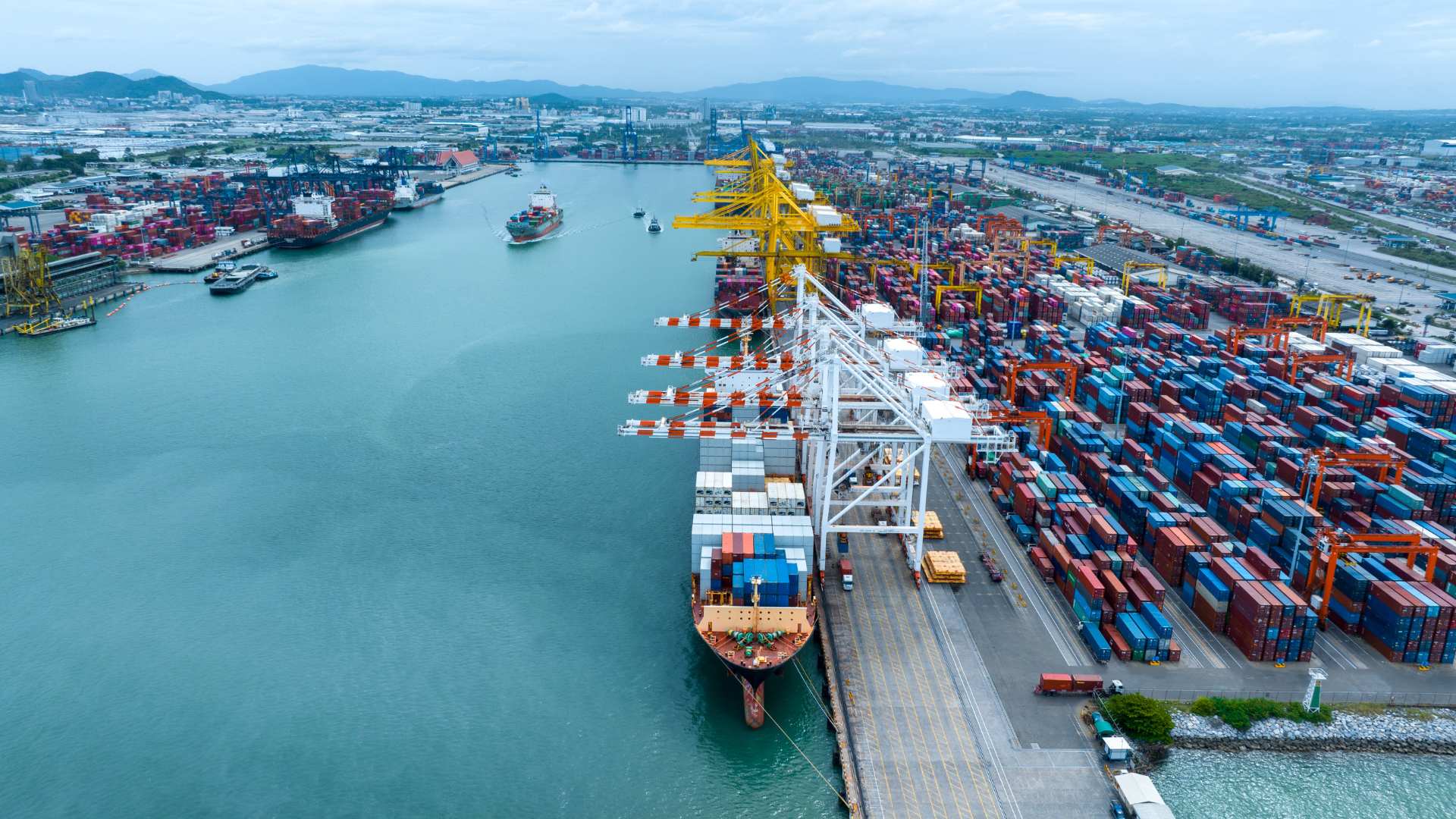
1. Context: Chabahar Port and India’s Strategic Connectivity Vision
India’s engagement with Iran’s Chabahar Port is rooted in long-term strategic and connectivity objectives rather than immediate commercial gains. The port provides India a rare maritime access point to Afghanistan and Central Asia, bypassing Pakistan, which has consistently denied overland transit.
Given India’s continental trade constraints, Chabahar has been positioned as a critical gateway for regional integration initiatives such as the International North-South Transport Corridor (INSTC). This enhances India’s geopolitical footprint in its extended neighbourhood.
However, the port’s viability is increasingly shaped by external geopolitical pressures, particularly United States sanctions on Iran. These pressures introduce uncertainty into India’s infrastructure diplomacy and regional connectivity ambitions.
If such strategic projects remain hostage to great power rivalries, India’s long-term regional integration goals risk repeated disruption.
“India has always believed that strong connectivity does not merely facilitate trade but also opens the doors to trust and development.” — Prime Minister Narendra Modi, SCO Summit
The governance logic is that connectivity infrastructure underpins regional influence; without strategic autonomy in access routes, India’s neighbourhood engagement remains structurally constrained.
2. Issue: US Sanctions Regime and Conditional Waivers
The United States has imposed extensive sanctions on Iran under domestic legislation, including the Iran Freedom and Counter-Proliferation Act (IFCA). These sanctions directly affect foreign entities operating infrastructure projects such as Chabahar.
In September 2025, the US revoked the earlier sanctions exception granted in 2018, exposing operators of Chabahar to potential penalties. This significantly altered the risk calculus for India’s involvement.
Subsequently, in October 2025, the US issued a conditional sanctions waiver valid till April 26, 2026, creating a temporary window for continued engagement. India’s Ministry of External Affairs has confirmed ongoing engagement with the US to operationalise this arrangement.
If the waiver lapses without renewal, India’s investments and presence at the port could face legal and financial constraints.
“We remain engaged with the US in working out this arrangement.” — Randhir Jaiswal, MEA Spokesperson
The policy logic is that sanctions waivers are instruments of strategic bargaining; uncertainty in their continuity weakens long-term infrastructure planning.
3. Strategic Investments and Economic Commitments
India signed a long-term contract with Iran in 2024 for the operation of the Shahid Beheshti Terminal at Chabahar, providing renewed momentum to the project. This marked a shift from ad-hoc engagement to structured investment.
- Investment commitments:
- $120 million direct investment
- $250 million line of credit
- Total commitment: $370 million
Despite these commitments, commercial traffic through the port remains limited. Strategic considerations, rather than trade volumes, continue to drive India’s involvement.
If strategic projects fail to translate into operational stability, sunk costs and credibility risks may emerge for India’s overseas infrastructure initiatives.
The development logic is that strategic infrastructure often precedes commercial viability; however, prolonged instability can erode both economic and diplomatic returns.
4. Implications: Geopolitical Pressures and Strategic Tightrope
US–Iran tensions, particularly over Iran’s nuclear programme, have intensified sanctions enforcement. Additionally, the announcement of a 25 per cent tariff on countries doing business with Iran has further complicated India’s position.
“Any country doing business with the Islamic Republic of Iran will pay a tariff of 25 per cent on any and all business being done with the United States of America.” — US President Donald Trump
India must now balance its strategic autonomy with its broader partnership with the United States. This creates a diplomatic tightrope between connectivity ambitions and economic exposure to US trade measures.
Domestic instability in Iran, including widespread protests and over 3000 reported arrests, further clouds the project’s outlook.
If unmanaged, these pressures could constrain India’s ability to pursue independent regional strategies.
The governance implication is that middle powers face compounding constraints when strategic projects intersect with sanctions and internal instability in partner states.
5. Regional Competition and Strategic Rationale
Chabahar’s strategic value is magnified by its proximity to Pakistan and China’s investments in Gwadar Port under the China–Pakistan Economic Corridor (CPEC). India views Chabahar as a counterbalance in the regional maritime landscape.
The port is also central to the INSTC, envisaged as a multimodal corridor linking India with Central Asia and Russia, reducing transit time and costs.
- Strategic relevance:
- Bypasses Pakistan for regional trade
- Counters China’s influence at Gwadar
- Anchors India’s Central Asia outreach
Without Chabahar, India’s continental trade access remains structurally limited.
The strategic logic is that alternative corridors reduce geopolitical vulnerability; absence of viable routes constrains India’s regional leverage.
6. Way Forward: Diplomatic Engagement and Strategic Patience
India continues to engage the United States to preserve the sanctions waiver while maintaining its strategic presence at Chabahar. However, experts note that India’s immediate room for manoeuvre is limited.
“Chabahar, at this point, is hostage to what is happening in Iran.” — Harsh V. Pant, Observer Research Foundation
The project’s long-term economic sustainability depends on Iran normalising relations with the global community. Until then, India may prioritise strategic signalling over commercial expansion.
A calibrated, patient approach allows India to retain strategic optionality without escalating diplomatic costs.
The governance logic is that strategic infrastructure in volatile regions requires patience and flexibility; premature withdrawal or escalation could foreclose long-term gains.
Conclusion
Chabahar Port remains a strategic asset shaped more by geopolitics than commerce. India’s challenge lies in sustaining its regional connectivity vision amid sanctions, instability, and great power rivalry. Long-term outcomes will depend on diplomatic engagement, regional stability, and the evolution of global power alignments.

.jpeg)