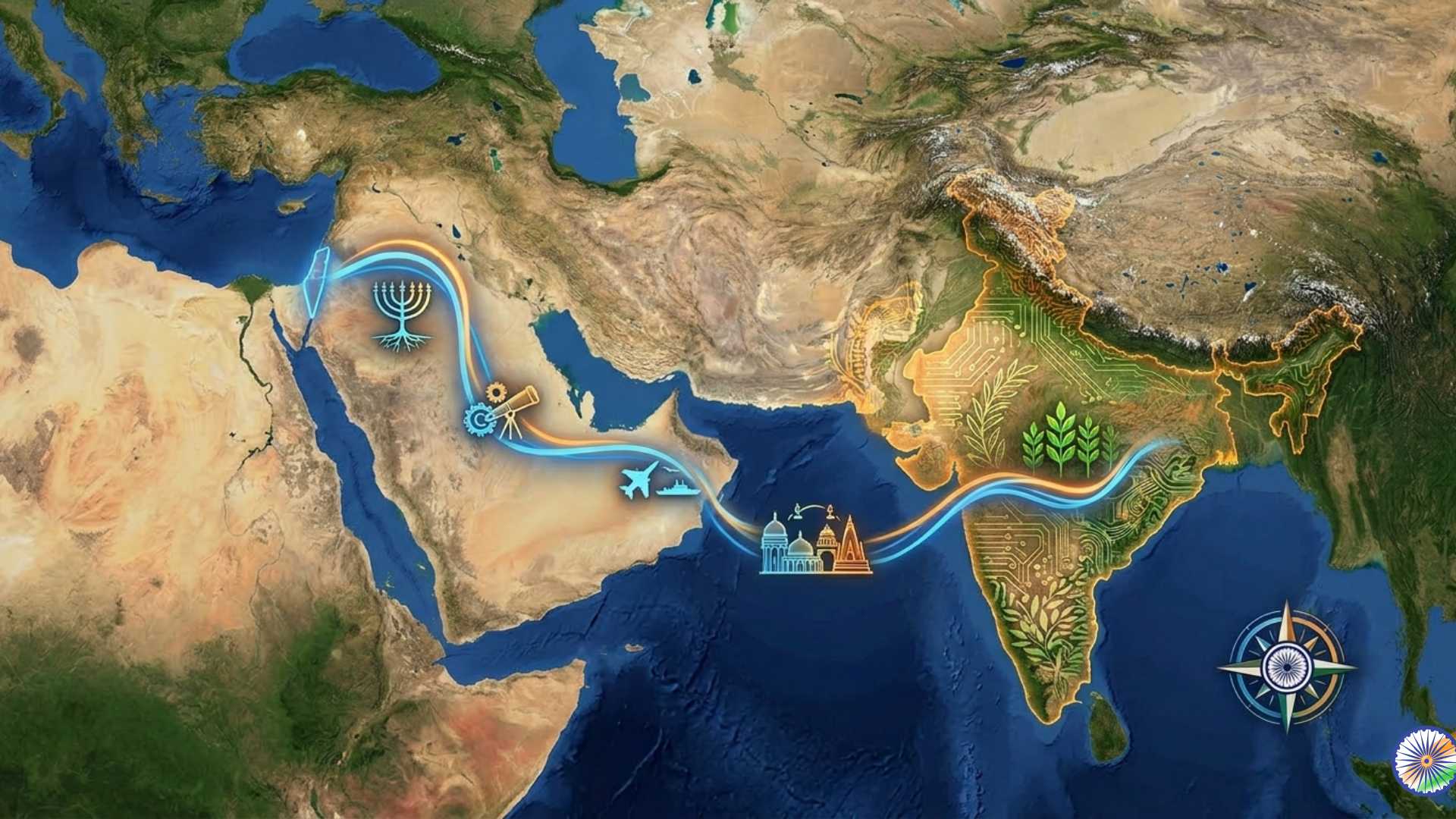
India’s Strategic Reset in West Asia: Navigating New Challenges

India's approach in West Asia demands a careful balance of interests amid dynamic geopolitical developments and security concerns.
G
Gopi
3 mins read
India’s West Asia policy shifts from balancing to strategic realism amid regional instability

INTRODUCTION

  • West Asia accounts for over $160 billion in India’s trade and hosts nearly 10 million Indian diaspora, making it vital for economic and strategic interests
  • The region supplies around 50–60% of India’s crude oil imports, underlining energy dependence
  • Ongoing instability since October 2023 and disruption risks in the Strait of Hormuz (~20% of global oil flow) have intensified geopolitical concerns
  • India’s policy reset reflects a shift towards strategic realism, autonomy, and interest-driven diplomacy

BACKGROUND: EVOLUTION OF INDIA–WEST ASIA RELATIONS

Historical Approach

  • Balanced engagement with Israel, Iran, and Arab nations
  • Consistent support for the Palestinian cause
  • Energy-focused ties with Gulf countries

Recent Transformation

  • Increased high-level diplomatic visits
  • CEPA signed with UAE and Oman
  • Expansion of defence and security cooperation
  • Adoption of de-hyphenation policy

KEY TRENDS SHAPING THE POLICY RESET

Intensified India–GCC Engagement

  • GCC as India’s largest socio-economic partner
  • Growth in trade, investment, diaspora, and security ties
  • India seen as a stable and responsible power

Shifting Regional Security Paradigm

  • Decline of U.S.-led Pax Americana
  • Rising threats from Iran
  • GCC seeking diversified security partnerships

FEATURES OF INDIA’S POLICY RESET

Shift Towards Realism

  • Focus on national interest over ideological balance
  • Reduced emphasis on traditional neutrality

Strategic Clarity

  • Independent articulation of foreign policy positions
  • Reduced diplomatic ambiguity

Active Political Signalling

  • High-level engagements during crises
  • Explicit support for regional stability

CRITICISM AND CONCERNS

DimensionCriticismAssessment
Diplomatic TimingIsrael visit seen as poorly timedInfluenced by hindsight bias
Moral PositionDilution of support for Palestine/IranReflects pragmatic shift, not abandonment
Strategic AutonomyAlignment with West/IsraelIndia still maintains independent stance
Strategic RiskFear of overreachValid concern; requires calibration

GEOPOLITICAL CONTEXT: GLOBAL POWER BEHAVIOUR

CountryApproach in West AsiaKey Insight
ChinaBought majority of Iranian oilEconomic pragmatism over ideology
RussiaStrategic ties with Iran but limited supportCapacity constraints
PakistanRhetoric vs pragmatic alignment with U.S.Strategic inconsistency
Arab StatesLimited response during Gaza conflictSelf-interest dominates

CHALLENGES IN INDIA’S APPROACH

Risk of Over-Correction

  • Possible alienation of Iran and Palestine
  • Impact on long-term strategic partnerships

Regional Complexity

  • Multiple rivalries (Saudi-UAE, Iran-Iraq, Türkiye-Pakistan)

Energy Vulnerability

  • Dependence on Strait of Hormuz
  • Supply chain disruptions

Soft Power Deficit

  • Limited humanitarian visibility
  • Risk to moral credibility

OPPORTUNITIES FOR INDIA

Security Engagement with GCC

  • GCC exploring alternatives to U.S.
  • Scope for India in defence and strategic cooperation

Economic Repositioning (“GCC+1 Strategy”)

  • GCC instability opens space for India
  • Opportunity to attract capital, talent, and supply chains

Strategic Expansion

  • Enhanced role in maritime security
  • Strengthening energy and connectivity diplomacy

KEY CONCEPTS

ConceptMeaning
De-hyphenation PolicyIndependent engagement with Israel and Palestine
Strategic AutonomyIndependent foreign policy decision-making
RealpolitikInterest-based pragmatic diplomacy
Pax AmericanaU.S.-dominated global/regional order

WAY FORWARD

  • Maintain balanced multi-alignment with all stakeholders
  • Adopt strategic hedging to manage uncertainties
  • Enhance humanitarian diplomacy
  • Diversify energy routes and partnerships (e.g., Chabahar Port)
  • Ensure flexible and adaptive foreign policy

CONCLUSION

  • India’s West Asia policy reflects a transition towards pragmatic realism grounded in national interest
  • Sustained effectiveness requires balance, flexibility, and inclusivity
  • As Lord Palmerston stated, “Nations have no permanent friends or enemies, only permanent interests”, aptly guiding India’s approach

UPSC MAINS QUESTION (250 WORDS)

  • “India’s recent policy reset in West Asia marks a shift from balancing diplomacy to strategic realism.” Critically examine the drivers, challenges, and implications of this shift.

Quick Q&A

Everything you need to know

India’s recent policy reset towards West Asia represents a shift from a cautious, balancing approach to a more assertive and interest-driven diplomacy. This transformation is rooted in the growing economic, strategic, and diaspora linkages with the region.

Key features of the reset include:

  • Enhanced diplomatic engagement: High-level visits, including multiple visits by the Prime Minister to GCC countries, Israel, Iran, and Palestine.
  • Economic integration: Signing of Comprehensive Economic Partnership Agreements (CEPA) with UAE and Oman, with ongoing negotiations with GCC and Israel.
  • Strategic autonomy: India has moved away from ‘balancing rhetoric’ and articulated independent positions on contentious issues.

For example, India’s direct outreach to both Israel and GCC countries during recent conflicts reflects its willingness to engage all stakeholders based on national interest rather than ideological positioning.

Thus, the policy reset reflects a transition towards realpolitik, strategic clarity, and confidence as an emerging global power.

West Asia holds critical importance for India due to its economic, energy, geopolitical, and diaspora linkages. The region is indispensable for India’s growth and security objectives.

Key reasons include:

  • Energy security: A significant portion of India’s oil and gas imports comes from the Gulf region.
  • Trade and investment: Bilateral trade with GCC exceeds $160 billion, making it India’s largest regional trading partner.
  • Indian diaspora: Around 10 million Indians reside in the Gulf, contributing significantly through remittances.

For instance, countries like UAE and Saudi Arabia are key partners in infrastructure investment and energy cooperation.

Additionally, West Asia’s geopolitical volatility directly impacts India’s interests, including maritime security in the Strait of Hormuz.

Therefore, West Asia is not just a neighborhood concern but a core pillar of India’s foreign policy and economic stability.

The evolving geopolitical landscape in West Asia—marked by conflicts, shifting alliances, and declining U.S. dominance—has compelled India to adopt a more pragmatic and flexible diplomatic approach.

Key influences include:

  • Decline of Pax Americana: GCC countries are reassessing their dependence on the U.S. for security.
  • Regional instability: Conflicts involving Iran, Israel, and Gulf states have heightened security concerns.
  • Emerging multipolarity: Countries are diversifying partnerships, creating opportunities for India.

For example, India’s outreach to both Israel and Iran, despite their rivalry, demonstrates its effort to maintain strategic balance while prioritizing national interests.

India has also emphasized hard diplomacy, avoiding traditional diplomatic ambiguity and clearly aligning its positions with its interests.

Thus, geopolitical shifts have driven India towards a multi-aligned, interest-based, and opportunity-driven foreign policy in West Asia.

India’s assertive policy reset offers significant opportunities but also entails certain risks, requiring careful calibration.

Advantages include:

  • Strategic gains: Stronger defence and security ties with GCC and Israel.
  • Economic benefits: Enhanced trade, investment, and energy partnerships.
  • Global positioning: Recognition as an autonomous and credible power.

Risks include:
  • Strategic overreach: Increased involvement in volatile conflicts may expose India to security threats.
  • Alienation of partners: Perceived neglect of traditional allies like Iran or Palestine.
  • Domestic criticism: Concerns about moral and ideological shifts in foreign policy.

For instance, criticism of India’s perceived tilt towards Israel highlights the delicate balancing act required.

Thus, while the reset enhances India’s strategic footprint, it must be managed with nuanced diplomacy, inclusivity, and long-term vision.

India has operationalized its West Asia policy through a series of concrete diplomatic, economic, and strategic initiatives.

Key examples include:

  • High-level visits: Multiple visits by the Prime Minister to GCC countries, Israel, and Iran.
  • Economic agreements: CEPA with UAE and Oman, boosting bilateral trade and investment.
  • Crisis diplomacy: Direct communication with regional leaders during conflicts to reassure support.

For instance, India’s outreach during recent hostilities, including calls to GCC leaders and engagement with Iran, reflects proactive diplomacy.

Additionally, India has strengthened defence cooperation and participated in regional security dialogues.

These actions demonstrate a shift from passive engagement to active and strategic participation in regional affairs.

The ongoing West Asia crisis presents India with significant strategic and economic opportunities as the regional order undergoes transformation.

Key opportunities include:

  • Security partnerships: GCC countries may diversify away from U.S. dependence and explore ties with India.
  • Economic positioning: India can emerge as an alternative hub for trade, investment, and talent.
  • Geopolitical influence: Enhanced role in regional diplomacy and conflict resolution.

For example, disruptions in GCC economies due to conflict have led to discussions on a “GCC+1” strategy, where India could play a central role.

Additionally, India’s stable political and economic environment makes it an attractive destination for global capital.

Thus, the crisis offers India a historic opportunity to enhance its regional influence, provided it adopts a strategic and balanced approach.

India’s West Asia policy reset has attracted criticism on several grounds, reflecting concerns about its strategic and ethical implications.

Major criticisms include:

  • Timing of diplomatic moves: Visits coinciding with regional conflicts are seen as poorly timed.
  • Abandonment of traditional allies: Perceived shift away from support for Palestine and Iran.
  • Loss of strategic autonomy: आरोप कि India is aligning too closely with Western or Israeli interests.

However, many of these criticisms are context-dependent. For instance, diplomatic visits are often scheduled well in advance, making hindsight criticism less valid.

Moreover, other global actors like China and Russia have also pursued interest-driven policies, highlighting the realism of India’s approach.

Thus, while some concerns are valid, the policy largely reflects a necessary adaptation to changing geopolitical realities, emphasizing national interest over ideological consistency.

Attribution

Original content sources and authors

Sign in to track your reading progress

Comments (0)

Please sign in to comment

No comments yet. Be the first to comment!