1. India’s Security Linkages with West Asia
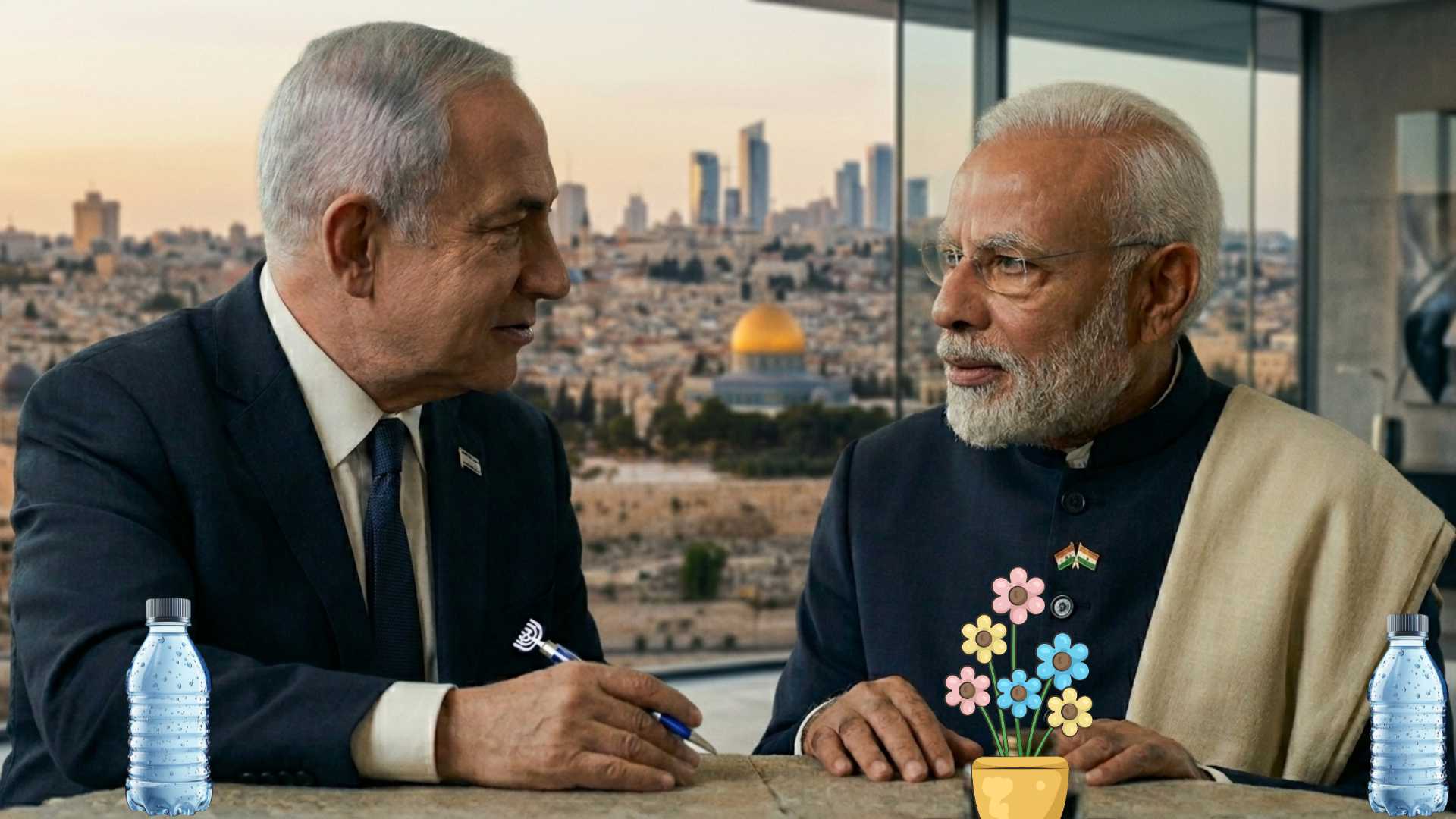
Prime Minister Narendra Modi’s 2026 visit to Israel underscored that India’s security interests are “directly linked” to peace and stability in West Asia. This reflects India’s long-standing position that regional instability in the Gulf has direct spillover effects on its energy security, diaspora welfare, and strategic environment.
The visit occurred amid escalating tensions between Iran and the Israel–U.S. coalition, including reports of large-scale U.S. military build-up over Iran’s nuclear energy position. In this context, India reiterated its support for dialogue and peaceful resolution of disputes, aligning with its traditional foreign policy approach of strategic autonomy and non-alignment in regional rivalries.
The Gulf region holds vital importance for India because of its energy dependence and the presence of a large Indian diaspora. Any disruption in the region could impact oil supplies, remittances, and maritime trade routes, thereby affecting India’s macroeconomic stability.
“Peace and stability in West Asia are directly linked to India’s security interests.” — Prime Minister Narendra Modi
India’s emphasis on dialogue reflects a pragmatic assessment: instability in West Asia directly threatens India’s energy flows, trade routes, and citizens abroad. Ignoring diplomatic engagement would increase economic vulnerability and strategic risks.
Key Strategic Linkages:
- Over 1 crore Indian expatriates in GCC countries
- Gulf region critical for India’s energy security
- Maritime routes in West Asia central to India’s trade flows
GS Linkages: GS2 (International Relations), GS3 (Energy Security), Essay (India and the Global South)
2. India’s Position on Terrorism and Regional Stability
During bilateral talks, India reiterated its uncompromising stance against terrorism in “all its forms and manifestations.” This reflects policy continuity in India’s global diplomacy, where counter-terrorism remains a core agenda in multilateral and bilateral engagements.
India and Israel have historically cooperated in defence and security, particularly in counter-terrorism, intelligence sharing, and homeland security technologies. The joint statement reaffirmed that both sides will continue to oppose terrorism and its supporters.
The emphasis on terrorism is also strategically relevant amid tensions involving Iran, Israel, and regional actors, where non-state actors and proxy conflicts have historically played destabilising roles.
“Terrorism has no place in the world. In any form and in any manifestation, terrorism cannot be accepted.” — Prime Minister Narendra Modi
By consistently foregrounding counter-terrorism, India strengthens normative legitimacy in global forums and deepens security partnerships. Failure to maintain clarity on this issue could weaken deterrence and strategic credibility.
Areas of Cooperation:
- Defence and security collaboration
- Intelligence sharing
- Cyber security
- Strategic technologies
GS Linkages: GS3 (Internal Security), GS2 (Bilateral Relations), Prelims (India–Israel defence cooperation)
3. India-Middle East Economic Corridor (IMEC) and I2U2 Initiative
The two leaders agreed to work with “renewed momentum” on the India–Middle East Economic Corridor (IMEC) and the I2U2 grouping (India–Israel–UAE–USA). These initiatives aim to enhance connectivity, digital infrastructure, trade, and food security cooperation.
IMEC is envisioned as a strategic connectivity project linking India with Europe via West Asia. However, progress remains sensitive to regional geopolitics, particularly Israel–Saudi Arabia relations and broader Gulf tensions.
The Foreign Secretary clarified that while regional tensions affect the pace of implementation, participating countries are advancing components in their national capacities. This suggests a modular, flexible implementation approach.
Connectivity initiatives like IMEC represent geo-economic statecraft. If regional tensions stall them, India risks losing strategic leverage in global supply chains and infrastructure diplomacy.
Strategic Objectives of IMEC & I2U2:
- Trade facilitation and logistics integration
- Digital Public Infrastructure collaboration
- Food production and supply chain resilience
- Enhanced regional connectivity
GS Linkages: GS2 (Regional Groupings), GS3 (Infrastructure, Supply Chains), Essay (Connectivity as strategy)
4. Economic and Technological Cooperation
The visit resulted in multiple Memorandums of Understanding (MoUs) across trade, defence, space, energy, cyber security, education, and innovation. Notably, cooperation in “geophysical exploration” using advanced geophysical and AI technologies was formalised.
This agreement aims to enhance mineral exploration and promote sustainable resource development. In the context of global competition over critical minerals and advanced technologies, such collaboration has strategic economic implications for India’s industrial and clean energy transitions.
The joint statement described bilateral relations as a “special strategic partnership” and emphasised progress toward an early signing of a Free Trade Agreement (FTA). An FTA could significantly deepen trade and investment ties.
Deepening technological and trade integration enhances India’s economic diversification and reduces overdependence on specific partners. Without such partnerships, India may lag in high-technology and resource security domains.
Domains of Cooperation:
- Trade and investment
- Space collaboration
- Energy and critical technologies
- Cyber security
- Scientific research and innovation
- AI-enabled mineral exploration
GS Linkages: GS3 (Science & Technology, Resource Security), GS2 (Trade Agreements), Prelims (India–Israel FTA negotiations)
5. India’s Diplomatic Balancing in West Asia
India’s position reflects calibrated diplomacy: strengthening ties with Israel while maintaining engagement with Gulf states and Iran. The Prime Minister expressed readiness to support peaceful solutions if required, reinforcing India’s image as a responsible stakeholder.
The regional context includes stalled Israel–Saudi Arabia normalization due to Palestinian statehood concerns. This dynamic directly affects IMEC’s feasibility, illustrating how geopolitical tensions shape economic diplomacy.
India’s outreach aligns with its broader Global South positioning, advocating dialogue and peaceful resolution. This reinforces its aspiration to play a constructive middle-power role in international conflicts.
Balancing competing regional actors preserves India’s strategic autonomy. A tilt toward one bloc could jeopardize energy supplies, diaspora safety, and regional partnerships.
GS Linkages: GS2 (India and its Neighbourhood/West Asia), Essay (Strategic Autonomy), Prelims (I2U2 composition)
6. Symbolism and Soft Power Diplomacy
The visit included a tribute at the Yad Vashem Holocaust Museum and a ceremonial tree planting with Israel’s President. Such symbolic gestures strengthen people-to-people ties and signal respect for historical memory.
High-level visits, especially nine years after the landmark 2017 visit, signal continuity in bilateral priorities. Diplomatic symbolism complements hard strategic cooperation by building trust and long-term partnership narratives.
Symbolic diplomacy reinforces political goodwill and societal legitimacy for strategic partnerships. Without soft power engagement, bilateral ties may remain transactional rather than strategic.
GS Linkages: GS2 (Diplomacy and Soft Power), GS1 (Modern World History – Holocaust context)
Conclusion
Prime Minister Modi’s 2026 Israel visit reflects India’s calibrated West Asia strategy—balancing security, energy, diaspora protection, connectivity initiatives, and technological cooperation amid rising regional tensions. By advocating dialogue while deepening strategic partnerships, India seeks to safeguard its long-term economic and geopolitical interests in a volatile yet vital region.