
1. Strategic Context: IIT Madras Global Research Foundation and India’s Knowledge Diplomacy
India’s higher education institutions are increasingly being positioned as instruments of global engagement, moving beyond domestic capacity-building to international knowledge partnerships. The launch of the IITM Global Research Foundation reflects this shift, aiming to project India’s academic, research, and innovation strengths onto the global stage in a structured manner.
This initiative aligns with India’s broader foreign policy approach of leveraging domestic institutions to generate international influence without coercion. By linking education, research, startups, and industry collaboration, India seeks to translate intellectual capital into strategic soft power and developmental outcomes.
The public-facing dimension, such as the IITM Festival Fortnight with open labs and innovation centres, reinforces transparency and societal participation in science and technology. This strengthens public trust in institutions and builds a science-oriented civic culture.
If such institutional globalisation is not pursued, India risks remaining a talent exporter rather than a knowledge partner, limiting long-term strategic influence in global governance and innovation ecosystems.
The governance logic lies in converting domestic excellence into global relevance; failure to do so constrains India’s soft power and reduces returns on public investment in higher education.
2. Foreign Policy Philosophy: Strategic Autonomy and Resource Optimisation
India’s contemporary diplomacy is framed around strategic autonomy, where national interest is pursued without formal alignment while engaging multiple partners. This approach recognises limited resources and seeks maximum impact through calibrated engagement.
The principle of Vasudhaiva Kutumbakam underlines India’s worldview of non-hostility and cooperative engagement. However, this idealism is balanced by realism—acknowledging constraints and prioritising outcomes through competitiveness and institutional leverage.
India’s foreign policy thus focuses on selective partnerships that amplify domestic strengths, rather than diffuse commitments. This ensures sustainability and credibility in international relations.
Ignoring resource optimisation could lead to overstretch, diluted diplomatic focus, and reduced effectiveness in safeguarding national interests.
The underlying logic is prioritisation: strategic autonomy allows flexibility, but only disciplined allocation of resources sustains long-term diplomatic effectiveness.
3. Security Dimension: Terrorism, Neighbourhood Challenges, and Right to Self-Defence
India’s external security environment continues to be shaped by persistent cross-border terrorism from its western neighbour. The articulation of an unequivocal right to self-defence underscores a shift from restraint-driven signalling to outcome-oriented deterrence.
The position that “how we exercise that right is up to us” reflects sovereign decision-making and rejection of external prescriptions. This is critical for maintaining deterrence credibility and domestic confidence.
Linking security issues to cooperative arrangements, such as water-sharing, highlights the limits of goodwill-based agreements when core security concerns remain unaddressed.
Failure to assert and communicate this position risks normalising asymmetric aggression and weakening India’s negotiating leverage in bilateral and multilateral forums.
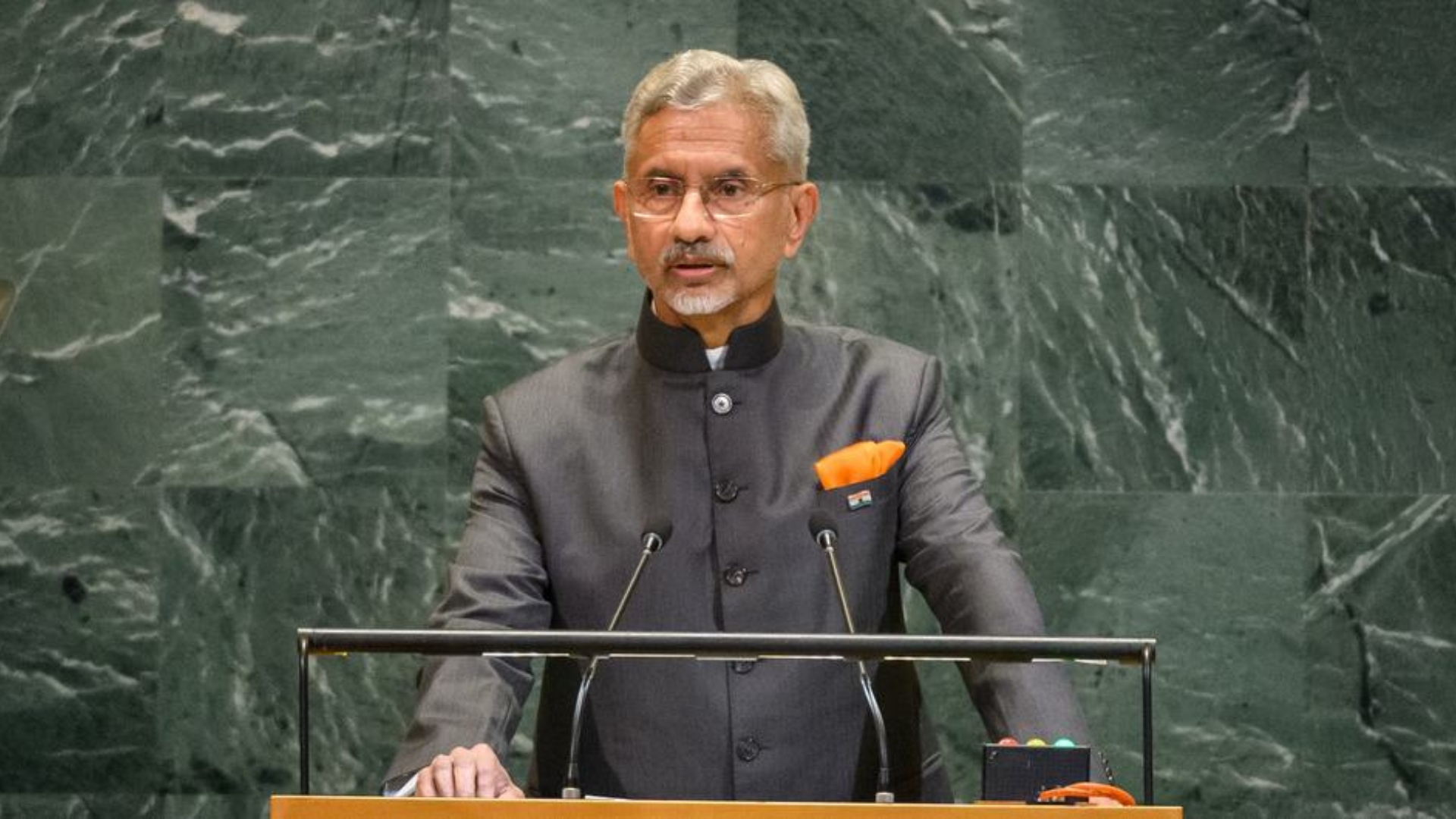
"If a country decides that they will deliberately, persistently, unrepentantly continue with terrorism, we have a right to defend our people against terrorism." — S. Jaishankar
The governance rationale is deterrence through clarity; ambiguity or restraint without reciprocity can embolden hostile actors and undermine internal security.
4. Treaties and Reciprocity: Re-evaluating Good Neighbourliness
The reference to the Indus Water Treaty illustrates the principle that long-standing cooperative frameworks depend on reciprocal conduct. Agreements rooted in goodwill cannot be insulated indefinitely from hostile actions.
India’s stance signals that treaties are not merely technical instruments but embedded in broader political and security contexts. Sustained terrorism erodes the moral and political basis of unilateral concessions.
This approach does not imply treaty abrogation but introduces conditionality linked to behaviour, reinforcing accountability in international relations.
Ignoring reciprocity could lock India into asymmetric obligations, constraining policy options amid evolving security realities.
The logic is balance: cooperation without reciprocity weakens state capacity to protect national interests and undermines treaty legitimacy.
5. Neighbourhood First in Practice: Developmental Assistance and Crisis Support
Despite security challenges, India emphasises that it is “blessed with many good neighbours,” reflected in its crisis-responsive regional outreach. During the COVID-19 pandemic, neighbouring countries received their first vaccine consignments from India.
Similarly, India’s response to the Ukraine conflict-induced shortages demonstrated practical solidarity through assistance in fuel, food, and fertilisers. These actions reinforced India’s role as a reliable regional partner.
Sri Lanka’s acute financial crisis saw India extend a $4 billion support package at a critical juncture, complementing slower multilateral processes.
Neglecting such regional responsibilities could create strategic vacuums, increasing extra-regional influence in South Asia.
- Key Evidence:
- $4 billion assistance to Sri Lanka during financial crisis
- Vaccine-first policy for neighbouring countries during COVID-19
The development logic is stability through support; regional neglect translates into insecurity and diminished influence.
6. Education as Foreign Policy Lever: Global Campuses and Institutional Presence
The example of an IIT Madras campus in Tanzania demonstrates how educational institutions can serve as long-term diplomatic assets. Such campuses embed India’s presence in partner countries beyond transactional diplomacy.
Educational outreach builds local capacity, fosters goodwill, and creates enduring people-to-people linkages. It also aligns with South-South cooperation principles, enhancing India’s normative leadership.
Without such initiatives, India’s global engagement risks being episodic and personality-driven rather than institutionalised.
The strategic logic is permanence: institutions outlast political cycles and anchor India’s influence in partner societies.
7. Operationalising Global Engagement: IITM Global Rollout and Partnerships
The IITM Global Research Foundation operationalises knowledge diplomacy through structured international partnerships. Multiple MoUs across the US, UK, Germany, Dubai, Asia-Pacific, and India-for-Global initiatives reflect a diversified engagement strategy.
The four-pronged approach—technology transfer, joint development, startup internationalisation, and foreign investment—integrates academia with industry and entrepreneurship.
Initial presence in five locations (US, Dubai, Malaysia, Germany, and others) ensures focus before scaling, reducing implementation risk.
Failure to integrate startups and research with global markets would limit innovation translation and economic returns.
- Focus Areas:
- Joint research and technology transfer
- Startup global market access
- Foreign investment inflows into Indian innovation
The governance logic is integration: aligning research, startups, and diplomacy maximises innovation-led growth.
Conclusion
The article highlights India’s evolving diplomacy that integrates security realism, developmental responsibility, and knowledge-based soft power. By leveraging institutions like IIT Madras globally while maintaining strategic autonomy and neighbourhood engagement, India seeks sustainable influence. Long-term governance outcomes depend on institutionalising this approach to balance national interest, regional stability, and global contribution.