1. Recent Tariff Developments and Strategic Signalling
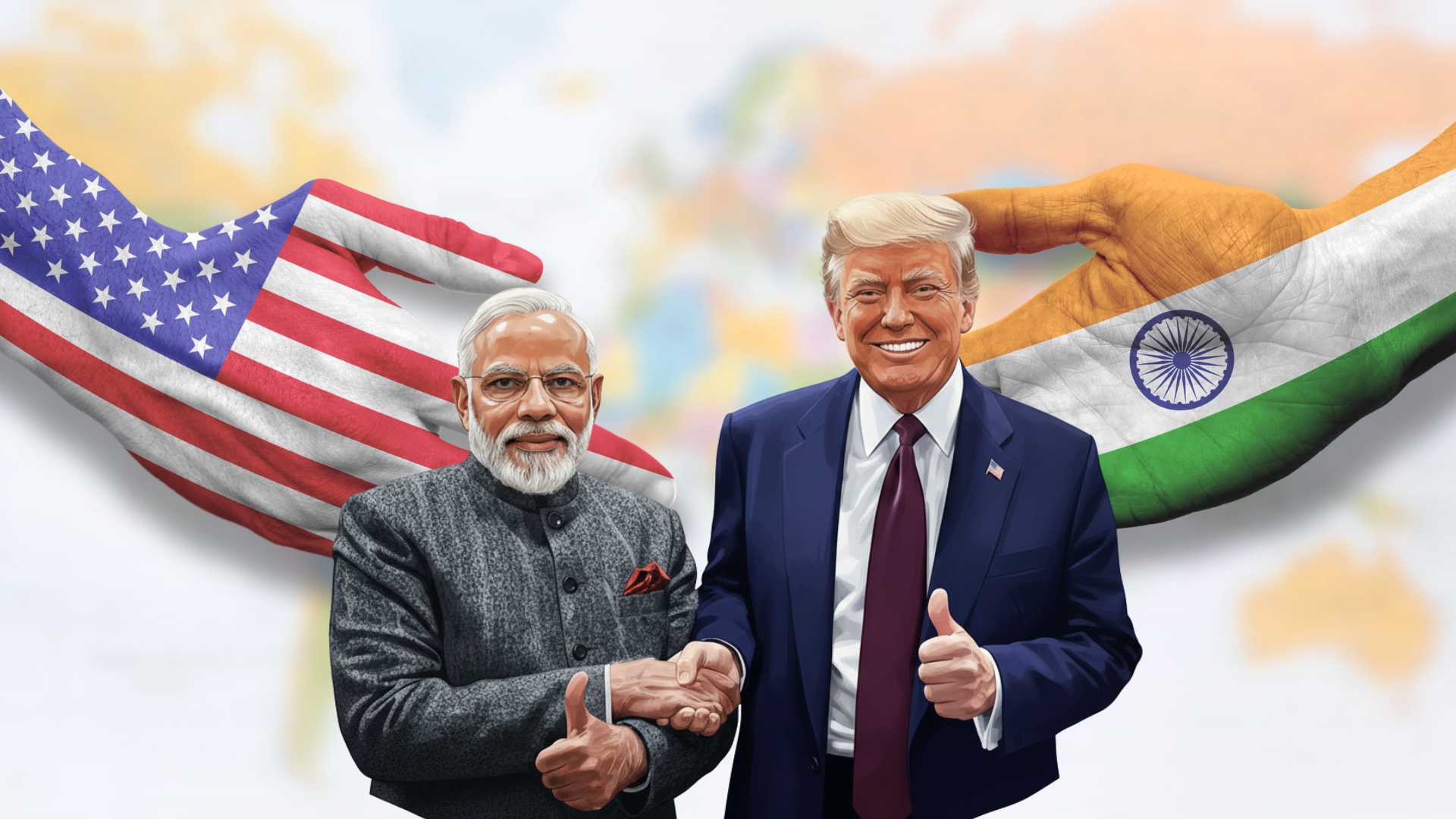
A significant shift occurred in India–U.S. trade relations after a period of strain caused by multiple tariff-related disputes. Prime Minister Narendra Modi announced that “Made in India” products will now attract a reduced U.S. tariff of 18%, a major relief from the 50% penalty tariffs imposed by the U.S. President in August 2025. This development followed a telephonic discussion between the two leaders and signals a renewed willingness to stabilise trade ties.
The announcement coincided with President Donald Trump’s post on social media, declaring that both countries had “agreed” to a trade deal wherein the U.S. would lower its “reciprocal” tariff from 25% to 18%. This is presented as a mutual effort to recalibrate tariff regimes that had burdened bilateral trade flows.
Political reactions emerged swiftly. While the Indian government framed the development as cooperative and mutually beneficial, opposition parties criticised the move as unilateral concession. This divergence highlights the domestic political sensitivity around trade policy.
The underlying governance logic is that tariff stability reduces uncertainty for exporters, preserves market competitiveness, and prevents broader geopolitical friction. Ignoring these considerations may lead to reduced export earnings, weakened investor confidence, and avoidable diplomatic strain.
Impacts:
- Reduced tariff from 25%/50% to 18% expected to benefit Indian exporters.
- May soften the effect of earlier U.S. penalty tariffs.
- Political contestation in India indicates domestic scrutiny of trade concessions.
2. Claims on Additional Conditions: Energy Purchases and Market Access
President Trump claimed that India had agreed to stop purchasing Russian oil and would increase energy imports from the U.S. and potentially Venezuela. He further stated that India “committed” to purchase U.S. products worth $500 billion, though the Indian Ministry of External Affairs has not yet confirmed these assertions. Such conditionalities, if accurate, reflect the use of energy and trade as leverage in bilateral negotiations.
India’s traditional approach emphasises diversified energy sourcing to ensure resilience and price stability. Any shift in oil purchasing patterns would have long-term implications for foreign policy autonomy and supply security. The absence of official confirmation indicates ongoing diplomatic calibration.
These claims also touch upon non-tariff barriers, with Trump stating that India would “reduce them to zero”. This represents a high benchmark for regulatory convergence that India historically approaches cautiously to protect domestic sectors.
From a governance standpoint, major shifts in energy sourcing or regulatory structures affect domestic prices, strategic autonomy, and industrial competitiveness. Neglecting these dimensions could create economic vulnerabilities and weaken India’s bargaining position.
Possible implications:
- Potential reorientation of India’s crude oil sourcing.
- Increased U.S. expectations regarding market access.
- Need for clarity to prevent misinformation affecting markets.
3. Diplomatic Backdrop: High-Level Engagements and Strategic Themes
The timing of the leadership-level conversation coincides with External Affairs Minister S. Jaishankar’s visit to the United States (February 2–4). His participation in the Critical Minerals Ministerial, convened by U.S. Secretary of State Marco Rubio, reflects a strategic push to build resilient supply chains for clean energy transitions. This theme has become central to global economic diplomacy.
Dozens of mineral-producing countries—including Kenya, South Korea, and the Democratic Republic of Congo—will be part of the Ministerial. Discussions will span mining, processing, recycling, and pricing mechanisms, making it a comprehensive attempt to reduce dependence on China-led supply chains.
India’s participation aligns with its broader goals under energy transition and economic security. Strengthening partnerships in critical minerals strengthens India’s ability to meet long-term needs in batteries, electronics, and renewable energy manufacturing.
The reasoning is that robust mineral supply chains are crucial for achieving national energy goals and reducing strategic vulnerabilities. Failure to engage could deepen dependence on external suppliers and constrain domestic manufacturing ambitions.
Focus areas of the Ministerial:
- Supply chain resilience
- Clean energy transitions
- Cooperation across mining → processing → recycling → pricing
- Coordinated strategies to reduce China-dependence
4. Geopolitical and Economic Implications for India
Recent developments reflect the broader recalibration of India–U.S. relations as both countries navigate global economic turbulence and shifting geopolitical alignments. Tariff relaxation serves as an immediate confidence-building measure, but underlying divergences—energy sourcing, strategic autonomy, and trade balance—remain significant.
India seeks balanced ties with major powers while advancing its developmental priorities. The U.S., however, frames trade within broader geopolitical concerns, including energy and strategic supply chain security. Navigating these expectations requires careful diplomacy to maintain policy independence while maximising economic opportunities.
The domestic political debate highlights how trade concessions can influence electoral narratives and public perceptions of sovereignty. Such sensitivities underscore the need for transparency and comprehensive communication from government agencies.
Ignoring these intertwined economic–geopolitical linkages can undermine long-term foreign policy coherence, create market uncertainties, and weaken policy credibility during global disruptions.
Key dimensions:
- India balancing strategic autonomy with enhanced U.S. engagement.
- U.S. emphasis on “reciprocity” in trade and energy.
- Domestic debates around concessions and competitiveness.
Conclusion
The renewed tariff concessions mark a positive turn in India–U.S. economic relations, offering immediate relief to exporters and opening avenues for deeper trade engagement. However, the accompanying claims on energy purchases and market access require careful verification and calibrated negotiation. India’s participation in the critical minerals framework further positions it within emerging global supply chains essential for long-term energy and economic security. Sustained diplomatic clarity, strategic autonomy, and transparent communication will be key to ensuring stable and mutually beneficial ties in the evolving geopolitical landscape.