Introduction
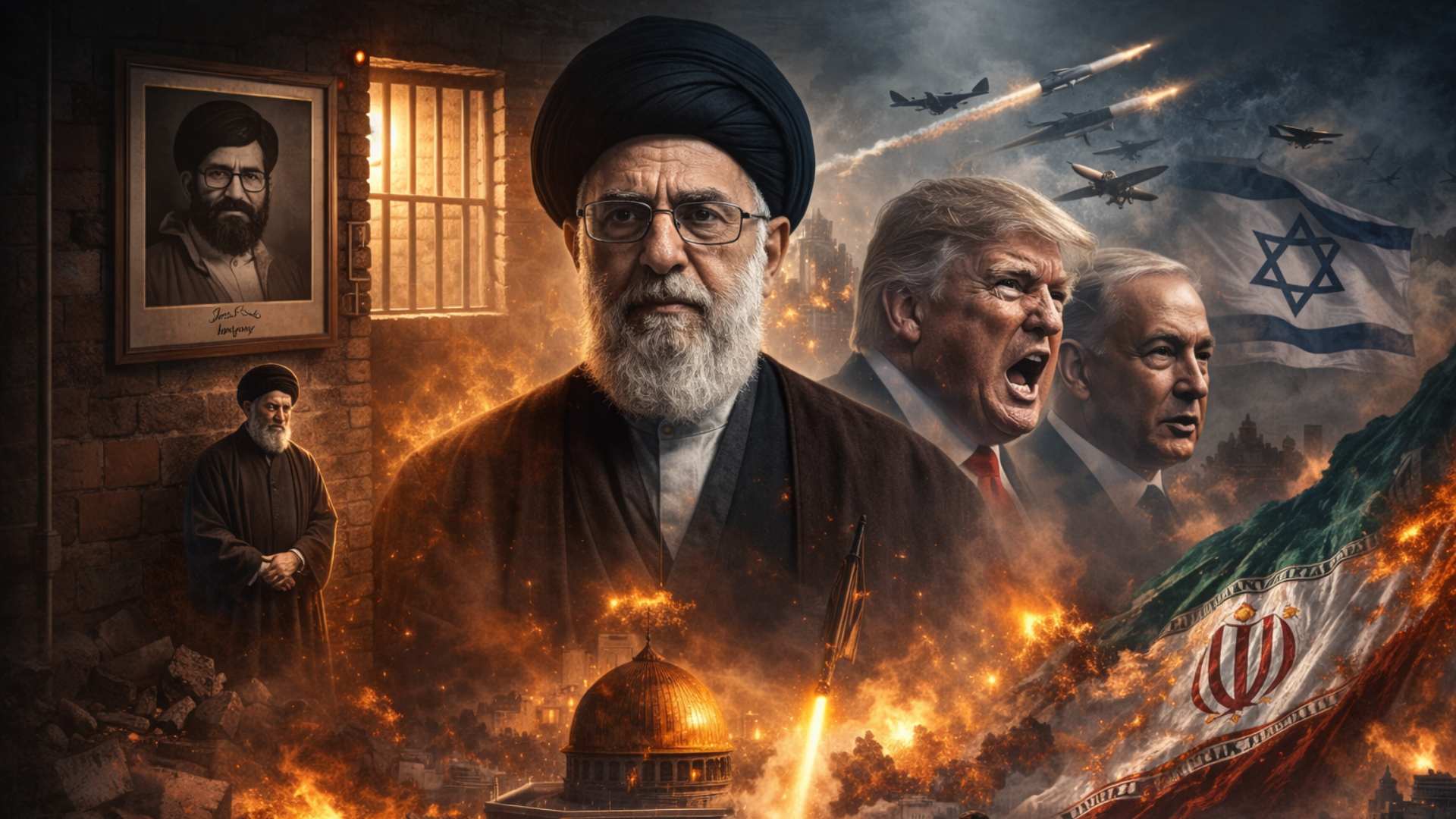
The assassination of Ayatollah Seyyed Ali Khamenei in a joint U.S.–Israeli strike marks a watershed moment in West Asian geopolitics. As Iran’s Supreme Leader (Rahbar) since 1989, Khamenei was not merely a political head but the pivot of a theocratic state built on Vilayat-e-Faqih (Guardianship of the Jurist). His death creates both a power vacuum within Iran and a strategic inflection point for the region.
Historical Roots of Khamenei’s Authority
Khamenei’s political journey mirrors the trajectory of the Islamic Republic itself:
- Influenced by the 1953 CIA–MI6 coup against Prime Minister Mohammad Mossadegh.
- Active participant in anti-Shah protests led by Ayatollah Ruhollah Khomeini.
- Imprisoned and tortured under SAVAK.
- Survived a 1981 assassination attempt.
- Became President (1981–89).
- Elevated to Supreme Leader after Khomeini’s death in 1989.
The Iranian Constitution vests the Supreme Leader with control over:
- Armed forces
- Judiciary
- State broadcasting
- Guardian Council
- Strategic foreign policy
Thus, his role transcended electoral politics.
The Theocratic Model: Vilayat-e-Faqih
The Iranian system combines republican institutions with clerical supremacy. While Presidents were elected (Khatami, Ahmadinejad, Rouhani), ultimate authority rested with the Supreme Leader.
This created:
- Institutional stability
- Ideological rigidity
- Limited scope for structural reform
Reformist waves (1997, 2009, 2022 protests) were suppressed when perceived as threats to the system.
Internal Challenges Under Khamenei
1️⃣ Economic Crisis
- Hyperinflation, currency depreciation
- Impact of Western sanctions
- Collapse of the 2015 JCPOA nuclear deal after U.S. withdrawal (2018)
2️⃣ Political Unrest
- Green Movement (2009)
- Frequent protests demanding civil liberties
- Growing generational divide
3️⃣ Erosion of External Influence
- Weakening of the “Axis of Resistance”
- Israeli offensives against Hamas, Hezbollah
- Syrian regime collapse
- Limited support from Russia and China
Strategic Impact of the Assassination
1️⃣ Internal Power Vacuum
Iran’s succession mechanism involves:
- Assembly of Experts
- Senior clerical consultations
- Revolutionary Guard influence
The absence of a towering ideological figure may:
- Trigger elite contestation
- Strengthen the IRGC’s political role
- Create instability within the clerical hierarchy
2️⃣ Regional Implications
- Escalation of direct Iran–Israel confrontation
- Risk of prolonged asymmetric warfare
- Increased vulnerability of Gulf energy corridors
- Greater volatility in oil markets
West Asia may face a systemic realignment.
3️⃣ Geopolitical Realignment
- U.S.–Israel strategy signals regime containment or change.
- Russia distracted by Ukraine.
- China reluctant to militarily intervene.
Iran appears strategically isolated.
From Political Science perspective:
- Theocracy vs Republicanism
- Charismatic Authority (Max Weber)
- Regime Resilience in Authoritarian Systems
- Geopolitical Deterrence and Proxy Warfare
Iran’s model relied heavily on charismatic-revolutionary legitimacy. The removal of such a central figure may test institutional durability.
Future Scenarios
1️⃣ Controlled succession and regime continuity 2️⃣ Increased militarisation under IRGC dominance 3️⃣ Gradual reformist opening 4️⃣ Prolonged instability and regional spillover
Much depends on internal elite cohesion and external escalation dynamics.
Conclusion
Khamenei was once described as the “Sun of the Iranian solar system.” His removal does not automatically collapse the system—but it alters its gravitational centre.
Whether Iran transitions toward reform, militarisation, or instability will determine not only its own future but also the strategic balance of West Asia.
As history repeatedly shows:
“Regimes built around institutions endure; those built around individuals are tested when the individual is gone.”
West Asia now stands at one of its most precarious crossroads in recent decades.