1. Context: A Rupture in the Global Order and the Search for Alternatives
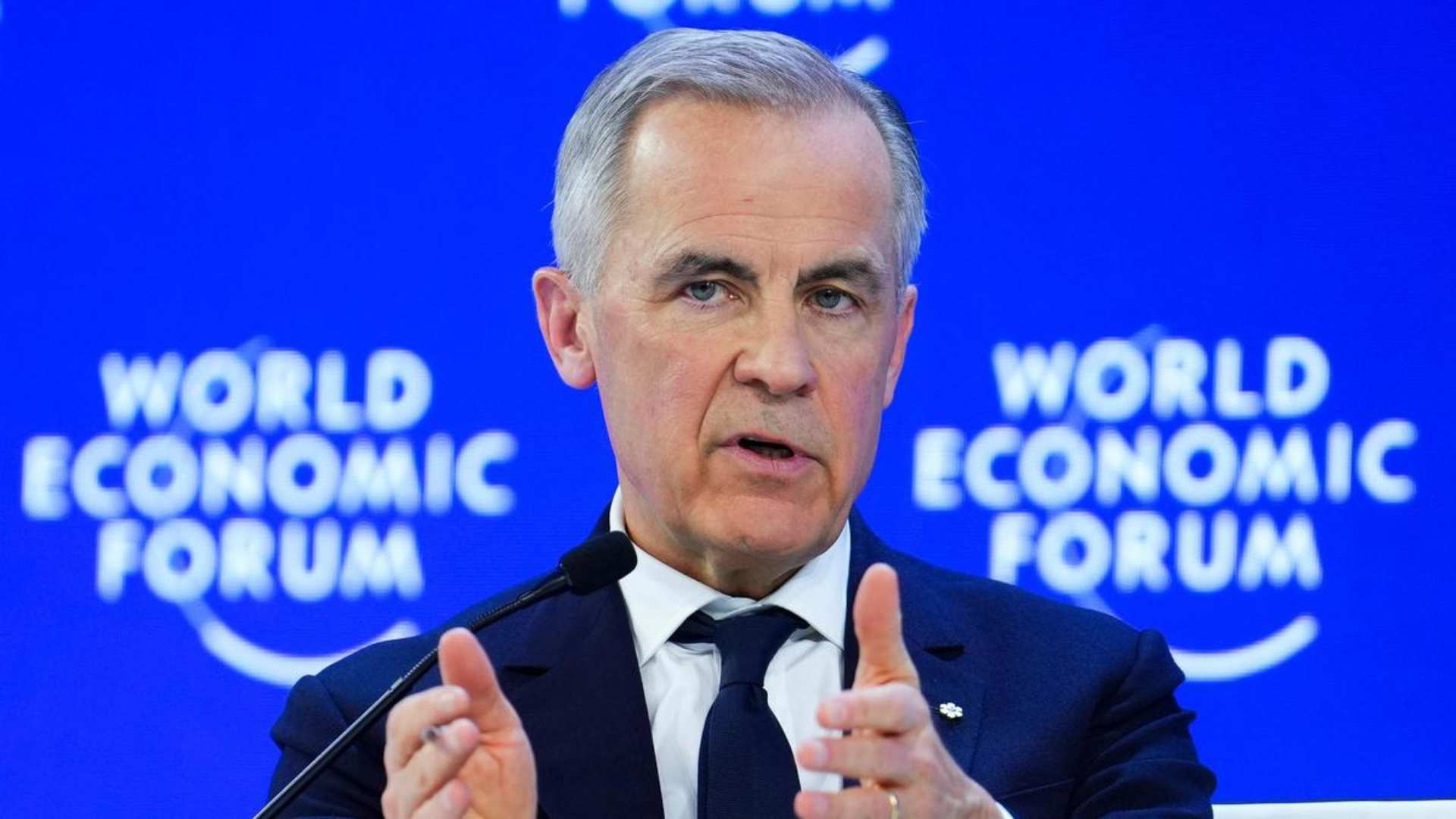
Canadian Prime Minister Mark Carney, speaking at the World Economic Forum, Davos (January 20, 2026), argued that the global order is undergoing a rupture rather than a temporary transition. He rejected the assumption that the liberal international order will naturally reassert itself after current disruptions.
According to Mr. Carney, the earlier promise of mutual benefit through deep economic integration masked structural subordination for many states. He cautioned that integration, when asymmetrical, can become a source of vulnerability rather than shared prosperity.
This framing is significant for governance because it challenges long-held assumptions guiding Western and middle-power foreign policies. Ignoring this rupture risks misdiagnosing systemic instability as episodic volatility.
The core logic is that policy responses must adapt to structural change, not wait for a return to a past equilibrium that no longer exists.
2. The ‘Third Path’ and Values-Based Realism
Mr. Carney proposed a “third path” for countries caught between U.S.–China rivalry, grounded in what he termed “values-based realism”, borrowing from Finnish President Alexander Stubb. This approach seeks to avoid alignment-driven subordination while remaining engaged internationally.
The framework rejects binary choices between rival blocs and instead emphasises principled autonomy combined with pragmatic cooperation. It challenges the dominant framing of global politics as a simple democracy-versus-authoritarianism contest.
For middle powers, such an approach offers space to protect sovereignty without isolation. Ignoring this option may force false choices that weaken long-term strategic autonomy.
“In a world of great-power rivalry, the countries in between have a choice: compete with each other for favour or combine to create a third path with impact.” — Mark Carney
Values-based realism seeks balance between ideals and interests; without it, middle powers risk strategic drift.
3. Limits of the Liberal International Order
Mr. Carney stands out among Western leaders for openly acknowledging the limits and contradictions of the liberal international order. He argued that the order required many countries to “live within the lie” of mutual benefit, even as integration entrenched dependency.
Unlike leaders who frame current turbulence as the result of individual political actors, Mr. Carney views systemic fragility as intrinsic to the old order. This honesty contrasts with attempts to preserve existing structures without reform.
For global governance, this recognition opens space for institutional redesign. Failure to acknowledge these limits perpetuates ineffective policy responses.
“You cannot ‘live within the lie’ of mutual benefit through integration when integration becomes the source of your subordination.” — Mark Carney
Admitting systemic flaws is a prerequisite for constructing resilient international arrangements.
4. Middle Powers, Strategic Autonomy, and Cooperation
Mr. Carney placed middle powers at the centre of his framework, arguing that acting alone leaves them weak when negotiating with hegemons. Bilateral engagement with great powers often compels excessive accommodation.
He emphasised that sovereignty is undermined when countries merely perform autonomy while accepting structural subordination. Collective action among middle powers can rebalance negotiating power and protect shared interests.
This perspective resonates strongly with countries like India that have historically valued strategic autonomy. Ignoring collective middle-power cooperation risks reinforcing hegemonic dominance.
“When we only negotiate bilaterally with a hegemon, we negotiate from weakness.” — Mark Carney
Pooling leverage among middle powers enhances real sovereignty and policy space.
5. Engagement Without Isolation: Rejection of Fortress Mentality
Mr. Carney rejected isolationism, warning that a “world of fortresses” would be economically poorer, environmentally fragile, and politically unstable. Strategic autonomy, in his view, is compatible with cooperation and openness.
He argued that adaptation to the new reality is inevitable, but countries must choose whether to respond defensively or creatively. Cooperation among like-minded but independent states is presented as the ambitious alternative.
For development and governance, this approach preserves access to trade, technology, and markets. Ignoring cooperative pathways could entrench stagnation and fragmentation.
“A world of fortresses will be poorer, more fragile and less sustainable.” — Mark Carney
Strategic autonomy without cooperation risks turning resilience into rigidity.
6. Canada’s Practice: Partnerships and Domestic Foundations
Mr. Carney cited Canada’s recent strategic partnerships with China and Qatar, alongside ongoing free-trade negotiations with India, ASEAN, Thailand, the Philippines, and Mercosur, as practical expressions of his doctrine. Engagement with Beijing, he clarified, would remain calibrated.
He also linked foreign policy credibility to domestic stability, emphasising Canada’s pluralistic and functional political system. Internal cohesion strengthens external negotiating capacity.
This linkage highlights that sovereignty is reinforced as much at home as abroad. Weak domestic consensus can erode strategic posture internationally.
Foreign policy autonomy is sustained by domestic institutional resilience and social cohesion.
7. Relevance for India and Other Middle Powers
Mr. Carney explicitly identified India as a priority partner, making his framework particularly relevant for New Delhi. India’s historical reluctance to fully integrate into U.S.-led systems reflects awareness of the risks Mr. Carney articulated.
India has observed vulnerabilities faced by states that overly aligned their financial or defence systems with a single power. The “third path” complements India’s long-standing emphasis on strategic autonomy without disengagement.
For India’s governance and foreign policy, ignoring such frameworks could limit options in an increasingly polarised world.
The convergence of Indian and Canadian perspectives highlights the strategic value of middle-power coalitions.
Conclusion
Mark Carney’s articulation of a “third path” reflects a pragmatic response to a fractured global order, prioritising strategic autonomy, cooperation among middle powers, and realistic engagement with great powers. For countries like India, this framework offers a forward-looking approach to preserve sovereignty, expand policy space, and shape a more balanced international system in an era of sustained rivalry.