Introduction
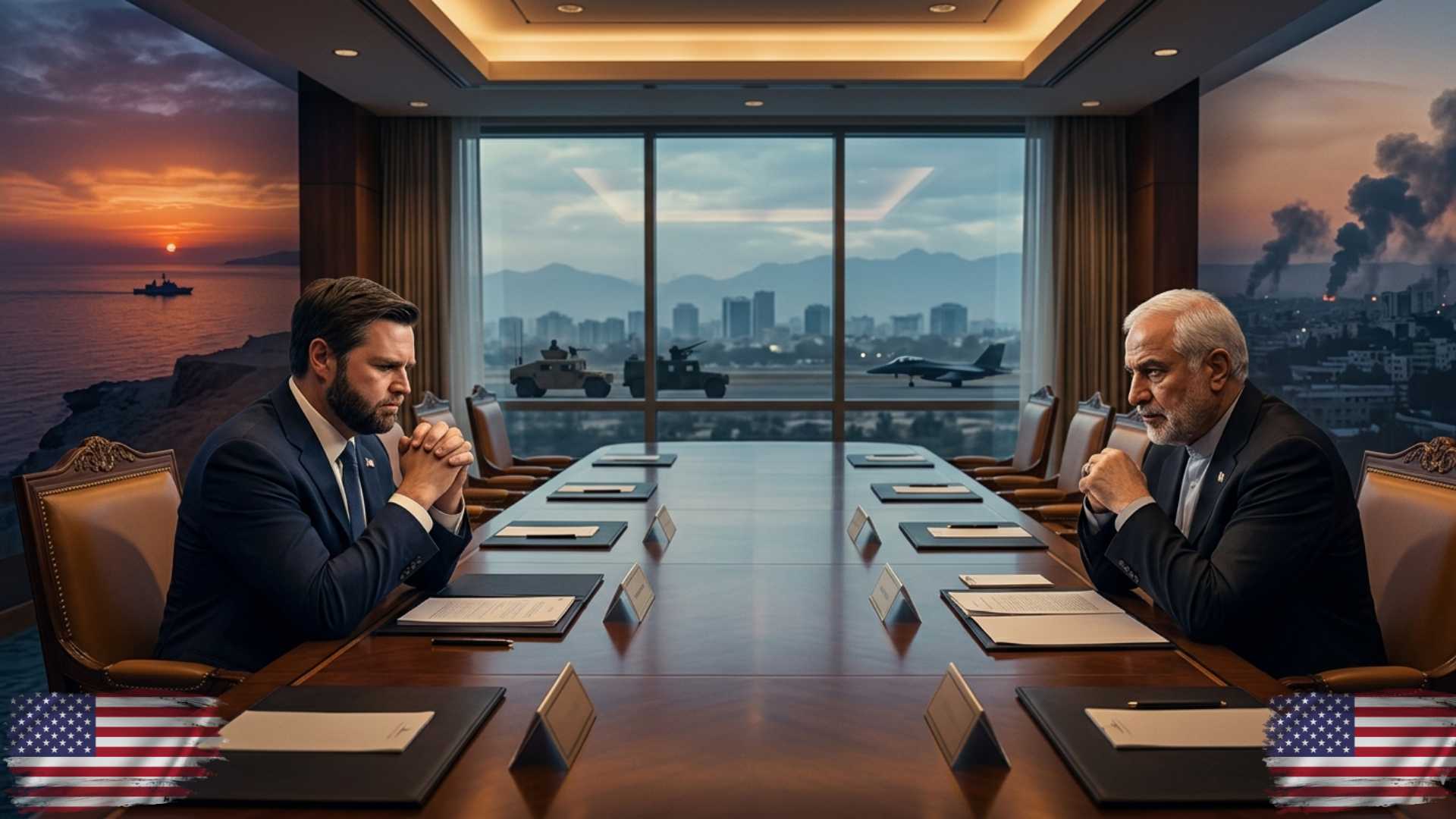
The 39-day U.S.-Iran war (February 28 – April 8, 2025) and the subsequent inconclusive Islamabad talks mark the most significant rupture in West Asian geopolitics since the 2003 Iraq War. Iran's effective closure of the Strait of Hormuz — through which 20 million barrels of oil (20% of global supply) flow daily — transformed a bilateral military conflict into a global economic crisis. The first face-to-face senior U.S.-Iran meeting since the 1979 Islamic Revolution, held in Islamabad with Pakistan as mediator, signals cautious diplomatic re-engagement — but with three unresolved fault lines: Iran's nuclear programme, Hormuz, and Israeli strikes on Lebanon.
"Trump, who unilaterally sabotaged the Obama-era Iran nuclear deal in 2018, should not have started this war — but now must focus on a negotiated settlement without ultimatums."
Timeline: From Nuclear Deal to War
| Year | Event |
|---|---|
| 2015 | JCPOA (Joint Comprehensive Plan of Action) signed — Iran, P5+1 |
| 2018 | Trump unilaterally withdraws U.S. from JCPOA |
| 2019–24 | Iran gradually exceeds JCPOA uranium enrichment limits |
| Feb 28, 2025 | U.S.-Israel launch strikes on Iran |
| April 8, 2025 | Trump announces 2-week ceasefire |
| April 13, 2025 | Islamabad talks — 21 hours, no breakthrough |
The Three Unresolved Fault Lines
| Issue | Iran's Position | U.S./Israel Position |
|---|---|---|
| Nuclear programme | Willing to negotiate; civilian use only | Demand zero enrichment capacity |
| Strait of Hormuz | Leverage card; partial reopening | Full, unconditional reopening |
| Lebanon/Israeli strikes | Ceasefire must cover Lebanon | Israel retains right to continue strikes |
The Islamabad Talks: Significance & Limitations
Historic significance:
- First face-to-face senior U.S.-Iran meeting since 1979 Revolution
- Pakistan's mediation role — elevates Islamabad's regional diplomatic standing
- J.D. Vance (U.S. VP) + Mohammad Bagher Ghalibaf (Iran Parliament Speaker) — senior-level engagement
Why no breakthrough:
- No mutually agreed framework — Iran and U.S. disputed which 10-point proposal formed the basis
- Ceasefire itself contested — Israel continued Lebanon strikes, undermining Pakistan-Iran claim that Lebanon was covered
- Structural trust deficit — 46 years of adversarial relations cannot be bridged in 21 hours
Iran's Strategic Position: Leverage & Limits
Sources of leverage:
- Strait of Hormuz control — 20 million barrels/day chokepoint
- Proxy network — Hezbollah (Lebanon), Houthis (Yemen), PMF (Iraq)
- Nuclear enrichment threshold — near weapons-grade capability (60%+ enrichment reported)
- War has hardened domestic public opinion — regime has nationalist wind behind it
Strategic constraints:
- Economy severely damaged — sanctions + war costs
- Needs reconstruction support
- Cannot sustain Hormuz closure indefinitely without destroying its own oil export revenue
- Risk of nuclear programme triggering Israeli unilateral military action
JCPOA & Nuclear Non-Proliferation: Key Concepts
| Term | Meaning |
|---|---|
| JCPOA | Joint Comprehensive Plan of Action (2015) — capped Iran enrichment at 3.67%, allowed inspections |
| NPT | Nuclear Non-Proliferation Treaty — Iran is signatory |
| IAEA | International Atomic Energy Agency — inspection authority |
| Breakout time | Time needed to produce enough weapons-grade uranium for one bomb |
| Enrichment levels | Civilian use: <5%; Weapons-grade: 90%+ |
Post-2018 trajectory: Iran's enrichment reached ~60% by 2024 — far beyond JCPOA limits but below weapons-grade. Breakout time estimated at weeks, not months.
India's Stakes: A Multi-dimensional Exposure
| Dimension | India's Exposure |
|---|---|
| Energy security | ~17% of crude imports from Iran historically; Gulf accounts for ~60% total |
| Diaspora | ~9 million Indians in Gulf region |
| Remittances | $30+ billion annually from Gulf |
| Chabahar Port | India's strategic access to Afghanistan/Central Asia via Iran — at risk |
| Trade routes | Disrupted shipping adds cost to Indian imports/exports |
| Fertiliser imports | Natural gas-based fertilisers — price transmission to agriculture |
| Israel ties | India-Israel defence cooperation — balancing act with Arab/Iranian relations |
India's diplomatic tightrope:
- Maintains ties with both Iran (Chabahar, energy history) and Israel (defence, technology)
- Supported ceasefire calls at UNSC
- Benefits from Pakistan's mediation success — but wary of Pakistan's enhanced regional standing
Regional Implications
| Actor | Impact |
|---|---|
| Pakistan | Diplomatic win — mediator role enhances regional standing post-economic crisis |
| Saudi Arabia | Watches Iran-U.S. deal nervously — Abraham Accords architecture under stress |
| Israel | Continues Lebanon strikes — risks being isolated if U.S.-Iran deal progresses |
| China | Benefits from U.S. strategic setback; deepens Iran economic ties under sanctions |
| Russia | War diverts U.S. attention from Ukraine — tactical benefit |
| Gulf States | Energy revenue windfall from high prices vs. instability risk |
Way Forward: Conditions for a Durable Settlement
For U.S.:
- Abandon ultimatum-based diplomacy — JCPOA showed negotiated frameworks work
- Restrain Israel on Lebanon — ceasefire credibility requires it
- Offer credible security guarantees to Iran against future aggression
For Iran:
- Avoid overplaying Hormuz leverage — prolonged closure damages own economy
- Demonstrate genuine flexibility on enrichment caps
- Separate nuclear negotiations from Lebanon — don't bundle all issues
For the process:
- Pakistan/Oman as sustained mediators — both have credibility with both sides
- Phased approach: Hormuz reopening → ceasefire consolidation → nuclear framework
- IAEA as verification mechanism — rebuild inspection architecture
Conclusion
The Islamabad talks are a beginning, not a resolution. The U.S.-Iran war achieved neither its stated military objectives nor regional stability — on the contrary, it has hardened positions, disrupted global energy markets, and created a new nuclear flashpoint. The path forward requires both sides to recognise what the last four decades should have taught: that coercive diplomacy with Iran produces crises, while negotiated frameworks — however imperfect — produce stability. For India, the priority is clear: a stable West Asia is not a foreign policy preference but an economic necessity. New Delhi's quiet diplomacy — maintaining equidistance while pushing for dialogue — may yet find its moment.