
1. Context and Origins of the Crisis
Iran has recently witnessed significant civic unrest stemming from severe economic distress and political discontent. The crisis began on December 28, 2025, when Tehran merchants, known as the Bazaari, staged a shutdown to protest the dramatic devaluation of the rial, the national currency. The official exchange rate of 42,000 per USD contrasted sharply with a market rate of 1.45 million per USD, reflecting a 45% decline in 2025 and long-term depreciation since the 1979 Islamic Revolution.
The economic deterioration directly impacted essential commodity trade, making imports of rice, sugar, and edible oil unprofitable under controlled prices. Consequently, other sections of society, including unemployed youth and low-paid workers, joined the protests, transforming a localized strike into a nationwide anti-government movement with arson and violence reported. Over 2,000 fatalities were officially acknowledged by January 13, 2026.
Economic instability, particularly currency devaluation, can act as a catalyst for large-scale social unrest. Ignoring such systemic risks undermines governance legitimacy and may exacerbate domestic instability.
2. Iran’s Institutional Response and the Authoritarian Playbook
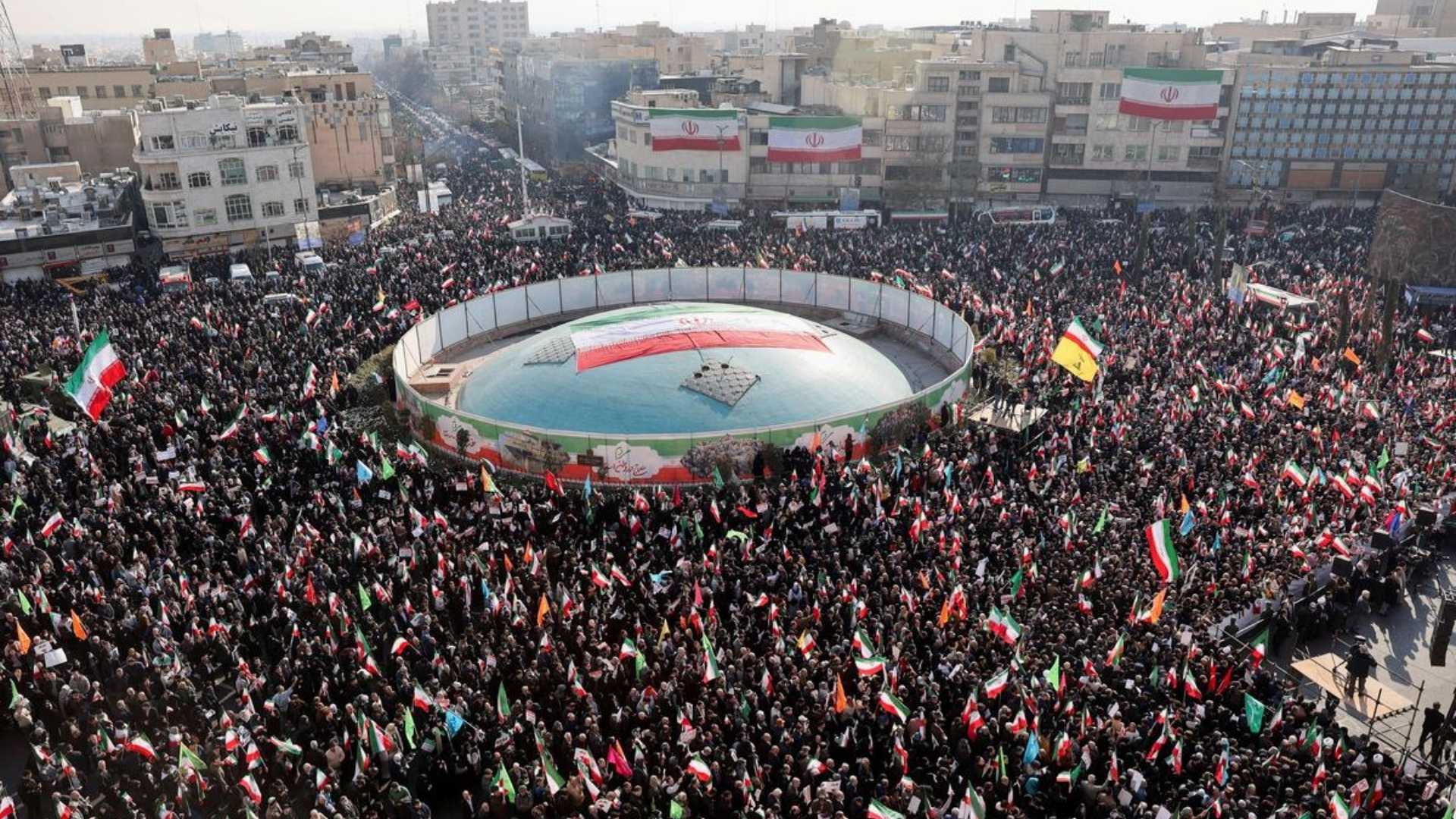
Since the 1979 Islamic Republic, Iran has deployed a four-stage playbook to manage mass protests: containment through police action, a “good-cop, bad-cop” approach with selective concessions, attrition combined with pro-government rallies, and punitive measures against leading agitators. Social media restrictions are a key instrument to manage narratives.
The ongoing unrest appears to be in the third phase, characterized by partial concessions, such as a token handout of 10 million rials (~$7) per month to citizens, alongside orchestrated pro-establishment rallies and funerals of security personnel. The IRGC (Pasdaran) and the army have remained loyal, and the oil sector, critical to Iran’s economy, has not been disrupted.
Impacts:
- Suppresses immediate protest momentum.
- Maintains regime control and elite cohesion.
- Limits the emergence of alternative leadership among protesters.
Structured institutional responses can temporarily stabilize unrest, but failure to address root socio-economic causes risks cyclical crises.
3. Economic, Social, and Political Drivers
Several intertwined factors underlie the unrest:
-
The Bazaari strike represents an unprecedented withdrawal of support from a historically influential merchant class.
-
U.S. sanctions and domestic elite capture by IRGC and Bonyads have constrained economic opportunities, exacerbating public dissatisfaction.
-
Demographic change: over two-thirds of Iranians were born post-Revolution, with aspirations divergent from a gerontocratic, politico-theocratic leadership.
Impacts:
- Social alienation of youth, women, and minorities.
- Heightened public perception of corruption and kleptocracy.
- Increased vulnerability to foreign interference in domestic politics.
Economic mismanagement coupled with demographic expectations can fuel persistent instability if unaddressed, stressing the importance of reform and inclusive governance.
4. Foreign Influence and Geopolitical Dimensions
External actors have shaped the crisis narrative. U.S. and Israel have openly encouraged protests, proposing military and economic pressure to weaken the regime. However, historical experience, such as the 1980 Iraqi invasion, shows that foreign intervention can unify the populace against external threats.
Iran retains strategic capabilities, including the potential to close the Strait of Hormuz and target U.S. interests in the region. China and the UAE remain Iran’s top trading partners, with bilateral commerce of 40billionand40 billion and 40billionand30 billion, respectively, demonstrating resilience against sanctions.
Impacts:
- External pressures increase the complexity of crisis management.
- Military interventions risk regional escalation and unintended consequences.
- Economic interdependencies mitigate some effects of sanctions but create global stakes.
Geopolitical leverage can both constrain and empower regimes; ignoring these dynamics risks miscalculating strategic responses.
5. Implications for India
Instability in Iran directly affects India’s strategic and economic interests:
- Any conflict threatens the Gulf security, impacting oil imports, trade, remittances, and diaspora welfare.
- Iran is crucial for India’s access to Afghanistan and Central Asia, with regional stability influencing India’s security calculus.
- Approximately 25 million Shias in India have cultural and social stakes linked to Iran’s internal dynamics.
- Post-sanctions economic recovery in Iran offers potential for trade and investment opportunities, aligning with India’s pursuit of economic self-reliance.
Regional crises can have cascading impacts on neighboring countries’ security and economic strategies, emphasizing the need for proactive diplomatic engagement.
6. Conclusion and Way Forward
Iran’s unrest is a convergence of economic distress, demographic pressures, institutional rigidity, and geopolitical challenges. While short-term containment measures stabilize the regime, addressing structural drivers—currency stability, equitable economic opportunity, and inclusive governance—is essential.
For India, a nuanced understanding of Iran’s domestic and foreign dynamics is critical for safeguarding energy security, diaspora welfare, and regional influence. Proactive engagement, diplomatic foresight, and monitoring economic trends will help mitigate risks and capitalize on future strategic opportunities.