
Israel's Parliament Approves Death Penalty for Palestinians

A controversial law raises human rights concerns and escalates tensions between Israelis and Palestinians amid ongoing conflict.
SuryaSurya
5 mins read
Israel approves death penalty for Palestinians

Introduction

Israel's Knesset has made death by hanging the default punishment for West Bank Palestinians convicted of nationalist killings — ending a moratorium on executions since 1962. Over 106 countries have abolished the death penalty; Israel now moves in the opposite direction.

"The death penalty is never the answer. It does not deter crime, and it violates the most fundamental human right — the right to life." — UN High Commissioner for Human Rights

ParameterDetail
Countries that abolished death penalty106+
Countries retaining it~55
Israel's last execution1962 (Adolf Eichmann)
Default sentence under new lawDeath by hanging
Court filing against lawWithin minutes of passage

Background & Context

Though Israel's statute books technically permit capital punishment for genocide, wartime espionage, and certain terror offences, the country had not executed anyone since 1962. For decades, Israel's Shin Bet (internal security agency) actively opposed the death penalty for militants, warning it would fuel martyrdom culture and revenge cycles rather than deter attacks.

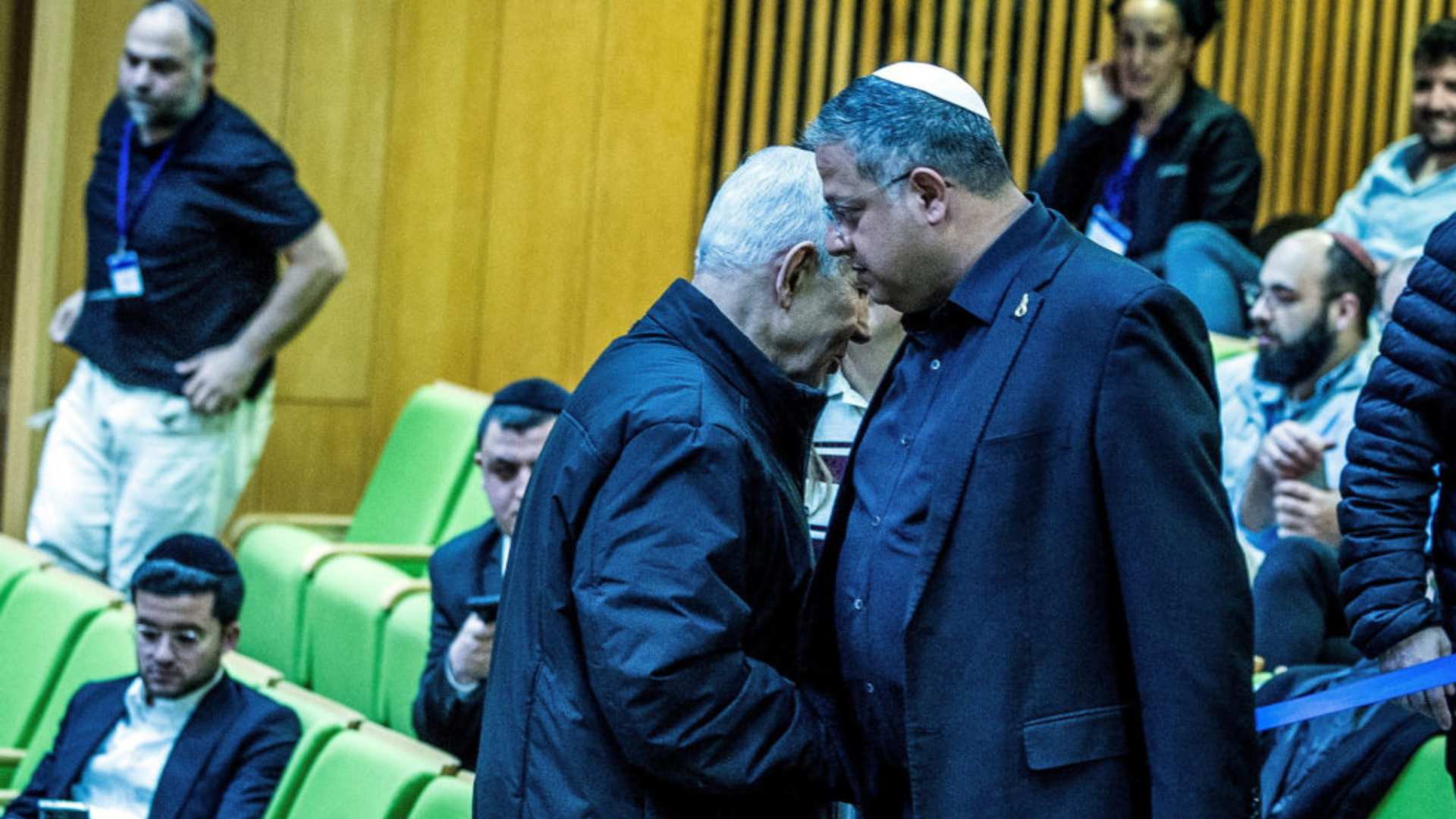
The political climate shifted dramatically after the October 7, 2023 Hamas attacks, which killed approximately 1,200 Israelis. Far-right coalition partners — led by National Security Minister Itamar Ben-Gvir — used the resulting national trauma to push legislation that had been stalled for years. Prime Minister Netanyahu personally entered the chamber to cast his vote in favour.


Key Provisions of the Law

FeatureDetail
PunishmentDeath by hanging (default)
Applicable toWest Bank Palestinians (military courts); Israeli citizens (civilian courts)
Military court discretionDeath is default; life imprisonment only in "special circumstances"
Civilian court discretionCourts may choose between death or life imprisonment
RetroactivityNone — Oct. 7 attackers not covered
ClemencyNot permitted
Execution timelineWithin 90 days of sentencing
Effective date30 days after passage

1. The Dual Court Problem The law's most contested feature is its routing through two separate judicial systems. West Bank Palestinians are tried exclusively in military courts — where death is the automatic default sentence. Israeli citizens, including Arab citizens of Israel, face civilian courts — where judges retain full discretion and the evidentiary bar for capital charges is higher (requiring proof of intent to "undermine the existence of Israel").

As Amichai Cohen of the Israel Democracy Institute stated, "Jews will not be indicted under this law" — making the differential application structurally, not incidentally, ethnic in character.

2. Occupied Territory & Legislative Authority Under international law — specifically the Fourth Geneva Convention — an occupying power cannot impose its domestic legislative framework on an occupied civilian population. The West Bank is internationally recognised as occupied territory, not sovereign Israeli land. Israel's parliament legislating capital punishment for West Bank Palestinians is therefore legally contested at its very foundation.

3. No Clemency Clause The law explicitly prohibits clemency — contradicting multiple international conventions including the International Covenant on Civil and Political Rights (ICCPR), to which Israel is a signatory. The ICCPR requires that in capital cases, the right to seek pardon or commutation must exist.


Implications & Challenges

Security & Strategic Risks

Israel's own Shin Bet had consistently argued that executing militants creates martyrs, incentivises suicide attacks, and hardens recruitment for armed groups. Opposition lawmakers have also flagged a direct threat to hostage negotiations — Israel exchanged ~250 hostages for thousands of Palestinian prisoners after October 7. Executing convicted militants would fundamentally foreclose this bargaining mechanism.

Human Rights & Rule of Law

The Association for Civil Rights in Israel filed a Supreme Court petition within minutes of the law's passage, calling it "discriminatory by design" and enacted without legal authority. The Public Committee against Torture in Israel noted the contradiction: Israel has historically voted in favour of abolishing capital punishment at the UN General Assembly.

Diplomatic Fallout

The UN and major international human rights organisations have condemned the legislation. For countries like India — maintaining a careful multi-alignment between Israeli strategic partnerships and Palestinian solidarity — such laws complicate diplomatic positioning considerably.


Comparative Perspective

CountryDeath Penalty StatusKey Feature
IsraelRetained; now expandedDefault sentence for Palestinians via military courts
IndiaRetained"Rarest of rare" doctrine (Bachan Singh, 1980); judicial discretion mandatory
USAVaries by stateFederal executions resumed in 2020
Saudi ArabiaRetainedFrequently applied; beheading
EU nationsAbolishedCondition for EU membership

India's jurisprudence is instructive here: the Supreme Court in Bachan Singh v. State of Punjab (1980) ruled that a mandatory death sentence — with no judicial discretion — is unconstitutional as it violates Articles 14 and 21. Israel's "default sentence" architecture for Palestinians would fail this very test.


India's Position

India recognised Palestine in 1988 and supports a two-state solution. Simultaneously, the India-Israel relationship was elevated to a Strategic Partnership in 2017, with deep cooperation in defence, agriculture, and technology. India typically abstains or votes carefully on Israel-related UN resolutions, reflecting this deliberate balance.

The Law Commission of India's 262nd Report (2015) recommended abolishing the death penalty for all offences except terrorism — itself a contested position that mirrors global debates this Israeli law has reignited.


Conclusion

Israel's death penalty law is not simply a domestic criminal justice measure — it is a political statement encoded in legal architecture. By designing a system where the death penalty flows almost exclusively through military courts that try only Palestinians, the legislation structurally conflates ethnicity with culpability. The deeper question it poses transcends Israel: can a democracy remain legitimate when its laws treat identical acts differently based on the identity of the accused? For UPSC aspirants, this case powerfully illustrates the intersection of international humanitarian law, democratic governance, human rights, and realpolitik — themes that are perennially central to GS2.

Quick Q&A

Everything you need to know

The newly passed Israeli law introduces the death penalty as a default punishment for Palestinians convicted of killing Israelis in what are defined as “nationalistic” or terror-related acts. The law mandates that military courts, which primarily try West Bank Palestinians, impose the death penalty—typically by hanging—unless exceptional circumstances justify life imprisonment.

Key provisions include:

  • Default death penalty: For Palestinians convicted of killing Israelis in terror-related cases.
  • Jurisdictional distinction: Military courts handle Palestinian cases, while civilian courts try Israeli citizens.
  • Discretion for Israeli courts: Courts may choose between life imprisonment and the death penalty for Israeli citizens.
  • No retroactive application: The law applies only to future offences.
  • Time-bound execution: Execution is to be carried out within 90 days of sentencing.

The law also removes provisions for clemency, which raises concerns regarding compliance with international legal standards.

Contextually, Israel has rarely used capital punishment, with the last execution being that of Adolf Eichmann in 1962. Thus, this law marks a significant shift in penal policy, particularly in the context of the Israeli-Palestinian conflict, where legal frameworks often intersect with political and security considerations.

The law has attracted widespread criticism from domestic and international actors due to concerns over discrimination, legality, and its potential consequences. Critics argue that the law is not merely a penal reform but reflects deeper structural inequalities in the legal system governing Israelis and Palestinians.

Major grounds of criticism:

  • Discriminatory application: The law is seen as targeting Palestinians disproportionately, particularly those in the West Bank under military jurisdiction.
  • Violation of international law: Experts argue Israel lacks sovereignty over the West Bank, making such legislation questionable.
  • Absence of clemency: The removal of pardon provisions contradicts global human rights norms.

Additionally, human rights organisations and the United Nations have labelled the law as “draconian” and “racist”, arguing that it institutionalises unequal treatment under the law.

Broader implications:
  • Escalation of conflict: Harsh punitive measures may fuel retaliatory violence.
  • Damage to international image: Contradicts Israel’s past support for global abolition of the death penalty.
  • Legal challenges: The law is already being contested in Israel’s Supreme Court.

Thus, the criticism stems from both normative concerns (human rights, equality) and pragmatic concerns (security, diplomacy).

The law exemplifies the close linkage between security imperatives and criminal justice systems in conflict-prone regions. In such contexts, legal frameworks are often shaped not only by principles of justice but also by strategic considerations of deterrence and national security.

Mechanisms of interaction:

  • Security-driven legislation: Laws are enacted to deter acts of violence and terrorism.
  • Special courts: Military courts are used to handle cases involving non-citizens or occupied territories.
  • Expedited procedures: Time-bound execution provisions reflect urgency in enforcement.

However, this blending of security and justice raises concerns about due process and fairness. For instance, military courts often operate under different procedural standards compared to civilian courts, which may affect the rights of the accused.

Comparative perspective: Countries facing insurgencies, such as the U.S. during the War on Terror or India in certain insurgency-hit areas, have also enacted special laws (e.g., AFSPA). While these laws aim to enhance security, they often face criticism for undermining civil liberties.

Thus, the Israeli law highlights the tension between ensuring national security and upholding rule of law, a challenge common to many conflict-affected regions.

The effectiveness of the death penalty as a deterrent in terrorism-related cases remains highly contested among scholars and policymakers. While proponents argue that severe punishment can discourage violent acts, empirical evidence often suggests otherwise.

Arguments supporting deterrence:

  • Fear of punishment: The threat of death may discourage potential attackers.
  • Symbolic assertion of state authority: Demonstrates zero tolerance for terrorism.

However, in the context of terrorism, these arguments are often weak because many perpetrators are driven by ideological or religious motivations, where the fear of death is diminished or even valorised.

Arguments against deterrence:
  • Martyrdom effect: Execution may glorify attackers and inspire others.
  • Cycle of violence: Harsh punishments can provoke retaliatory attacks.
  • Lack of empirical support: Studies globally show limited correlation between capital punishment and reduced terrorism.

For example, Israel’s own security agencies have historically opposed the death penalty, fearing it could escalate violence rather than contain it.

Conclusion: While the death penalty may serve as a symbolic or political tool, its practical effectiveness as a deterrent in terrorism cases is questionable. A more sustainable approach may involve intelligence-based prevention, socio-political engagement, and conflict resolution.

The application of this law in the West Bank raises significant legal and constitutional concerns, particularly regarding jurisdiction, sovereignty, and adherence to international law. The West Bank is considered an occupied territory under international law, and Israel’s authority to legislate there is contested.

Key legal challenges:

  • Jurisdictional limits: Critics argue that Israel’s parliament does not have the authority to impose such laws in non-sovereign territory.
  • Dual legal systems: Palestinians are tried in military courts, while Israeli citizens are tried in civilian courts, raising concerns of inequality.
  • Violation of international conventions: The absence of clemency provisions contradicts norms under human rights law.

Additionally, the law may conflict with principles of natural justice and equal protection, as it appears to create a hierarchy in the application of punishment based on identity.

Judicial review: The law has already been challenged in Israel’s Supreme Court, which will examine its compatibility with constitutional principles and international obligations.

Thus, the issue is not merely about punishment but about the legitimacy of legal authority and adherence to rule of law in contested territories.

From a geopolitical perspective, the introduction of the death penalty in this context could have far-reaching implications for Israel’s relations with neighbouring countries, global powers, and international organisations. The law intersects with ongoing tensions in the Israeli-Palestinian conflict, making its impact multidimensional.

Potential implications:

  • Escalation of tensions: The law may intensify hostilities between Israelis and Palestinians.
  • Impact on peace negotiations: Harsh punitive measures could undermine trust and complicate diplomatic efforts.
  • International criticism: Countries and organisations advocating human rights may increase pressure on Israel.

For instance, similar hardline policies in conflict zones—such as harsh counterterrorism measures in other regions—have often led to international condemnation and strained diplomatic ties.

Strategic considerations:
  • Hostage negotiations: The law may reduce incentives for prisoner exchanges.
  • Global image: Contradicts Israel’s earlier support for abolition of capital punishment at the UN.
  • Domestic politics: Reflects the influence of far-right elements in policymaking.

Conclusion: While the law may aim to project strength, it risks deepening conflict and isolating Israel diplomatically. A balanced approach combining security measures with diplomatic engagement may be more effective in achieving long-term stability.

Attribution

Original content sources and authors

Sign in to track your reading progress

Comments (0)

Please sign in to comment

No comments yet. Be the first to comment!