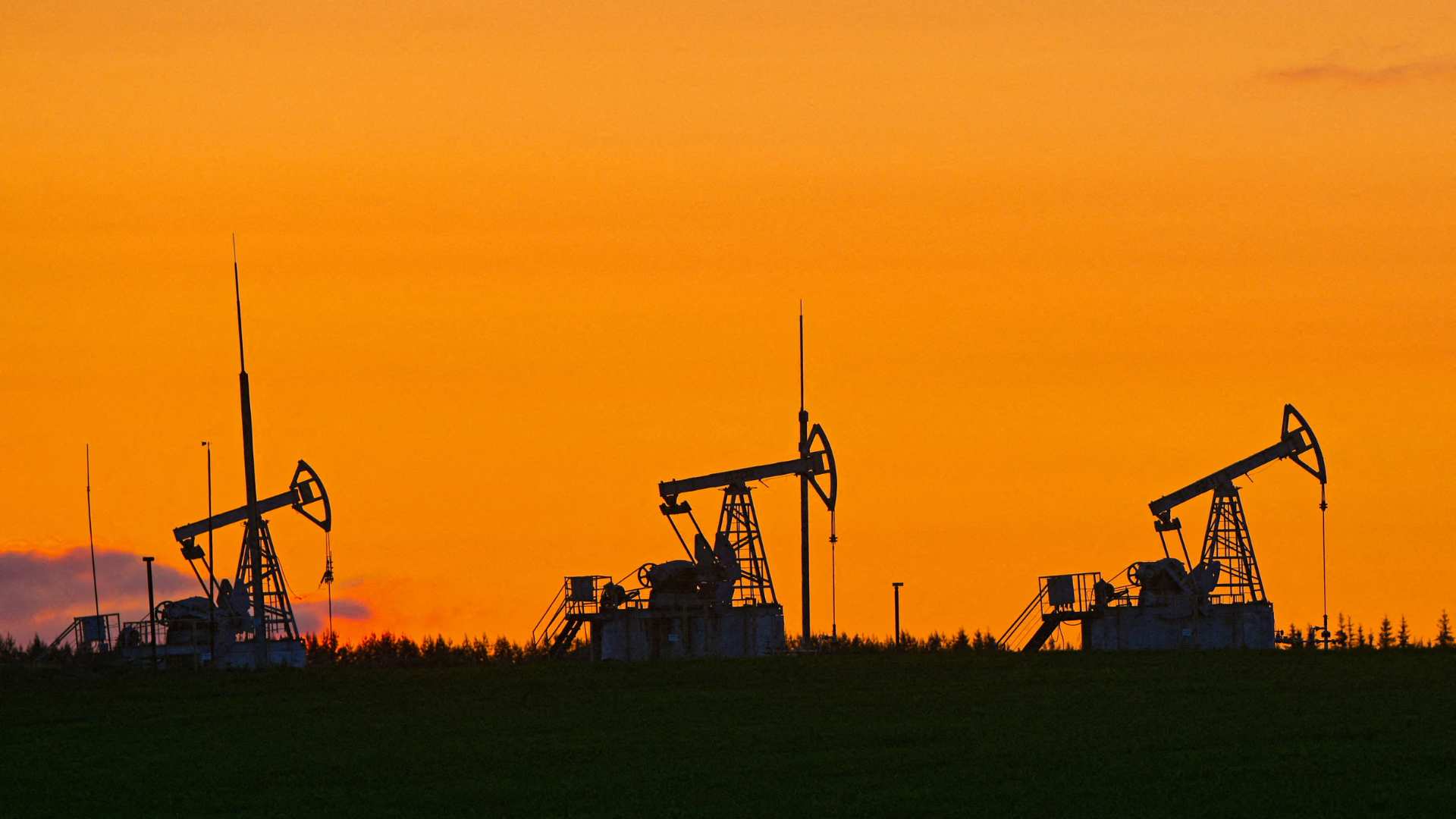
Rising Western Pressure Could Force Cuts in Russian Oil Output

India's retreat and falling exports strain Kremlin finances amid tightening sanctions from the West.
PT
pocketias team
5 mins read
Sanctions squeeze Russia’s oil lifeline
Not Started

Russian Oil Exports Under Sanctions: Global Energy and Geopolitical Implications

1.Sanctions Pressure on Russian Oil Exports

Russian oil exports have remained resilient since the imposition of sweeping Western sanctions following the Ukraine conflict in 2022. Moscow successfully redirected crude flows from Europe to Asia, particularly China, India, and Turkey, often using a “shadow fleet” of ageing and uninsured tankers to bypass restrictions while offering discounted prices.

However, tightening sanctions by the United States and European Union, including new tariff measures and secondary sanctions pressures, are now constraining Russia’s export flexibility. The European Union has also imposed a ban on fuels refined from Russian crude.

Russia produces around 9.3 million barrels per day (bpd) of crude, roughly half of which is exported. Oil and gas revenues account for nearly one-fourth of Russia’s federal budget receipts, making the energy sector central to the Kremlin’s fiscal capacity.

Energy exports are the backbone of Russia’s fiscal and geopolitical strength. Sustained disruption in export channels directly affects state revenues and war-financing capability.


2. Declining Seaborne Exports and Storage Build-Up

Recent data indicates a sharp slowdown in Russian crude exports.

Export Trends (Kpler data):

  • 3.8 million bpd (December)
  • 3.4 million bpd (January)
  • Around 2.8 million bpd (February, tracking)

Simultaneously, oil held on ships has surged to over 150 million barrels, indicating weaker demand and logistical bottlenecks. Slower tanker speeds and prolonged voyages further reflect disruptions in trade flows.

Onshore inventories are also rising:

  • Onshore storage estimated at 16 million barrels, about 51% of capacity (satellite-based monitoring).
  • Total potential onshore storage, including pipeline systems, may reach 100 million barrels.

If exports remain constrained, storage facilities could fill rapidly, forcing production cuts.

When export channels narrow but production continues, storage saturation becomes a structural constraint. Once storage fills, output reduction becomes inevitable.


3. India and China: Shifting Import Dynamics

India emerged as the largest buyer of seaborne Russian crude in recent years, purchasing approximately 1.7 million bpd last year — nearly half of Russia’s seaborne exports.

Recent trends show:

  • Imports fell to 1.1 million bpd in January.
  • Further sharp declines are projected from March onward.
  • Three major refiners — Indian Oil, Bharat Petroleum, and Reliance Industries — have halted purchases.

However:

  • Nayara Energy’s 400,000 bpd refinery (partly owned by Rosneft) will continue sourcing Russian crude.
  • Smaller Indian refiners may continue purchases if discounts deepen.
  • Russia already accounts for about one-fifth of China’s total crude imports of 11.5 million bpd, limiting China’s capacity to absorb significantly higher volumes.

These shifts highlight the geopolitical sensitivity of energy trade, especially under secondary sanctions and tariff pressures.

Energy trade decisions increasingly reflect geopolitical alignment. Reduced Indian imports significantly affect Russia due to high concentration of export dependence.


4. Logistical Bottlenecks and Supply Chain Repercussions

Longer shipping routes to Asia and reliance on a “shadow fleet” have reduced tanker availability. As ships are tied up for longer durations, floating storage capacity shrinks, increasing pressure on onshore storage.

This creates a negative chain reaction:

  • Reduced tanker availability
  • Rising floating inventories
  • Limited onshore storage space
  • Forced diversion of crude domestically
  • Potential production cuts

Analysts estimate Russia’s oil production could fall by up to 300,000 bpd between March and May due to logistical constraints.

Such bottlenecks reveal that sanctions can indirectly constrain production even without direct output caps.

Sanctions need not directly ban production; disrupting logistics and trade financing can generate downstream production cuts through market mechanisms.


5. Fiscal Impact on Russia

Oil and gas revenues are central to Russia’s budgetary stability. However, financial strain is intensifying:

  • State oil and gas revenues halved in January compared to a year earlier.
  • Revenues fell to their lowest level since July 2020, according to finance ministry data.

Declining crude prices, combined with deeper discounts required to attract buyers, further compress revenue margins. If production falls while export discounts widen, Moscow’s fiscal buffer weakens further.

This has implications for:

  • War financing capacity
  • Social spending commitments
  • Macroeconomic stability

Reduced hydrocarbon revenue constrains fiscal space, affecting both military expenditure and domestic economic stability.


6. Broader Global Energy and Geopolitical Implications

The evolving sanctions regime demonstrates how energy markets are increasingly shaped by geopolitical strategy. Western measures aim to reduce Russia’s war-funding capacity without triggering global oil supply shocks.

However, prolonged supply disruptions may:

  • Increase global oil price volatility
  • Reconfigure trade flows toward alternative suppliers
  • Accelerate energy diversification and transition strategies

For countries like India, balancing energy security, affordability, and geopolitical alignment becomes increasingly complex.

Energy geopolitics is reshaping global trade patterns. Countries dependent on imported energy must navigate strategic autonomy while ensuring supply stability.


Conclusion

Tightening sanctions and shifting import patterns are placing structural pressure on Russian oil exports. Rising storage levels, logistical bottlenecks, and declining revenues indicate potential production cuts ahead. The episode underscores the interlinkage between energy markets, geopolitics, and fiscal stability in conflict situations. For global stakeholders, it highlights the strategic importance of diversified supply chains and calibrated energy diplomacy.

Quick Q&A

Everything you need to know

Russian oil exports remained surprisingly resilient after the imposition of Western sanctions following the Ukraine conflict. This resilience was primarily due to trade redirection and logistical innovation. Moscow shifted most of its seaborne crude exports from Europe to countries such as India, China, and Turkey. It also relied on a so-called “shadow fleet” of ageing and often uninsured tankers to bypass Western shipping and insurance restrictions, while offering steep price discounts to attract buyers.

However, this adaptability is now facing structural constraints. Recent tightening of sanctions by the United States and proposals by the European Commission to prohibit any business supporting Russian seaborne exports have increased transaction risks. Simultaneously, India—the largest buyer of Russian seaborne crude—has begun curbing imports under pressure linked to trade negotiations with the U.S. As a result, seaborne exports have fallen sharply, and oil held on tankers has reached record levels above 150 million barrels.

Thus, while Russia initially demonstrated flexibility in navigating sanctions, logistical bottlenecks, diplomatic pressure, and shrinking demand are now testing the sustainability of that model.

India’s reduction of Russian oil imports is geopolitically significant because it alters the balance of Russia’s post-sanctions trade strategy. After Europe curtailed imports, India emerged as Russia’s largest seaborne crude buyer, purchasing around 1.7 million barrels per day—roughly half of Moscow’s maritime exports. This provided Russia with a crucial revenue lifeline.

If India meaningfully reduces imports, Russia faces limited alternatives. China already sources about one-fifth of its crude imports from Russia and has historically avoided excessive dependence on any single supplier. Smaller refiners may absorb some volumes, but not at scale. Therefore, India’s shift has implications not just for energy markets but for Russia’s fiscal capacity to finance defence spending.

For India, the decision reflects a balancing act between securing discounted energy supplies and maintaining strategic ties with the United States and Europe. It illustrates how energy trade has become intertwined with broader geopolitical negotiations, including tariffs and trade agreements.

Oil markets are highly sensitive to logistical constraints. When exports slow, unsold crude accumulates either in floating storage (tankers at sea) or in onshore storage tanks. Current data indicate that Russian oil stored on ships has surged to record levels, while onshore storage is nearing capacity. This creates a bottleneck effect.

The reliance on long-distance voyages using shadow fleet tankers further complicates the situation. Longer shipping routes tie up vessels for extended periods, reducing availability for fresh cargoes. As floating storage fills and tanker speeds slow—signalling weaker demand—producers face limited options.

If storage capacity reaches saturation, producers may be compelled to cut output. Estimates suggest Russia could reduce production by up to 300,000 barrels per day in coming months. This demonstrates how supply chain mechanics—rather than just political sanctions—can directly affect national production levels and revenue streams.

Energy sanctions aim to restrict a state’s revenue base, thereby constraining its strategic and military capabilities. In Russia’s case, oil and gas revenues account for nearly one-quarter of federal budget receipts. Initially, sanctions appeared partially ineffective, as Moscow rerouted exports and leveraged discounts to maintain volume stability.

Strengths of sanctions:

  • Forced Russia to offer discounted crude, reducing revenue per barrel.
  • Increased logistical costs due to shadow fleet reliance.
  • Gradually reduced fiscal inflows, with oil revenues halving in January compared to a year earlier.

Limitations:
  • Global oil demand provides alternative buyers.
  • Major economies may prioritise energy security over political alignment.
  • Shadow networks can temporarily circumvent restrictions.

Overall, sanctions may not produce immediate collapse but can create cumulative pressure over time, especially when combined with diplomatic measures and market dynamics.

A sustained decline in oil production would have serious macroeconomic implications for Russia. Oil and gas revenues constitute a significant share of federal income. With state finances already strained due to elevated defence spending, reduced production would shrink fiscal space further.

Lower production combined with deeper export discounts could erode foreign exchange earnings. This may weaken the rouble, increase inflationary pressures, and constrain public spending on social and infrastructure programmes. A fall of 300,000 barrels per day, while modest relative to total output, could translate into substantial annual revenue losses given current price levels.

In the broader geopolitical context, diminished energy revenues could limit Russia’s capacity to sustain prolonged military engagement. Thus, production cuts triggered by logistical and demand constraints would not merely be an economic event but a strategic development affecting global power dynamics.

The Russian oil episode vividly demonstrates the deep interlinkages between energy markets, global trade, and geopolitics. When Europe reduced imports, trade flows were reoriented toward Asia, particularly India and China. This reshaping of energy routes altered shipping patterns, pricing structures, and diplomatic alignments.

For example, India capitalised on discounted Russian crude to manage domestic inflation and energy security. However, subsequent U.S. pressure and tariff measures influenced India’s purchasing decisions, illustrating how trade policy and energy security intersect. Similarly, European regulatory proposals targeting any entity supporting Russian exports extend sanctions beyond national boundaries, affecting global shipping and insurance sectors.

Thus, the case highlights that oil is not merely a commodity but a strategic instrument. Decisions taken in Washington, Brussels, Moscow, or New Delhi reverberate through supply chains, financial markets, and diplomatic relations worldwide.

Attribution

Original content sources and authors

Sign in to track your reading progress

Comments (0)

Please sign in to comment

No comments yet. Be the first to comment!