
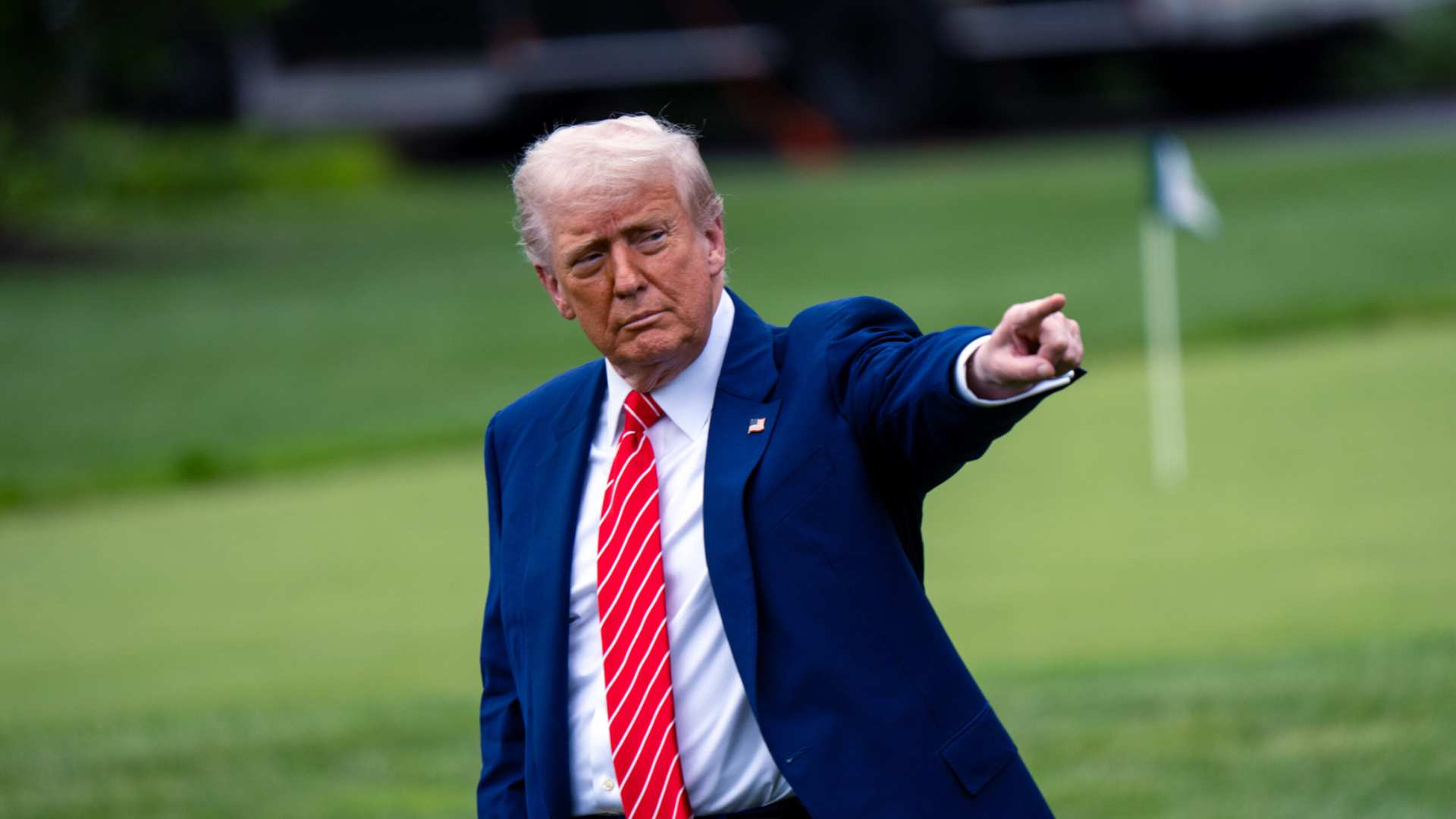
Trump's Trade Bullying A Threat to NATO and Europe

Exploring the implications of Trump's tariffs on European nations and NATO's unity amidst geopolitical tensions.
5 mins read
U.S.-EU tensions rise as Trump threatens tariffs over Greenland dispute
Not Started

1. Context: Escalation of U.S.–Europe Trade and Strategic Tensions

The Trump administration has announced a sharp escalation in trade measures against several European countries, proposing a 10% tariff on all goods from February 1, rising to 25% from June 1, unless U.S. demands regarding Greenland are met. These measures are in addition to existing 15% trade duties already imposed on the targeted countries.

The countries affected include Denmark, Finland, France, Germany, the Netherlands, Norway, Sweden, and the United Kingdom, reflecting the breadth of the proposed action. The linkage of tariffs to territorial and strategic demands marks a departure from conventional trade negotiations.

This move has triggered strong political reactions in Europe, with leaders describing it as unacceptable and normatively wrong. It has also brought trade, security, and sovereignty issues into a single coercive framework.

If such linkage becomes normalised, it risks undermining the predictability of international economic relations.

Using trade instruments to pursue strategic or territorial objectives blurs the line between economic policy and coercive diplomacy, weakening global governance norms.

2. Greenland, Security Concerns, and European Responses

Greenland, an autonomous Arctic territory administered by Denmark, has emerged as the focal point of this confrontation. European states have responded by deploying limited troop contingents to Greenland, officially described as reconnaissance and military exercises.

These deployments signal Europe’s collective commitment to defend the territory and uphold its sovereignty. The actions also reflect deeper anxieties arising from recent U.S. conduct beyond Europe.

The article notes European concern following reports of U.S. troops entering Venezuela and forcibly transporting President Nicolás Maduro to the United States, coupled with warnings of potential intervention in other countries.

If security anxieties deepen, Europe may accelerate efforts toward strategic autonomy independent of U.S. leadership.

Security signalling in contested regions reflects fear of precedent; unchecked, it can trigger militarisation and alliance fragmentation.

3. International Law and Legitimacy of Unilateral Action

Beyond political disagreement, the U.S. actions raise serious questions of international legality. Unilateral tariffs imposed to coerce sovereign decisions are widely viewed as inconsistent with international law and established trade norms.

A key concern is the absence of explicit legislative backing from the U.S. Congress for targeting Denmark and other European states in this manner. Executive-driven economic coercion weakens institutional checks and balances.

Additionally, the administration’s reliance on the International Emergency Economic Powers Act (IEEPA) to justify broad tariffs is under judicial scrutiny, with a ruling expected against such usage.

If legality is sidelined, rule-based international order gives way to power-based bargaining.

Legitimacy in global economic governance rests on law and consent; erosion of these principles fuels instability.

4. Impact on Transatlantic Trade and Economic Cooperation

The proposed tariffs threaten to undo years of progress in transatlantic trade cooperation between the United States and the European Union. Stable trade relations have been a cornerstone of post-war economic growth and political alignment.

Weaponisation of tariffs against allies introduces uncertainty for firms, investors, and supply chains on both sides of the Atlantic. It also undermines trust essential for negotiating future trade agreements.

European leaders fear that once trust erodes, rebuilding it may take decades, even if the immediate dispute is resolved.

If unresolved, the conflict could permanently weaken one of the world’s most important economic relationships.

Trade stability depends on trust and reciprocity; repeated coercion converts partners into wary competitors.

5. European Union’s Possible Countermeasures

In response, European countries may activate the EU’s “anti-coercion instrument”, designed to counter economic pressure from third countries. This mechanism allows targeted restrictions on trade and services.

Such measures could particularly affect major U.S. technology firms and service providers with significant operations in the EU. The objective is deterrence rather than escalation.

However, reciprocal trade restrictions risk deepening economic fragmentation and harming global growth.

Possible EU responses:

  • Activation of the anti-coercion instrument
  • Counter-tariffs on selected U.S. goods and services
  • Regulatory pressure on U.S. tech firms operating in Europe

Countermeasures may restore balance but also entrench conflict if dialogue fails.

6. Strategic Fallout: NATO and the Ukraine Conflict

The transatlantic rift has broader strategic implications beyond trade. A weakened U.S.–EU relationship could undermine NATO cohesion, particularly at a time when Europe faces security challenges from an aggressive Russia.

The article notes that a distracted and divided alliance would be less capable of supporting Ukraine on its eastern front, affecting European security architecture.

Strategic unity depends on trust among allies; economic coercion corrodes this foundation.

If alliance solidarity weakens, adversaries may exploit divisions.

Economic disputes among allies can spill over into security domains, reducing collective deterrence.

7. Broader Implications for Global Governance

The episode illustrates a shift from multilateralism toward unilateralism and coercion in global affairs. It reflects a departure from negotiated solutions toward power-based tactics.

Such trends weaken institutions governing trade, security, and international cooperation, encouraging other states to adopt similar approaches.

For countries like India, this underscores the risks inherent in an unstable global order dominated by transactional power politics.

If left unchecked, global governance may fragment into competing blocs.

“International law exists to restrain power, not to legitimise its abuse.” — International Court of Justice (general principle)

The erosion of multilateral norms increases uncertainty for all states, especially middle and emerging powers.

Conclusion

The proposed U.S. tariffs on European allies, tied to strategic demands over Greenland, represent a significant challenge to international law, transatlantic cooperation, and alliance politics. Sustainable global stability requires restraint, legality, and dialogue rather than coercion. Rebuilding trust will be essential for preserving both economic integration and collective security in an increasingly volatile world.

Quick Q&A

Everything you need to know

Overview: The Trump administration announced a 10% tariff on goods from several European nations—including Denmark, France, Germany, the Netherlands, Norway, Sweden, Finland, and the United Kingdom—set to rise to 25% unless Greenland-related demands were met. The tariffs were linked to U.S. interest in acquiring or controlling the Denmark-administered Arctic territory of Greenland.

Controversial aspects:

  • The tariffs are seen as weaponisation of trade to achieve geopolitical goals, effectively coercing allied nations.
  • There is no legislative or legal backing from the U.S. Congress; the use of the International Emergency Economic Powers Act (IEEPA) to justify these actions is contested and likely to face judicial challenges.
  • European leaders, including President Emmanuel Macron and UK Prime Minister Keir Starmer, publicly condemned the move as unacceptable and completely wrong.

Implications: Beyond immediate economic disruption, the action threatens to undermine transatlantic relations, degrade NATO cohesion, and potentially provoke the EU to use its anti-coercion instrument to retaliate against major U.S. firms. This situation exemplifies how trade can be used as a tool of coercive diplomacy, raising questions about adherence to international law and norms.

Legal and institutional issues: The unilateral imposition of tariffs lacks legislative backing from the U.S. Congress, making it legally questionable under domestic law. Furthermore, invoking the International Emergency Economic Powers Act (IEEPA) as justification is widely contested, with courts expected to review its applicability for coercive trade measures.

International norms: The tariffs contravene principles of non-coercion, free trade, and sovereign equality enshrined in global trade law. By threatening economic penalties to achieve territorial or geopolitical objectives, the U.S. blurs the line between trade policy and foreign intervention, undermining trust in multilateral frameworks such as the World Trade Organization (WTO).

Geopolitical implications: Such actions risk a long-term transatlantic rift. Countries targeted may respond using the EU’s anti-coercion instrument, imposing counter-tariffs on U.S. technology and services firms. The potential retaliation could disrupt global trade flows, weaken NATO’s operational cohesion, and reduce collective capacity to address security threats such as Russia’s aggression in Ukraine. Thus, the move is viewed as a violation of both legal norms and the spirit of international cooperation.

EU countermeasures: The European Union has a legal framework called the anti-coercion instrument, which allows member states to impose retaliatory measures against foreign entities attempting to coerce EU policy. This may include counter-tariffs, restrictions on U.S. tech firms, or targeted sanctions against sectors critical to the U.S. economy.

Diplomatic and legal avenues:

  • Pursue judicial challenges against the U.S. administration’s use of the International Emergency Economic Powers Act.
  • Engage in multilateral forums, such as the World Trade Organization, to contest unlawful trade measures.
  • Coordinate a unified diplomatic response, emphasizing adherence to international law and free-trade principles.

Strategic signalling: European countries have already sent troops to Greenland for reconnaissance and military exercises, signaling collective defense commitments. While these actions are symbolic, they reinforce Europe’s determination to resist coercive attempts at territorial control. Taken together, these mechanisms offer both immediate economic countermeasures and long-term deterrence, balancing trade, legal, and security dimensions.

Trade relations: The imposition of tariffs risks undermining decades of trust and cooperation in transatlantic trade. The EU has long been a key partner of the U.S., and the tariffs, if implemented, could prompt retaliatory countermeasures under the anti-coercion framework. This would likely disrupt trade in goods and services, particularly in technology and industrial sectors, harming businesses on both sides.

Security implications: NATO cohesion could also be affected. The targeted countries are key members of NATO, and economic tensions may complicate joint military operations or strategic planning. The article notes that a weakened NATO would be less able to assist Ukraine in countering Russian aggression, highlighting a direct link between trade disputes and security vulnerabilities.

Long-term considerations: While tariffs are an immediate tool of pressure, they may have lasting negative effects. Trust-building in international relations takes decades, whereas unilateral economic coercion can erode it rapidly. In addition, this episode sets a precedent for using trade as a geopolitical weapon, potentially encouraging similar measures by other nations in the future. The U.S.’s approach thus represents a delicate balance between pursuing national interests and maintaining multilateral cooperation.

Context: The U.S. tariffs on Denmark and other European countries were explicitly linked to Greenland, a strategically located Arctic territory. This illustrates how trade instruments—such as tariffs—can be deployed not purely for economic reasons but as leverage in pursuing geopolitical objectives.

Trade as coercion: By threatening tariffs on a broad array of European goods, the U.S. sought to pressure allies into acquiescing to territorial demands, effectively using economic instruments to achieve political goals. This highlights the potential of trade policy to serve as a foreign policy tool, blurring the line between economic diplomacy and military or territorial ambitions.

Implications: The Greenland case demonstrates the risks associated with intertwining trade and geopolitics. It can erode alliances, provoke retaliatory measures, and weaken multilateral institutions. Additionally, the strategy undermines legal norms, as unilateral coercion bypasses established frameworks for territorial negotiation and international trade governance. For policymakers and analysts, Greenland underscores the need to anticipate spillover effects of trade policy on security, law, and international cooperation.

Strategic concerns: Greenland is of critical geostrategic importance, particularly for Arctic security and surveillance. European nations, including Denmark and its partners, have maintained a presence to monitor geopolitical developments in the Arctic and to reinforce collective defense commitments.

Legal and normative concerns: The U.S. approach raises questions of sovereignty and adherence to international law. Unilateral coercive measures, such as the threatened tariffs, challenge the principle that territorial negotiations should occur through diplomatic channels rather than economic pressure.

Economic and diplomatic risks: European countries are concerned about the broader precedent set by weaponizing trade. The tariffs could trigger retaliatory measures under the EU’s anti-coercion instrument, disrupt existing trade agreements, and create uncertainty for multinational companies operating across the Atlantic. Collectively, these factors underscore why Europe views the U.S. actions as unacceptable, threatening both long-term strategic interests and established norms of international cooperation.

Attribution

Original content sources and authors

Sign in to track your reading progress

Comments (0)

Please sign in to comment

No comments yet. Be the first to comment!