
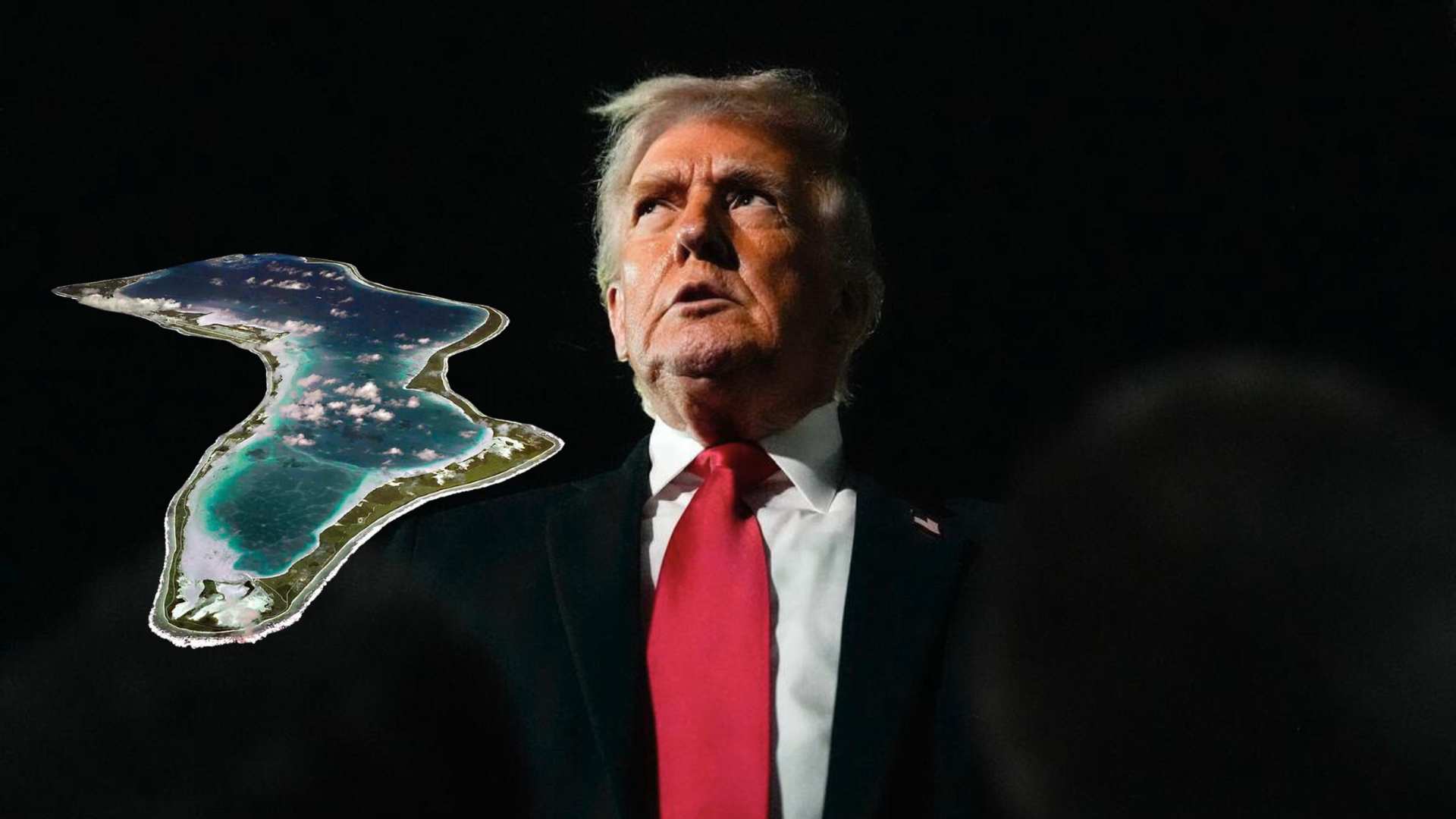
1. Chagos Islands Deal: Strategic and Historical Context
The decision by the United Kingdom to transfer sovereignty of the Chagos Islands to Mauritius marks a significant moment in post-colonial territorial adjustment. The islands have been under British control since 1814, and were administratively separated from Mauritius in 1965, prior to Mauritian independence.
At the core of the issue lies Diego Garcia, which hosts a critical joint U.S.–U.K. military base. This base has long been described by the United States as indispensable for operations across the Middle East, South Asia, and East Africa.
The agreement reflects Britain’s attempt to align with international legal and normative pressures, particularly from the United Nations and its principal judicial organ. Ignoring such pressures risks prolonged legal vulnerability and reputational costs.
The governance logic is that unresolved colonial-era disputes weaken rule-based order. Failure to address them invites legal challenges and diplomatic friction.
2. International Law, Decolonisation, and Sovereignty Transfer
In recent years, the United Nations and the International Court of Justice have urged the UK to return the Chagos Islands to Mauritius. The British government has framed the deal as a legally prudent move to safeguard the long-term operation of the Diego Garcia base.
By transferring sovereignty while leasing back Diego Garcia for at least 99 years, the UK seeks to reconcile decolonisation norms with strategic imperatives. This hybrid arrangement reflects contemporary approaches to disputed territories.
However, critics argue that sovereignty transfer may dilute effective control, particularly in a contested Indo-Pacific security environment. If mismanaged, legal compliance could unintentionally introduce strategic uncertainty.
“Decolonisation is not an act of charity, it is an act of justice.” — United Nations General Assembly, Decolonisation debates
The governance logic is that legitimacy in international relations increasingly flows from legal and normative compliance. Ignoring this erodes diplomatic standing.
3. Strategic Concerns and Trans-Atlantic Tensions
The agreement has triggered sharp reactions from U.S. President Donald Trump, who described the move as strategically reckless and a signal of weakness. His comments link the Chagos issue to broader anxieties about China and Russia exploiting perceived Western indecision.
Despite this rhetoric, the U.S. administration had earlier welcomed the deal, stating that it secures “long-term, stable, and effective operation” of the base. This reveals a divergence between strategic assessment and political messaging.
Such public disagreements strain trans-Atlantic coordination, especially when alliance credibility and deterrence are under scrutiny.
“Alliances are strongest when strategy, not impulse, guides decisions.” — Henry Kissinger
The governance logic is that alliance management requires coherence and predictability. Inconsistent signals weaken collective security.
4. Domestic Political Opposition and Parliamentary Scrutiny
Within the UK, the agreement has faced strong opposition from Conservative and other parties. Critics argue that relinquishing sovereignty undermines national security and exposes the region to external influence.
Although the House of Commons has passed the legislation, the House of Lords expressed formal regret, highlighting unease even within institutional processes. Such dissent underscores the political sensitivity of sovereignty decisions.
Sustained domestic contestation can complicate implementation and weaken the credibility of foreign policy commitments.
The governance logic is that durable foreign policy requires domestic consensus. Ignoring internal dissent risks policy reversal or dilution.
5. Human Rights Dimension: Displaced Chagossians
The Chagos Islands case is also a human rights issue. Around 2,000 islanders were displaced to facilitate construction of the Diego Garcia base, with an estimated 10,000 descendants now living in the UK, Mauritius, and Seychelles.
Many displaced Chagossians argue they were not adequately consulted in the sovereignty deal. The agreement provides for a resettlement fund, but excludes Diego Garcia itself, limiting the scope of return.
Failure to centre affected communities risks perpetuating historical injustice and undermining the moral legitimacy of the settlement.
“Justice that ignores those most affected ceases to be justice.” — Amartya Sen, The Idea of Justice
The governance logic is that sustainable settlements require inclusion of affected populations. Exclusion breeds long-term grievance.
6. Geopolitical Implications in the Indo-Pacific
The Diego Garcia base remains central to power projection in the Indian Ocean region. Its strategic value explains both U.S. concern and UK assurances that security will not be compromised.
The deal illustrates a broader tension between territorial sovereignty, great power competition, and international law. How such balances are struck will shape future dispute resolutions in the Indo-Pacific.
For emerging powers and smaller states, the case sets a precedent on how legal norms interact with strategic realities.
“Power and legitimacy are increasingly intertwined in global politics.” — Joseph S. Nye
The governance logic is that strategic assets must be embedded within legitimate frameworks. Ignoring legitimacy undermines long-term security.
Conclusion
The Chagos Islands agreement reflects the complex interplay of decolonisation, strategic security, alliance politics, and human rights. While designed to reconcile legal obligations with military imperatives, its success will depend on transparent implementation, alliance coordination, and meaningful inclusion of displaced communities. The episode underscores how sovereignty decisions in a multipolar world must balance power with principle to remain sustainable.
.jpeg)