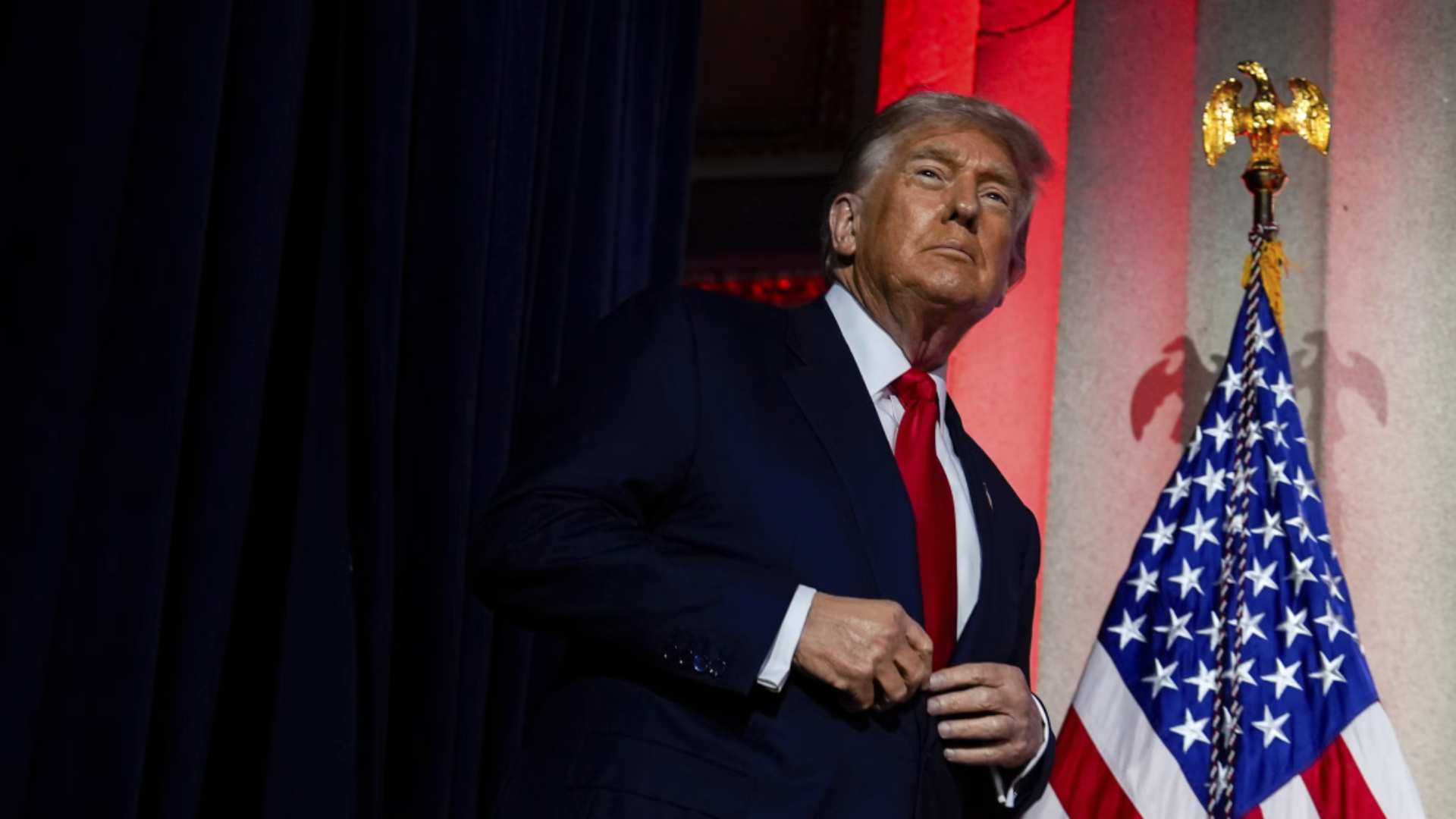
Trump's America: A Historical Problem with Global Ramifications

Conflicting signals from Trump on the Gulf war create market instability and highlight deeper geopolitical challenges.
S
Surya
3 mins read
Global tensions rise amid Gulf war uncertainty

Introduction

The Gulf region accounts for nearly 30% of global oil supply, with the Strait of Hormuz handling ~20% of global petroleum trade. Any instability here directly impacts global energy security and inflation. Recent tensions involving the US and Iran have pushed Murban crude to $146/barrel, highlighting extreme volatility. For India, which imports ~85% of its crude oil, such disruptions pose serious macroeconomic risks.


Background & Context

  • The US-led conflict in the Gulf reflects unclear and shifting strategic objectives.

  • Initial goals included:

    • Weakening Iran’s military capabilities
    • Curbing its nuclear ambitions
  • Over time, objectives fluctuated between:

    • Regime change
    • Tactical military degradation
    • Reopening the Strait of Hormuz

➡️ This inconsistency has led to strategic ambiguity and market instability.


Key Concepts

1. Strategic Ambiguity in Warfare

  • Lack of clearly defined goals weakens credibility.
  • Leads to policy inconsistency and global uncertainty.

Clausewitz: “War is the continuation of politics by other means” — but unclear political goals lead to chaotic outcomes.


2. Energy Geopolitics

  • Oil prices are highly sensitive to:

    • Supply disruptions
    • Military conflicts
  • Gulf remains the epicentre of global energy flows.


3. Market Inefficiency under Political Volatility

  • Traditional Efficient Market Hypothesis (EMH) fails when:

    • Prices react to unpredictable political statements
  • Example:

    • Simultaneous fall in gold and equities indicates panic-driven liquidation.

Oil Market Fragmentation

Benchmark CrudeRegionPrice (approx.)Insight
MurbanGulf$146Highly impacted by conflict
BrentEurope$112Moderate impact
WTIUSA$90Least affected

➡️ Indicates fragmentation of global oil markets.

Implication

  • Asia (incl. India): Worst affected
  • Europe: Moderate impact
  • USA: Least affected due to energy self-sufficiency

Implications for Global Economy

1. Unequal Economic Impact

  • US:

    • Gains from high oil prices (energy exporter)
    • Less exposed geographically
  • Rest of the world:

    • Faces inflation, trade deficits, and slowdown

2. Perverse Incentives in Global Politics

  • US may benefit from controlled instability:

    • Weakens competitors
    • Strengthens domestic energy sector

3. Threat to Globalisation

  • Fragmentation of markets → decline in integrated global economy
  • Rise of regional blocs and protectionism

Challenges & Risks

1. Policy Uncertainty

  • Contradictory signals undermine:

    • Investor confidence
    • Diplomatic credibility

2. Energy Security Risks

  • Vulnerability of chokepoints like Hormuz
  • Supply shocks → inflation globally

3. Weak Global Governance

  • Lack of effective institutions to:

    • Restrain unilateral actions
    • Ensure collective security

Global Responses

1. Formation of Strategic Blocs

  • Countries may align against unilateral US actions

  • Example:

    • Growing openness to China as an alternative partner in Western nations

2. De-dollarisation Efforts

  • Reducing dependence on US dollar:

    • Use of local currencies in trade
    • Diversification of reserves
StrategyChallenge
De-dollarisationHigh transition cost
Treasury sell-offsFinancial instability risk
Alternative institutionsLack of trust & scale

Implications for India

  • Energy Security:

    • Heavy dependence on Gulf oil imports
  • Inflationary Pressures:

    • Rising crude → higher fuel & food prices
  • Strategic Autonomy:

    • Need to balance ties with US, Iran, and global blocs

Policy Measures

  • Diversify energy sources (renewables, strategic reserves)
  • Strengthen diplomatic engagement in West Asia
  • Promote International Solar Alliance (ISA)

Case Study

  • 1973 Oil Crisis:

    • Similar geopolitical trigger
    • Led to stagflation globally ➡️ Demonstrates long-term economic consequences of oil shocks.

Conclusion

The Gulf conflict highlights a deeper structural issue in global politics—asymmetric power with limited accountability. The US, insulated economically and geographically, may have incentives that diverge from global stability. Over time, such imbalances could push the world toward multipolarity, economic fragmentation, and institutional reform. For countries like India, energy resilience and strategic autonomy will be key to navigating this uncertain order.

Quick Q&A

Everything you need to know

Strategic ambiguity in the Gulf conflict refers to the unclear and shifting objectives of the United States, as reflected in contradictory statements by its leadership. Initially, the goals appeared to include decapitating Iran’s leadership, limiting its missile capabilities, and constraining its nuclear programme. However, over time, these objectives expanded to include regime change and later contracted to more limited goals such as weakening Iran’s military capacity or reopening the Strait of Hormuz.

This ambiguity arises from competing political, military, and economic considerations. On one hand, the US leadership seeks to project strength and justify the war domestically. On the other, it must avoid prolonged conflict and economic fallout, particularly rising oil prices that directly affect American consumers. These conflicting imperatives result in inconsistent messaging, such as simultaneously hinting at escalation (ground assault plans) and de-escalation (“war winding down”).

The implications of such ambiguity are significant. It undermines credibility in international relations, confuses allies and adversaries alike, and destabilizes global markets. For instance, markets reacted positively to premature claims of victory, only to face renewed uncertainty later. This highlights how unclear strategic goals can amplify volatility in geopolitics and economics.

The Gulf conflict has triggered significant global market instability due to its direct impact on energy supply chains and the uncertainty surrounding geopolitical decision-making. The Persian Gulf region, particularly the Strait of Hormuz, is a critical chokepoint through which a large proportion of global oil shipments pass. Any disruption or perceived threat to this route leads to sharp fluctuations in oil prices, affecting economies worldwide.

A key factor amplifying instability is the unpredictability of US policy signals. Markets typically rely on consistent information to price assets efficiently. However, contradictory statements—such as claims that the war is nearly over followed by indications of escalation—have confused investors. This has led to unusual trends like simultaneous declines in gold and equities, signaling panic-driven behavior rather than rational market responses.

Additionally, the fragmentation of oil benchmarks—such as Brent, Murban, and West Texas Intermediate (WTI)—reflects regional disparities in supply disruptions. For example, Murban crude prices surged significantly higher than Brent and WTI, indicating greater stress in Gulf supply chains. This uneven impact disproportionately affects Asian economies, which rely heavily on Gulf oil, thereby exacerbating global economic imbalances.

The United States faces a fundamental dilemma between achieving its geopolitical objectives and maintaining economic stability. On the geopolitical front, the US aims to weaken Iran strategically—through military pressure, economic isolation, and potentially regime destabilization. However, these actions risk disrupting global oil supplies, leading to higher energy prices that directly impact American consumers and global markets.

This creates a contradiction. For instance, while the US may want to demonstrate that Iran is economically weakened, it also needs Iranian oil to continue flowing into global markets to prevent price spikes. Similarly, while military strikes on energy infrastructure could weaken Iran, they would also reduce global supply and drive up prices. This explains why US leadership has distanced itself from attacks on critical assets like the South Pars gas field.

The dilemma reflects the broader challenge of balancing hard power and economic interdependence in a globalized world. It also highlights the limits of unilateral action, where pursuing strategic dominance can inadvertently undermine domestic economic interests. This tension is central to understanding modern geopolitical conflicts involving energy security.

The fragmentation of global oil markets during the Gulf crisis is driven by supply disruptions, regional dependencies, and geopolitical risk perceptions. Traditionally, oil markets have been highly integrated, with benchmarks like Brent and WTI reflecting global price trends. However, the crisis has exposed vulnerabilities in supply chains, particularly those linked to the Gulf region.

One key reason is the uneven impact of disruptions on different regions. For example, Murban crude, which is closely tied to Gulf production, saw a sharp price increase compared to Brent and WTI. This indicates that Asian buyers, who rely more heavily on Gulf oil, face greater supply risks than European or American consumers. Such disparities lead to the emergence of regional price differentials, fragmenting what was once a unified global market.

Another factor is the role of geopolitical uncertainty. Markets are increasingly influenced by political decisions rather than purely economic fundamentals. The unpredictability of US actions has further exacerbated this fragmentation. Over time, this could lead to structural changes in energy trade, including diversification of supply sources and the development of regional energy blocs.

The Gulf conflict provides a clear example of asymmetric economic impacts resulting from geopolitical actions. While the war has disrupted global oil markets and created economic stress worldwide, its effects are unevenly distributed. Countries heavily dependent on oil imports, such as Japan and many Asian economies, are more vulnerable to price spikes and supply disruptions.

In contrast, the United States occupies a unique position. As both a major consumer and producer of oil, it is partially insulated from the negative effects of rising prices. In fact, higher oil prices can benefit US energy companies, as seen in the rise of stocks like Chevron, even as broader indices like the Dow Jones decline. This dual role allows the US to absorb shocks more effectively than other economies.

This asymmetry highlights a broader structural issue in the global economy, where powerful nations can externalize the costs of their actions. It also explains why geopolitical decisions by the US can have disproportionate consequences for other countries, reinforcing debates around global governance and economic fairness.

The argument that the United States has incentives to create global economic instability is rooted in its unique position in the global economy. As a relatively self-sufficient energy producer and the issuer of the world’s dominant reserve currency, the US is less vulnerable to external shocks compared to other nations. This creates a situation where global disruptions—particularly in energy markets—can relatively strengthen the US economy while weakening others.

Supporting arguments:

  • The US benefits from higher oil prices due to its domestic energy industry.
  • Geographic distance insulates it from direct conflict-related disruptions.
  • The dominance of the dollar ensures continued global demand for US financial assets.

Counterarguments:
  • Global instability can eventually harm US exports and financial markets.
  • Allies’ economic distress can weaken strategic partnerships.
  • Long-term erosion of trust may accelerate de-dollarization efforts.

In conclusion, while the US may derive short-term advantages from global instability, the long-term consequences could be detrimental. The perception of self-serving behavior can lead to shifts in global alliances and economic structures, ultimately challenging US dominance.

The Gulf conflict serves as an important case study for understanding the growing discourse around de-dollarization and global economic realignment. The perceived unpredictability and unilateral actions of the United States have prompted many countries to reconsider their dependence on the US-led financial system. This is particularly relevant for nations that are adversely affected by US foreign policy decisions.

Evidence of this shift can be seen in public opinion trends and policy discussions. For instance, surveys in countries like Canada, France, and the UK indicate a surprising willingness to consider alternatives to the US, including closer economic ties with China. Additionally, countries like Japan, which hold significant US Treasury reserves, are exploring ways to mitigate their exposure to US-driven economic risks.

However, transitioning away from the dollar is complex and costly. It requires building alternative financial systems, establishing new trade mechanisms, and overcoming coordination challenges among countries. Despite these hurdles, continued geopolitical instability could accelerate this process. The Gulf conflict thus highlights both the limitations of US dominance and the potential for a more multipolar global economic order.

Attribution

Original content sources and authors

Sign in to track your reading progress

Comments (0)

Please sign in to comment

No comments yet. Be the first to comment!