
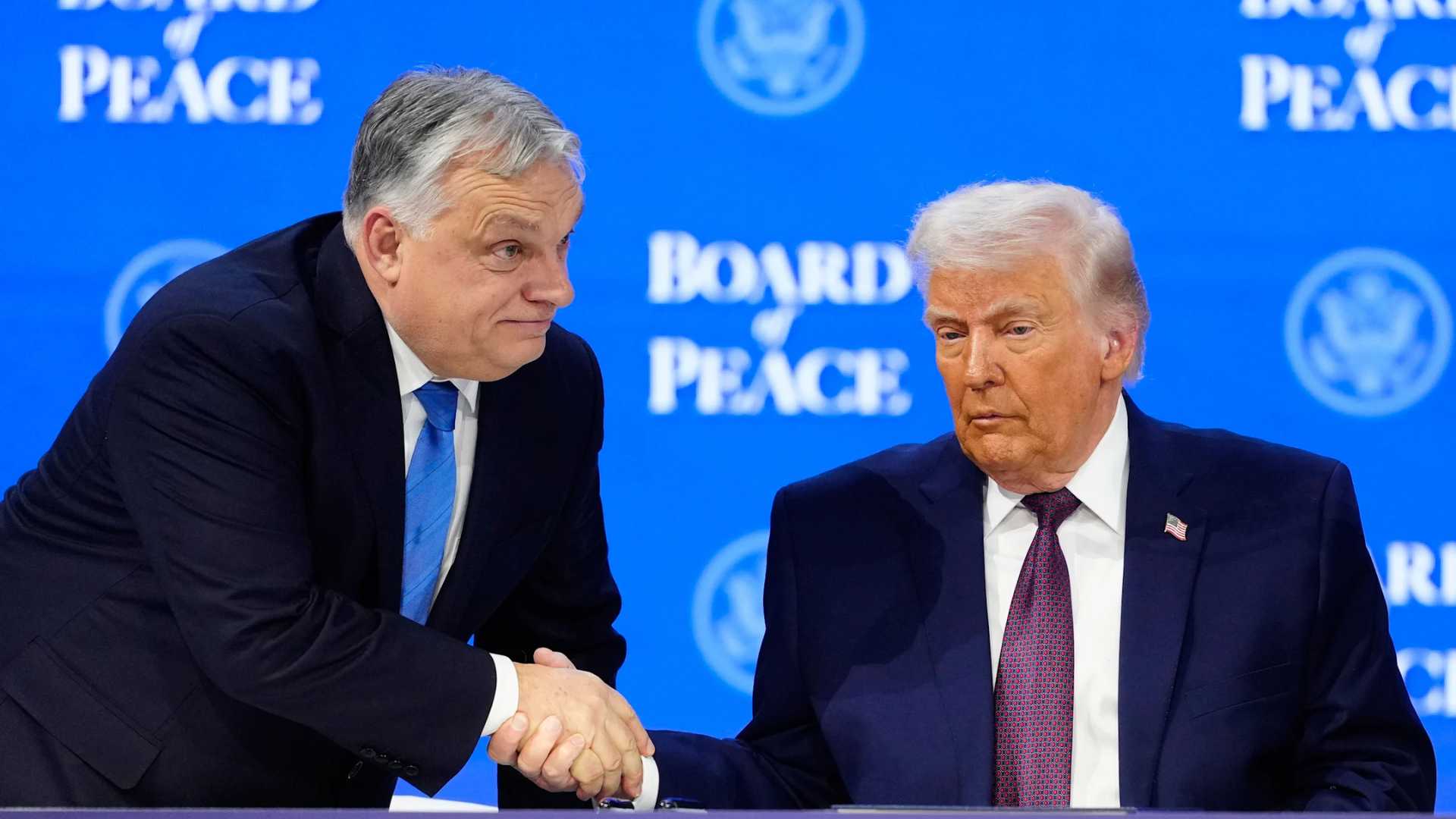
1. Context: Transatlantic Far-Right Alignment under Strain
The political alignment between the US MAGA movement and Europe’s far-right parties has been a notable feature of recent transatlantic politics. Shared positions on immigration, nationalism, and skepticism of liberal multilateralism had created a perception of ideological solidarity.
However, US President Donald Trump’s stated plans to take control of Greenland, a territory linked to Denmark and NATO, have exposed fault lines within this alliance. What was earlier seen as ideological convergence is now being tested by questions of sovereignty and national interest.
This development is significant for international relations as it shows that ideological affinity does not automatically translate into strategic alignment. For European nationalist parties, defending territorial sovereignty remains a core political principle.
If such tensions are ignored, they could weaken cohesion among Europe’s far-right forces and alter their collective stance on the EU–US relationship.
The governance logic is that foreign policy actions often override ideological sympathy; when sovereignty is threatened, domestic political legitimacy becomes the primary concern.
2. Issue: Greenland and the Limits of Ideological Loyalty
Trump’s proposals regarding Greenland have triggered sharp reactions from far-right leaders traditionally sympathetic to his agenda. Leaders in Germany, Italy, France, and the UK have described the move as coercive and hostile, signalling discomfort with US interference in European affairs.
Even long-standing allies such as Nigel Farage publicly criticised the plan, calling it “a very hostile act.” In the European Parliament, far-right lawmakers aligned with Trump supported blocking an EU–US trade pact, citing threats to sovereignty.
This reaction illustrates that while European far-right parties may admire Trump’s domestic agenda, they resist actions perceived as undermining European territorial integrity.
Failure to acknowledge this boundary risks deepening mistrust between transatlantic nationalist movements.
“A very hostile act.” — Nigel Farage, Leader, Reform UK (on Trump’s Greenland plans)
The political logic is that nationalist movements draw legitimacy from defending sovereignty; perceived external coercion directly undermines their core narrative.
3. Evidence of Divergence within the European Far Right
The divergence is particularly visible in Western Europe. France’s National Front, despite past ideological closeness to Trump, has criticised what it terms US “commercial blackmail” over Greenland. Italian Prime Minister Giorgia Meloni similarly described US tariff threats linked to Greenland as a mistake.
These reactions contrast sharply with earlier displays of solidarity, such as the 2024 Madrid gathering under the slogan “Make Europe Great Again.” The shift highlights a reassessment of the costs of alignment with US power politics.
If unresolved, these divisions could weaken coordinated far-right influence within EU institutions.
Key data:
- Far-right parties hold 26% of seats in the European Parliament
— Source: German Institute for International and Security Affairs
The governance logic is that electoral strength does not ensure policy unity; divergent national interests can fragment even ideologically similar blocs.
4. Eastern Europe: Strategic Dependence and Selective Silence
In contrast, several far-right leaders on the EU’s eastern flank have avoided criticising Trump. Hungarian Prime Minister Viktor Orbán has framed Greenland as a NATO issue and avoided challenging US intentions, reflecting his strategic dependence on Trump’s support.
Similarly, leaders in Poland, the Czech Republic, and Slovakia have either called for quiet diplomacy or remained silent. Their responses reflect domestic political calculations and security concerns, particularly linked to the Ukraine conflict.
This selective silence shows that geopolitical vulnerability can shape nationalist responses differently across Europe.
Ignoring this divide risks oversimplifying the European far-right as a uniform political force.
The logic is that states with higher security dependence prioritise external patronage over ideological consistency.
5. Broader Implications for EU Politics and Transatlantic Relations
The Greenland episode suggests that sovereignty concerns can override shared ideological grievances. Analysts note that while the radical right may reunite around opposition to EU migration policy or trade deals, repeated US actions perceived as coercive could deepen internal divisions.
Such fragmentation has implications for EU decision-making, trade negotiations, and the bloc’s collective foreign policy stance toward the US.
At the same time, these tensions highlight the resilience of national interest even within transnational ideological movements.
“If Trump continues in this way, posing a threat to the sovereignty of European countries, then of course this will divide the European radical right.”
— Daniel Hegedüs, German Marshall Fund
The governance logic is that sovereignty remains a foundational principle in international politics; alliances that ignore it struggle to sustain coherence.
Conclusion
The rift over Greenland underscores the limits of ideological alignment in international politics. While MAGA-style nationalism has influenced Europe’s far right, national sovereignty and strategic interests continue to shape political behaviour. For the EU, these divisions may both weaken far-right coordination and complicate transatlantic engagement, reinforcing the enduring primacy of state interests over ideology.
.png)