1. Strategic Context of Iran–U.S. Tensions
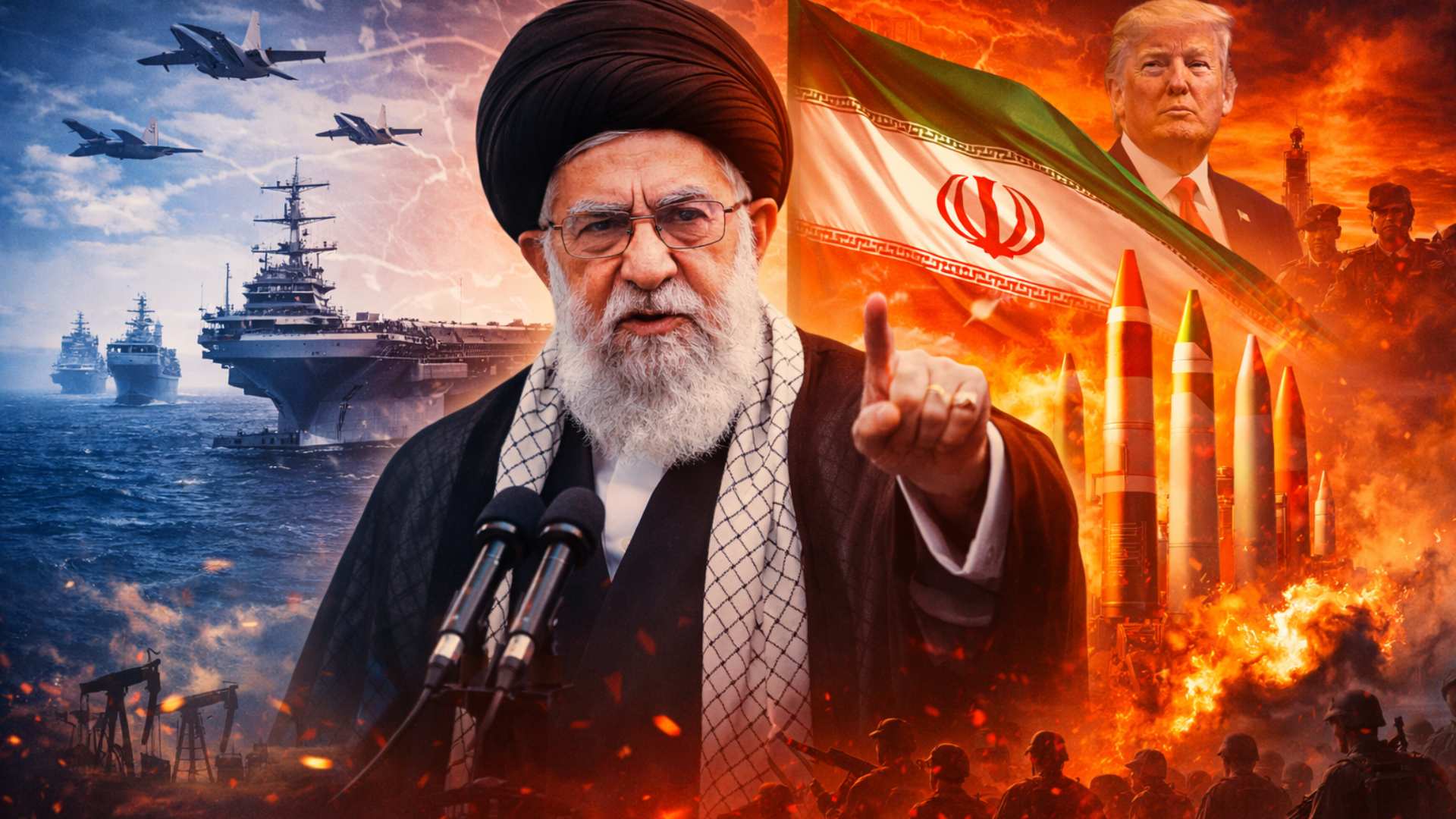
Iran–U.S. relations have entered a phase of heightened military signalling alongside parallel diplomatic engagement. The warning by Iran’s Supreme Leader that any U.S. strike would escalate into a “regional war” reflects Tehran’s attempt to raise the cost of coercive action while deterring direct military intervention.
This statement comes amid visible U.S. force mobilisation in West Asia, including warships, fighter jets, and an aircraft carrier. Such deployments are intended to signal resolve and pressure Iran on its nuclear programme, but they also increase the risk of miscalculation in a volatile region.
At the same time, both Tehran and Washington have publicly acknowledged that talks are progressing. This coexistence of military posturing and diplomacy underscores a classic crisis-management dynamic where escalation and negotiation proceed simultaneously.
For governance and regional stability, this dual-track approach matters because prolonged uncertainty affects energy markets, regional security architectures, and the strategic autonomy of smaller West Asian states.
The underlying logic is deterrence through signalling while keeping diplomatic exits open; if ignored, military brinkmanship can overwhelm negotiation channels and push the region into unintended conflict.
2. Iran’s Deterrence Narrative and Regionalisation of Conflict
Iranian leadership has consistently framed any potential U.S. attack as inherently regional rather than bilateral. By emphasising “regional war,” Tehran signals its ability to activate allied non-state and state actors across West Asia, thereby expanding the conflict’s scope.
This narrative seeks to deter the U.S. by highlighting asymmetric escalation pathways, including threats to maritime security and regional stability. It also reassures domestic audiences that Iran will not appear weak under external pressure.
However, Iran simultaneously stresses that it does not seek to initiate war, positioning itself as a defensive actor responding to aggression. This dual framing is central to Iran’s strategic communication.
For regional governance, such narratives complicate conflict de-escalation because they widen the perceived stakes for all neighbouring states, even those not directly involved.
"We are not the initiators of war… However, anyone who seeks to attack or cause harm will face a decisive blow from the Iranian nation." — Ayatollah Ali Khamenei
The logic is to strengthen deterrence without foreclosing diplomacy; ignoring this balance risks legitimising pre-emptive actions by external powers.
3. U.S. Pressure Strategy and Negotiation Leverage
The U.S. approach combines explicit military pressure with deadline-driven diplomatic messaging on Iran’s nuclear programme. Statements that “time is running out” and references to a “massive armada” are designed to compress Iran’s decision-making space.
Such coercive diplomacy aims to extract concessions while avoiding war. However, public threats can harden positions in Tehran and reduce flexibility for compromise, especially when national sovereignty and regime legitimacy are invoked.
The confirmation by the U.S. President that talks are “seriously” underway indicates recognition that a negotiated outcome remains preferable to military escalation. This reflects lessons from earlier regional interventions that proved costly and destabilising.
For global governance, this strategy tests the effectiveness of power-based bargaining versus rules-based nuclear non-proliferation frameworks.
The governance logic lies in using pressure to shape outcomes without triggering conflict; if mismanaged, pressure can entrench defiance rather than compliance.
4. Regional Mediation and Middle Power Diplomacy
Regional states such as Oman, Qatar, Turkey, and Saudi Arabia have emerged as key diplomatic intermediaries. Their efforts highlight a growing preference among West Asian states for de-escalation to protect economic stability and sovereignty.
Notably, Saudi Arabia and the UAE have ruled out the use of their airspace for any strike against Iran, signalling limits to alliance cooperation when national interests are at stake. Turkey’s refusal to support military action further reflects this trend.
Qatar’s engagement, including high-level meetings with Iranian leadership, demonstrates the role of small but diplomatically agile states in crisis mediation. Such efforts reduce reliance on extra-regional powers.
For regional order, these actions indicate a gradual shift towards indigenous conflict-management mechanisms.
The logic is pragmatic regionalism aimed at stability; ignoring such mediation risks marginalising local stakeholders and escalating external intervention.
5. Nuclear Negotiations and Sanctions Relief Dynamics
Iran’s stated willingness to accept a “fair and equitable” nuclear deal, including assurances of “No Nuclear Weapons” and sanctions relief, reiterates its long-standing negotiating position. This aligns with its claim of compliance with non-proliferation norms while contesting punitive economic measures.
Sanctions relief remains central to Iran’s economic governance and domestic stability. Prolonged sanctions affect development outcomes, public welfare, and state capacity.
The emphasis on guarantees reflects Iran’s experience with past agreements where expected economic benefits did not fully materialise. This shapes its current negotiating posture.
For international regimes, the issue tests the credibility of negotiated agreements and enforcement mechanisms.
"Iran has never sought nuclear weapons and is ready to embrace a fair and equitable nuclear deal." — Abbas Araghchi
The logic connects economic governance with security assurances; failure to address both dimensions undermines durable agreement.
6. Implications for India and Global Order
Although not a direct party, India is affected through energy security, diaspora safety, and regional connectivity initiatives. Statements about shifting oil sourcing away from Iran highlight the geopolitical constraints India faces.
Escalation would disrupt maritime routes in West Asia, impacting global trade and energy prices. Conversely, successful diplomacy would stabilise markets and reduce geopolitical risk premiums.
At a systemic level, the crisis reflects tensions between unilateral pressure tactics and multilateral diplomacy in managing proliferation and regional security.
For India’s foreign policy, the situation reinforces the importance of strategic autonomy and diversified partnerships.
The logic is interconnected security and economic governance; ignoring these linkages exposes states to external shocks.
Conclusion
The Iran–U.S. standoff illustrates the fragile balance between deterrence and diplomacy in a highly militarised region. Regional mediation efforts and cautious negotiation signals offer pathways to de-escalation. Sustained engagement, respect for regional stakes, and credible diplomatic guarantees are essential for long-term stability and effective global governance.