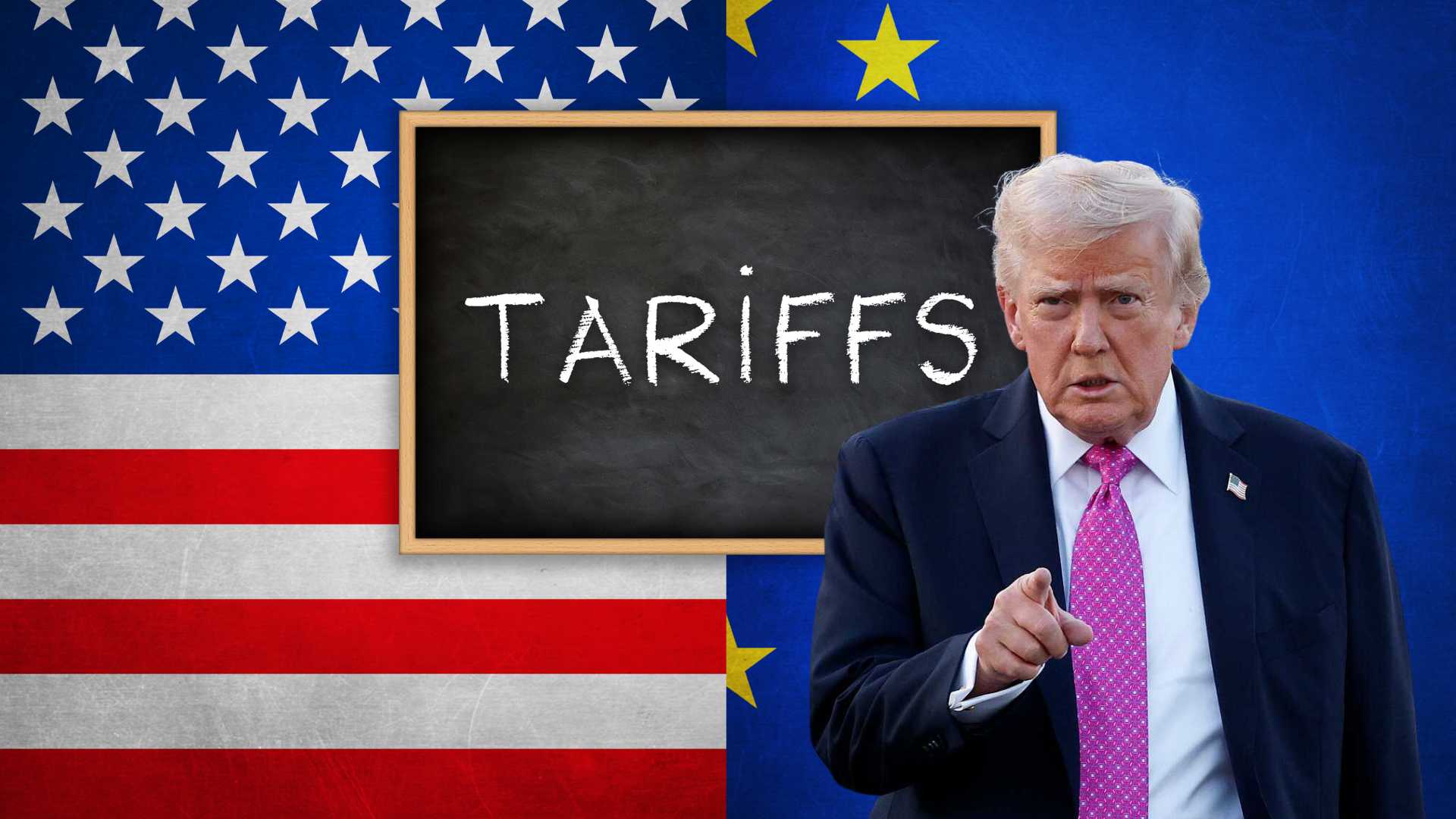
1. Constitutional Limits on Presidential Tariff Powers
The U.S. Supreme Court, in a 6–3 majority, struck down former President Donald Trump’s sweeping tariffs imposed under the International Emergency Economic Powers Act (IEEPA), 1977. The Court held that IEEPA does not authorize the President to impose tariffs, thereby reinforcing the constitutional allocation of trade powers to Congress.
The ruling is significant because the U.S. Constitution explicitly vests the power to levy taxes and tariffs in Congress. By attempting to impose tariffs under a national emergency law without Congressional approval, the executive was seen as expanding its authority beyond statutory limits.
Chief Justice John Roberts, writing for the majority, clarified the core issue:
"Our task today is to decide only whether the power to 'regulate ... importation,' as granted to the president in IEEPA, embraces the power to impose tariffs. It does not." — Chief Justice John Roberts
The decision represents a major judicial check on executive overreach in trade policy and reinforces the doctrine of separation of powers.
This ruling underscores that economic policy tools with vast fiscal consequences cannot be unilaterally deployed by the executive without clear legislative sanction. Ignoring such limits risks institutional imbalance and erosion of constitutional governance.
2. The “Major Questions” Doctrine and Judicial Review
The Court invoked the “major questions doctrine”, which requires explicit Congressional authorization for executive actions of “vast economic and political significance.” The majority held that permitting the President’s interpretation would intrude into Congress’s constitutionally assigned tariff authority.
The doctrine has previously been used to limit executive actions under both Republican and Democratic administrations. Its application here reinforces judicial insistence on clear statutory backing for expansive executive measures.
However, the three liberal justices did not join the portion of the ruling invoking the major questions doctrine, reflecting nuanced judicial reasoning even within the majority coalition.
In dissent, Justice Brett Kavanaugh argued that the President may still impose similar tariffs under alternative statutory authorities, suggesting that the ruling primarily concerns statutory interpretation rather than broad tariff authority.
The judgment highlights the judiciary’s evolving role in policing executive action in complex economic domains. Failure to enforce clear authorization standards could normalize expansive interpretations of emergency powers.
3. IEEPA: Scope, Purpose and Limits
IEEPA historically enabled presidents to regulate commerce during national emergencies, particularly for sanctions, asset freezes, and restrictions on adversarial states. It had not previously been used to impose general tariffs.
Trump invoked IEEPA citing:
- A national emergency due to the 1.24 trillion in 2025
- Fentanyl trafficking concerns in relation to China, Canada and Mexico
The Court found that the statute does not explicitly mention tariffs and that interpreting “regulate importation” to include tariff imposition would dramatically expand presidential authority.
Roberts observed that no prior President had used IEEPA to impose tariffs of such magnitude, reinforcing the argument against historical precedent.
Emergency economic legislation is designed for targeted crisis management, not structural trade policy redesign. Expanding such statutes risks converting exceptional powers into routine governance tools.
4. Economic Dimensions: Trade War, Revenue and Market Uncertainty
Tariffs were central to Trump’s renewed global trade strategy, aimed at leveraging U.S. market access to extract concessions and renegotiate trade terms.
- Tariffs imposed under IEEPA had generated over $175 billion (Penn-Wharton Budget Model estimate)
- If all tariffs remained, they were projected to generate $300 billion annually over the next decade (Congressional Budget Office estimate)
- Tariffs were expected to yield trillions over a decade
- Tariffs represented roughly one-third of revenue from Trump-imposed duties (Oct–Dec data)
The ruling triggered volatility in financial markets as investors assessed possible inflation relief against uncertainty over alternative tariff mechanisms.
The Court did not clarify refund mechanisms for previously collected tariffs, potentially leading to prolonged litigation.
Trade policy uncertainty affects inflation, supply chains, and global investor confidence. Institutional ambiguity in economic governance can amplify market instability and undermine policy predictability.
5. Executive Authority and Institutional Balance
The ruling marks one of the most significant setbacks to Trump’s broader effort to expand executive authority across domains such as immigration, military deployment, and regulatory policy.
The majority emphasized that endorsing the administration’s interpretation would:
- Replace executive-legislative collaboration in trade
- Create “unchecked presidential policymaking”
- Undermine the constitutional separation of powers
Despite the setback, the dissent noted that alternative statutes—such as those permitting tariffs on national security grounds or for unfair trade practices—remain available.
Thus, while the ruling restricts use of IEEPA for tariffs, it does not eliminate presidential tariff authority under other laws.
Institutional resilience depends not only on constitutional text but also on judicial willingness to enforce boundaries. Without such enforcement, executive accumulation of powers may gradually reshape governance structures.
6. Global Trade and Geopolitical Implications
Trump’s tariff strategy functioned as a coercive diplomatic instrument, influencing negotiations with allies and adversaries alike.
Countries affected included:
- China
- Canada
- Mexico
- India (over Russian oil purchases)
- Brazil (political disputes)
- Ontario province (anti-tariff advertisement issue)
The tariffs prompted foreign governments to offer investment pledges and market access concessions. However, they also strained alliances and increased global economic uncertainty.
The Canadian Chamber of Commerce cautioned that alternative, possibly “blunter mechanisms” may now be used to reassert trade pressure.
Trade instruments increasingly serve geopolitical purposes. However, unilateral and legally contested measures risk destabilizing global economic governance and weakening long-term diplomatic credibility.
7. Federalism and Litigation Dynamics
The case was brought by:
- Five small importing businesses
- 12 U.S. states, largely Democratic-governed
The involvement of states highlights sub-national economic vulnerability in global trade conflicts. States dependent on imports or export markets face direct fiscal and employment impacts from tariff regimes.
The judgment illustrates how federalism and judicial review intersect in economic governance, with states acting as litigants to check federal executive action.
When federal trade policy imposes disproportionate local costs, sub-national units may increasingly turn to courts as corrective arenas, reshaping the balance of economic federalism.
8. Alternatives Available to the Executive
The administration indicated possible reliance on:
- National security-based tariff provisions
- Trade Representative determinations on unfair trade practices
- Other statutory authorities permitting retaliatory measures
However, these mechanisms:
- Require more procedural steps
- May not replicate the flexibility of IEEPA
- May limit instantaneous tariff imposition
Thus, the ruling may constrain speed and scope rather than eliminate tariff tools altogether.
Legal procedural safeguards slow executive action but enhance accountability. Governance trade-offs between efficiency and constitutionalism remain central in economic policymaking.
9. Key Data for Prelims Enrichment
- Supreme Court majority: 6–3
- IEEPA enacted: 1977
- U.S. goods trade deficit: 1.24 trillion (2025)
- IEEPA tariff collections: $175+ billion
- Potential annual tariff revenue: $300 billion
- Tariffs represented ~one-third of revenue from Trump-imposed duties (late 2025 data)
Conclusion
The Supreme Court’s decision reaffirms constitutional limits on executive authority in trade policy while preserving alternative statutory pathways. It reflects the judiciary’s role in maintaining separation of powers amid expanding executive ambitions.
For governance systems globally, the episode highlights a core principle: economic nationalism and emergency powers must operate within clearly defined institutional boundaries to ensure stability, accountability, and long-term policy credibility.