
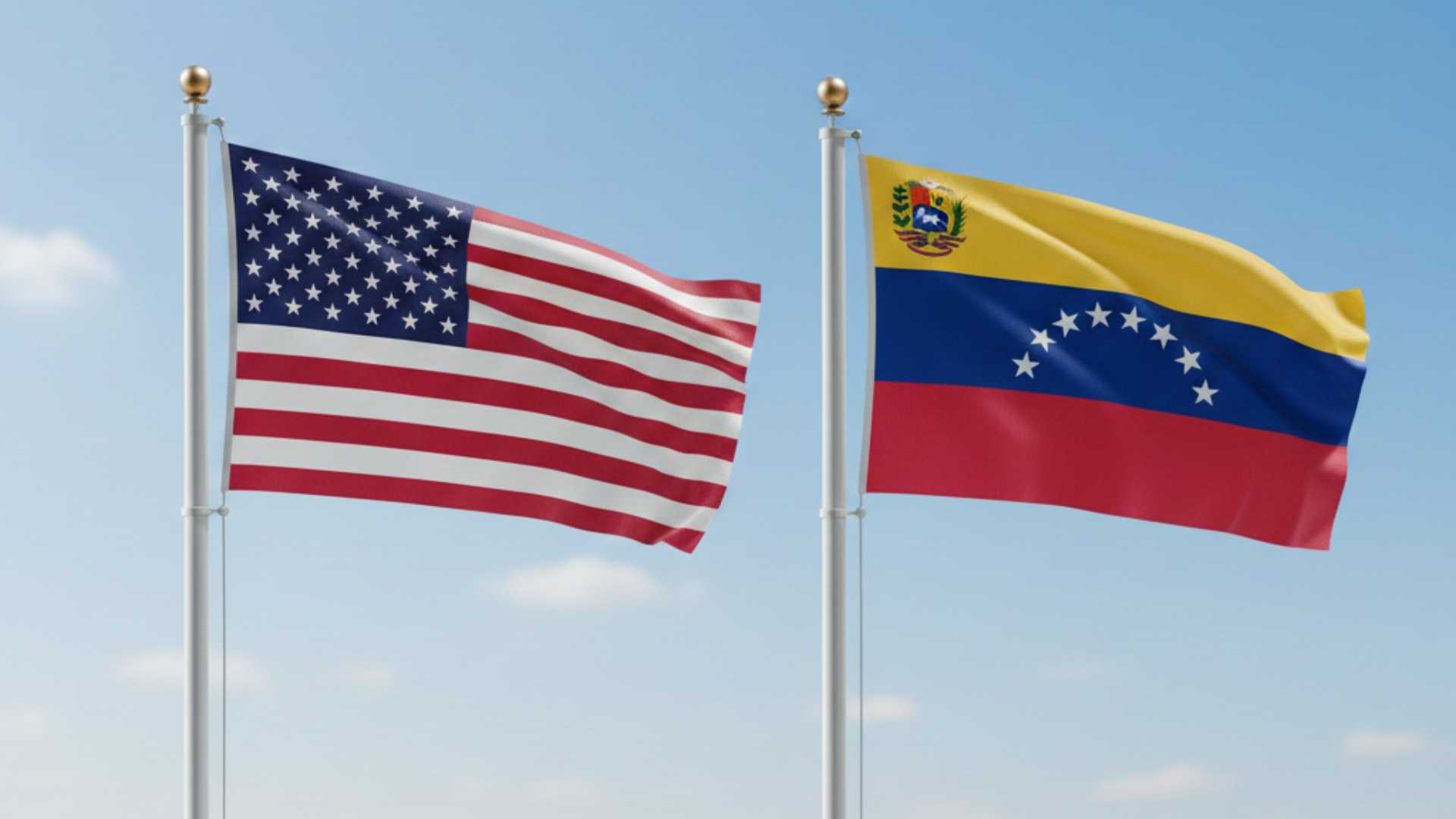
1. Context: U.S. Action Against Venezuela and International Law
The article examines the reported use of force by the United States against Venezuela, including military action and the capture of President Nicolás Maduro. This episode is situated within a broader pattern of recent unilateral uses of force by powerful states, raising questions about the durability of post-1945 international legal norms.
At the core is Article 2(4) of the United Nations Charter, which prohibits the threat or use of force in international relations. This provision was designed to delegitimise war as a tool of state policy and to preserve international peace through collective security.
The incident is significant for global governance because it tests whether foundational rules apply equally to all states. If such actions go unchallenged, they risk normalising unilateral coercion and weakening institutional checks on power.
The governance logic is that predictable adherence to shared legal rules reduces conflict and power asymmetries. Ignoring this principle leads to erosion of trust in multilateral institutions and greater instability.
2. Legal Framework on the Use of Force
Article 2(4) allows only two exceptions to the prohibition on force: self-defence under Article 51, and authorisation by the UN Security Council. The article argues that neither condition was met in the Venezuelan case.
Scholars such as Oona A. Hathaway and Scott J. Shapiro are cited to underline how the UN Charter fundamentally reshaped international law by outlawing war. This framework aims to replace unilateral violence with collective decision-making.
The absence of clear legal justification matters because expanding exceptions risks hollowing out the rule itself. Over time, this could transform a narrow prohibition into a discretionary norm.
The reasoning is that strict thresholds for force act as guardrails for state behaviour. Diluting them increases arbitrariness and undermines collective security mechanisms.
3. Expansion of Self-Defence and Contested Justifications
The article highlights how powerful states have sought to broaden self-defence to include pre-emptive and anticipatory action, especially against non-state threats like terrorism. It also references humanitarian intervention as another contested justification.
Nico Krisch’s argument is used to show that the prohibition on force is among the most constraining rules for hegemonic states. Innovative legal interpretations are often employed to bypass these constraints.
In the Venezuelan case, the U.S. reportedly advanced a law-enforcement rationale, claiming to act against alleged criminal activity. This goes beyond even the contested categories of self-defence and humanitarian intervention.
The logic is that stretching legal concepts to fit political objectives weakens normative clarity. If ignored, such practices blur the line between lawful defence and unlawful aggression.
4. Sovereignty, Non-Intervention, and the Monroe Doctrine
State sovereignty and non-intervention are central principles of the international order. The article argues that unilateral military action and regime interference directly violate these norms.
References to the Monroe Doctrine suggest a revival of sphere-of-influence thinking, where regional dominance is asserted over legal equality. This clashes with post-colonial and UN-based norms of sovereign equality.
For developing countries, especially in the Global South, such precedents are troubling as they echo historical patterns of imperial control and external interference.
The governance reasoning is that sovereignty protects political independence and policy autonomy. Undermining it reintroduces hierarchical power relations into international affairs.
5. Head of State Immunity and Jurisdiction
A key legal issue discussed is the treatment of President Maduro under international law. The International Court of Justice, in the Arrest Warrant Case (DRC v. Belgium, 2002), affirmed that sitting heads of state enjoy immunity ratione personae from foreign criminal jurisdiction.
The article stresses that legitimacy under international law depends on effective control, not on recognition or electoral assessments by other states. Maduro’s government exercised effective control over Venezuelan territory.
Denying immunity based on subjective criteria would allow states to selectively withdraw recognition and prosecute foreign leaders, destabilising diplomatic relations.
The logic is that personal immunity ensures stable interstate relations. Ignoring it risks politicising criminal jurisdiction and escalating conflicts.
6. Forcible Arrest and Internationally Wrongful Acts
The forcible capture of a foreign national, especially a head of state, on another state’s territory without consent is characterised as an internationally wrongful act. It violates territorial sovereignty and due process norms.
Such actions also amount to undue interference in internal affairs, particularly when framed as an attempt to “run” or manage another state’s governance.
This has implications for international cooperation, as states may become wary of engaging diplomatically if legal protections are uncertain.
The reasoning is that respect for jurisdictional boundaries enables cooperation and predictability. Disregard leads to fear, retaliation, and diplomatic breakdown.
7. Compliance Crisis in International Law
The article argues that the main problem lies not in the content of international law but in declining commitment to compliance. Marko Milanovic is cited to support this view.
Authoritarian tendencies and weakening domestic rule of law, even in established democracies, reduce respect for external legal constraints. Domestic legal erosion thus spills over into international behaviour.
This linkage is important for governance because it shows how internal political trends affect global norms and institutions.
The governance logic is that strong domestic rule of law reinforces international compliance. Ignoring this connection weakens both systems simultaneously.
8. Implications for Global Order
- Undermining Article 2(4) risks normalising unilateral use of force
- Selective application of immunity weakens diplomatic stability
- Revival of dominance doctrines challenges post-colonial equality
- Erosion of trust in multilateral institutions like the UN
These implications affect peace, development, and international cooperation, particularly for smaller and weaker states.
The reasoning is that consistent rule application sustains legitimacy. Inconsistency accelerates fragmentation of the international system.
9. Way Forward: Strengthening the International Rule of Law
The article concludes that strengthening international law requires reinforcing domestic democracy and rule of law. Legal norms cannot function without political will and institutional integrity.
Democratic forces and multilateral institutions must collectively resist unilateralism and reaffirm core principles such as non-use of force and sovereign equality.
This approach aligns with long-term governance goals of stability, predictability, and peaceful dispute resolution.
The logic is that law derives strength from collective commitment. Without it, norms become symbolic and ineffective.
Conclusion
The Venezuela episode illustrates how unilateral actions by powerful states strain the foundations of international law. Preserving the global legal order requires renewed adherence to core UN Charter principles and stronger domestic rule-of-law institutions. Over the long term, this is essential for stable governance, equitable development, and international peace.