
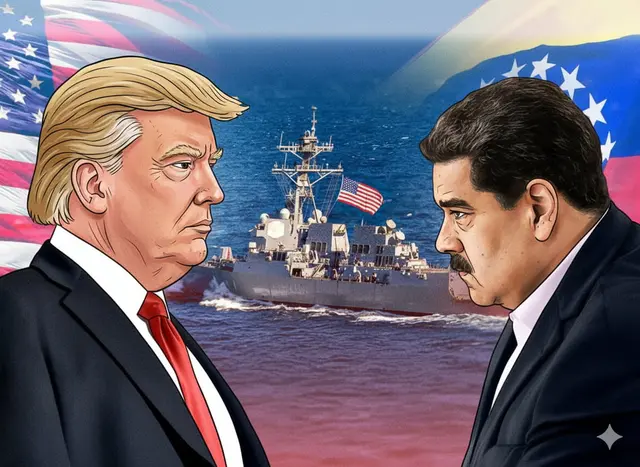
Venezuela’s Oil Temptation: Power, Politics, and Why Markets Aren’t Reacting

Despite regime turmoil and America’s eye on the world’s largest oil reserves, decayed infrastructure, legal uncertainty, and global oversupply mean prices are unlikely to budge anytime soon
GopiGopi
4 mins read
Geopolitical turmoil clouds Venezuela’s oil future as vast reserves await stability markets
Not Started

Venezuela’s Oil Industry and Geopolitical Dynamics

1. Venezuela’s Oil Potential and Current Reality

Venezuela possesses the world’s largest proven crude oil reserves, approximately 303 billion barrels, accounting for around 17% of global reserves. Despite this endowment, its current production stands at only ~1.1 million barrels per day, a steep decline from 3.5 million barrels in 1999, due to decades of mismanagement, corruption, and international sanctions. This discrepancy underscores the gap between natural resource wealth and effective economic utilization.

The country’s heavy crude oil is crucial for diesel, asphalt, and industrial fuels, which makes it strategically important for global energy markets. U.S. Gulf Coast refineries, optimized for this grade, could benefit significantly from increased Venezuelan supply, potentially improving operational efficiency and reducing dependence on other heavy crude sources.

Political instability remains a key constraint. Nationalization under Hugo Chávez in 2007, frequent leadership disputes, and the uncertain status of President Nicolás Maduro versus interim claims have deterred foreign investment. Consequently, even with vast reserves, the potential for immediate production increases is limited.

The governance and development logic here emphasizes that resource endowments alone do not ensure energy security or economic benefit; political stability and institutional capacity are critical.

  • Statistics:

    • 303 billion barrels – proven crude oil reserves
    • Current production: 1.1 million bpd
    • Historical production (1999): 3.5 million bpd

2. Infrastructure and Investment Challenges

Venezuela’s oil infrastructure has been in decay for years, requiring massive capital and time for restoration. Estimates suggest that raising output from 1 million to 4 million barrels per day could take roughly a decade and $100 billion in investment. Infrastructure deterioration includes extraction facilities, pipelines, and refining capacities.

Foreign companies are hesitant to invest without a stable political and legal framework. Chevron remains the only major operator, producing ~250,000 bpd through joint ventures with the state-owned PDVSA. ExxonMobil and ConocoPhillips have withdrawn operations due to nationalization and sanctions, highlighting the risks associated with Venezuela’s investment environment.

Institutional stability and contract certainty are essential for foreign capital inflows; without them, even resource-rich nations cannot unlock their economic potential.

  • Challenges:

    • Decayed infrastructure needing $100 billion investment
    • Political uncertainty and legal risks
    • Limited foreign investment presence

3. Global Oil Market Dynamics and Price Implications

Despite U.S. intervention plans, short-term global oil prices are unlikely to react due to several factors. Venezuela is an OPEC member, so any potential increase in production is already considered within OPEC quotas. Additionally, a global surplus of oil exists, limiting the price impact of incremental supply from Venezuela.

Heavy crude shortages, particularly for diesel, currently affect global markets. If Venezuela’s production is revived, it could provide competition to Russia and other producers, stabilizing prices for industrial and transportation fuels. However, political and operational uncertainties, combined with the time required for infrastructural upgrades, suggest that immediate effects on global energy markets will be minimal.

Understanding market dynamics shows that supply potential does not instantly translate to price changes; institutional and infrastructural constraints shape real-world outcomes.

  • Impacts:

    • Global oil surplus limits price volatility
    • Potential long-term competition with Russian oil
    • Heavy crude supply affects diesel and industrial fuel markets

4. Geopolitical and Legal Considerations

The U.S. plan to capture Venezuelan leadership and engage American companies in the oil sector raises legal and geopolitical issues. International law prohibits occupying powers from exploiting another state’s resources. Furthermore, Venezuela’s contested governance structure complicates the legitimacy of such interventions.

Strategically, increased Venezuelan production could reduce global dependence on Russian and other heavy crude producers, altering geopolitical leverage. However, effective implementation depends on political stability, international acceptance, and long-term investment commitments.

Geopolitical and legal frameworks directly influence resource access and energy diplomacy; ignoring these factors can result in conflict, sanctions, and failed policy outcomes.

  • Institutions involved:

    • Venezuelan government and Supreme Court
    • U.S. administration
    • Chevron, ExxonMobil, ConocoPhillips
    • OPEC

5. Way Forward and Policy Implications

Reviving Venezuela’s oil sector requires a multi-pronged approach:

  • Establishing political stability and clear legal frameworks to attract foreign investment.
  • Prioritizing infrastructure rehabilitation through long-term, large-scale capital allocation.
  • Coordinating with OPEC and global stakeholders to manage production and price stability.
  • Considering alternative supply chains to reduce dependence on geopolitically sensitive oil sources.

For governance and development, integrating institutional stability, infrastructure investment, and international cooperation is key to converting natural resource wealth into sustainable economic growth.


Conclusion Venezuela’s oil reserves offer strategic potential, but realizing it requires addressing political, infrastructural, and legal barriers. Effective governance, foreign investment facilitation, and international coordination are critical to restoring production, stabilizing global markets, and leveraging energy resources for development.

Quick Q&A

Everything you need to know

Venezuela's oil industry, once a global powerhouse, is currently in a state of severe disrepair. Production has declined from around 3.5 million barrels per day in 1999 to roughly 1.1 million barrels today, accounting for less than 1% of the world's crude oil supply.

Several factors contributed to this decline:

  • Corruption and mismanagement: Inefficient operations and misallocation of resources have crippled production capacity.
  • Nationalization policies: The Chávez government in 2007 nationalized much of the oil sector, forcing major international players like ExxonMobil and ConocoPhillips to exit, which resulted in loss of technical expertise and investment.
  • Economic sanctions: U.S. sanctions restricted Venezuela’s access to international markets and investment, further deteriorating the infrastructure.
While Venezuela holds the world's largest proven oil reserves (approximately 303 billion barrels, about 17% of global reserves), the real challenge is political instability and lack of investor confidence rather than availability of crude.

American oil companies see significant potential in Venezuela due to its enormous proven reserves and the type of crude it produces. Venezuelan oil is heavy crude, ideal for diesel, asphalt, and other industrial fuels. Many U.S. Gulf Coast refineries were historically optimized for this type of crude, so accessing Venezuelan oil could improve operational efficiency and reduce costs.

Additionally, there are strategic considerations:

  • Energy security: Re-establishing access to Venezuelan oil could reduce U.S. dependence on other heavy crude suppliers.
  • Geopolitical leverage: Increased Venezuelan production could help the U.S. and its allies exert pressure on other oil producers like Russia by diversifying supply sources.
  • Long-term investment potential: While the infrastructure is decayed, a stable political regime could allow companies to revitalize production, potentially doubling or tripling output within a decade.
However, these investments are contingent on political stability and assurances regarding contract enforcement.

In the short term, the U.S. intervention is unlikely to significantly affect global oil prices because:

  • Venezuela's production is currently low and accounted for within OPEC's quotas.
  • There is a surplus of oil in the global market.
However, in the long term, if production is successfully revitalized, it could have a notable impact:
  • Increase in supply: Venezuela could potentially double or triple its output, easing pressure on heavy crude markets, especially diesel, which is in high demand.
  • Price stabilization: Higher production could contribute to lower long-term oil prices, benefiting consuming nations.
  • Geopolitical implications: A strengthened Venezuelan output could reduce European reliance on Russian oil, thereby influencing global power dynamics.
These outcomes are dependent on long-term investment, infrastructure rehabilitation, and political stability.

The primary challenges are not technical but political and economic. Key issues include:

  • Political instability: Uncertainty over leadership, legal disputes, and contested governance make long-term contracts risky.
  • Contract enforcement: Past nationalizations (e.g., 2007 under Chávez) demonstrated that the government could revoke agreements, deterring foreign investment.
  • Infrastructure decay: Refineries, pipelines, and oil rigs require substantial investment to become operational again.
  • International sanctions: U.S. and global sanctions create legal and financial hurdles for foreign firms.

For example, Chevron is one of the few companies still operating in Venezuela, producing around 250,000 barrels per day, but even it emphasizes employee safety, compliance, and asset integrity due to the precarious environment.

Seizing control of another country's resources raises complex legal and ethical concerns:

  • International law: Under customary international law, an occupying power cannot enrich itself by exploiting another state's natural resources. The U.S. may argue that the Venezuelan government never legitimately controlled the resources, but this is contested.
  • Political legitimacy: Installing a proxy regime and appropriating assets can set a precedent that undermines sovereignty norms, potentially destabilizing international relations.
  • Ethical concerns: Such interventions can harm civilians, exacerbate political conflict, and risk violations of human rights.
Historically, resource expropriation has led to prolonged conflict and economic stagnation, as seen in earlier nationalizations in Latin America, highlighting the need for careful diplomatic and legal frameworks before undertaking such actions.

A notable example is the nationalization of Venezuela's oil industry under President Hugo Chávez in 2007. Major international companies like ExxonMobil and ConocoPhillips were forced to exit, and production dropped sharply.

Consequences included:

  • A decline from 3.5 million barrels per day in 1999 to just over 1 million barrels today.
  • Loss of technical expertise and international investment.
  • Reduced global supply of heavy crude, increasing prices for diesel and other industrial fuels.
This demonstrates how political decisions and instability can directly impact both domestic production and global energy markets.

In this scenario, several outcomes are possible:

  • Boosted production: Venezuelan output could rise from 1.1 million barrels per day to 3–4 million barrels within a decade, reducing global supply constraints.
  • Diversification of supply: Europe and Asia could reduce reliance on Russian and Middle Eastern crude, enhancing energy security.
  • Geopolitical leverage: The U.S. and its allies could influence global oil markets more effectively, using Venezuelan production to stabilize prices or apply pressure on rival nations.

However, risks remain:
  • Political backlash or insurgency could destabilize production.
  • Long-term infrastructure rehabilitation requires massive investment (~$100 billion), which may not yield immediate returns.
  • Legal disputes over ownership and international condemnation could affect investor confidence.
Thus, while potential benefits exist, careful management of political, legal, and technical challenges is essential.

Attribution

Original content sources and authors

MO

Matt O'Brien

PBS NEWS
PBS NEWS
Sign in to track your reading progress

Comments (0)

Please sign in to comment

No comments yet. Be the first to comment!