1. Context: Vietnam–U.S. Relations and Strategic Contradictions
Vietnam and the United States upgraded their relationship to a Comprehensive Strategic Partnership in 2023, placing Washington at the highest diplomatic tier alongside China and Russia. This marked a significant shift from historical hostility to pragmatic engagement driven by trade, technology, and Indo-Pacific stability.
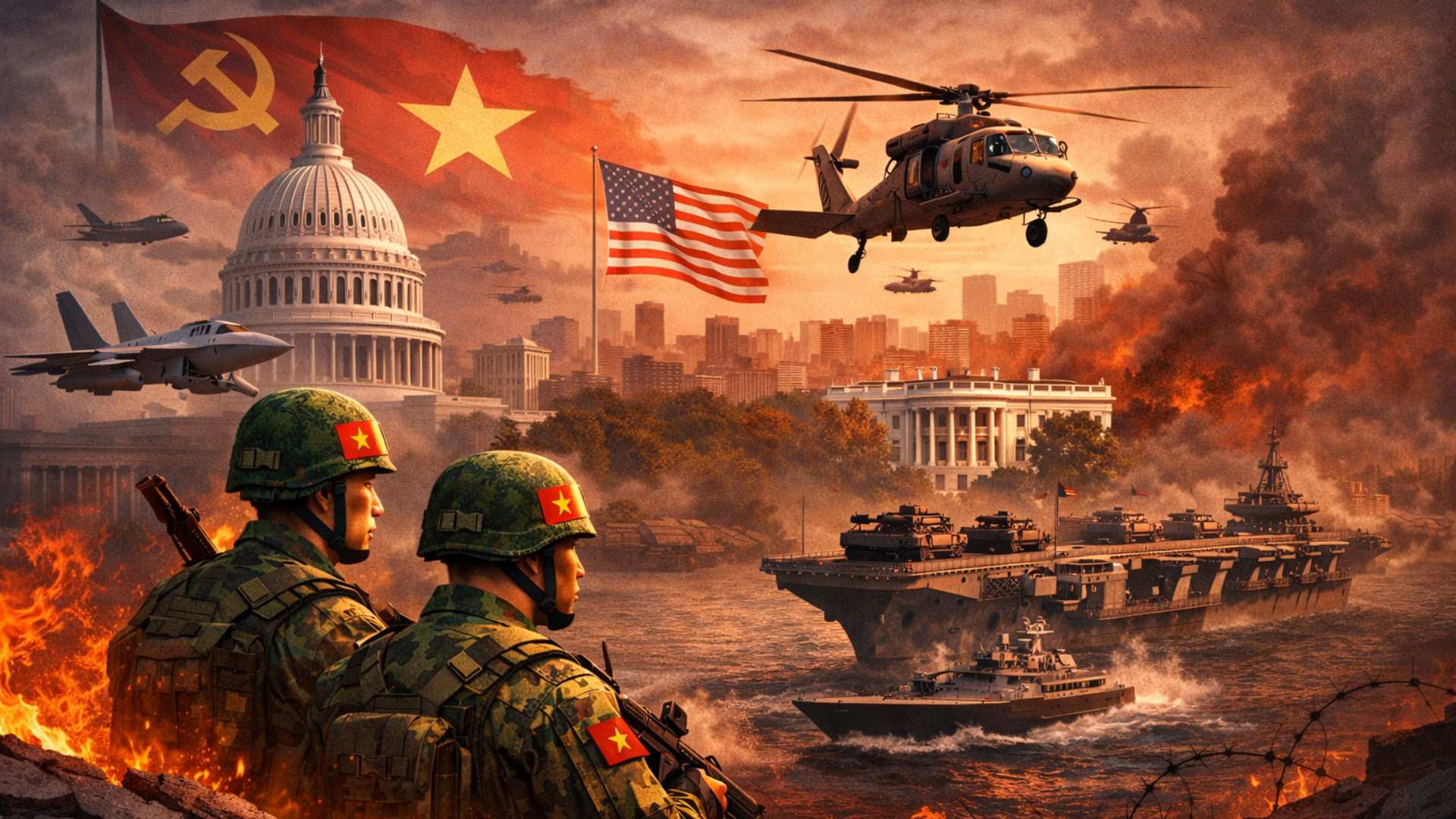
However, leaked Vietnamese internal military documents from August 2024, analysed by The 88 Project, reveal a parallel strategic mindset that views the U.S. as a potential “belligerent” and even an existential threat. This duality highlights the gap between Vietnam’s outward diplomacy and inward security calculations.
The episode is important for understanding how authoritarian or single-party states manage external partnerships while prioritising regime security. Ignoring this contradiction risks misreading Vietnam’s foreign policy as alignment-driven rather than hedging-based.
“In international politics, trust is scarce, and intentions are always uncertain.” — Kenneth Waltz, Theory of International Politics
This reflects the governance logic of strategic autonomy: states may deepen cooperation externally while internally preparing for worst-case scenarios to preserve regime stability. If overlooked, external partners may miscalculate trust and long-term commitments.
2. Core Issue: Fear of “Color Revolution” and Regime Security
The Vietnamese document titled “The 2nd U.S. Invasion Plan” frames the primary threat not as direct military attack, but as indirect destabilisation through democracy promotion, human rights advocacy, and civil society engagement. The U.S. is perceived as capable of fomenting a “color revolution” similar to Ukraine (2004) or the Philippines (1986).
This fear is shared across multiple Vietnamese institutions, indicating it is not an isolated or fringe concern. The military and conservative factions of the Communist Party see ideological influence as a pathway to regime change.
Such perceptions shape internal governance choices, including restrictions on universities, NGOs, and foreign-funded programmes. If unaddressed, this insecurity can constrain reforms and create friction even with economically beneficial partners.
“Regimes often fear ideas more than armies.” — Fareed Zakaria, The Future of Freedom
From a governance perspective, regimes prioritising political survival may securitise non-military domains. If this fear dominates policy, it can reduce policy openness and weaken institutional trust with external partners.
3. Strategic Balancing: U.S., China, and Vietnam’s Hedging Strategy
Vietnam’s foreign policy reflects a calibrated balancing act. While China and Vietnam have territorial disputes in the South China Sea, internal documents portray China as a regional rival, not an existential threat. In contrast, the U.S. is viewed as ideologically intrusive.
Economic interdependence reinforces this hedging:
- China is Vietnam’s largest two-way trade partner
- The U.S. is Vietnam’s largest export market
Vietnam therefore avoids formal alignment with any anti-China bloc, despite expanding defence and economic ties with Washington. This approach aligns with ASEAN norms of non-alignment and strategic autonomy.
“Small and middle powers survive not by choosing sides, but by managing dependencies.” — Amitav Acharya, The End of American World Order
This logic underscores middle-power diplomacy: balancing economic gains with security anxieties. Ignoring this could push Vietnam to overcorrect towards insularity or excessive dependence on one partner.
4. Internal Political Dynamics and Institutional Tensions
The documents reveal tensions within Vietnam’s political leadership. The military and conservative factions remain sceptical of deep U.S. engagement, while technocratic and foreign policy arms pursue economic and diplomatic gains.
These tensions surfaced publicly in June 2024, when a military-linked media outlet accused Fulbright University Vietnam of promoting a color revolution—claims later defended against by the Foreign Ministry.
Such episodes show how internal institutional divergence can spill into public discourse, affecting foreign confidence and domestic governance credibility.
“Foreign policy is often the external expression of internal political struggles.” — Graham Allison, Essence of Decision
Institutional incoherence can weaken policy signalling. If unresolved, it risks undermining both internal governance coordination and external diplomatic reliability.
5. Changing U.S. Posture and Vietnamese Uncertainty
The return of Donald Trump for a second term altered Vietnamese perceptions. On one hand, reduced emphasis on democracy promotion and increased business engagement—such as a $1.5 billion Trump-branded project in Hung Yen—eased some ideological concerns.
On the other hand, U.S. actions elsewhere, including military interventions and sovereignty violations, reinforced Vietnamese fears of unpredictability. Concerns are heightened regarding Cuba, a close Vietnamese ally, where any U.S. action could have symbolic and strategic repercussions.
Cuts to USAID programmes, including Agent Orange clean-up efforts, also undermined trust and highlighted the vulnerability of cooperation to political shifts in Washington.
“Unpredictability in great power behaviour increases insecurity even among partners.” — Stephen Walt, The Hell of Good Intentions
This illustrates the development logic of policy consistency: erratic external behaviour increases hedging by partners. If such uncertainty persists, long-term strategic partnerships weaken.
6. Implications for India and the Indo-Pacific (Prelims & GS-II Enrichment)
- Vietnam’s stance reinforces the limits of U.S.-led coalition-building in Asia.
- Highlights the primacy of regime security over ideological alignment in many Asian states.
- Underscores ASEAN members’ preference for strategic autonomy over bloc politics.
- Relevant for India’s Act East Policy and partnerships with Vietnam based on non-interference.
“Strategic autonomy is not isolation; it is calibrated engagement.” — S. Jaishankar, The India Way
Conclusion
Vietnam’s internal security perceptions reveal that high-level diplomatic upgrades do not automatically translate into strategic trust. The case underscores how regime security, historical memory, and ideological concerns continue to shape foreign policy choices. For long-term regional stability, external engagement must internalise these constraints while respecting strategic autonomy and political sensitivities.