
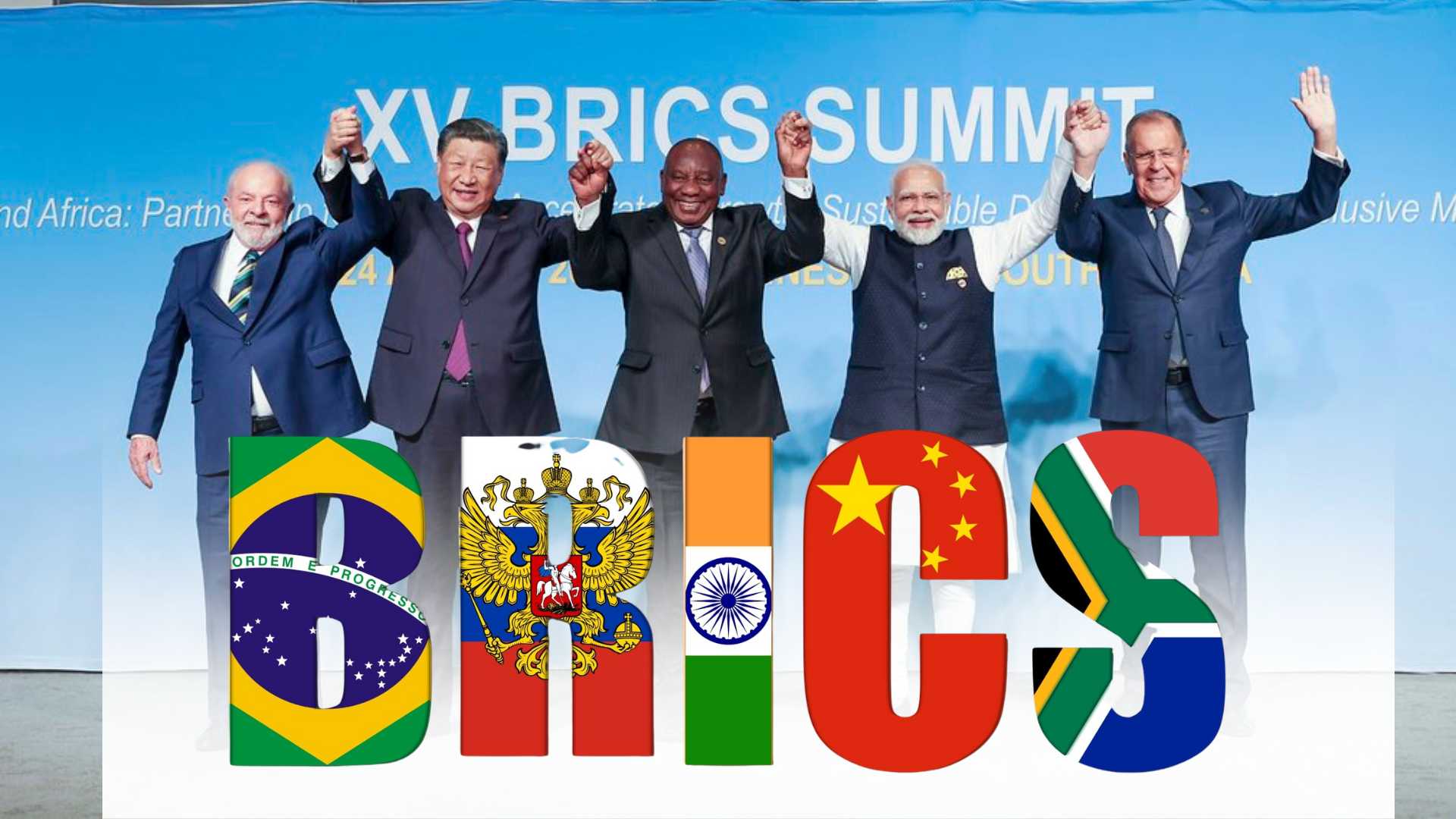
1. Context: RBI Proposal on Linking BRICS CBDCs
The Reserve Bank of India has proposed linking the central bank digital currencies (CBDCs) of BRICS countries to facilitate cross-border trade finance and tourism payments. The recommendation has been made to include this proposal on the agenda of the 2026 BRICS Summit, which India will host as the incoming BRICS president.
The proposal builds on earlier BRICS efforts to improve cross-border payment efficiency and reflects India’s broader push to modernise payment systems using digital public infrastructure. It also comes amid rising geopolitical tensions and growing scrutiny of the dominance of the U.S. dollar in global finance.
While the initiative has the potential to reshape payment settlement mechanisms among emerging economies, it also carries diplomatic and systemic implications, especially given U.S. warnings against attempts to bypass the dollar.
This proposal reflects a governance logic that seeks efficiency, resilience, and autonomy in cross-border payments; if ignored, BRICS economies may remain vulnerable to external financial shocks and geopolitical leverage.
2. Issue: Cross-border Payments, Dollar Dependence, and Geopolitics
Cross-border transactions among BRICS countries currently rely heavily on correspondent banking networks and systems such as SWIFT, which are dollar-centric and exposed to sanctions risk. The RBI proposal aims to address inefficiencies, delays, and strategic vulnerabilities in this framework.
The initiative is politically sensitive, as the U.S. has openly cautioned against any collective effort to undermine the dollar’s role. Statements by U.S. leadership have framed BRICS initiatives as potentially “anti-American,” raising the risk of trade or tariff retaliation.
At the same time, India has clarified that its push to internationalise the rupee and link CBDCs is not explicitly aimed at de-dollarisation, but at improving transactional efficiency and financial stability.
The underlying issue is balancing economic pragmatism with geopolitical risk; failure to manage this balance could constrain India’s strategic autonomy in global finance.
3. Building Blocks: Payment Interoperability and CBDC Pilots
The proposal draws legitimacy from a 2025 BRICS declaration in Rio de Janeiro, which emphasised interoperability among members’ payment systems. All five original BRICS members are currently running CBDC pilot projects, though none has fully launched a national CBDC.
India has actively promoted the e-rupee by enabling offline payments, programmability for targeted government transfers, and participation of fintech firms in wallet provision. These measures aim to improve adoption and demonstrate practical use cases.
However, scaling this to a multilateral BRICS framework requires trust in technology standards, regulatory compatibility, and institutional coordination among diverse economies.
The governance logic here is incrementalism—using pilots and interoperability to reduce risk; without this, large-scale digital integration could fail at the implementation stage.
4. Challenges: Technology, Governance, and Trade Imbalances
Despite conceptual agreement, several structural challenges remain. BRICS members have differing levels of technological maturity and may be reluctant to adopt platforms developed by other countries, slowing consensus.
Past attempts at increasing local-currency trade illustrate these difficulties. For instance, Russia accumulated large rupee balances with limited domestic use, forcing India to permit investment of such balances in Indian bonds.
Challenges:
- Lack of consensus on common technological standards
- Governance rules for settlement and dispute resolution
- Managing persistent trade imbalances among members
These challenges highlight that financial innovation without institutional alignment can exacerbate imbalances rather than resolve them.
5. Proposed Mechanisms: FX Swaps and Periodic Settlements
To address trade asymmetries, one proposal under discussion is the use of bilateral foreign exchange swap arrangements between central banks. These swaps could enable periodic settlement—weekly or monthly—of net transaction positions arising from CBDC-linked payments.
Such mechanisms would reduce the need for immediate hard-currency settlement and provide liquidity backstops. However, they also require high levels of trust and transparency among participating central banks.
The logic is risk-sharing through institutional mechanisms; if absent, payment imbalances could undermine confidence in the system.
6. Broader Context: BRICS Expansion and Limits of Monetary Integration
Founded in 2009, BRICS has expanded beyond its original members to include countries such as the UAE, Iran, and Indonesia. This expansion has increased its geopolitical visibility but also added heterogeneity.
Earlier ambitions, such as creating a common BRICS currency, were abandoned due to practical and political constraints. The CBDC linkage proposal is therefore more modest, focusing on interoperability rather than monetary union.
Globally, enthusiasm for CBDCs has been tempered by the rise of stablecoins. However, the RBI maintains that CBDCs offer a safer and more regulated alternative.
“Beyond the facilitation of illicit payments and circumvention of control measures, stablecoins raise significant concerns for monetary stability, fiscal policy, banking intermediation and systemic resilience.” — RBI Deputy Governor T. Rabi Sankar
This reflects a cautious approach that prioritises systemic stability over rapid innovation; ignoring these limits could expose economies to new financial risks.
7. Implications for India and Global Governance
For India, the proposal aligns with its leadership role in BRICS 2026 and its emphasis on a “humanity-first” approach to global governance. It offers an opportunity to shape norms on digital finance while safeguarding regulatory sovereignty.
At the global level, successful CBDC linkage among BRICS could gradually diversify cross-border payment channels, though it is unlikely to displace the dollar in the near term.
The developmental logic is diversification without disruption; failure to pursue such calibrated reforms may leave emerging economies structurally dependent.
Conclusion
The RBI’s proposal to link BRICS CBDCs represents an incremental yet strategic attempt to modernise cross-border payments amid geopolitical uncertainty. Its success will depend on technological interoperability, institutional trust, and careful management of trade imbalances. In the long term, such initiatives could strengthen financial resilience and cooperative governance among emerging economies without destabilising the global monetary order.
.jpeg)
