
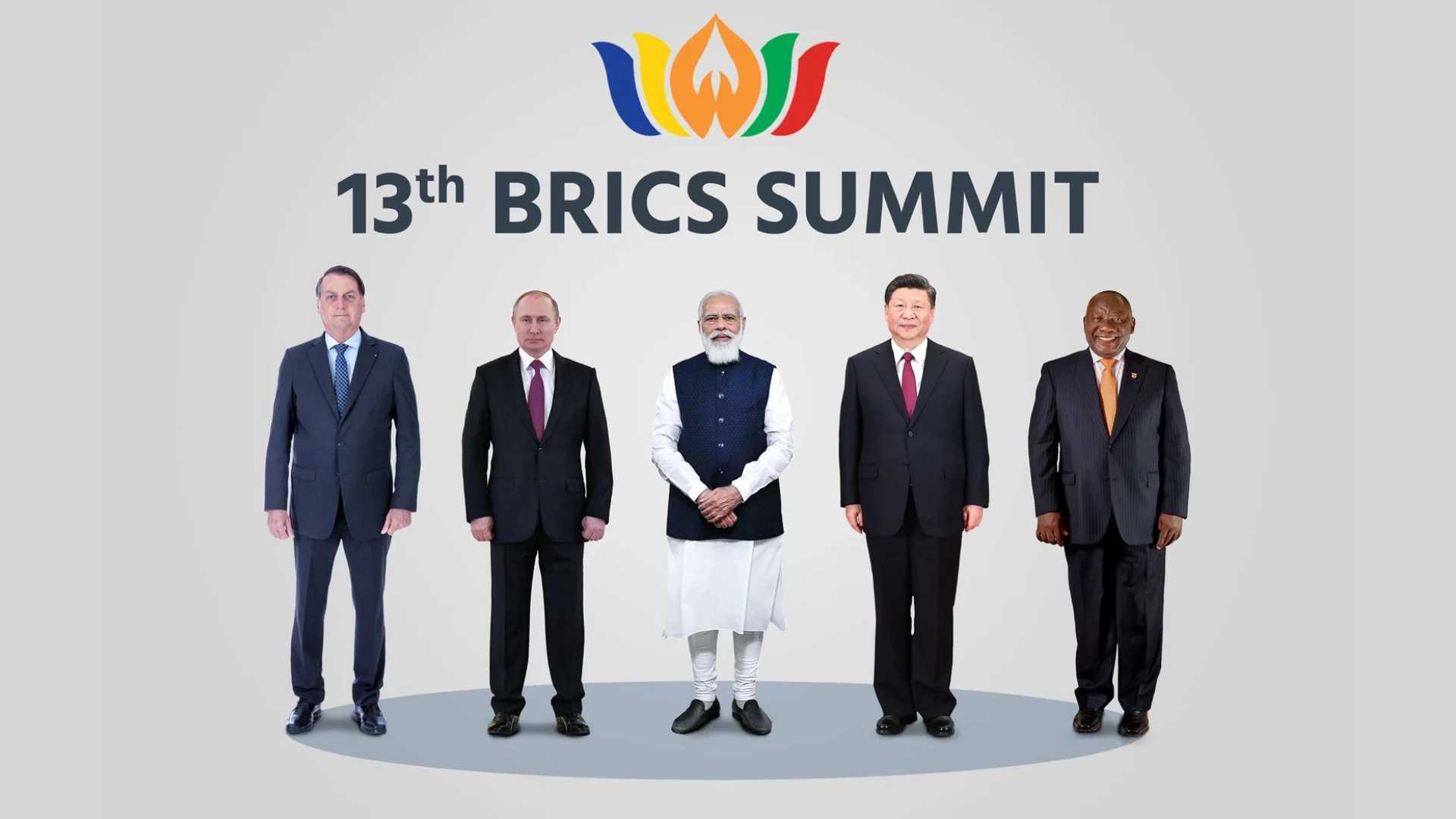
1. India’s BRICS Presidency: Strategic Context and Significance
India will host the BRICS Summit in 2026, building on the institutional capacity, logistical preparedness, and diplomatic confidence gained during the successful G-20 Summit (2023). This continuity offers India an opportunity to move quickly from organisation to agenda-setting, a critical requirement for effective global leadership.
The choice of summit focus is central to India’s credibility as a leader of the Global South. An agenda that resonates simultaneously with national priorities, BRICS interests, and the pressing needs of developing countries can reinforce India’s role as a bridge between competing global blocs.
For the Global South, climate change has emerged not merely as an environmental issue but as a core development and governance challenge. Vulnerability to extreme weather, infrastructure stress, livelihood insecurity, and health risks makes resilience a shared concern across developing economies.
Failure to anchor the BRICS agenda around such a unifying issue risks reducing the summit to a symbolic exercise, thereby missing an opportunity for India to shape global discourse at a time of leadership flux.
Climate-focused agenda-setting is a governance tool: it aligns domestic capability with international responsibility. If ignored, India risks ceding narrative leadership to other powers and weakening BRICS’ relevance for development-centric cooperation.
2. Stress on Multilateralism and the Need for a Stabilising Force
The current global order is marked by heightened polarisation, particularly under a renewed Trump-led U.S. administration, where collaborative multilateralism faces visible strain. Climate change has been singled out, labelled a “hoax,” alongside an explicit push for expanded fossil fuel use.
The U.S. decision to withdraw from 66 international organisations, including the International Solar Alliance chaired by India, reflects a broader retreat from climate governance. The U.S. absence from COP30 (Belém, November 2025) further underscores this disengagement, even as global processes continued without it.
Simultaneously, European countries—traditionally climate champions—are experiencing domestic climate fatigue and prioritising national security concerns. This has created a leadership vacuum in sustaining collective climate action.
In this context, BRICS can act as a stabilising force by reaffirming collaborative approaches to sustainability and resilience, particularly from a development-oriented perspective.
When traditional climate leaders retreat, governance gaps emerge. If BRICS does not step in, climate multilateralism risks fragmentation, undermining predictability and trust for vulnerable economies.
3. Managing BRICS–U.S. Tensions and India’s Strategic Autonomy
The BRICS grouping has attracted scepticism from the U.S., with President Trump viewing it as anti-American and a challenge to the dollar-dominated financial order. This perception complicates India’s diplomatic calculus given its extensive strategic, economic, and trade ties with Washington.
India must balance participation in BRICS with imperatives such as negotiating a viable trade deal with the U.S., avoiding punitive tariffs linked to Russian oil imports, and maintaining stable bilateral relations.
India’s diplomatic handling during the G-20 Delhi Summit demonstrated its ability to balance geopolitical tensions while safeguarding strategic autonomy through multi-alignment and Global South leadership.
A similar calibrated approach at the BRICS Summit can allow India to advance collective climate resilience without framing BRICS as a confrontational bloc.
Diplomatic adroitness is essential for policy space. Ignoring this balance could either dilute India’s leadership role in BRICS or strain critical bilateral partnerships.
4. Climate Change as a Shared BRICS Concern
Climate impacts vary across BRICS members but remain universally consequential. Risks span infrastructure damage, public health pressures, livelihood disruptions, and ecosystem degradation.
Examples include thawing permafrost, stress on the Amazon rainforest, vulnerabilities in the Himalayas, and increasing exposure of coastal and riverine regions. These shared risks provide a strong basis for collective action on adaptation and resilience.
At the UNFCCC, the BASIC grouping (Brazil, South Africa, India, China) has historically coordinated developing country positions. However, an expanded BRICS framework brings greater demographic, economic, and political weight.
At COP30 in Belém, coordinated developing country positions ensured that fossil fuel discussions did not undermine development imperatives, illustrating the utility of broader coalitions.
Shared vulnerability creates shared interest. Without collective articulation, climate negotiations risk privileging mitigation narratives over adaptation and equity concerns of developing economies.
5. BRICS’ Role in Sustaining Global Climate Governance
Several BRICS members have played key roles in steering the global climate process after the Paris Agreement. Brazil, Egypt, and the UAE have presided over climate conferences in the post-COVID-19 period, helping maintain momentum on climate action.
BRICS engagement can also counter unilateral measures that sidestep UNFCCC principles, such as the European Union’s Carbon Border Adjustment Mechanism (CBAM), which has implications for developing country exports.
The opening of climate–trade linkages at Belém reflects growing recognition that sustainability debates cannot be divorced from development and trade equity.
A coordinated BRICS position can reinforce multilateral norms while safeguarding developmental space.
Institutional continuity in climate governance prevents rule fragmentation. If BRICS remains passive, global climate rules may increasingly reflect unilateral or club-based approaches.
6. Climate Finance: Central Enabler of Climate Action
A major outcome of the July 2025 BRICS Summit in Rio de Janeiro was the BRICS Leaders’ Framework Declaration on Climate Finance, an area where India has consistently articulated Global South concerns.
Finance remains the principal constraint on climate action. Adaptation, resilience-building, and energy transitions in developing countries depend on predictable and adequate funding.
Given this, engaging only the New Development Bank is insufficient. Inclusion of the World Bank and International Monetary Fund leadership in the BRICS Summit is necessary, as meaningful global finance mobilisation cannot occur without them.
This becomes more urgent amid U.S. climate scepticism and declining private finance flows, including pullbacks from ESG investments and green bonds.
Climate commitments without finance lack credibility. Ignoring multilateral financial institutions risks reducing BRICS climate declarations to aspirational statements.
7. Expanded BRICS: Scale, Voice, and Global South Representation
BRICS now includes Egypt, Ethiopia, Indonesia, Iran, and the UAE, significantly expanding its representational base.
Key aggregates:
- ~50% of global population
- ~40% of global GDP
- ~26% of global trade
This scale provides BRICS with substantial normative and negotiating power, particularly on issues affecting developing countries.
Harnessing this collective weight for resilience and inclusive green development can shift global priorities from narrow mitigation targets to balanced development outcomes.
Numerical heft translates into agenda-setting power only when used cohesively. Fragmentation would weaken BRICS’ capacity to influence global norms.
8. India’s Leadership Opportunity and Strategic Payoffs
As BRICS chair, India is uniquely positioned to drive a consensus around climate resilience and inclusive green growth. This aligns with India’s domestic priorities and its projection of global leadership on sustainability.
A BRICS-led resilience agenda also serves India’s geopolitical interests by moderating competing ambitions, particularly China’s push for leadership in green governance.
Furthermore, such an agenda would resonate with Ethiopia, the host of COP32 (2027), allowing continuity between BRICS and UN climate processes.
Leadership is exercised through agenda coherence. If India does not shape this space, others will define priorities that may not align with its strategic and developmental interests.
Conclusion
India’s BRICS presidency in 2026 presents a timely opportunity to reposition the grouping as a stabilising force for climate resilience and inclusive green development. By aligning Global South priorities with pragmatic multilateral engagement, India can strengthen both BRICS’ relevance and long-term global governance outcomes.