1. Strategic Context: India’s Entry into Pax Silica
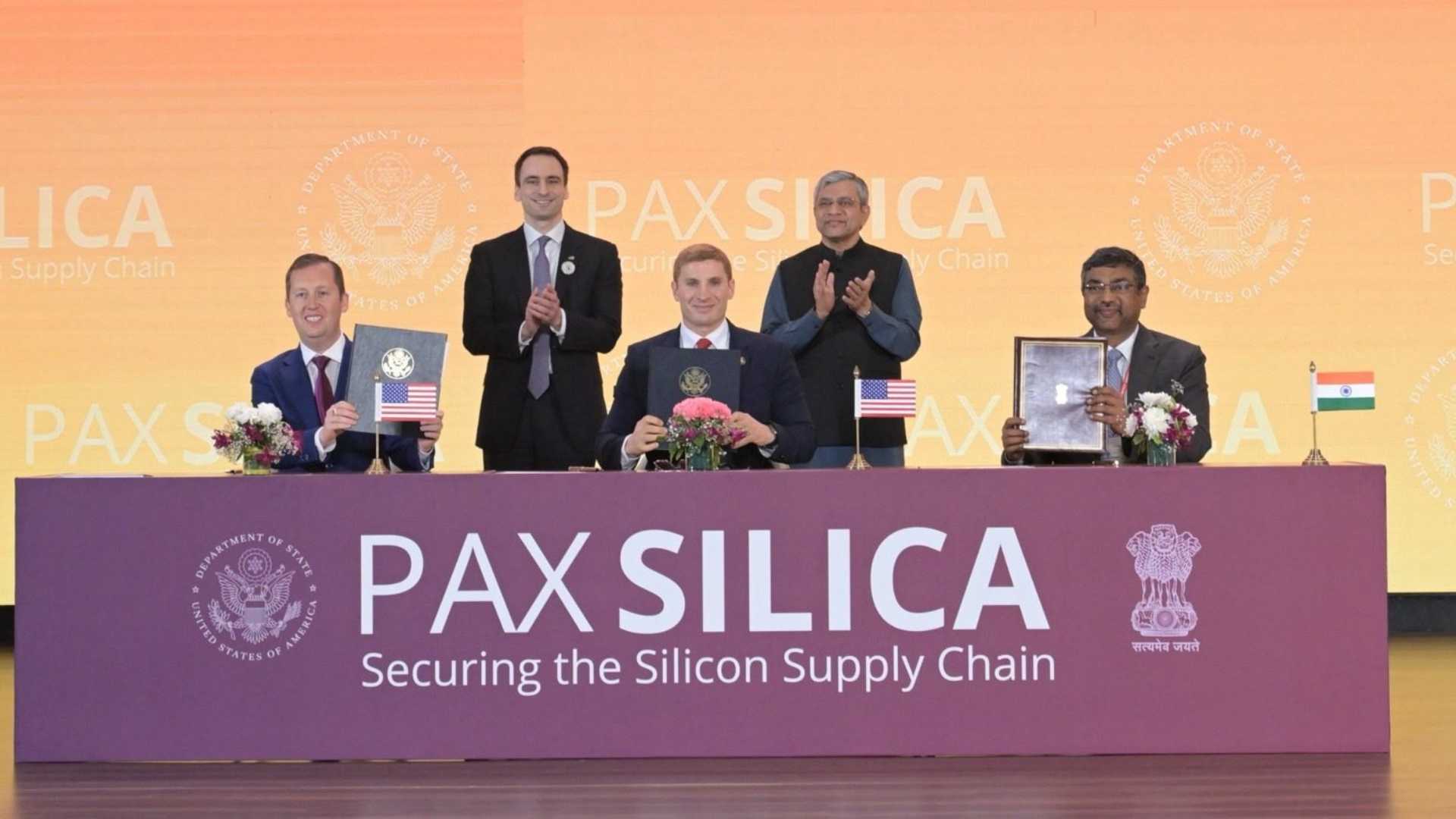
India formally joined the Pax Silica group on February 20, 2026, aligning with the United States, Canada, Japan, South Korea, and the European Union to build resilient supply chains for electronics and critical minerals. The agreement was signed during the AI Impact Summit by India’s Minister for Electronics and IT and the U.S. Undersecretary of State.
Pax Silica was conceived as a coalition to reduce excessive dependence on single-country sources—particularly in critical technologies and rare earth elements. The initiative gained momentum after China leveraged its dominance in refined rare earth elements during trade negotiations.
India’s inclusion reflects its growing strategic and technological significance, especially given its large talent pool and expanding electronics manufacturing ecosystem. The move also signals India’s willingness to integrate with trusted supply-chain frameworks without formally aligning in a bloc-based security architecture.
"So today, as we signed the Pax Silica Declaration, we say no to weaponised dependency, and we say no to blackmail." — Jacob Helberg
Strategically, India’s entry reflects the shift from globalization-driven efficiency to security-driven resilience. If ignored, overconcentration in supply chains can undermine economic sovereignty and national security.
GS Linkages:
- GS2: International Relations – India-US relations, global groupings
- GS3: Infrastructure, industrial policy, critical minerals
- Essay: Economic sovereignty and strategic autonomy
2. The Core Issue: Weaponisation of Economic Interdependence
The initiative emerges amid growing concerns over “weaponised dependency”—where economic interdependence is used for strategic coercion. China’s dominance as the sole source of refined rare earth elements has exposed vulnerabilities in global supply chains.
Recent instances include:
- Alleged cyber-linked power disruption in Mumbai (2020).
- Restrictions on rare earth exports following political statements by foreign leaders.
Such actions demonstrate how supply chains in semiconductors, electronics, and critical minerals can become geopolitical leverage tools. The concentration of production in a single geography increases systemic risk for the global economy.
India initially did not join the inaugural summit in December 2025, but sustained diplomatic engagement led to its inclusion. This suggests calibrated participation rather than reactive alignment.
The governance logic is clear: economic security is now inseparable from national security. Ignoring supply-chain concentration risks coercion, technological stagnation, and external vulnerability.
GS Linkages:
- GS3: Cybersecurity, critical infrastructure protection
- GS2: Strategic partnerships
- Prelims: Rare earth elements, supply-chain resilience
3. Implications for India
India’s participation strengthens its role in emerging techno-strategic coalitions while preserving strategic autonomy. It enhances India's credibility as a trusted manufacturing and technology partner.
India’s advantages include:
- Large skilled workforce in electronics and IT
- Expanding semiconductor and electronics manufacturing ecosystem
- Trusted diplomatic posture among major powers
However, joining Pax Silica may complicate India’s economic engagement with China, its significant trading partner. Therefore, India must balance resilience-building with pragmatic economic diplomacy.
Strategic Impacts:
- Diversification of critical mineral supply sources
- Strengthening India-US technology cooperation
- Reduced vulnerability to external supply shocks
- Enhanced positioning in global semiconductor value chains
Economic Implications:
- Boost to electronics manufacturing
- Attraction of investment in critical mineral processing
- Greater integration into trusted global supply networks
For India, participation is not merely symbolic; it is developmental. Failure to build resilient supply chains could slow industrial growth, affect digital transformation, and undermine energy transition goals.
GS Linkages:
- GS3: Make in India, semiconductor mission, industrial growth
- GS2: India’s foreign policy recalibration
- Essay: Self-reliance vs global integration
4. Broader Geopolitical Significance
Pax Silica reflects a broader restructuring of globalization—from efficiency-based hyper-globalization to trust-based strategic globalization. Countries are increasingly prioritizing resilience over cost minimization.
The coalition is part of a wider pattern:
- Supply chain de-risking
- Friend-shoring and near-shoring
- Technology alliances among democracies
India’s participation signals convergence with like-minded countries without formal military alignment. It also aligns with India’s vision of becoming a global manufacturing hub and a key node in trusted supply networks.
However, the evolution of such blocs may accelerate economic fragmentation globally. Therefore, multilateral dialogue and transparency will remain crucial.
The long-term logic is that technological ecosystems are becoming geopolitical arenas. If India does not proactively integrate into such frameworks, it risks marginalisation in emerging technology regimes.
GS Linkages:
- GS2: Changing global order
- GS3: Critical technologies, energy security
- Essay: Technology and power in the 21st century
5. Way Forward for India
India must leverage Pax Silica membership to deepen domestic reforms and capacity building.
Policy Priorities:
- Strengthen critical mineral exploration and processing
- Accelerate semiconductor ecosystem development
- Build cyber-resilient infrastructure
- Enhance research collaboration with partner countries
India must also maintain balanced diplomacy to avoid overt bloc politics while advancing economic security.
A calibrated approach—combining strategic autonomy with supply-chain resilience—will help India secure both prosperity and sovereignty.
Conclusion
India’s entry into Pax Silica marks a significant step in aligning economic security with national security priorities. As supply chains increasingly define geopolitical influence, resilient partnerships will shape future growth trajectories.
If strategically leveraged, this initiative can enhance India’s technological sovereignty, industrial capacity, and global standing in an era of fragmented globalization.