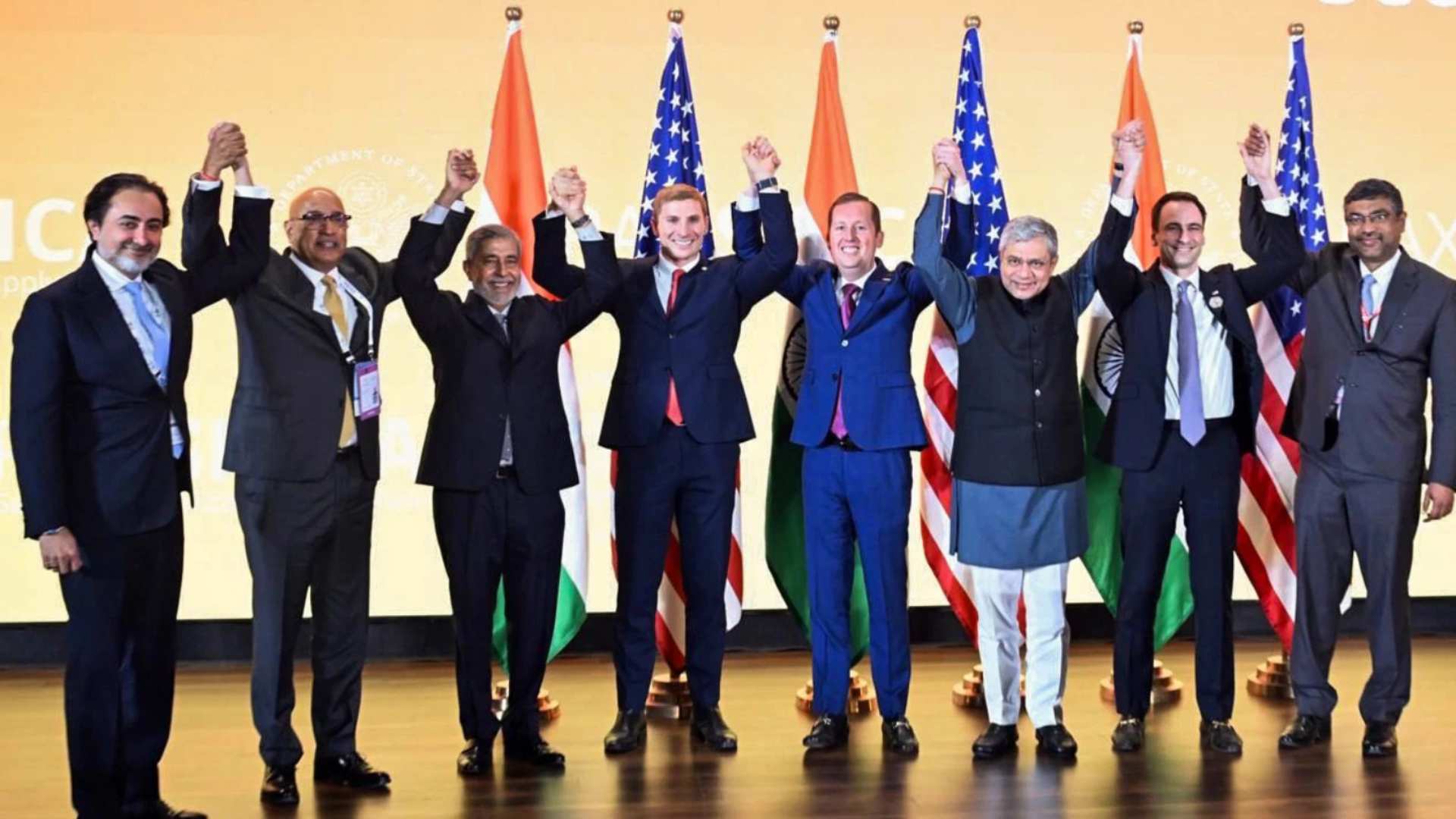
India and the Pax Silica Alliance: Strategic, Economic and Geopolitical Dimensions
1. Strategic Context: Pax Silica and India’s Technological Positioning
India’s entry into the Pax Silica alliance marks a strategic alignment with a U.S.-led coalition focused on Artificial Intelligence (AI) infrastructure and critical minerals. The grouping seeks to build trusted supply chains in emerging technologies that are central to economic growth and national security.
For India, this move reflects a recognition that AI, semiconductors, and critical minerals form the backbone of 21st-century strategic power. Technological ecosystems are increasingly intertwined with geopolitical blocs, and supply chain resilience has become a core policy objective.
India’s participation also aligns with its broader aspiration to emerge as a leading digital and manufacturing power. By joining such a coalition, India seeks to integrate itself into global technology governance structures while safeguarding long-term strategic autonomy.
In a world where technological capability determines economic and geopolitical leverage, alignment with supply-chain coalitions can either secure strategic space or leave countries dependent on external powers.
2. Complementarity with Domestic Industrial Missions
India’s membership in Pax Silica complements existing domestic initiatives such as:
- India Semiconductor Mission
- IndiaAI Mission
- National Critical Mineral Mission
These initiatives aim to build domestic capacity in chip manufacturing, AI innovation, and mineral security. However, India currently lacks significant capacity in processing critical minerals and does not extract them in large quantities.
By joining a structured alliance, India can potentially secure access to raw materials, advanced manufacturing equipment, and investment flows. This could accelerate domestic industrial goals and reduce vulnerability to supply disruptions.
The alliance also offers opportunities to shape global technology and security standards, ensuring that India is not merely a rule-taker but a stakeholder in emerging governance frameworks.
Without external partnerships that bridge capability gaps, domestic missions may struggle to achieve scale, limiting India’s ability to compete in high-technology value chains.
3. India’s Structural Value to the Alliance
Although India has limited mineral extraction and processing capacity, its systemic importance lies elsewhere. India’s large domestic market and rising consumption can financially justify new, diversified supply chains not reliant on China.
India’s engineering talent, assembly capacity, and expanding manufacturing base provide the human and industrial capital necessary to diversify global technology production networks. In this sense, India can shift the “centre of gravity” of global manufacturing and consumption.
Additionally, India’s participation adds geopolitical weight to efforts aimed at establishing democratic governance norms for critical technologies. This enhances the credibility and viability of the bloc’s standards at a global level.
Strategic Contributions:
- Large and growing demand base
- Skilled engineering workforce
- Assembly and manufacturing capacity
- Geopolitical legitimacy for democratic tech standards
If India leverages its market size and talent base effectively, it can move from being a peripheral participant to a central node in restructured global supply chains.
4. Geopolitical and Economic Risks
Strategic alignment comes with costs. Closer participation in a U.S.-led coalition may trigger economic retaliation from China, including trade friction, slower market access, or pressure on upstream inputs such as minerals and active pharmaceutical ingredients (APIs).
The Pax Silica focus on “trusted ecosystems” may require adherence to export controls and technology-transfer guardrails. Such expectations could constrain India’s preference for flexible, issue-based partnerships.
As articulated by External Affairs Minister S. Jaishankar:
“Issue-based alignments” — S. Jaishankar
India traditionally avoids rigid alliances and prefers strategic autonomy. Binding commitments could limit diplomatic flexibility in a multipolar world.
Domestically, criticism may arise if alliance standards influence India’s AI regulatory framework in ways perceived as externally driven.
Risks:
- Economic retaliation from China
- Reduced policy autonomy in technology governance
- Increased compliance costs for firms
- Political scrutiny over regulatory sovereignty
If geopolitical balancing is mismanaged, India could face economic costs without fully realising technological gains.
5. Impact on Industry and Global Value Chains
For Indian firms, especially smaller enterprises, entry into “trusted ecosystems” may entail stricter security audits, compliance standards, and longer timelines for integration into global value chains.
While higher standards can improve competitiveness in the long run, they also increase financial burdens in the short term. This may slow participation unless supported by domestic policy interventions.
At the systemic level, the success of Pax Silica depends on moving beyond declaratory intent to tangible supply chain restructuring. This includes:
- Mining of raw minerals
- Refining and processing
- Semiconductor fabrication
- Deployment in AI systems
Only a full-cycle ecosystem among member states can reduce vulnerability to disruptions and create a secure technology network.
If supply-chain restructuring remains rhetorical rather than operational, the alliance may fail to deliver resilience or economic dividends.
6. Governance and Standards: Democratic Technology Order
Pax Silica seeks to establish governance frameworks rooted in democratic norms. India’s participation strengthens efforts to create alternative standards to those shaped by authoritarian systems.
This has implications for global technology governance, export controls, data security, and AI ethics. India’s involvement could make coalition standards more globally acceptable, particularly among developing countries.
However, India must balance participation with safeguarding regulatory sovereignty. Over-standardisation without domestic adaptation may undermine local innovation ecosystems.
Effective participation requires harmonising global standards with domestic priorities; otherwise, regulatory misalignment could hamper technological growth.
7. Way Forward: Strategic Calibration
India’s approach to Pax Silica should combine strategic alignment with calibrated autonomy.
Policy Priorities:
- Accelerate domestic mineral processing capacity
- Strengthen semiconductor ecosystem through public–private partnerships
- Provide compliance support to MSMEs
- Maintain diversified trade partnerships to hedge geopolitical risks
Simultaneously, India should use its market size and demographic advantage as leverage to negotiate favourable terms within the alliance.
Strategic engagement should aim at supply chain resilience, technological upgrading, and economic growth without compromising flexibility in foreign policy.
Balanced calibration can convert alliance participation into long-term technological sovereignty rather than dependency.
Conclusion
India’s entry into Pax Silica represents a calculated step toward securing its technological and industrial future in an era of fragmented globalisation. While it offers opportunities in AI infrastructure, critical minerals, and global standards-setting, it also carries geopolitical and economic risks.
The long-term success of this engagement will depend on India’s ability to translate strategic alignment into real supply-chain capacity, maintain policy autonomy, and leverage its market and talent base to become a central pillar of the emerging global technology order.