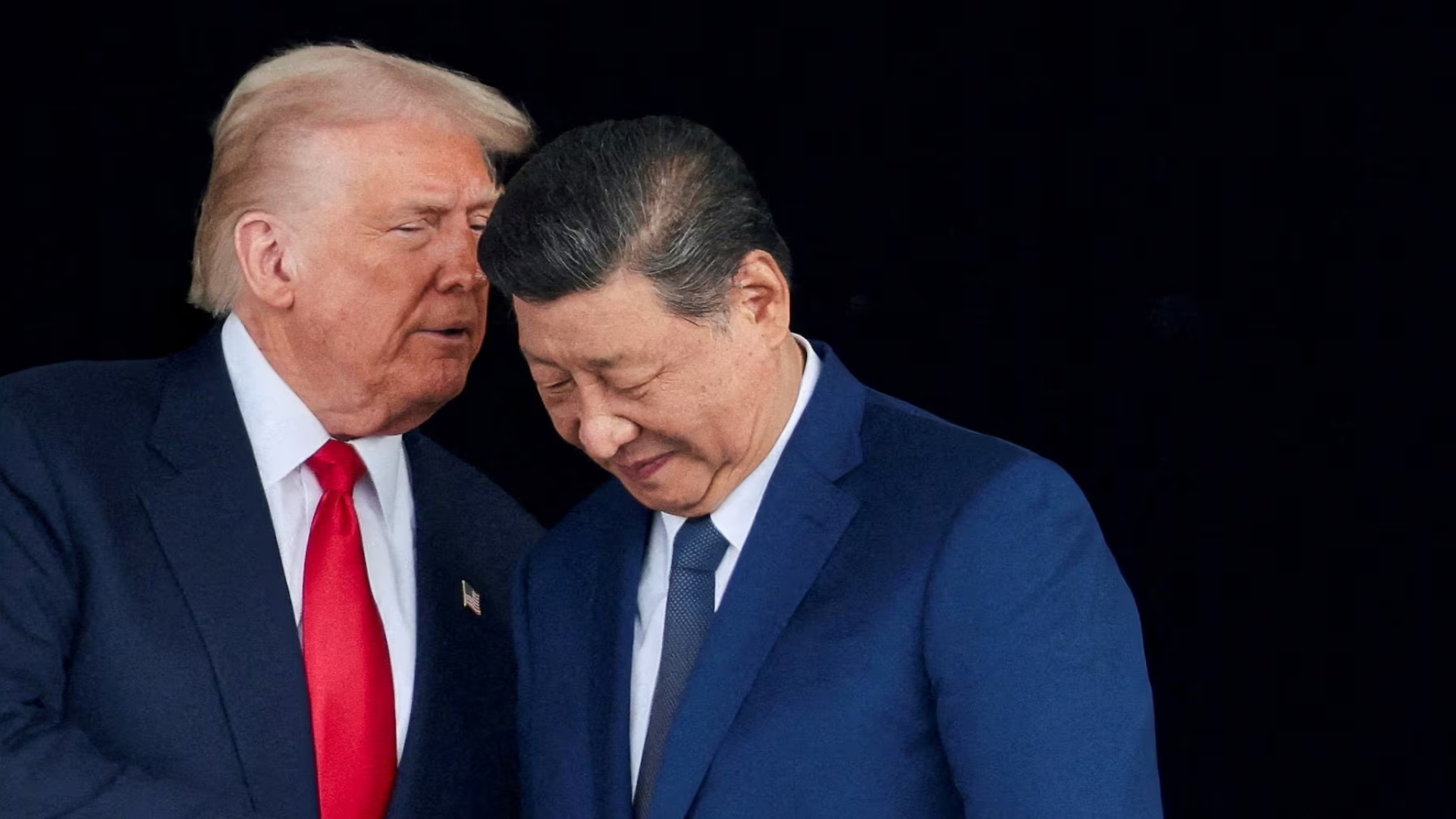
1. U.S. Tariffs and China’s Strategic Response
Renewed U.S. tariff measures under President Donald Trump have created uncertainty in global trade flows. In response, China is attempting to reshape global trade alignments to reduce long-term dependence on the U.S. market.
With a $19 trillion economy, China is leveraging its manufacturing depth and global supply chain integration to build alternative economic partnerships. The objective is to insulate its economy from sustained U.S. pressure and potential containment strategies.
Rather than responding defensively, Beijing appears to be using the disruption as an opportunity to accelerate trade diversification and institutional engagement.
"Don't interrupt your opponent when he is making a mistake." — Chinese official (on U.S. trade policy)
Strategic trade diversification reduces vulnerability to unilateral tariff shocks. Failure to diversify could leave China structurally exposed to prolonged economic coercion.
2. Accelerated Trade Diplomacy and Bloc-Building
China is fast-tracking approximately 20 trade negotiations, many of which have been under discussion since 2017. These efforts span regions including the European Union, Gulf Cooperation Council (GCC), Africa, Southeast Asia, and trans-Pacific economies.
Key developments include:
- Tariff reductions with Canada on Chinese electric vehicles.
- Zero-tariff implementation for imports from 53 African countries.
- Revived discussions with the EU on free-trade possibilities.
- Efforts to conclude long-pending GCC free trade talks.
- Push to join the Comprehensive and Progressive Agreement for Trans-Pacific Partnership (CPTPP).
China is also leveraging platforms such as:
- Regional Comprehensive Economic Partnership (RCEP), covering about 30% of global GDP.
- Belt and Road Initiative (BRI) to influence trade infrastructure and standards.
Embedding deeply within multiple trade blocs reduces the feasibility of economic decoupling. If successful, China could shift from bilateral vulnerability to multilateral resilience.
3. “Anti-Decoupling” Strategy and Institutional Influence
Chinese policy papers reviewed since 2017 indicate a systematic strategy to counter U.S. containment by strengthening multilateral integration. Scholars affiliated with institutions such as CASS and Peking University have emphasised “anti-decoupling” as a central objective.
One policy priority is studying how the U.S. has leveraged international institutions and adapting accordingly. China seeks to influence global norms in areas such as:
- Intellectual property standards
- Digital trade
- AI-driven customs and logistics systems
Upgraded agreements with Southeast Asian partners include provisions on AI-enabled digital trade, suggesting a push for technological first-mover advantage.
Institutional influence allows long-term strategic leverage beyond immediate tariff disputes. Ignoring global standard-setting arenas could weaken China’s structural position in global trade governance.
4. Structural Imbalances: Trade Surplus and Domestic Demand
China’s trade strategy is complicated by its large and persistent trade surplus.
- China’s trade surplus: $1.2 trillion
- Reconstruction of domestic consumption remains a stated priority in the upcoming Five-Year Plan.
Concerns among potential partners include:
- Overproduction and excess manufacturing capacity
- Uneven market access
- Sluggish domestic demand
Pascal Lamy, former WTO Director-General, questioned why China has not fully rebalanced its economic model toward consumption.
High trade imbalances make partners wary that improved access could lead to an influx of low-cost Chinese goods, potentially harming domestic industries.
Trade expansion without internal rebalancing risks external pushback. Sustainable global integration requires adjustment in both export orientation and domestic demand patterns.
5. Multilateralism vs. Strategic Competition
China’s diplomatic messaging now emphasises defending multilateralism and open trade, contrasting with U.S. tariff-driven unilateralism. This marks a shift from earlier rhetoric focused on strategic resilience and national mobilisation.
More than rhetoric, China is:
- Dispatching diplomats globally to promote trade cooperation.
- Proposing digital infrastructure integration.
- Exploring service-sector agreements (e.g., with the UK).
However, skepticism persists among Western partners. Some European officials view overtures cautiously, particularly after the 2020 EU-China investment deal was frozen in 2021 due to political disputes.
Championing multilateralism can improve global perception and expand influence. However, credibility depends on consistency between external messaging and domestic economic practices.
6. Risks and Geopolitical Constraints
China’s strategy unfolds within geopolitical uncertainty. While the current U.S. administration emphasises tariffs, future administrations could revert to coalition-based containment.
Countries such as Mexico and Canada remain cautious due to commitments under existing agreements like USMCA. Some fear jeopardising access to the U.S. market by aligning too closely with China.
Moreover, concerns about coercive trade measures and strategic competition complicate trust-building.
Geopolitical alignment influences economic decisions. Trade diversification strategies must account for alliance politics and security considerations.
7. Long-Term Implications for Global Trade Order
If successful, China’s approach could reconfigure global trade architecture by placing itself at the center of new economic blocs. This may weaken the effectiveness of U.S.-led tariff strategies.
The competition reflects broader structural shifts:
- Movement from U.S.-centric globalization to multipolar trade networks.
- Increased emphasis on regional agreements (RCEP, CPTPP).
- Integration of digital trade and AI-driven customs systems.
However, sustained trade leadership will require:
- Domestic economic rebalancing.
- Reduction of trade frictions.
- Greater transparency and reciprocal market access.
The future global trade order may hinge on whether diversification strategies translate into stable, rules-based economic partnerships.
Conclusion
China is leveraging U.S. tariff pressures to accelerate trade diversification and embed itself more deeply within global economic blocs. Through bilateral deals, regional agreements, and institutional engagement, Beijing aims to reduce vulnerability to unilateral U.S. measures.
However, large trade imbalances, geopolitical distrust, and domestic structural constraints pose significant challenges. The evolving contest between tariff-driven protectionism and multilateral trade integration will shape the trajectory of the global economic order in the coming decade.*