
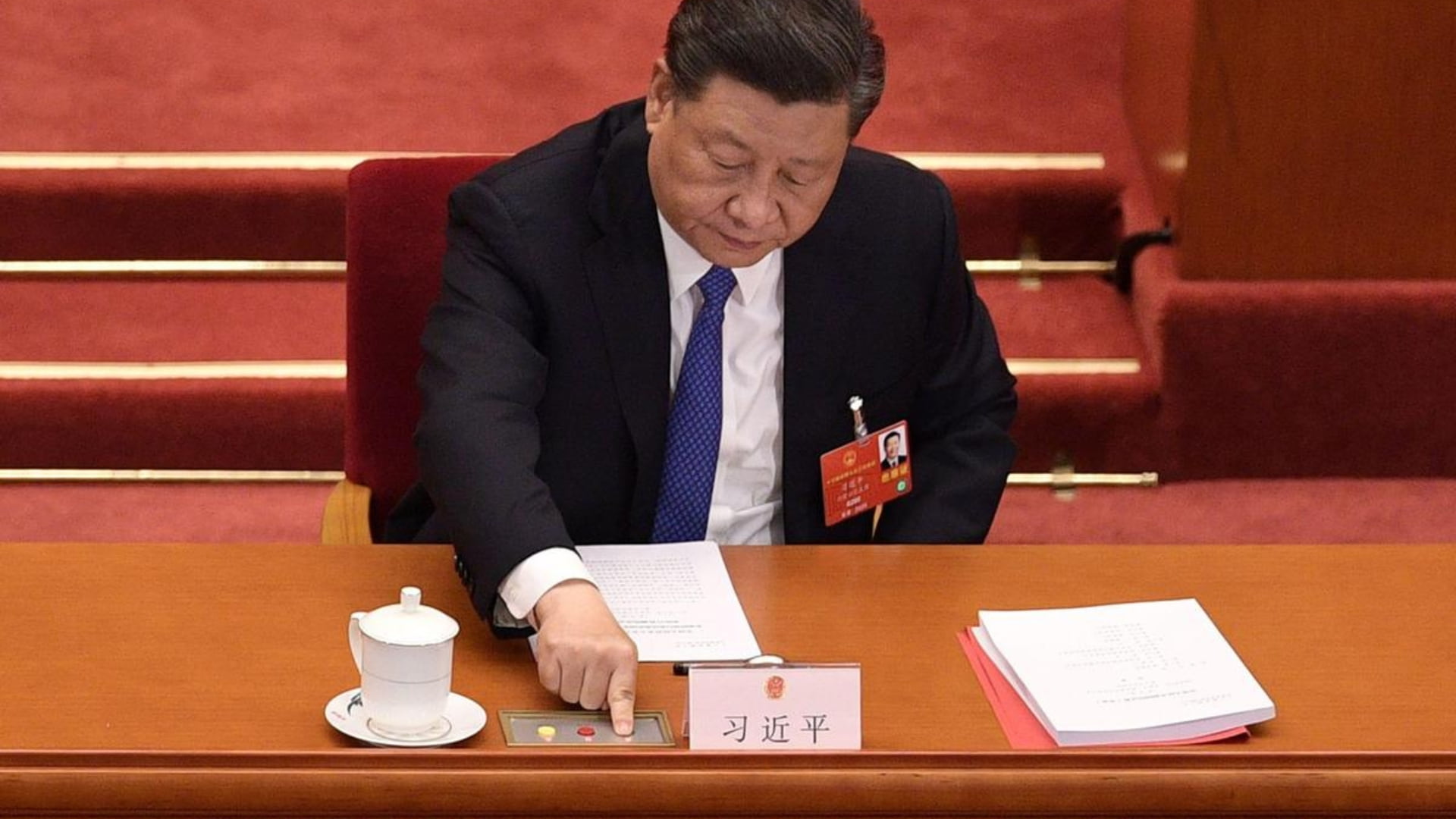
1. China’s Strategic Posture in 2026
China presents a complex and paradoxical posture: it faces domestic economic challenges while projecting strategic confidence internationally. By mid-2025, the Chinese leadership exhibited a regained sense of momentum in the context of U.S.-China competition, asserting influence in trade, diplomacy, and Global South engagement. This assertiveness is reinforced by deepening alignment with Russia, consolidation of key bilateral relations, and growing leverage in global value chains.
Domestically, the leadership continues to emphasise political consolidation, information control, and ideological discipline. Military modernisation, including both conventional and nuclear capabilities, signals risk-tolerant strategic behaviour. These measures allow China to pursue managed competition abroad while reinforcing domestic stability, even as economic growth slows.
It is crucial for governance and strategic planning to understand that China’s outward confidence masks structural vulnerabilities. Ignoring this duality may lead to underestimating the risk of economic shocks spilling into foreign policy assertiveness.
- Key point: Leadership combines anxiety at home with assertiveness abroad, affecting regional and global strategic calculations.
2. Economic Dynamics and Domestic Challenges
China’s economic growth in 2025 was reported at around 5%, but structural weaknesses persist. Domestic demand remains subdued, the property sector is overbuilt, producer prices have been negative for 38 consecutive months, and corporate profits are tepid. Local government fiscal stress constrains stimulus options.
To counter domestic stagnation, China reinforces a state-led model focused on advanced manufacturing, semiconductors, AI, green energy, and dual-use technologies. The 15th Five-Year Plan (2026–2030) prioritises technological self-reliance and supply chain insulation. Despite weak domestic demand, China’s export dependence grows, with the trade surplus exceeding $1 trillion in the first 11 months of 2025. China’s dominance in electric vehicles, batteries, solar panels, and industrial machinery is causing disruptions in global supply chains, termed “China Shock 2.0.”
From a governance perspective, reliance on exports for growth creates vulnerabilities. For countries like India, this magnifies trade deficits and exposes critical sectors, emphasizing the need for technological and industrial self-reliance.
Impacts on India:
- Trade deficit projected to exceed $110 billion in 2025.
- Vulnerabilities in pharmaceuticals, electronics, green energy, and rare earth magnets.
3. Domestic Political Consolidation and Security Posture
China has strengthened political control in 2025 through information management, ideological reinforcement, and national security expansion. The PLA continues to modernise, reflecting a more assertive military doctrine, including movement toward an “early warning counter-strike” nuclear posture.
These measures reflect Beijing’s prioritisation of stability and resilience amid economic and international challenges. Domestic consolidation ensures leadership flexibility in executing foreign policy and grey-zone strategies without domestic dissent.
Governance implication: Political and military consolidation allows strategic predictability but also reduces avenues for negotiation. Ignoring these dynamics could underestimate China’s calculated assertiveness.
4. Great Power Relations: U.S., Europe, and the Global South
Under President Trump’s second term, U.S.-China relations shifted from systemic rivalry to primarily economic competition. The Indo-Pacific is no longer the strategic centre of gravity for the U.S., while intervention in Venezuela demonstrated that strategic rivalry persists. Limited de-escalation measures, such as modest tariff adjustments, suggest transactional engagement rather than a G2 framework.
China has adopted a tough posture with Europe, resisting curbs on industrial overcapacity, EV subsidies, and maintaining strategic links with Russia. In parallel, China expands influence in the Global South through BRI projects, AIIB, NDB, and BRICS, promoting itself as a stabilising partner amid Western retrenchment, though concerns about debt and policy autonomy remain.
From an IR and policy perspective, China’s calibrated global engagement underscores the need for India to diversify partnerships, as tacit China-U.S. coordination can constrain strategic manoeuvres.
Key highlights:
- China pursues “two-ocean strategy” with Indian Ocean operations.
- Strategic Global South focus with economic leverage and institutional influence.
5. India–China Relations and Strategic Implications
India-China relations in 2025 showed cautious stabilisation but no resolution of structural issues. High-level meetings improved communication, yet border disengagement has not led to full de-escalation. Tactical Chinese actions—such as China-Pakistan collaboration (Operation Sindoor), hydropower projects near borders, and denial of critical inputs—signal incremental assertiveness consistent with grey-zone strategies.
The changing U.S.-China dynamic has narrowed India’s strategic space. Washington prioritises economic competition with Beijing over Asia-focused counterbalance strategies, reducing India’s leverage. Consequently, India must pursue calibrated engagement, strengthen asymmetric deterrence, and accelerate domestic technological and industrial capabilities.
Strategically, India cannot rely solely on external balancing. Long-term resilience requires technological self-sufficiency, robust defence capabilities, and patient diplomacy.
Key challenges for India:
- Managed competition with China while preventing escalation along the Line of Actual Control (LAC).
- Mitigating supply chain vulnerabilities in critical sectors.
6. Conclusion: Strategic and Policy Way Forward
China’s posture in 2026 reflects managed assertiveness abroad and inward consolidation at home. India must adopt a strategy of calibrated engagement, domestic capability enhancement, and cautious external balancing. Strengthening technological and industrial autonomy, asymmetric deterrence, and stepwise confidence-building measures with China are key to securing national interests.
Long-term governance outcomes depend on sustaining strategic patience, resilient diplomacy, and systemic preparedness against economic and military contingencies arising from China’s evolving global strategy.