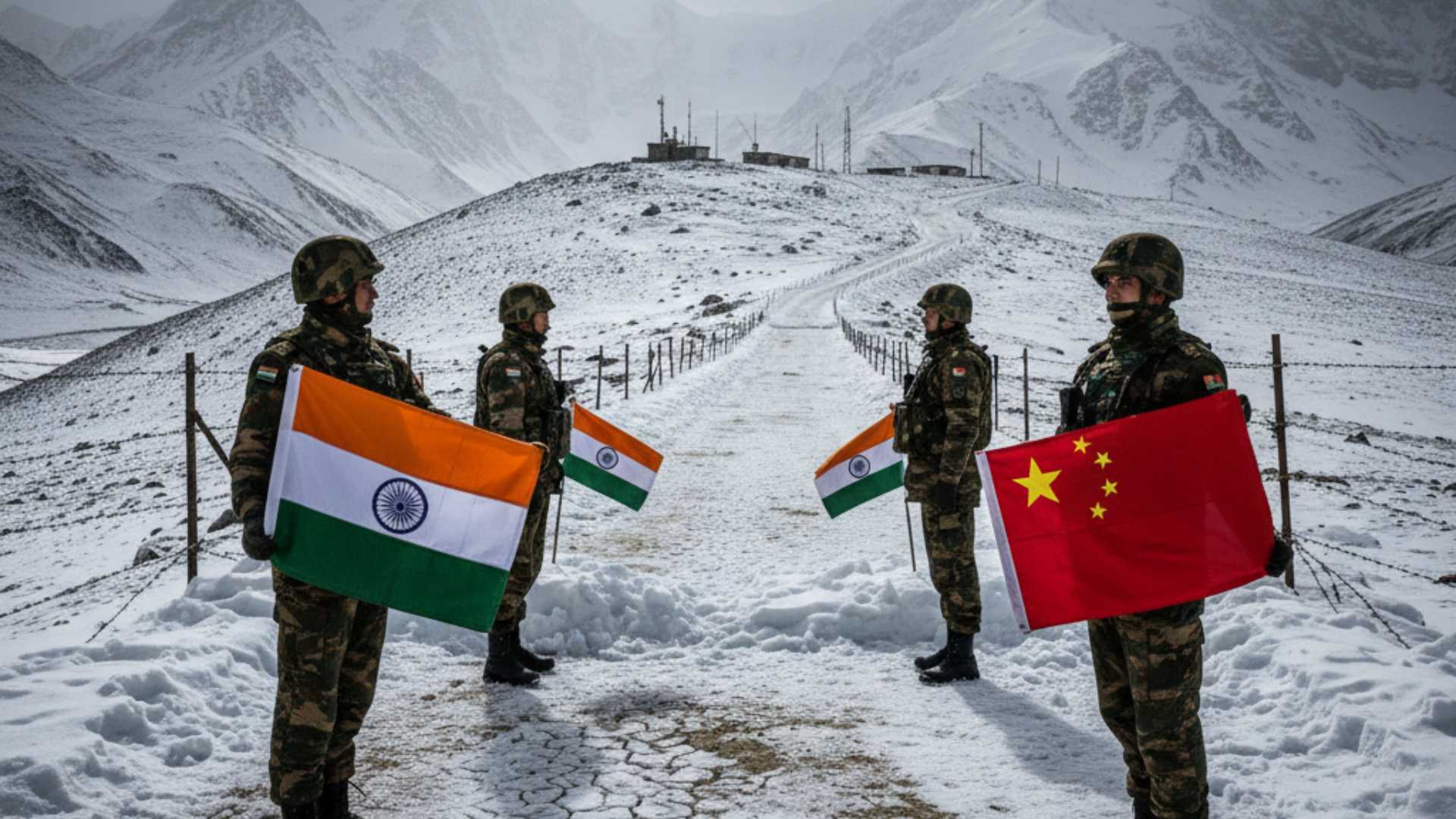
1. The Unresolved Boundary as the Core Structural Issue
The India–China relationship continues to be shaped by the unresolved nature of their boundary. Former Army Chief General M.M. Naravane emphasised that the “nebulous” character of the boundary is the central cause of recurring tensions. Unlike clearly demarcated international borders, the India–China boundary remains undefined in several sectors.
He drew attention to the distinction between “boundary” and “border,” noting that the Line of Actual Control (LAC) is not a mutually agreed and demarcated boundary. This ambiguity leads to differing perceptions of territorial alignment, resulting in periodic face-offs.
“The India-China border is notional.” — General M.M. Naravane
The absence of a formally agreed boundary creates space for contestation, miscalculation, and escalation. In governance terms, unresolved territorial questions weaken stability, increase defence burdens, and constrain diplomatic engagement.
The governance logic is clear: where territorial sovereignty is undefined, friction becomes structural rather than episodic. If ambiguity persists, recurring military confrontations become inevitable, affecting national security planning and foreign policy coherence.
2. Boundary vs Border: Legal and Conceptual Clarity
General Naravane highlighted the conceptual distinction between a legally recognised “border” and an undemarcated “boundary.” A border is mutually recognised, surveyed, and marked on maps; a boundary under dispute remains subject to competing claims.
In contrast to India’s clearly demarcated border with Bangladesh, the India–China boundary lacks final settlement and on-ground delineation. This leads to “differing perceptions” of the LAC in sectors such as eastern Ladakh, the central sector, Sikkim, and Arunachal Pradesh.
The conceptual ambiguity complicates military operations and diplomatic negotiations. It also limits enforceability of existing confidence-building agreements.
For public administration and national security, clarity in territorial definition reduces transaction costs of defence management. If left unresolved, legal ambiguity translates into operational instability and escalatory risks.
3. Recurring Clashes and the Galwan Precedent
The June 2020 Galwan Valley clash marked a major turning point in bilateral ties. It occurred during General Naravane’s tenure as Army Chief and underscored the fragility of peace along the LAC despite multiple agreements.
The episode demonstrated that even established protocols may fail under conditions of mistrust and divergent interpretations of ground positions. It also exposed the importance of political–military coordination during crisis management.
General Naravane reiterated India’s long-standing principled position:
“Unilateral use of force will not be acceptable to us.” — General M.M. Naravane
The insistence on opposing unilateral force reflects India’s adherence to sovereign equality and rule-based conduct in international relations.
From a governance perspective, crisis episodes test civil-military relations, strategic communication, and institutional preparedness. If political clarity and military directives are delayed or unclear, escalation risks multiply.
4. Institutional Mechanisms and Escalation Prevention
India and China have signed multiple agreements aimed at maintaining peace and tranquillity along the LAC. These mechanisms are designed to prevent escalation through dialogue, flag meetings, and disengagement protocols.
However, the persistence of clashes suggests limitations in implementation. Agreements without shared boundary perception reduce predictability and increase the possibility of friction.
Key sectors of tension:
- Eastern Ladakh
- Central sector
- Sikkim
- Arunachal Pradesh
The recurrence of incidents highlights the gap between diplomatic frameworks and ground-level realities.
Institutional arrangements can mitigate tensions only when supported by mutual trust and clearly defined parameters. Without clarity, agreements become reactive rather than preventive.
5. Comparative Example: India–Bangladesh Land Boundary Agreement (2015)
General Naravane cited the 2015 Land Boundary Agreement (LBA) between India and Bangladesh as an example of how complex territorial disputes can be resolved through sustained negotiation.
The LBA involved exchange of enclaves and resolution of long-pending anomalies through mutual consent and “give and take.” The agreement demonstrated that political will and trust-building can transform historically contentious boundaries into settled borders.
Comparative Significance:
- Negotiated settlement after decades of dispute
- Exchange of territories
- Parliamentary approval and constitutional amendment
This example suggests that boundary disputes are not inherently insoluble but require diplomatic continuity and domestic political consensus.
The Bangladesh example shows that boundary resolution is a function of political commitment and institutional maturity. If similar diplomatic investment is not made with China, the dispute risks becoming permanently militarised.
6. Dialogue as the Preferred Pathway
General Naravane emphasised that boundary disputes “can be resolved through dialogue and discussion.” This aligns with India’s broader foreign policy principle of peaceful dispute resolution.
Sustainable settlement requires:
- Political engagement at the highest level
- Military-to-military communication channels
- Confidence-building measures
- Acceptance of compromise
However, resolution also depends on mutual recognition of interests and adherence to agreed frameworks.
Dialogue reduces strategic uncertainty and defence expenditure pressures. Without diplomatic engagement, the boundary issue may entrench adversarial postures, affecting trade, regional cooperation, and broader Indo-Pacific dynamics.
7. Broader Implications for India
Strategic Implications
- Persistent high troop deployment along the LAC
- Infrastructure race in border areas
- Defence resource diversion
Diplomatic Implications
- Strain on bilateral ties
- Impact on BRICS, SCO, and multilateral coordination
- Increased alignment dynamics in Indo-Pacific geopolitics
Governance Implications
- Civil-military coordination during crises
- Parliamentary and public accountability
- Need for coherent strategic communication
The boundary question affects not only territorial security but also economic priorities, regional diplomacy, and domestic governance.
Conclusion
The unresolved India–China boundary remains a structural fault line in bilateral relations. While agreements exist to manage tensions, durable peace requires formal settlement through sustained dialogue and mutual accommodation.
The experience of the India–Bangladesh Land Boundary Agreement demonstrates that even complex territorial disputes can be resolved with political will. Moving from a “notional boundary” to a mutually recognised border is essential for long-term stability, strategic predictability, and developmental focus.
A stable boundary is not merely a cartographic achievement; it is a foundation for secure governance and constructive regional engagement.