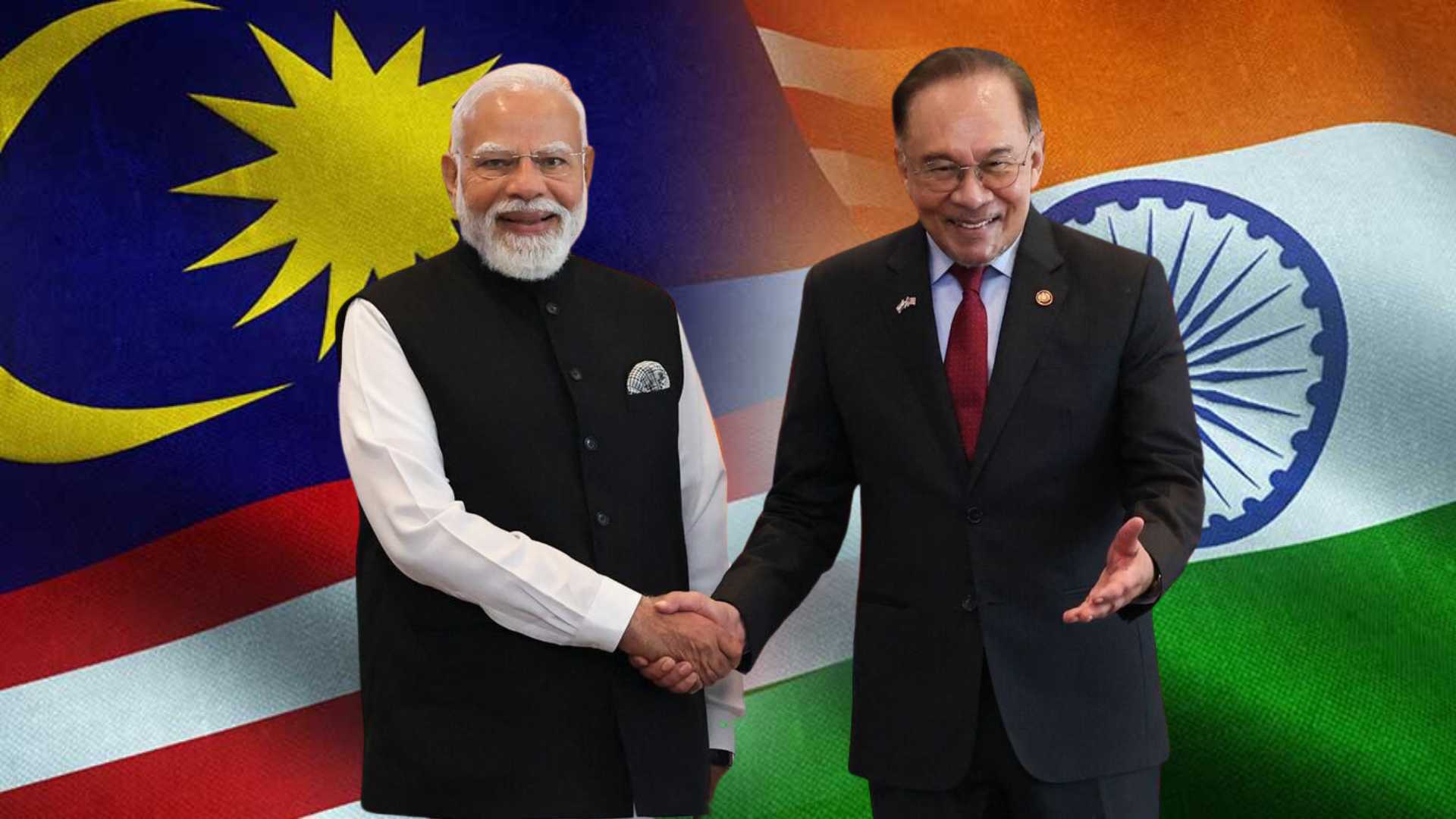
1. Diplomatic Reset and Strategic Signalling
Prime Minister Narendra Modi’s 24-hour visit to Kuala Lumpur in early 2026 marked a deliberate diplomatic reset after the abrupt cancellation of his 2025 visit to attend the ASEAN Summit. The choice of Malaysia as India’s first overseas destination of the year signalled an intent to rebuild trust and restore diplomatic warmth. For India, re-engaging Malaysia was essential to maintain continuity in its Act East Policy and reinforce ties with a key ASEAN member.
The visit took place against a backdrop of strained ties in 2025. Although Malaysia condemned the Pahalgam terror attacks, Prime Minister Anwar Ibrahim’s remarks calling for a “full and thorough enquiry” and urging India–Pakistan dialogue created unease in New Delhi. His offer to mediate and hosting of Pakistan’s PM further complicated the diplomatic environment. Despite this, both sides used the visit to set aside irritants and emphasise shared strategic interests.
The joint statement’s unequivocal condemnation of terrorism, including “cross-border terrorism,” signalled alignment on a sensitive issue. This framing helped India secure Malaysia’s support on concerns linked to Pakistan’s use of terrorism as an instrument of state policy. Cooperation in counter-terrorism, intelligence sharing, and multilateral forums like the UN and FATF added operational depth to the political convergence.
Ignoring diplomatic repair could have deepened mistrust within ASEAN and weakened India’s Act East Policy, reducing regional influence in a strategically competitive Indo-Pacific.
2. Security Cooperation and Terrorism Alignment
The visit foregrounded security collaboration as a stabilising pillar of bilateral ties. India and Malaysia expanded discussions on counter-terrorism, intelligence exchanges, and coordinated positions in multilateral bodies. This signalled a recognition that regional security challenges—particularly terrorism—require institutional partnerships rather than isolated national efforts.
The acknowledgement of “cross-border terrorism” marked a notable shift, especially given Malaysia’s past reluctance to use terminology associated with India–Pakistan tensions. Strengthening FATF coordination helps India address Pakistan’s financing networks, while Malaysia benefits from India’s experience in counter-terror frameworks.
Contentious issues such as the presence of Zakir Naik in Malaysia—who is wanted in India—were tactfully avoided in the public domain. This approach allowed both sides to focus on areas of convergence without allowing bilateral irritants to overshadow broader cooperation.
If security coordination remains weak, both countries risk misalignment in global forums and reduced leverage in counter-terror regimes, leading to fragmented regional security responses.
3. Economic Cooperation: Trade, Semiconductors, and Technology
Economic ties received a major push with a new MoU on semiconductors, strengthening cooperation between IIT Madras Global and Malaysia’s Advanced Semiconductor Academy. This enables both countries to tap into emerging supply-chain diversification trends amid global “chip wars.” Malaysia seeks to build itself as a semiconductor hub, while India aims to accelerate its domestic chip ecosystem.
Commerce, defence manufacturing, energy, and digital technologies emerged as priority sectors. These align with India’s industrial policies focused on manufacturing competitiveness and technological self-reliance. Strengthening bilateral trade is particularly crucial given ongoing discussions around FTAs with Europe and the U.S., which may reshape India’s trade architecture.
Malaysia, however, remains sensitive to India’s views on multilateral trade negotiations, especially after Commerce Minister Piyush Goyal’s criticisms of the ASEAN FTA as “badly negotiated” and his comment referring to ASEAN as “B-teams to China.” These remarks continue to affect perceptions within the region, making economic diplomacy essential for rebuilding trust.
Neglecting economic engagement risks leaving India out of key Southeast Asian value chains, weakening integration into Indo-Pacific supply routes and reducing competitiveness.
4. Multilateral and Regional Dynamics: ASEAN, BRICS, and Indo-Pacific Strategy
The visit helped bridge gaps created when India skipped the ASEAN Summit in 2025 despite accepting the invitation earlier. This impacted negotiations for reviewing the ASEAN-India Trade in Goods Agreement (AITIGA), a long-pending issue. Re-engagement is essential as ASEAN remains central to India’s Act East and Indo-Pacific strategies.
India will chair the BRICS Summit in 2026 and “noted” Malaysia’s aspiration to join the grouping. While Malaysia is not yet a full member, its status as a BRICS partner country ensures its participation when invited, alongside new member Indonesia. This signals potential reconfiguration of regional alignments in a multipolar context.
Both countries avoided public discussion on divisive issues in multilateral settings, reflecting a preference for stability over confrontation. Their convergence in the Indo-Pacific—based on geography, connectivity, and shared concerns over geopolitical competition—strengthens regional resilience.
If India fails to sustain ASEAN engagement, it risks ceding strategic space to competing powers, undermining Indo-Pacific stability and New Delhi’s own regional standing.
5. Way Forward for India–Malaysia Cooperation
Reform pathways:
- Institutionalise annual high-level dialogues to maintain diplomatic continuity.
- Deepen semiconductor and digital technology partnerships for supply-chain resilience.
- Expand counter-terrorism frameworks with joint training and intelligence mechanisms.
- Accelerate AITIGA review to restore economic confidence within ASEAN.
- Encourage defence manufacturing collaboration under Make in India.
Challenges:
- Lingering perceptions of India’s unpredictability in ASEAN engagement.
- Sensitivities around Pakistan-related issues.
- Balancing domestic politics with diplomatic commitments.
Opportunities:
- Leveraging Malaysia’s role in ASEAN to strengthen India’s regional presence.
- Positioning India as a partner in Southeast Asia’s technological and security landscape.
- Coordinating positions on FATF, BRICS, and UN reforms.
Conclusion
India’s 2026 outreach to Malaysia demonstrates a calibrated effort to restore trust, expand strategic alignment, and advance Act East priorities. By prioritising security coordination, economic cooperation, and multilateral engagement, both countries can shape a stable Indo-Pacific and strengthen regional partnerships. Sustained diplomacy, sensitivity to ASEAN dynamics, and long-term policy consistency will determine the durability of this renewed relationship.