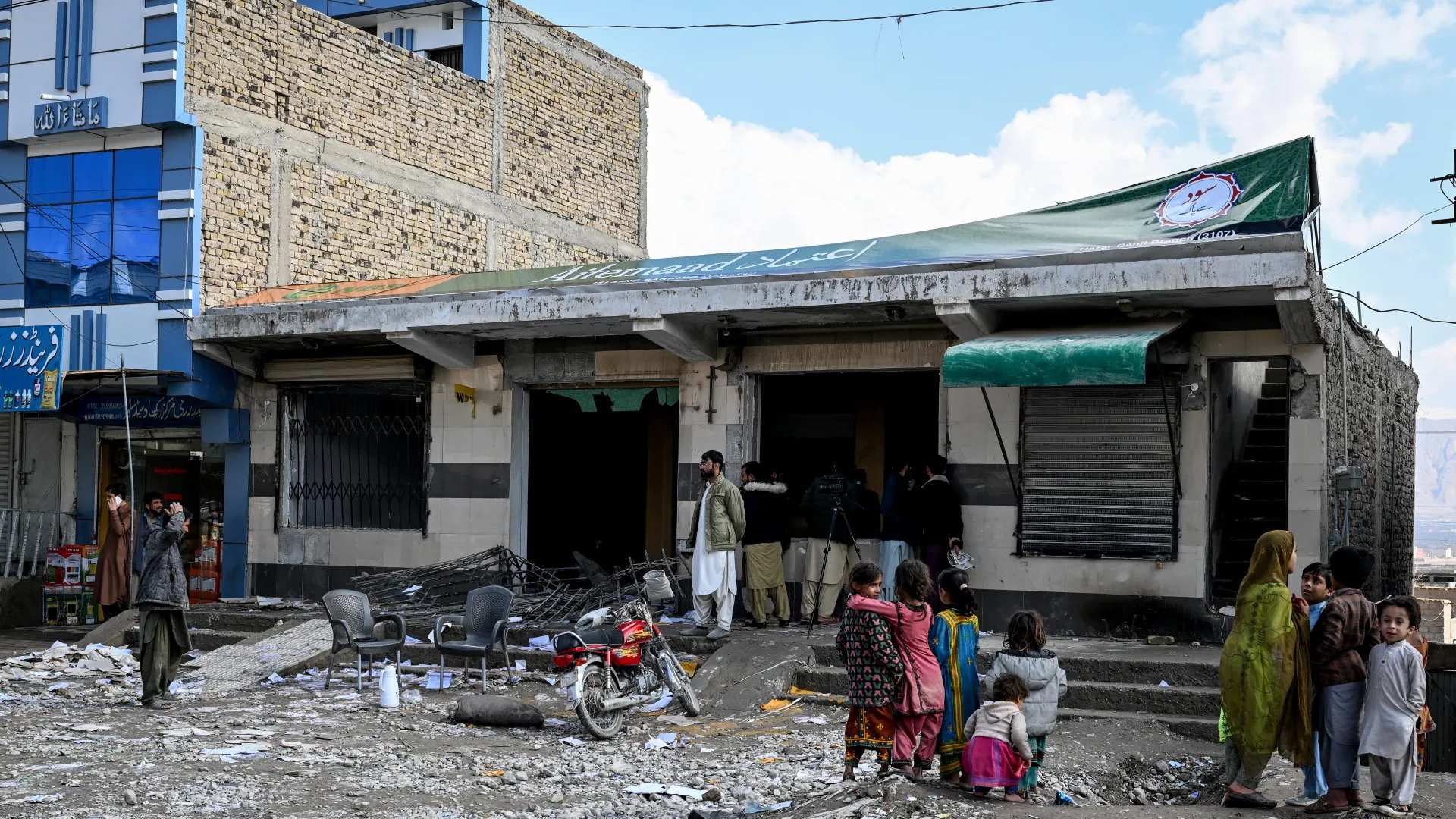
Balochistan Attacks: A Challenge to Pakistan’s Promises

The escalating violence in Balochistan poses significant risks for Pakistan's economic commitments to China and the US, impacting potential investments.
5 mins read
Rich in minerals, poor in peace: Balochistan violence clouds Pakistan’s investment push
Not Started

1. Context: Pakistan’s Mineral Diplomacy and Strategic Stakes

Pakistan has sought to leverage its vast mineral resources as a strategic tool to revive economic growth and attract major powers. In September, Pakistan’s army chief presented mineral samples to U.S. President Donald Trump, signalling Islamabad’s willingness to open the sector to U.S. investment, alongside existing Chinese commitments.

This outreach comes amid Pakistan’s fragile economic recovery after narrowly avoiding default in 2023 and securing a $7 billion IMF bailout, the 25th IMF programme in its history. Minerals are projected as a pathway to foreign exchange earnings, fiscal stability, and geopolitical relevance.

However, most high-value mineral deposits lie in Balochistan, Pakistan’s largest yet poorest province. Persistent violence there exposes the disconnect between Pakistan’s external economic diplomacy and internal governance realities.

If this contradiction is ignored, mineral-led growth risks remaining aspirational, undermining investor confidence and long-term economic planning.

The governance logic is that economic diplomacy cannot succeed without internal political stability. Ignoring domestic fault lines converts strategic assets into strategic liabilities.


2. Core Issue: Structural Roots of Unrest in Balochistan

Balochistan, home to about 15 million people out of Pakistan’s 240 million (2023 Census), is resource-rich yet economically marginalised. It holds oil, gas, coal, gold, and copper that generate substantial federal revenues but have not translated into local development.

Annexed by Pakistan in 1948, the province has experienced five major rebellions, with the current insurgency intensifying since the early 2000s. Initial demands for greater control over resources gradually escalated into calls for independence.

State responses have largely relied on militarised approaches. Human rights groups allege thousands of enforced disappearances, deepening alienation and reinforcing perceptions of political exclusion.

If structural grievances over ownership, autonomy, and representation remain unaddressed, security-centric responses risk perpetuating a cycle of violence.

From a development perspective, exclusionary resource governance weakens state legitimacy. When political grievances persist, economic initiatives become conflict multipliers rather than stabilisers.


3. Security Situation: Escalating Violence and Investor Risk

The security environment in Balochistan has deteriorated sharply. Coordinated attacks across at least 12 locations recently killed 31 civilians and 17 security personnel, while the military reported killing 145 fighters.

According to the Pakistan Institute for Peace Studies, the province recorded 254 attacks in 2025, a 26% increase from the previous year, resulting in over 400 deaths. High-profile incidents include the attempted hijacking of the Jaffer Express in March, involving more than 300 passengers.

Such incidents highlight vulnerabilities even in heavily guarded zones. Persistent violence increases operational costs, insurance premiums, and security deployment for projects.

If insecurity continues, large-scale extraction and infrastructure projects risk becoming economically unviable for most private investors.

The development logic is straightforward: sustained violence raises transaction costs and deters capital. Ignoring security externalities undermines both growth and fiscal recovery.


4. External Investments: China, the U.S., and Strategic Calculus

Balochistan is central to China’s $60 billion China–Pakistan Economic Corridor (CPEC), including the development of Gwadar Port, Pakistan’s only deep-sea port. These projects are strategically significant but have faced repeated militant attacks, requiring thousands of troops for protection.

Pakistan has also courted U.S. investment. A $500 million MoU was signed with a U.S.-based mining firm (USSM), signalling diversification beyond China. However, Western investors are typically more sensitive to political risk and local consent.

Analysts note a “core contradiction”: Islamabad markets Balochistan’s resources internationally without resolving local political grievances, creating a perception of extractive governance.

If unresolved, this imbalance may limit participation to state-backed actors while excluding market-driven investment.

Strategically, great powers may tolerate risk, but sustainable development requires legitimacy and consent. Ignoring this narrows investment options and increases dependency.


5. Economy-Wide Implications: FDI and Fiscal Stress

Pakistan’s broader economic indicators reveal vulnerability. Despite IMF-backed stabilisation, foreign direct investment (FDI) remains weak. Between July and December FY2026, FDI stood at 808million,downfrom808 million**, down from **1.425 billion a year earlier (State Bank of Pakistan).

Rising violence, especially in resource-rich regions, compounds investor scepticism. Security concerns intersect with perceptions of policy unpredictability and governance deficits.

A long, porous border with Iran’s Sistan-Baluchestan province further reinforces Balochistan’s image as a high-risk zone.

If investor confidence continues to erode, Pakistan’s recovery risks becoming consumption- and debt-driven rather than investment-led.

The economic logic is that stability is a prerequisite for capital formation. Ignoring regional insecurity weakens macroeconomic resilience and fiscal sustainability.


6. External vs Internal Narrative: Limits of Attribution

Following major attacks, Pakistani officials have blamed India, designating Baloch groups as “Fitna al-Hindustan”. India has rejected these claims, urging Pakistan to address domestic grievances instead.

While analysts do not rule out external interests exploiting instability, most emphasise that local factors are primary. Attacks are often carried out by local fighters, indicating gaps in intelligence and governance.

Framing Balochistan solely as a security or external interference problem may provide short-term diplomatic cover but limits policy learning and reform.

If internal drivers are not addressed, externalisation risks entrenching conflict rather than resolving it.

Governance logic suggests durable solutions require internal accountability. Over-reliance on external attribution delays institutional reform and conflict resolution.


7. Implications for Regional and International Politics (GS-II & IR)

  • Reinforces how internal conflicts constrain economic diplomacy.
  • Highlights the intersection of resource governance, security, and foreign policy.
  • Illustrates limits of securitised development models.
  • Relevant for understanding China–Pakistan ties, U.S. strategic investments, and regional stability.

“Absence of local consent increases the likelihood of a backlash.” — Saher Baloch (as quoted in the article)


Conclusion

Balochistan’s unrest demonstrates that natural resource wealth alone cannot drive development or strategic leverage without inclusive governance and political legitimacy. For Pakistan, aligning security policy, economic reform, and local consent is essential to convert minerals from a source of instability into a foundation for sustainable growth and regional credibility.

Quick Q&A

Everything you need to know

Balochistan occupies a uniquely strategic position in Pakistan’s political economy and geopolitics. It is the country’s largest province by area, rich in natural resources such as oil, gas, coal, copper and gold, yet remains its most impoverished and underdeveloped region. These resources contribute substantially to Pakistan’s federal revenues, but local communities have long perceived that they receive little benefit in return. This imbalance lies at the heart of Balochistan’s persistent unrest and fuels demands for greater autonomy or independence.

Internationally, Balochistan has emerged as a key node in great-power competition. It hosts Gwadar port, a central pillar of the China–Pakistan Economic Corridor (CPEC), linking western China to the Arabian Sea. More recently, Pakistan has sought to attract US investment by offering access to critical minerals essential for global energy transitions and advanced manufacturing. This dual courtship of China and the United States elevates Balochistan from a domestic governance challenge to a region of global strategic relevance.

However, this convergence of resource wealth, strategic geography and political marginalisation creates a classic resource conflict trap. Large-scale extraction projects intensify local fears of exploitation, while heavy securitisation alienates communities further. As the article illustrates, unresolved internal grievances transform Balochistan into a high-risk investment zone, where strategic ambition clashes with ground realities. Thus, Balochistan’s importance is not merely economic but emblematic of how internal governance failures can undermine external strategic opportunities.

The separatist movement in Balochistan is rooted in a combination of historical grievances, political exclusion and economic marginalisation. Annexed by Pakistan in 1948, the province has witnessed multiple rebellions, reflecting unresolved questions about consent, autonomy and control over local resources. Over time, demands for fair revenue-sharing and provincial rights evolved into calls for independence, particularly as resource extraction expanded without visible local benefits.

A central factor behind the persistence of the insurgency is the state’s reliance on a predominantly security-centric response. Human rights organisations have documented allegations of enforced disappearances, extrajudicial killings and collective punishment. Such practices, whether fully substantiated or not, have deepened mistrust between the local population and the state. Instead of isolating militants, they often broaden the pool of grievances, allowing groups like the Baloch Liberation Army (BLA) to recruit and justify violence.

The movement has also endured because political and economic reforms have lagged behind security operations. Limited provincial autonomy, weak civilian institutions and inadequate investment in education, health and employment have prevented meaningful integration. As seen in comparable cases such as Sri Lanka’s Tamil conflict or India’s Northeast, insurgencies tend to persist when underlying political issues are not addressed. The article underscores that Balochistan’s unrest is structural rather than episodic, explaining why repeated crackdowns have failed to deliver lasting stability.

Pakistan’s fragile economy makes stability in Balochistan especially critical. The country narrowly avoided default in 2023 and remains dependent on IMF support, having turned to the lender 25 times. In such a context, attracting foreign direct investment (FDI) is essential for growth, employment and fiscal sustainability. Yet persistent violence directly undermines investor confidence, as reflected in declining FDI inflows during 2026 despite aggressive marketing efforts.

Large-scale infrastructure and mining projects are particularly vulnerable. Attacks on Chinese interests under CPEC, including repeated assaults near Gwadar, demonstrate that even heavily guarded projects are not immune. This raises costs through security premiums and delays, making projects viable mainly for state-backed investors like China rather than market-driven Western firms. The US-based USSM mining memorandum, for instance, exists against a backdrop of escalating risk, limiting its transformative potential.

Beyond economics, instability in Balochistan also weakens Pakistan’s diplomatic credibility. Promising access to minerals while failing to ensure security and local consent creates a contradiction that external partners cannot ignore. As analysts quoted in the article argue, without addressing domestic grievances, Pakistan risks a cycle where violence deters investment, economic weakness fuels unrest, and strategic ambitions remain unrealised.

Pakistan’s attribution of Balochistan’s unrest to external actors, particularly India, reflects a familiar strategic narrative. Such framing can yield short-term diplomatic benefits by deflecting scrutiny and rallying domestic opinion around national security. It also aligns with Pakistan’s broader regional rivalry with India, especially amid heightened tensions following incidents in Kashmir and cross-border escalations.

However, this approach has significant limitations. Analysts cited in the article stress that most attacks are carried out by local actors exploiting local grievances. Without credible evidence, repeated allegations risk undermining Pakistan’s international credibility. More importantly, externalising the problem diverts attention from internal reforms related to governance, human rights and political inclusion, which are essential for long-term stability.

Comparative conflict studies suggest that insurgencies rooted in identity and resource control cannot be resolved solely through securitisation. While external actors may exploit instability, they are rarely the primary cause. By overemphasising external threats, Pakistan risks perpetuating a cycle where internal fault lines remain unaddressed, allowing militancy to regenerate. A more balanced approach would acknowledge security challenges while prioritising political dialogue, development and accountability.

A sustainable strategy for Balochistan must combine security, political reconciliation and inclusive development. First, security operations should be more intelligence-driven and accountable, minimising civilian harm and rebuilding trust. Strengthening local policing and civilian oversight can gradually reduce reliance on the military for internal governance.

Second, meaningful political engagement is essential. This includes greater provincial autonomy, transparent revenue-sharing mechanisms for natural resources and empowered local governments. Lessons can be drawn from decentralisation efforts in other conflict-prone regions, where giving communities a stake in decision-making reduced incentives for rebellion.

Third, economic development must prioritise local participation. Large projects under CPEC or mineral extraction deals should include local employment quotas, skills training and social infrastructure investment. International partners could be encouraged to adopt community consent frameworks, aligning profitability with social legitimacy. Over time, such an integrated approach can transform Balochistan from a security liability into a development and connectivity hub, strengthening both Pakistan’s internal cohesion and its external strategic position.

Attribution

Original content sources and authors

Sign in to track your reading progress

Comments (0)

Please sign in to comment

No comments yet. Be the first to comment!