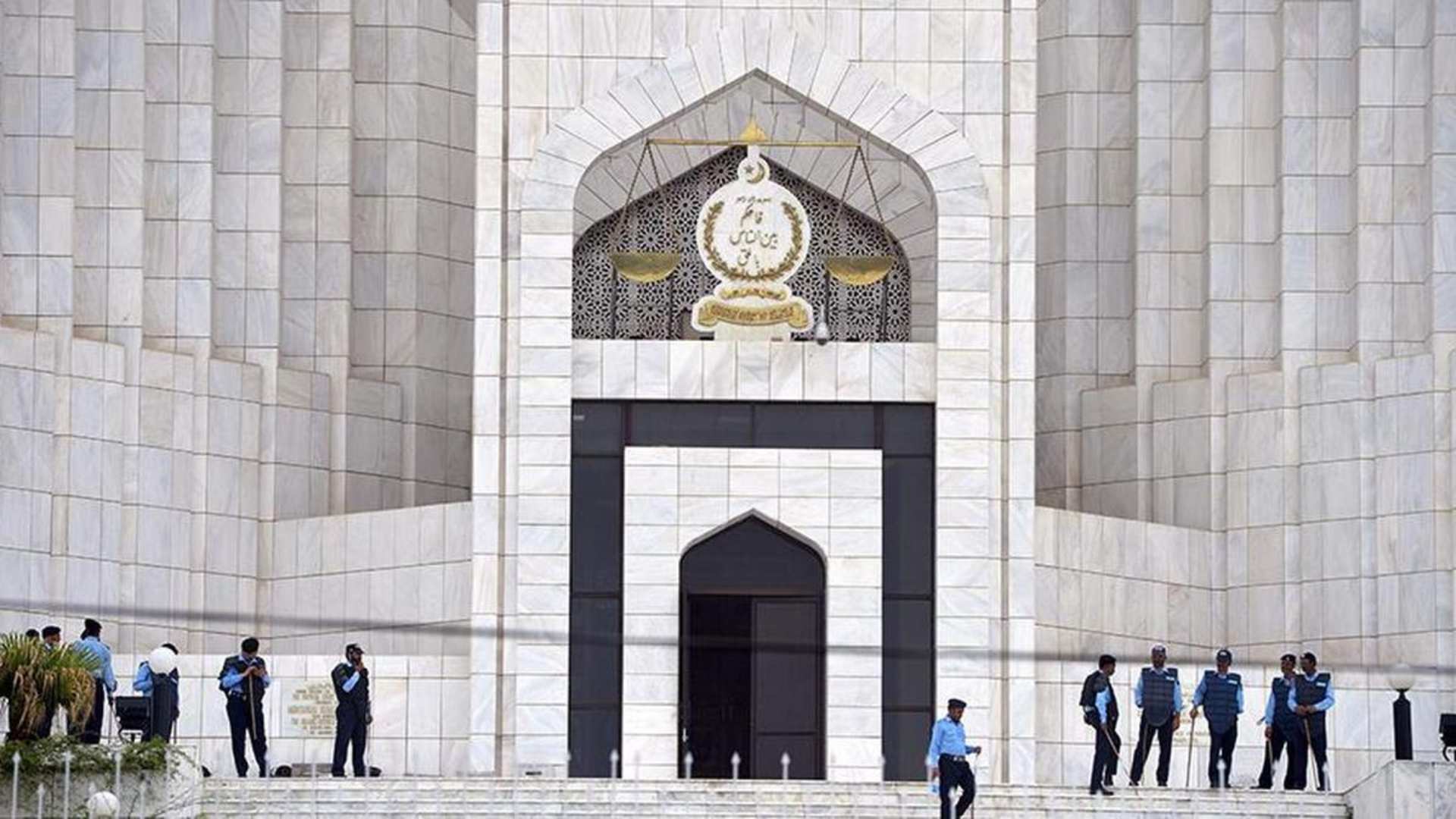
The 27th Amendment: Navigating Pakistan's Democratic Challenges

Exploring the significant constitutional implications of the 27th Amendment on Pakistan's governance and judiciary
PT
pocketias team
5 mins read
New constitutional court in Pakistan signals troubling shift in separation of powers
Not Started

1. Context: Pakistan’s 27th Constitutional Amendment (PCA)

Pakistan’s legislature passed the 27th Constitutional Amendment (PCA) in mid-November last year, followed by presidential assent. Although formally presented as a measure to reorganise aspects of the military command structure, the amendment has wide-ranging constitutional implications.

At its core, the PCA restructures constitutional adjudication by transferring original jurisdiction over constitutional interpretation, fundamental rights, and federal–provincial disputes away from the Supreme Court to a newly created Federal Constitutional Court (FCC).

This change directly alters the balance of power among constitutional institutions. If unexamined, such restructuring risks reshaping governance through legal form rather than overt political action.

Constitutional amendments that reallocate judicial power are never merely procedural; they redefine how authority is constrained and exercised within the state.


2. Issue: Dilution of the Supreme Court’s Constitutional Role

The Supreme Court of Pakistan historically exercised original jurisdiction over politically and constitutionally sensitive cases. This authority enabled it to adjudicate landmark matters such as the Panama Papers case and the Memogate controversy.

By removing this jurisdiction, the PCA fragments constitutional adjudication and weakens the Supreme Court’s position as the final guardian of the Constitution. This institutional downgrading exposes the Court to marginalisation, particularly in an environment where executive influence is strong.

If the apex court’s constitutional role is diminished, constitutional accountability risks becoming dispersed and less effective.

Judicial authority derives not only from existence but from jurisdiction. Curtailing core jurisdiction erodes institutional stature and constitutional restraint.


3. Regional and Comparative Context: South Asia and the Global South

The PCA must be situated within a broader South Asian context marked by political instability, security challenges, and institutional strain. Across the Global South, constitutional institutions often operate under competing pressures of governance efficiency and security imperatives.

These pressures do not remain confined within national borders. The erosion of judicial independence or normalisation of executive dominance in one state generates regional precedents and cautionary signals.

For India, as the region’s largest constitutional democracy, developments in neighbouring constitutional systems hold indirect relevance for democratic norms and regional stability.

Constitutional backsliding rarely remains isolated; it shapes regional expectations about the limits of power and accountability.


4. Constitutional Principle at Stake: Rule of Law

The PCA unsettles the classical understanding of the rule of law, articulated by A.V. Dicey, which rests on the absence of arbitrary power, equality before law, and the centrality of independent courts.

In Dicey’s framework, courts act as institutional sentinels that restrain authority and mediate between power and liberty. By diluting the Supreme Court’s primacy, the PCA weakens this equilibrium.

When courts lose their central constitutional role, the rule of law risks becoming procedural rather than substantive.

"The rule of law means the absolute supremacy or predominance of regular law as opposed to the influence of arbitrary power." — A.V. Dicey

Without strong constitutional courts, legal restraints on power become fragile and contingent.


5. The Federal Constitutional Court (FCC): Design Concerns

Specialised constitutional courts are not inherently problematic. However, Pakistan’s creation of the FCC removes constitutional adjudication from the Supreme Court, disturbing a balance restored by the 18th Constitutional Amendment.

The 18th Amendment had strengthened the Judicial Commission of Pakistan to depoliticise judicial appointments and insulate the judiciary from executive dominance. The FCC risks reversing these gains.

A major concern is the scope for executive influence over the FCC’s composition and functioning, which could transform judicial review into an extension of political power.

Judicial legitimacy flows from independence. New institutions lacking insulation risk weakening constitutional review rather than strengthening it.


6. Historical Illustration: Executive Power vs Judicial Independence

A foundational constitutional principle is illustrated by early 17th century England. King James I claimed the sovereign could personally adjudicate disputes, a position resisted by Sir Edward Coke, then Chief Justice.

Coke asserted that the king was subject to the law and could not sit in judgment. This confrontation affirmed that judicial authority must remain independent of executive will.

The episode remains relevant as it underlines that constitutional governance depends on insulating courts from even well-intentioned rulers.

Historical precedents reinforce that judicial independence is not symbolic but essential for the rule of law.


7. Why It Matters for India: Constitutional Lessons

The latter half of the 20th century saw newly independent nations adopt written constitutions as instruments to bind power and restrain authority. However, the 21st century has witnessed constitutions being reshaped to legitimise power concentration.

The PCA reflects this global trend, where democratic erosion occurs through formally valid legal changes rather than abrupt coups. Inter-war Europe of the 1930s demonstrated how institutions were hollowed out incrementally in the name of stability.

For India, the lesson is one of vigilance. Constitutional democracy depends not just on text but on judicial independence, institutional boundaries, and self-restraint.

Democratic decay often proceeds legally before it becomes visible politically.


Conclusion

Pakistan’s 27th Constitutional Amendment highlights how constitutional design choices can recalibrate power without overt disruption. By weakening the Supreme Court’s central role and empowering a potentially executive-influenced FCC, the PCA raises concerns about judicial independence and the rule of law. For India and other constitutional democracies, the episode reinforces the need to safeguard institutional autonomy to ensure that constitutions remain instruments of restraint rather than tools of power.

Quick Q&A

Everything you need to know

Overview: The 27th Amendment to Pakistan’s Constitution, also referred to as the PCA, was passed by the legislature and received presidential assent in November 2025. Although presented as a measure to reorganize aspects of the military command structure, it has profound implications for Pakistan’s constitutional order.
Key Changes:

  • Original jurisdiction over constitutional interpretation, fundamental rights, and federal-provincial disputes has been transferred from the Supreme Court to a newly constituted Federal Constitutional Court (FCC).
  • This diminishes the Supreme Court’s central role as the final guardian of the Constitution.
  • The FCC may be more susceptible to executive influence, potentially compromising impartial judicial review.
Significance: Historically, the Supreme Court adjudicated landmark political cases, such as the Panama Papers and Memogate controversies. Stripping it of this authority undermines institutional checks on executive power and may weaken the rule of law in Pakistan.

Threat to Judicial Autonomy: By creating the FCC and transferring original jurisdiction, the PCA reduces the Supreme Court’s authority to review executive or legislative actions. This limits the judiciary’s ability to act as an independent check on power.
Executive Influence:

  • The FCC’s composition and functioning could be influenced by the executive, creating opportunities for political interference in constitutional interpretation.
  • This undermines the principle that courts must remain insulated from the government to enforce the rule of law effectively.
Consequences: Fragmenting constitutional adjudication risks diluting accountability and eroding citizens’ trust in institutions. This situation contrasts with the 18th Constitutional Amendment, which strengthened judicial independence by depoliticizing appointments and insulating courts from executive dominance.

Regional Implications: The PCA occurs amid political instability and institutional strain in South Asia. Weakening judicial independence in Pakistan has broader regional consequences, influencing perceptions of governance and institutional norms.
Potential Risks:

  • Reduced accountability: Executive actions may face less scrutiny, allowing policy decisions to bypass judicial checks.
  • Fragmentation: Constitutional adjudication may become inconsistent due to overlapping jurisdictions between the Supreme Court and the FCC.
  • Precedent for power consolidation: Legal reforms may be used to legitimize executive authority rather than protect citizen rights.
Lesson for India: Observing Pakistan’s experience underscores the importance of safeguarding judicial autonomy, ensuring a robust separation of powers, and maintaining institutional checks within a democracy.

Shift in Power Dynamics: The PCA shifts constitutional adjudication from an independent Supreme Court to the FCC, which may be more aligned with executive interests.
Impact on Governance:

  • Executive actions, including military and federal decisions, may now face reduced judicial scrutiny.
  • Judicial review risks being converted into a formal process that legitimizes government policy rather than objectively evaluating it.
  • Political controversies previously handled impartially by the Supreme Court may now be influenced by executive preferences.
Historical Context: The 17th century struggle between Sir Edward Coke and King James I exemplifies the principle that judicial authority must remain independent of sovereign influence. The PCA undermines this principle, raising concerns about arbitrary governance and erosion of the rule of law.

Historical Lessons:

  • 17th century England: Sir Edward Coke opposed King James I’s claim to personally adjudicate disputes, establishing that even sovereign authority is bound by law.
  • Inter-war Europe: Legal reforms were used to hollow out democratic institutions, showing how courts can be undermined through legal manipulations rather than abrupt coups.
Contemporary Relevance: Independent courts are crucial to restrain arbitrary power, protect minority rights, and maintain democratic accountability. Weakening judicial authority, as seen in Pakistan, demonstrates the risks when constitutions become tools for executive consolidation instead of instruments of governance.

Example: Panama Papers Case
The Supreme Court’s original jurisdiction allowed it to adjudicate the Panama Papers case, holding high-ranking officials accountable. This demonstrated the Court’s role as a constitutional guardian.
Impact of PCA:

  • With the FCC now holding original jurisdiction, similar cases may face executive influence, delaying or compromising impartial outcomes.
  • The shift reduces public confidence in judicial review and risks weakening institutional checks on power.
Lesson: Effective constitutional governance depends on independent adjudication. The PCA highlights how legal reforms can be used to curtail judicial autonomy and consolidate power.

Case Study Perspective: The PCA illustrates how formal constitutional changes can be used to centralize power and undermine judicial autonomy.
Lessons for India:

  • Maintaining judicial independence is essential to prevent executive overreach.
  • Constitutional texts alone are insufficient; institutional respect and commitment to separation of powers are critical.
  • Legal reforms should strengthen, not hollow out, democratic institutions.
Policy Implication: India must remain vigilant in preserving checks and balances, ensuring that courts retain the authority to uphold fundamental rights, provide accountability, and protect the rule of law, even amid regional political pressures.

Strategic Importance: Constitutional developments in neighboring countries have implications for regional stability, governance norms, and security dynamics.
Importance:

  • Monitoring these changes allows India to anticipate potential challenges to democratic norms in the region.
  • It provides lessons on safeguarding institutional checks and balances and judicial independence domestically.
  • It helps in formulating foreign policy, diplomatic responses, and internal institutional reforms to prevent similar erosion of constitutional safeguards.
Conclusion: Observing Pakistan’s PCA is not adversarial but a proactive measure for India to strengthen its democratic institutions and reinforce the centrality of the rule of law in governance.

Attribution

Original content sources and authors

Sign in to track your reading progress

Comments (0)

Please sign in to comment

No comments yet. Be the first to comment!