Pakistan–Afghanistan Conflict: Strategic Rupture, Militant Dynamics, and Regional Implications
1. Escalation Across the Durand Line: From Friction to Open Confrontation
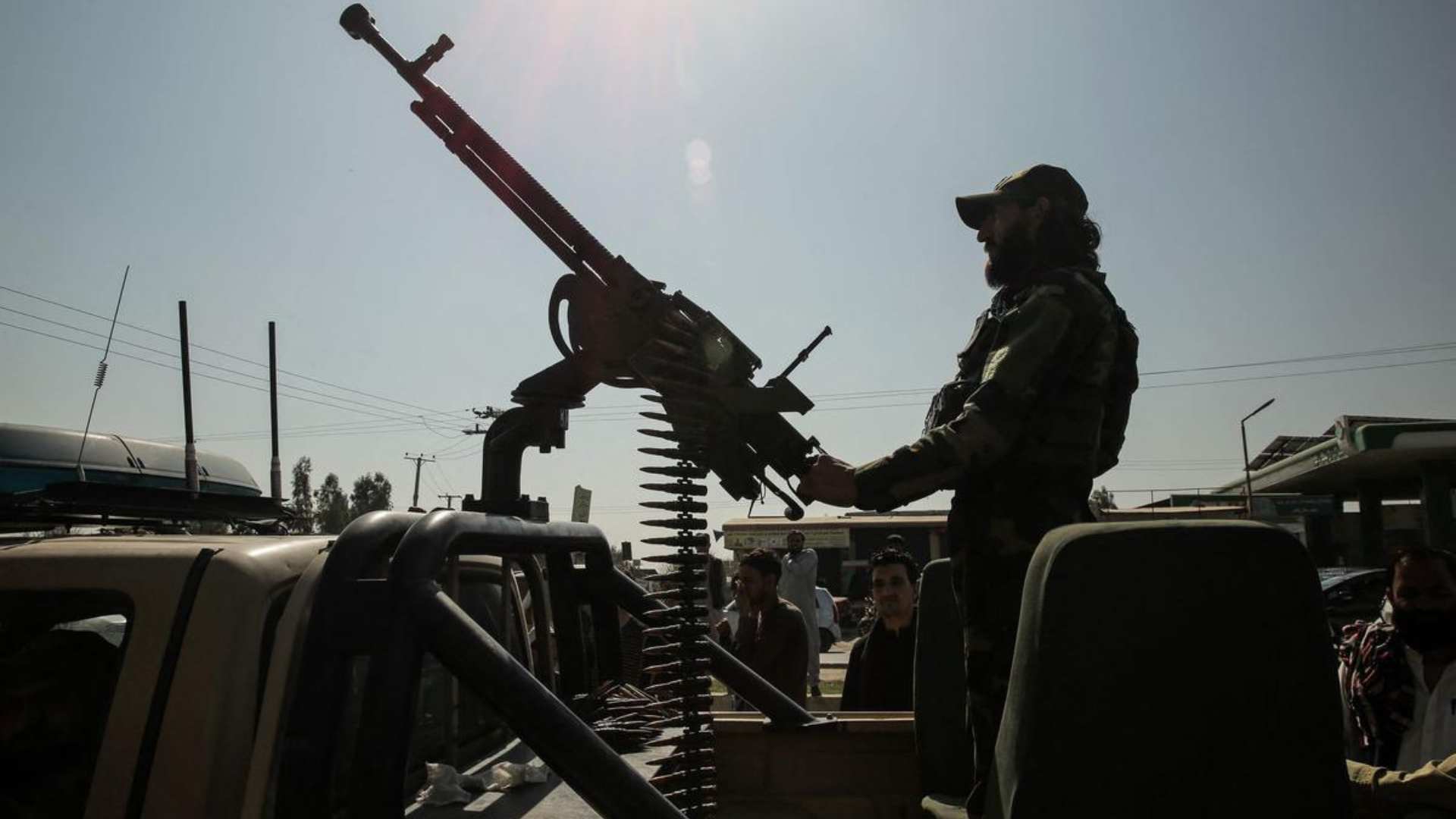
For the second time in six months, Pakistan and Afghanistan have engaged in intense military clashes. Unlike earlier periodic skirmishes during the U.S. presence in Afghanistan (2001–2021), the recent confrontations have involved air and missile strikes deep inside Afghan territory, including Kabul and Kandahar.
The Taliban retaliated by targeting Pakistani military posts across the Durand Line. Casualties—both military and civilian—have reportedly been high. These attacks occurred despite a ceasefire mediated by Turkiye and Qatar after the October 2025 clashes.
Pakistan’s Defence Minister declared that the situation could turn into an “open war”, signalling a major shift in rhetoric and political intent. The conflict thus marks not merely a border skirmish but a structural rupture in bilateral relations.
Escalation from proxy management to direct confrontation indicates breakdown of strategic alignment. If unchecked, such escalation risks regional instability and cross-border militancy spillover.
2. Three-Level Rupture: Political, Institutional, and Societal
The current crisis reflects a rupture at three distinct levels:
(a) Political Rupture: Islamabad vs Kabul
After the Taliban’s takeover in August 2021, Pakistan expected improved relations. Instead, repeated tensions and military escalation indicate deepening mistrust. The “open war” declaration marks a visible political breakdown.
(b) Institutional Rupture: Pakistan’s Establishment vs Taliban
Pakistan’s military and ISI historically supported the Taliban since the 1990s. However, under new leadership in Rawalpindi, that relationship appears fractured. Military escalation would not occur without Establishment approval.
(c) Societal Rupture: Afghan Refugees and Deportations
Pakistan has intensified deportation of Afghan refugees who had settled during successive conflicts. This has generated resentment in Afghanistan and widened the societal divide across the Durand Line.
These ruptures threaten long-standing tribal, social, and cross-border linkages forged over centuries.
When political distrust aligns with institutional breakdown and societal hostility, bilateral conflict becomes entrenched rather than episodic.
3. TTP Factor: Core Trigger of the Fallout
A central driver of tensions is the Tehrik-e-Taliban-Pakistan (TTP). After the Taliban’s takeover in 2021, Pakistan expected Kabul to suppress or extradite TTP leaders.
Instead, militant activity increased in Pakistan’s tribal regions (Khyber Pakhtunkhwa) during 2022–25. Pakistan initially pursued a carrot-and-stick approach under Imran Khan but later shifted to a harder military line.
Kabul’s inability or unwillingness to control the TTP remains a major grievance for Islamabad.
The Taliban, however, may be reluctant to act decisively against the TTP due to:
- Historical refuge provided by TTP to Afghan Taliban pre-2021
- Tribal and ideological overlaps
- Fear of strengthening Islamic State-Khorasan (IS-K), which poses a greater threat
“The enemy of my enemy is my friend.” — Proverb
This logic often shapes non-state militant alliances, complicating state-level diplomacy.
Militant networks built for strategic depth often acquire autonomous interests. Failure to dismantle such networks can create long-term blowback.
4. Strategic Depth Narrative in Tatters
For decades, Pakistan pursued a “strategic depth” doctrine—seeking influence in Afghanistan to counter India and secure western borders. The Taliban’s 2021 victory was seen in Rawalpindi as a strategic gain.
However, the current conflict undermines this doctrine. Instead of strategic depth, Afghanistan risks becoming a strategic liability or trap for Pakistan.
Kabul accuses Pakistan of externalising internal militancy problems rather than addressing domestic extremist infrastructure cultivated since the 1980s.
Thus, the relationship has shifted from Af-Pak cooperation to Af vs Pak confrontation.
Proxy-based foreign policy strategies often generate unintended consequences. Without recalibrating doctrine, states risk long-term instability along their borders.
5. Internal Divisions and Militant Fragmentation
Neither the Afghan Taliban nor the TTP is monolithic. Tribal divisions and ideological splits exist within both groups.
A factional dynamic is visible:
- Some militants gravitate toward Islamic State-Khorasan (IS-K)
- IS-K represents a transnational jihadist alternative
- Afghan Taliban may avoid antagonising TTP to prevent IS-K expansion
This complex militant ecosystem reduces Kabul’s capacity to fully comply with Pakistan’s demands.
Fragmented militant landscapes reduce the effectiveness of bilateral security arrangements. State-to-state agreements cannot easily control decentralised armed actors.
6. Asymmetry Between Pakistan and Afghanistan
There exists a clear asymmetry in military, economic, and diplomatic strength.
Military Asymmetry:
- Pakistan possesses air force and missile capabilities.
- Taliban lacks air and naval power.
- Drone warfare may offer limited tactical parity but only in eastern border areas.
Economic Asymmetry:
- Afghanistan is landlocked and dependent on Karachi port.
- Pakistan can exert trade pressure by closing transit routes.
- Afghanistan’s economy is weaker and more fragile.
Diplomatic Asymmetry:
-
Pakistan retains regional clout in West Asia.
-
The current Pakistani leadership reportedly enjoys improved ties with the U.S.
-
Taliban’s global recognition remains limited.
-
Implications:
- Pakistan can escalate militarily.
- Afghanistan may rely on asymmetric or proxy tactics.
- Open war is structurally unequal.
Asymmetry reduces likelihood of conventional war but increases probability of hybrid or proxy conflict.
7. Regional and Strategic Implications
The conflict has implications for:
- Regional stability in South and Central Asia
- Counter-terrorism architecture
- China–Pakistan Economic Corridor (CPEC) security
- India’s strategic calculus
- Refugee and humanitarian dynamics
The Durand Line remains disputed and politically sensitive. Continued militarisation may create safe havens for extremist actors, destabilising the broader region.
From a GS-II (International Relations) perspective, this conflict intersects with:
- State failure and insurgency
- Proxy warfare
- Regional power competition
- Border disputes
From a GS-III (Internal Security) perspective:
- Terror networks
- Radicalisation
- Cross-border militancy
Prolonged instability along the Durand Line risks transforming a bilateral crisis into a regional security challenge.
8. Possible Trajectories
Given asymmetries and internal militant dynamics, the Taliban is unlikely to engage in sustained “open war.” Instead, conflict may manifest through:
- Limited cross-border strikes
- Proxy or deniable operations
- Tactical ceasefires followed by renewed tensions
Stability will depend on:
- Taliban’s willingness and capacity to control TTP
- Pakistan’s approach—military coercion vs negotiated accommodation
- External mediation by regional actors
Absent structural trust-building, relations are likely to remain conflict-prone.
Without addressing root causes—militant safe havens, refugee tensions, and doctrinal mistrust—ceasefires may remain temporary.
Conclusion
The Pakistan–Afghanistan clashes signal a profound rupture in a relationship once shaped by strategic patronage. The TTP issue, militant fragmentation, and shifting political calculations have transformed strategic depth into strategic friction. Given the military and economic asymmetry, a full-scale war remains unlikely, but persistent hybrid conflict is probable. Long-term stability across the Durand Line will require recalibration of security doctrines, credible counter-terror commitments, and regional diplomatic engagement. Without such adjustments, the Af-Pak theatre will remain a flashpoint in South Asian geopolitics.