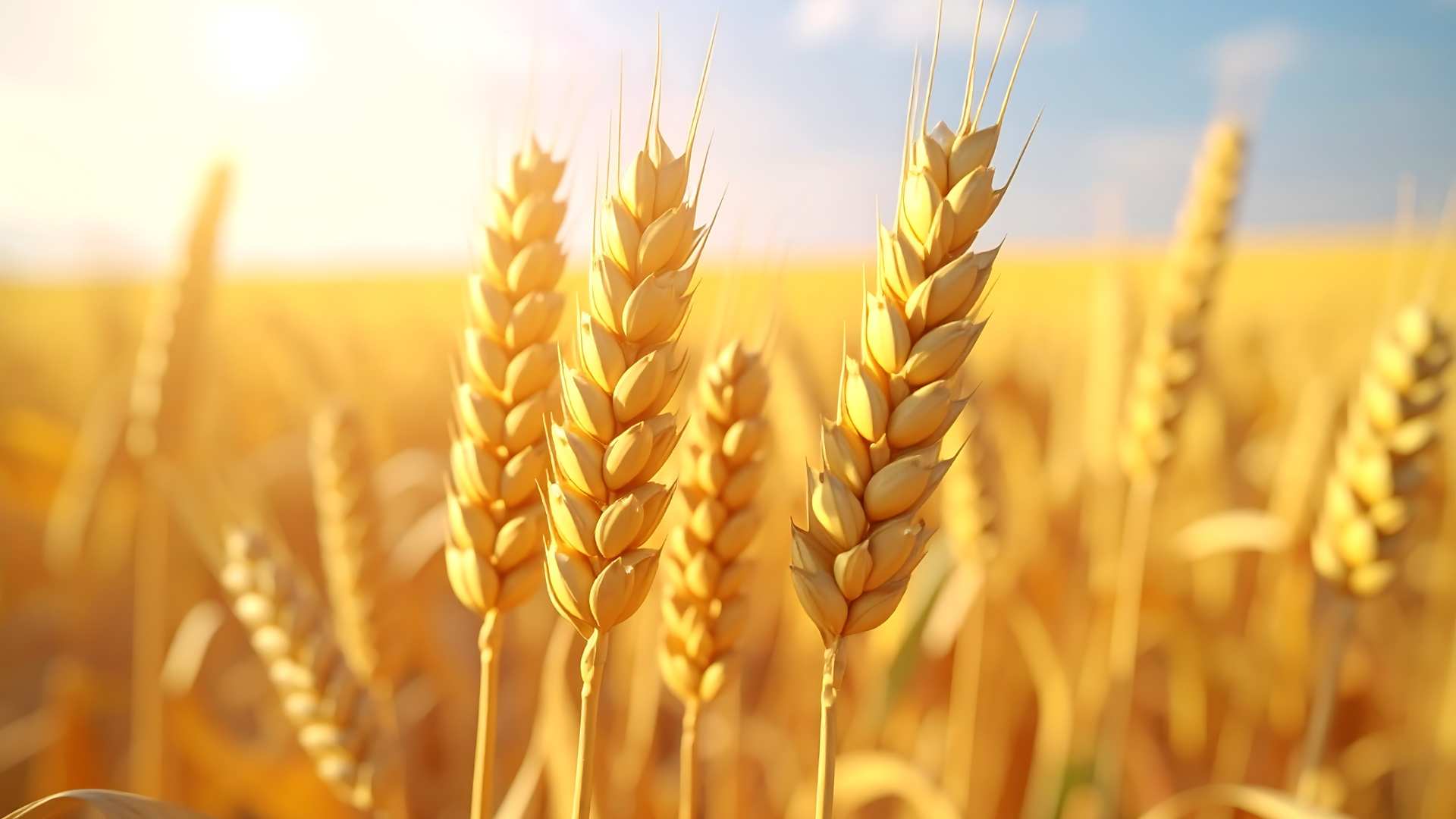
Government Approves Wheat and Sugar Exports to Boost Farmers

Amid surplus stocks, the government permits wheat and sugar exports to stabilize markets and enhance farmer incomes without jeopardizing food security.
PT
pocketias team
4 mins read
Government Boosts Wheat, Sugar Exports
Not Started

1. Wheat Export Policy and Domestic Market Stabilisation

The Government of India has approved the export of 25 LMT of wheat along with an additional 5 LMT of wheat products. This decision follows a comprehensive assessment of domestic availability, prices, and farmer interests. It aims to stabilise domestic markets, ensure remunerative prices for producers, and manage stock efficiently.

Wheat stock with private entities during 2025–26 stands at approximately 75 LMT, which is 32 LMT higher than the previous year, reflecting a comfortable supply position. The central pool, managed by FCI, is projected to hold 182 LMT of wheat as on 1st April 2026, ensuring that exports will not compromise domestic food security.

By aligning export policy with stock and production data, the government balances market stability with farmer welfare. Neglecting such calibration could lead to price volatility, distress sales, and weakened rural incomes.

Key Statistics:

  • Private stock: 75 LMT
  • Central pool availability: 182 LMT
  • Export approval: 25 LMT wheat + 5 LMT wheat products

2. Rabi 2026 Wheat Cultivation and Farmer Confidence

Wheat acreage for Rabi 2026 has increased to 334.17 lakh hectares from 328.04 lakh hectares last year. This expansion reflects strong farmer confidence driven by Minimum Support Price (MSP) and assured procurement mechanisms. Higher acreage indicates the likelihood of robust production, which supports both domestic food security and export readiness.

Stable MSP and procurement systems incentivise farmers to expand cultivation, preventing supply shocks and contributing to predictable market outcomes.

*Key Data:

  • Wheat acreage Rabi 2026: 334.17 lakh hectares
  • Previous year: 328.04 lakh hectares

3. Implications of Wheat Export Decisions

Exporting wheat and wheat products under controlled quotas ensures multiple benefits: stabilisation of domestic prices, improved market liquidity, efficient stock rotation, and protection of farmers’ incomes. These measures also reduce the risk of distress sales during peak harvest periods and contribute to overall food security.

Efficient stock management and calibrated exports strengthen market signals and maintain continuity in rural livelihoods. Ignoring stock and price dynamics could lead to imbalanced markets and revenue losses for farmers.

Impacts:

  • Stabilises domestic wheat prices
  • Improves stock rotation and market liquidity
  • Supports farmer income during peak arrivals

4. Sugar Export Policy and Surplus Management

The government has approved an additional 5 LMT sugar export for the 2025–26 Sugar Season, over and above the 15 LMT previously allowed. As of 31 January 2026, 1.97 LMT sugar has been exported, with 2.72 LMT contracted for export. Allocation will be pro-rata among willing mills, subject to at least 70% export completion by 30 June 2026, and cannot be swapped or exchanged.

This policy aims to manage domestic surplus efficiently, reduce price pressure, and promote exports without compromising domestic availability.

Targeted export quotas ensure that surplus production is channelled effectively, preventing market distortions while enhancing global trade participation.

Key Figures:

  • Previous sugar export: 15 LMT
  • Additional approved export: 5 LMT
  • Export completed: 1.97 LMT
  • Contracted for export: 2.72 LMT

5. Governance and Policy Implications

The government’s calibrated approach to agricultural exports reflects the integration of food security, farmer welfare, and market management. Linking export permissions to domestic stocks, production forecasts, and MSP policies ensures that both national and farmer interests are protected. Such measures also have cross-cutting implications for GS3 topics like agriculture, food processing, trade, and rural development, as well as GS2 dimensions of policy implementation and governance.

Ignoring the interplay between domestic supply and exports could lead to market instability, farmer distress, and inefficient stock utilisation.


6. Conclusion and Forward Outlook

India’s agricultural export policy demonstrates a balance between market-oriented growth and farmer protection. Continued monitoring of production, stock, and price trends, along with calibrated export quotas, can stabilise domestic markets, improve farmer incomes, and enhance India’s global trade presence.

"Agriculture is the most healthful, most useful, and most noble employment of man." — George Washington

Quick Q&A

Everything you need to know

Wheat Export Decisions: The Government of India has approved the export of 25 Lakh Metric Tonnes (LMT) of wheat along with an additional 5 LMT of wheat products for the current period. This decision comes after a comprehensive assessment of domestic stock availability, price trends, and production projections.

Significance:

  • Ensures farmers receive remunerative returns by preventing distress sales during peak harvest periods.
  • Stabilises domestic wheat prices and improves market liquidity.
  • Supports efficient stock rotation, maintaining food security while leveraging surplus production.

Example: With wheat stock availability with private entities at approximately 75 LMT in 2025–26, which is 32 LMT higher than last year, the government is able to permit exports without compromising domestic food requirements.

Rationale for Encouraging Exports: The decision to allow wheat exports is a strategic measure to balance domestic supply and demand dynamics. Despite softening prices, high stock levels and projected increased production create a situation where surplus wheat could lead to market saturation and reduced farmer incomes.

Economic and Farmer-Centric Considerations:

  • Prevents distress sales by providing alternative markets for farmers, ensuring income stability.
  • Enhances market liquidity and efficient stock rotation, allowing storage facilities like FCI and private warehouses to manage inventory effectively.
  • Signals confidence in India’s export capacity and reinforces its role as a reliable global supplier of wheat.

Illustration: With projected central pool wheat availability at 182 LMT as of April 2026, the government can safely sanction exports without threatening domestic food security.

Wheat Acreage and Production: Wheat acreage for Rabi 2026 has increased to 334.17 lakh hectares from 328.04 lakh hectares last year, reflecting strong farmer confidence. This confidence is largely supported by assured Minimum Support Price (MSP) and robust procurement mechanisms.

Impact on Production and Markets:

  • Encourages higher cultivation, leading to increased output and potential surplus for exports.
  • Helps stabilise farmer incomes by reducing the risk of price volatility and distress selling during peak harvest.
  • Strengthens the overall wheat supply chain, including private stocks and central pool reserves, enabling export decisions without compromising domestic food security.

Example: The increase in acreage directly correlates with projected higher production, which justifies the government’s calibrated export approval to 25 LMT of wheat and 5 LMT of wheat products.

Rationale for Sugar Exports: The government has permitted an additional 5 LMT of sugar exports during the 2025–26 season, supplementing the earlier approved 15 LMT. The decision is driven by surplus sugar availability and the need to manage domestic stocks efficiently.

Key Reasons:

  • Current exports and contracted quantities were low, with only 1.97 LMT exported and 2.72 LMT contracted as of 31.01.2026, indicating underutilisation of export potential.
  • Facilitates better price realisation for sugar mills by enabling access to international markets.
  • Promotes orderly stock management, reducing storage costs and market pressure in domestic sugar markets.

Implementation Mechanism: The additional quota is allocated pro-rata among willing sugar mills, conditioned on exporting at least 70% of their allocation by 30 June 2026, ensuring accountability and timely dispatch.

Example – Wheat Exports: By approving 25 LMT of wheat exports, the government directly supports farmers’ income. During periods of high supply and softening domestic prices, farmers might otherwise resort to distress selling, reducing profitability.

Market Stability:

  • Exports absorb surplus stocks, reducing downward pressure on prices.
  • Encourage timely stock rotation, avoiding deterioration of stored grains.
  • Enhance liquidity in commodity markets, allowing smoother functioning and price discovery.

Illustration: The increase in wheat acreage to 334.17 lakh hectares demonstrates farmer confidence, which is reinforced by government measures that allow surplus production to be exported while ensuring domestic supply, thus balancing both farmer welfare and food security objectives.

Benefits:

  • Supports farmer incomes and prevents distress sales.
  • Stabilises domestic prices and improves market liquidity.
  • Reinforces India’s role as a reliable global supplier of wheat and sugar, enhancing trade revenues.

Challenges:
  • Dependency on global market conditions; price volatility could affect the expected gains.
  • Logistical constraints in storage, transportation, and export infrastructure could impede timely delivery.
  • Ensuring compliance with export quotas and timelines (like the 70% condition for sugar mills) may be administratively challenging.

Way Forward: Strengthening supply chain infrastructure, forecasting global demand trends, and providing real-time market intelligence to farmers and mills will maximise benefits while mitigating risks.

Case Study – Wheat Exports 2025–26: The Government of India approved 25 LMT of wheat and 5 LMT of wheat products for export despite domestic price softening. This decision was based on high stock availability with private entities (75 LMT) and projected central pool reserves of 182 LMT.

Balancing Food Security and Farmer Welfare:

  • Domestic consumption needs remain safeguarded by maintaining adequate central pool stocks.
  • Exports provide farmers with access to international markets, preventing income losses due to oversupply.
  • Market liquidity improves as surplus wheat is rotated through exports, preventing stagnation in storage and reducing costs.

Insights: This scenario highlights the importance of data-driven policy decisions that simultaneously ensure national food security and protect farmer livelihoods. It serves as a model for calibrated commodity export strategies in future agricultural seasons.

Attribution

Original content sources and authors

Sign in to track your reading progress

Comments (0)

Please sign in to comment

No comments yet. Be the first to comment!