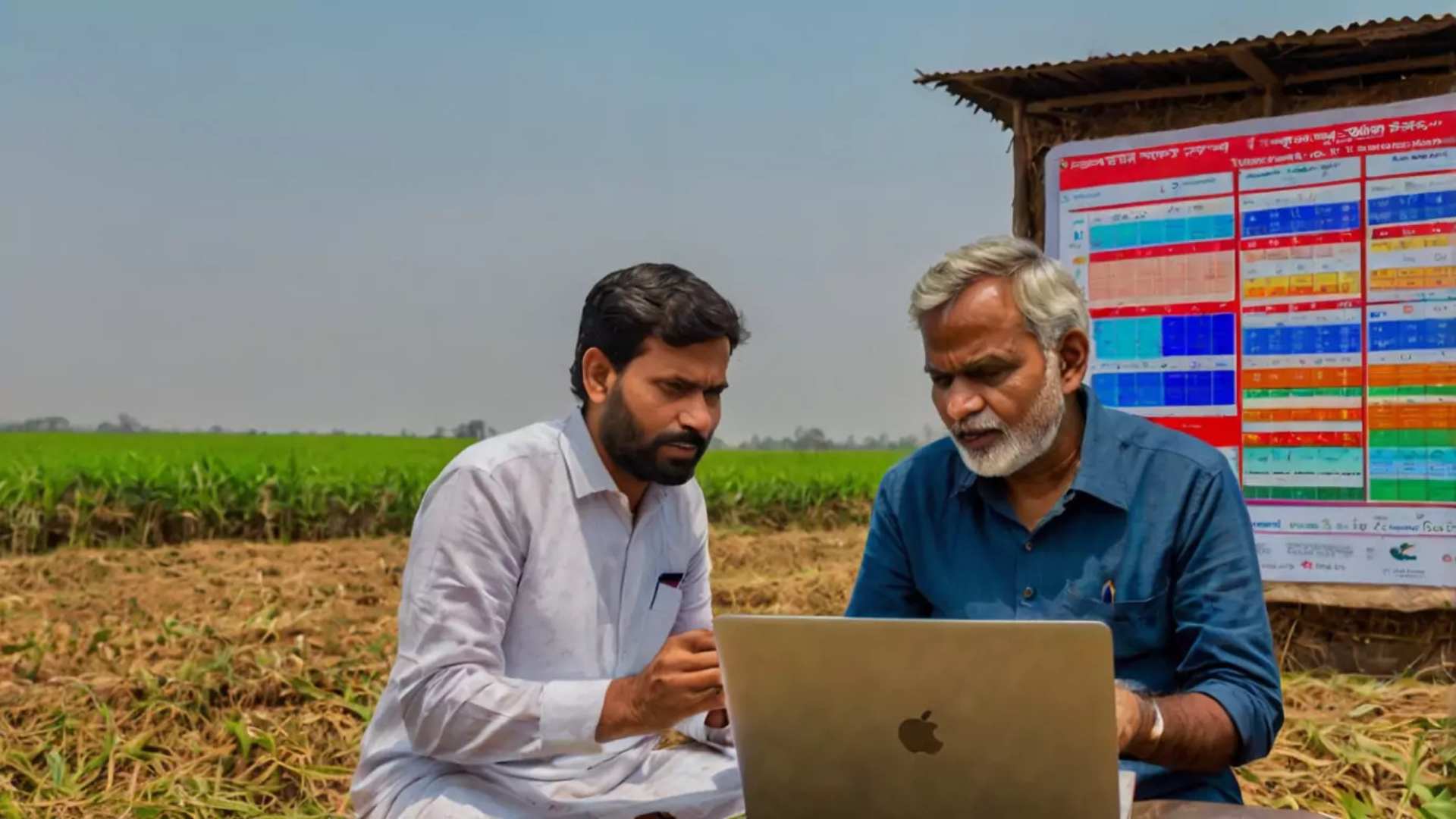
1. AgriStack as the “Next UPI”: Scope and Significance
At a recent public forum, the Union Finance Minister described AgriStack as the “next UPI,” signalling its ambition as a transformative digital public infrastructure (DPI) for agriculture. While the Unified Payments Interface (UPI) links bank accounts to a payments network through interoperable apps, AgriStack aims to integrate multiple agricultural databases into a unified digital ecosystem.
Unlike UPI’s relatively straightforward financial architecture, AgriStack is administratively complex. It requires coordination between the Centre and States, integration of land and crop data, and real-time updating of farmer registries. This scale of integration tests both governance capacity and technological robustness.
The broader objective is to simplify farmers’ access to government services, credit, subsidies, and insurance with minimal paperwork and reduced transaction costs.
“The remit is to create digital IDs for 110 million farmers and build comprehensive three foundational databases linking farmer registries, land records, and crop data.” — As stated by the Union Finance Minister
Digital public infrastructure in agriculture can reduce leakages and improve targeting. However, if data integrity and administrative coordination fail, the system risks excluding vulnerable beneficiaries instead of empowering them.
2. Institutional Design and Implementation Status
The Centre approved AgriStack in September 2024, providing financial support to States for creating farmer registries. Most States and Union Territories have signed on to the initiative.
Key implementation milestones include:
- Targeted farmer IDs: 110 million
- Farmer IDs created so far: 86.2 million
- Target completion date: March 2027
The initiative involves creating three foundational databases:
- Farmer registry
- Digitised land records
- Crop data
While drone-based digital mapping of agricultural land has progressed in parts of India, accurate identification of ownership and tenancy remains challenging.
The success of AgriStack depends not merely on digital tools but on accurate and updated primary data. Weak land records or fragmented databases could undermine the credibility of the platform.
3. Tenancy, Landlessness and Inclusion Challenges
A structural challenge arises from India’s tenancy patterns. Approximately 20% of farm households are tenant cultivators, leasing land from owners who may reside in cities or even overseas. In some States, the proportion of tenant farmers is as high as 36%.
Furthermore, about one-third of tenant farmers are landless and are among the most vulnerable groups, with limited access to institutional credit and government schemes. Many are excluded from:
- Crop insurance
- Institutional loans
- PM-KISAN (₹6,000 annual direct income support)
Data also indicates that 60% of fertiliser usage is by those who do not hold land in their own name.
This disconnect between land ownership and cultivation complicates beneficiary identification under existing schemes.
If tenancy is not accurately captured in digital registries, AgriStack may inadvertently reinforce exclusion. Conversely, proper recognition of cultivators rather than mere landowners can expand welfare coverage.
4. Fertiliser Subsidy Reform and Soil Health
One of AgriStack’s most significant potential impacts lies in fertiliser management. The fertiliser subsidy is budgeted at over ₹1.7 trillion in the coming financial year, making it one of the largest subsidy heads.
The current system heavily subsidises urea (Nitrogen), leading to chronic overuse and an imbalance in NPK (Nitrogen-Phosphorus-Potassium) application. This imbalance has contributed to soil degradation and declining productivity over time.
An experiment in Haryana linking land records, fertiliser purchases and crop patterns through AgriStack reportedly resulted in substantial savings, particularly through reduced urea consumption.
Experts estimate potential savings of ₹30,000–40,000 crore if subsidies are recalibrated through direct transfers to farmers instead of manufacturers.
Key Data:
- Fertiliser subsidy: Over ₹1.7 trillion
- Estimated potential savings: ₹30,000–40,000 crore
- Fertiliser use by non-landowners: 60%
By linking fertiliser purchase to verified land and crop data, AgriStack could promote balanced nutrient application and fiscal savings. Without accurate data capture, however, subsidy rationalisation may misfire.
5. Direct Benefit Transfers and Transparency
AgriStack could enable a structural shift in subsidy delivery — from manufacturer-level support to Direct Benefit Transfers (DBT) to farmers. This would increase transparency in fertiliser usage and reduce distortions in input markets.
A farmer-centric DBT model could:
- Improve targeting accuracy
- Reduce diversion and leakage
- Encourage balanced fertiliser use
- Enable dynamic recalibration of subsidy outlays
Such a system aligns with India’s broader DPI framework, where identity (Aadhaar), payments (UPI), and data integration support service delivery.
“The intention is unexceptionable: To enable farmers to access benefits and services with minimum paperwork or physical visits to service providers.” — As stated in the address
Transparent and targeted transfers enhance fiscal sustainability and equity. However, weak grievance redressal or exclusion errors may undermine trust in digital governance.
6. Administrative and Technological Capacity Constraints
AgriStack’s success hinges on intergovernmental coordination and technological reliability. Agriculture is a State subject, and land records are maintained at the State level. Therefore, uniform implementation requires harmonisation across diverse administrative systems.
Challenges include:
- Incomplete or outdated land records
- Informal tenancy arrangements
- Variations in digitisation standards across States
- Data privacy and consent management concerns
Unlike UPI, which operates within a relatively standardised banking ecosystem, AgriStack must integrate heterogeneous agricultural data across jurisdictions.
Complex data ecosystems require strong institutional capacity and continuous updating. If governance mechanisms are weak, digital infrastructure may amplify rather than resolve structural inefficiencies.
7. Broader Developmental Implications
If successfully implemented, AgriStack could transform agricultural governance by enabling:
- Targeted welfare delivery
- Improved credit access
- Better crop planning and risk management
- Evidence-based policymaking
It could particularly benefit vulnerable cultivators by formalising their economic identity within the system. This would strengthen inclusion in insurance, credit, and subsidy frameworks.
However, the transformative potential depends on data accuracy, inclusion of tenants, and robust administrative oversight.
“Technology is a useful servant but a dangerous master.” — Christian Lous Lange
Digital tools can enhance efficiency and inclusion. But without safeguards and institutional capacity, technology-driven governance can create new forms of exclusion.
Conclusion
AgriStack represents an ambitious attempt to build digital public infrastructure for agriculture on the scale of UPI. With a target of 110 million farmer IDs and integration of land and crop data by March 2027, it has the potential to reshape subsidy delivery, improve soil health, and enhance inclusion.
The long-term success of AgriStack will depend not merely on digital innovation but on accurate land records, recognition of tenant farmers, and coordinated federal implementation. If these conditions are met, it could become a cornerstone of data-driven agricultural reform in India.